
Pakistan
2,055 stories

Ghana's Partey loses bid to enter Canada for World Cup
Ghana midfielder Thomas Partey, who is facing trial on rape charges in Britain, lost a court challenge on Tuesday that would have allowed him to enter Canada for his side’s World Cup opener in Toronto. Ottawa denied the Villarreal player a visa over the British charges, blocking him from playing for Ghana against Panama on Wednesday. Accra filed a request for an injunction in federal court on Tuesday seeking to set aside Ottawa’s decision. But broadcaster CBC said Judge Roger Lafreniere had dismissed the challenge. Shortly before the decision was handed down, Ghana’s veteran coach Carlos Queiroz told reporters in Toronto that his side would be ready, regardless of the court outcome. “My business is to play with the cards that I have in front of me,” Queiroz said. “When the decision comes, we are ready.” Panama head coach Thomas Christiansen, also asked about Partey’s possible exclusion, said he believed Ghana would pose strong competition even if the former Arsenal player was not on the pitch. “They have a lot of other footballers who can take on his role,” he said in Spanish. Ghana would not be “weaker” because Partey was absent, he added. “They have a lot more experience than we have,” Christiansen said of the Black Stars. Ghanaian Foreign Minister Sam Okudzeto Ablakwa has called Canada’s decision “high-handed and extremely unfair,” describing Partey as “a key member of Ghana’s senior national team.” Accra has sent an official “note of protest” to Ottawa over the move and formally asked Canada to review the decision, Ablakwa said. Canada’s foreign ministry told AFP that it “maintains regular diplomatic engagement with Ghana, including on consular and migration-related issues when they arise.” But the ministry declined comment on discussions with Ghana about Partey’s exclusion and said decisions on entering the country are made by Immigration, Refugees and Citizenship Canada (IRCC). IRCC said “Canada has been consistent that hosting major events does not change Canada’s immigration laws.” “Every person seeking to come to Canada is assessed individually, based on the facts available and the law that applies,” it added in a statement. Partey is facing seven charges of rape and one count of sexual assault in Britain relating to allegations by four different women between 2020 and 2022. He denies the allegations.
17 Jun 2026
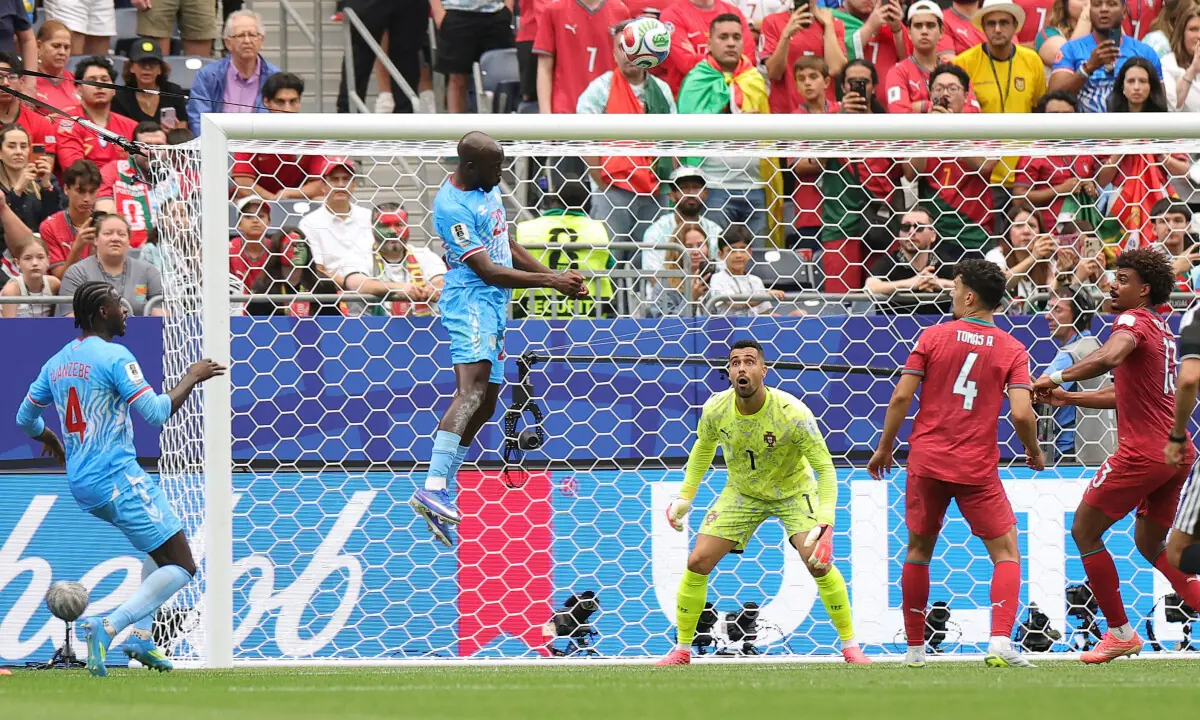
Ronaldo fails to shine as DR Congo earn historic World Cup point
Cristiano Ronaldo’s record-equalling sixth World Cup got off to a disappointing start as the Democratic Republic of Congo secured their first ever point at the finals, drawing 1-1 with Portugal in their Group ‘K’ match in Houston on Wednesday. Yoane Wissa’s header cancelled out Joao Neves’s early goal and the African side — appearing in their first World Cup since 1974 when it was known as Zaire — more than held their own. Ronaldo, 41, was largely a peripheral figure throughout the match — failing to make the impact his great rival Lionel Messi had done on Tuesday in scoring a hat-trick against Algeria. The DRC’s achievement was even greater given their preparations had been disrupted by the Ebola outbreak back in their country. Some Portugal players were wearing wrist bands, given to them by their Prime Minister Luis Montenegro, in tribute to late team-mate Diogo Jota, who was killed in a car crash last year. Portugal got off to the perfect start, with Neves powering home a header from Pedro Neto’s cross in the sixth minute. However, despite dominating possession they lacked a cutting edge and well into time added on in the first half their opponents made them pay. Wissa rose unmarked to head past Diogo Costa in the Portuguese goal sparking wild celebrations on the pitch, the bench and among the Congolese fans in the stadium as the Newcastle forward registered his country’s first ever goal at a World Cup. Former Portuguese defensive bulwark Pepe, watching from the VIP seats, did not look impressed. Bernardo Silva had started the day by joining Real Madrid on a free transfer but he ended it by watching from the bench after Martinez took him off at half-time. He was briefly off his feet celebrating when Joao Cancelo’s overhead kick hit the back of the net – only for it to be ruled out for offside. The Congolese were matching the Portuguese, though, and 35-year-old veteran striker Cedric Bakambu shrugged aside Bruno Fernandes, but his shot came back off the near post. Ronaldo finally had a chance to shine when presented with a chance by Francisco Conceicao’s pass but he fluffed his lines sending it wide of the post. The same combination linked up again minutes later, Conceicao — a far livelier presence than Silva had been — teeing up Ronaldo but once again the result was the same, the ball went wide. Portugal thought they had at least got a corner but when it was not given Conceicao slammed the ball into the ground in frustration as his side failed to pick up three points in their opener.
17 Jun 2026
US official unveils 14-point Iran agreement to halt conflict and reopen Strait of Hormuz
The United States on Wednesday read out the text of the interim US-Iran agreement to halt the war in Iran and open the Strait of Hormuz, according to a Reuters report. The agreement, read to reporters by a senior US official, outlines in 14 points a high-level understanding that defers many of the most difficult issues, such as how to wind down Iran’s nuclear program, until a final deal is reached. It paves the way for a broader 60-day negotiation period due to begin in Switzerland on Friday. Here is the full document, titled “Islamabad Memorandum of Understanding between the United States of America and the Islamic Republic of Iran”, as it was read out: 1. The United States of America and the Islamic Republic of Iran and their allies in the current war, by signing this MOU (Memorandum of Understanding), declare the immediate and permanent termination of military operations on all fronts, including in Lebanon, and undertake from now on not to initiate any war or any military operation against each other, and to refrain from the threat or use of force against each other, and ensuring the territorial integrity and sovereignty of Lebanon. The final deal will confirm the permanent termination of the war on all fronts, including in Lebanon, and other provisions of this paragraph. 2. The United States of America and the Islamic Republic of Iran undertake to respect each other’s sovereignty and territorial integrity, and to refrain from interfering in each other’s internal affairs. 3. The United States of America and the Islamic Republic of Iran commit to negotiating and achieving the final deal in maximum 60 days extendable with mutual consent. 4. Immediately upon the signing of this MOU, the United States of America will begin the removal of its naval blockade and any disturbances or impediments against the Islamic Republic of Iran, and will fully end the naval blockade within 30 days. During this period, the traffic of vessels will be in proportion to the numbers of pre-war traffic being restored by the Islamic Republic of Iran. The United States of America further undertakes to remove its forces from the proximity of the Islamic Republic of Iran within 30 days after the final deal. 5. Upon the signing of this MOU, the Islamic Republic of Iran will make arrangements using its best efforts for the safe passage of commercial vessels with no charge for 60 days only from the Persian Gulf to the Sea of Oman and vice versa. The traffic of commercial vessels will immediately start and, considering the need for removing the technical and military obstacles and de-mining by the Islamic Republic of Iran, will be instated within 30 days. The Islamic Republic of Iran will conduct dialog with the Sultanate of Oman to define the future administration and maritime services in the Strait of Hormuz, in discussion with other Persian Gulf littoral states in line with the applicable international law and the sovereign rights of coastal states of the Strait of Hormuz. 6. The United States of America undertakes with regional partners to develop a definitive, mutually agreed plan with at least USD 300 billion for the reconstruction and economic development of the Islamic Republic of Iran. The mechanism for the implementation of this plan will be finalized as part of final deal within 60 days. All required licenses, waivers, and permissions needed for the relevant financial transactions will be granted by the United States of America. 7. The United States of America undertakes to terminate all types of sanctions against the Islamic Republic of Iran, including the United Nations Security Council resolutions, i.e. IAEA Board of Governors resolutions, and all unilateral U.S. sanctions, primary and secondary, in an agreed upon schedule as part of the final deal. The Islamic Republic of Iran and the United States of America acknowledge the critical importance of the sanctions termination issue above mentioned and express their intentions to immediately address these issues in the negotiations in order to achieve mutual agreement on them. 8. The Islamic Republic of Iran reaffirms that it shall not procure or develop nuclear weapons. The United States of America and the Islamic Republic of Iran have agreed to resolve the disposition of stockpiled enriched material pursuant to a mechanism that will be mutually agreed upon, in accordance with the schedule mentioned in paragraph seven with the minimum methodology to be down blending on site under the supervision of the IAEA. The two parties also agreed to discuss the issue of enrichment and other mutually agreed matters related to the Islamic Republic of Iran’s nuclear needs, based on a satisfactory framework being agreed upon in the final deal. The final deal will confirm the provisions of this paragraph. The United States of America and the Islamic Republic of Iran acknowledge the critical importance of the nuclear issues above mentioned and express their intention to immediately address these issues in the negotiations in order to achieve mutual agreement on them. 9. Pending the final deal, the United States of America and the Islamic Republic of Iran agree to maintain the status quo. The Islamic Republic of Iran will maintain the current status quo of its nuclear program and the United States of America will not impose any new sanctions and will not deploy additional forces in the region. 10. The United States of America undertakes that immediately upon the signing of this MOU and until the termination of sanctions, U.S. Department of Treasury will issue waivers for the export of Iranian crude oil, petroleum products, and derivatives, and all associated services, including banking transactions, insurances, transportation, etc. 11. The United States of America undertakes to make fully available for use the frozen or restricted funds and assets of the Islamic Republic of Iran. Upon the implementation of this MOU, the United States of America and the Islamic Republic of Iran will mutually agree on the procedures related to the release of these funds during the negotiation. Such funds, whether retained in the original account or transferred, shall be made fully usable for payment to any ultimate beneficiary designated by the Central Bank of the Islamic Republic of Iran. The United States of America undertakes to issue all necessary licenses and authorizations accordingly. 12. The United States of America and the Islamic Republic of Iran agree that an executive mechanism will be established to monitor the successful implementation of this MOU and the future compliance of the final deal. 13. After signing this MOU, and subject to the beginning of the implementation of paragraphs 1,4,5,10 and 11 of this MOU, and the continuing implementation of these measures, the United States of America and the Islamic Republic of Iran will start negotiations regarding the final deal exclusively on the other paragraphs. 14. The final deal will be endorsed by a binding UNSC resolution.
17 Jun 2026
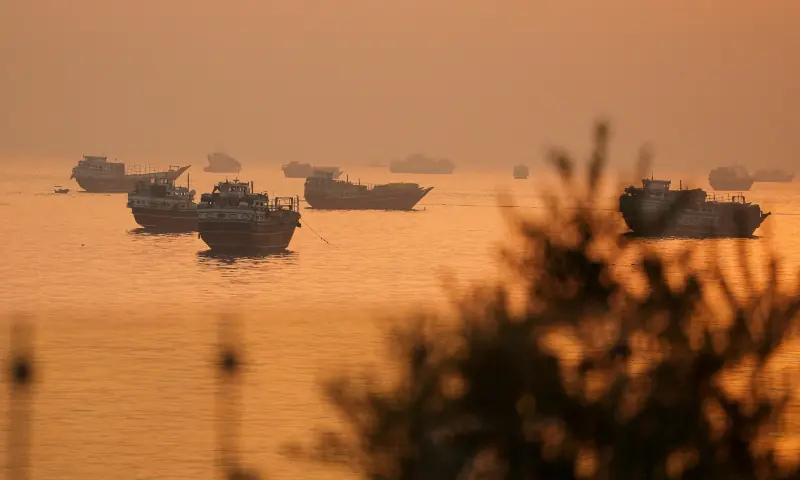
What happens when the Strait of Hormuz reopens?
The vital Strait of Hormuz shipping lane is expected to reopen on Friday after nearly four months, following the signing of a US-Iran agreement to end the Middle East war. AFP examines how the reopening could work and why a return to normal is likely to take time. Are ships ready? Once formal approval is given to reopen, stranded ships could theoretically begin to move through the strait almost immediately. Crews that have been idle for months will most likely have “performed regular onboard drills and maintained the ships’ machinery, technical installations and equipment”, Jakob Larsen, head of security at shipowners’ association Bimco, told AFP . However, some ships may require underwater hull cleaning to remove barnacles and other marine growth accumulated during the shutdown. The strait, through which roughly 20 per cent of the world’s crude oil supply normally transits, was effectively closed by Iran after it came under fire from the United States and Israel. About 500 ships and 20,000 seafarers have been stranded in Gulf waters, according to the International Chamber of Shipping, a maritime industry group. Who can pass? Operators are expected to proceed cautiously and insurers may even require naval escorts, according to Hugo Rousse of maritime tracking group AXSMarine. The first to cross the strait could be “shipowners who operate their own fleet” and those “not listed on a stock exchange”, he told AFP . “Given the elevated earnings still prevalent in the tanker sector, higher war risk insurance is unlikely to be an obstacle,” said Tim Smith, a director at maritime industry analysis firm MSI. Tankers linked to Kuwait, Iraq, the United Arab Emirates and Saudi Arabia are likely to be among the first to resume transits, said Arne Lohmann Rasmussen, an analyst at Global Risk Management. Must mines be cleared first? Iran has designated the central area of the strait as a mine danger zone. Until mines are cleared , “ships can use the coastal traffic zones which are mine-free but which are not well-suited to accommodate normal volumes of maritime traffic,” Larsen said. France and Britain have been working since March to assemble a coalition to remove mines and help restore shipping flows. The US has also requested “the deployment of mine-clearing capabilities”, a European source said on Tuesday, adding that French and German vessels had been mobilised for that purpose. Vessels at the Strait of Hormuz, as seen from Musandam, Oman, on June 16, 2026. — Reuters How long before a return to normal? Reopening the waterway will only be a first step. Crew changes are needed, disrupted supply chains restarted and strategic energy reserves replenished. Some tankers could take more than one month to reach Europe after the route reopens, according to Argus Media analysts. They estimated that it could take four to six months before crude export volumes return to their prewar levels. “Not everything will go back to normal with the snap of a finger,” Rousse said. He said some buyers have found alternative suppliers, including the US and Nigeria, and have established new shipping routes and commercial contracts. Will ships have to pay? US Vice President JD Vance told CNBC on Monday that there was an understanding with Iran that the strait would reopen “in a toll-free way for the long term”. Iran’s foreign ministry, however, said the deal would allow it to charge maritime service fees rather than imposing “tolls”. Such fees would put shipping companies in a bind, however, as it could mean transferring funds indirectly to Iran’s Revolutionary Guard.
17 Jun 2026

Autopsy report of nine-year-old girl killed in Chakwal CCD shooting reveals multiple bullet wounds
CHAKWAL: The post-mortem report of nine-year-old Hania Ahmed, an Australian national who was killed in a shootout in Chakwal on Wednesday night, has confirmed that she sustained multiple gunshot wounds. Adeel Ahmed, 39, his wife Dr Sidra Khan, their daughter Hania Ahmed, 9, and son Aafan Ahmed, 10, were shot at during a robbery when CCD personnel opened fire on their vehicle, mistaking it for that of robbers. As a result, Hania died on the spot, while Adeel and Aafan were critically injured. Dr Khan remained unhurt. The report, available with Dawn , reveals that Hania sustained 11 gunshot wounds. The post-mortem examination was conducted at the District Headquarters (DHQ) Hospital Chakwal on the night of June 11. “She was hit by five bullets, which appeared to have been fired from AK-47 rifles. The five bullets caused 10 wounds, as all of them passed through her body, leaving both entry and exit wounds,” a senior doctor at DHQ Hospital told Dawn . The report states that the examination began at 4:27am after the body had been shifted to the mortuary at 1:33am. Medical examiners found multiple wounds on the child’s chest, abdomen, thighs and left arm. The report notes that the injuries were consistent with firearm trauma. The report further states that the nature of the injuries indicated death caused by gunshot wounds. The killing of Hania Ahmed, which resulted from a case of mistaken identity by an officer of the embattled Crime Control Department (CCD), sparked widespread grief and anger in Pakistan and Australia. Meanwhile, in an audio message shared with Dawn , Adeel Ahmed, the father of the deceased, claimed they were hit by bullets fired from AK-47 rifles. “My daughter was martyred on the spot. CCD officers chased us, but luckily, I managed to escape. Had they caught up with us, they would have killed us all to cover up their crime,” he said. He further alleged that senior officials were attempting to shield the accused and were manipulating the investigation. “Two officials of the Australian Consulate visited us at the hospital and assured us of their full support. We do not need any financial assistance. All I want is for the accused who committed this brutality against us to be punished so that such incidents do not occur in the future,” Adeel said. “Look at the incompetence of the CCD personnel. When they saw that robbers were looting us, instead of waiting for the situation to unfold, they started firing. If firing was necessary, they should have done so after the robbers had finished their act. They are highly incompetent and lack professionalism,” he alleged. He further claimed that the robbers did not initiate firing; rather, firing was started by CCD personnel. “The robbers fired only two bullets before fleeing.” He alleged that the officer was not alone and that two to three officers had opened fire on them. “The government did not help us. We are not satisfied with the circumstances,” Adeel claimed in his audio message. Meanwhile, CCD Chief Sohail Zaffar Chatha vowed a transparent inquiry and swift justice into the fatal shootout. Chatha visited the bereaved family on Sunday evening and offered his condolences. He also visited Hania’s grave and laid flowers on it after offering fateha . Talking to reporters, Chatha termed the incident “highly shocking”. “The incident occurred during a raid when CCD officials responded to an ongoing robbery. Both robbers hid behind the car and an exchange of fire took place. The robbers escaped after the shootout, but CCD officials could not see them fleeing as they ran in the opposite direction of the street. The official used excessive force based on a misjudgement, which deprived us of an innocent and beautiful life,” he said. He maintained that his visit to the family was to assure them that the CCD would act as a neutral institution and would not shield its officials. The senior police official added that Section 302 of the Pakistan Penal Code, dealing with murder, had been added to the FIR and that the court would now decide the matter.
17 Jun 2026
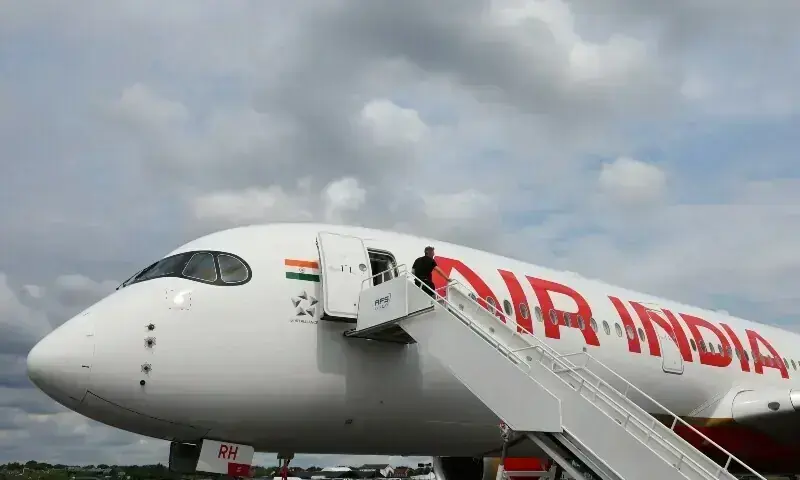
PAA extends airspace ban on Indian aircraft until July 24
ISLAMABAD: Pakistan has extended its airspace ban on Indian civilian and military aircraft for another month, until July 24, 2026, according to a Notice to Airmen (Notam) issued by the Pakistan Airports Authority (PAA) on Wednesday. The previous extension of the airspace ban was set to expire on June 24. “Pakistan has extended the air ban on Indian-registered aircraft till the morning of July 24,” the PAA Notam said. “The ban on Indian aircraft (both civil and military) will remain in effect from 5:50pm on June 16 to 4:59am on July 24,” the Notam added. The country’s airspace is divided into two flight information regions (FIRs) — Karachi and Lahore, according to a Pakistan Civil Aviation Authority (PCAA) document from 2022. The Notam applies to both the Karachi (OPKR) and Lahore (OPLR) FIRs. India and Pakistan closed their airspaces to each other’s airlines since late April 2025, when tensions between them escalated in the wake of a deadly attack in Indian-occupied Kashmir’s Pahalgam. On April 24, Pakistan’s top brass had announced a series of measures , including the closure of its airspace to all India-owned or Indian-operated airlines with immediate effect, as it retaliated against New Delhi’s slew of aggressive measures against the country. Since then, Pakistan has extended the ban several times. New Delhi, without evidence, had alleged that Islamabad backed the attack; however, Pakistan had strongly denied any involvement and offered a neutral probe . The nuclear powers had the fiercest air battle in May, in which Pakistan said it downed seven Indian fighter jets.
17 Jun 2026
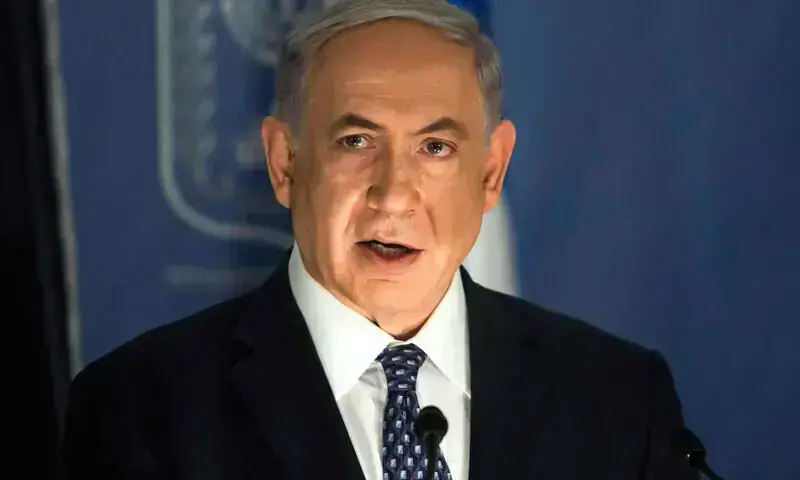
US-Iran deal a ‘political nightmare’ for Netanyahu, analysts say
WASHINGTON: The US-Iran agreement has placed Israeli Prime Minister Benjamin Netanyahu in one of the most difficult political positions of his career, leaving him squeezed between Washington, Tehran, domestic critics, and an approaching election. For decades, Netanyahu built his political identity around three interconnected themes: his ability to influence United States policy, his determination to confront Iran, and his reputation as Israel’s ultimate guarantor of security. The emerging agreement has now raised questions about all three. The deal leaves unresolved several issues Israel has long regarded as vital, including Iran’s ballistic missile programme , its support for regional allies such as Hezbollah , and key aspects of its nuclear activities. At the same time, sanctions relief could provide Tehran with significant economic breathing room. The New York Times noted that the agreement “omits some of the most important things Israel wanted” and observed that “Israel now finds itself counting the ways that Netanyahu’s grand strategy against Iran has failed”. Compounding the challenge is Netanyahu’s increasingly strained relationship with President Donald Trump. The Israeli leader has long presented himself as uniquely capable of shaping policy in Washington. Yet as negotiations progressed, Israel found itself largely on the sidelines while Trump openly criticised Netanyahu and moved ahead with diplomacy. The BBC described the agreement as a “ political nightmare ” for Netanyahu, arguing that it undermines the core pillars of his political career and long-standing strategic posture on Iran. CNN similarly called it “the moment Netanyahu has been dreading”. The Guardian highlighted the reversal in Netanyahu’s standing in Washington, describing the situation as a “ nightmare turnaround ”. Quoting Aaron David Miller of the Carnegie Endowment for International Peace, it noted, “No American president has ever talked to an Israeli prime minister the way Donald Trump has talked about Netanyahu.” Miller has also described the agreement as a “strategic defeat” for Israel, arguing that it reflects Netanyahu’s diminishing ability to shape US policy. A similar assessment came from the Atlantic Council , which said the agreement exposes a widening gap between US and Israeli priorities. According to its analysis, Washington’s shift toward an interim diplomatic arrangement leaves Netanyahu caught between US pressure to scale back military operations and demands from his governing coalition to maintain a hard line against Iran and its allies. The Centre for Strategic and International Studies (CSIS) likewise argues that the truce places Netanyahu in a politically precarious position ahead of Israel’s next election, as opponents portray the agreement as falling short of Israel’s security objectives and question whether the war achieved its stated goals. The New York Times further portrayed Netanyahu as trapped between competing pressures. “Effectively, Netanyahu appeared to have fallen into a trap,” it wrote. If he refrained from responding to Hezbollah attacks, critics at home could accuse him of weakness. If he retaliated, he risked being seen as trying to derail a US-Iran agreement that Trump was determined to secure. Whether that assessment ultimately proves correct will depend on the final terms of the agreement and the outcome of future negotiations. For now, however, the convergence of views from major international news organisations and leading Washington policy institutes suggests a shared conclusion: the agreement has left Netanyahu politically weakened, strategically constrained, and facing one of the most difficult periods of his long political career.
17 Jun 2026
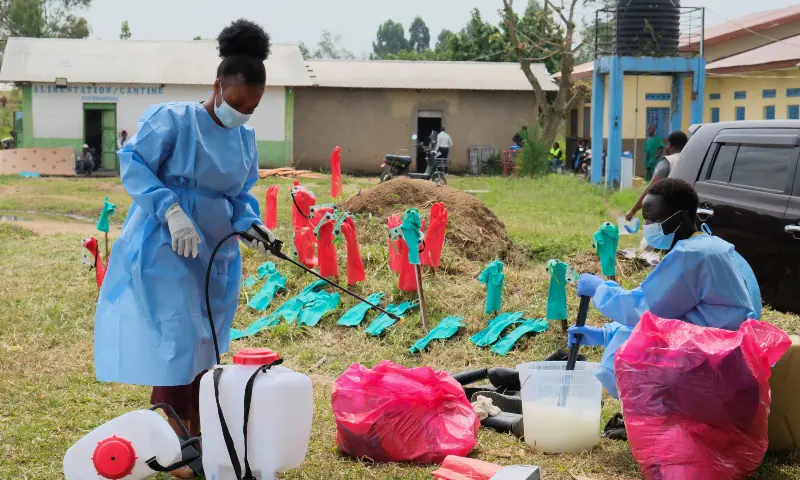
Congo Ebola response strained a month after WHO declares international emergency
Health workers battling an Ebola outbreak in eastern Democratic Republic of Congo lack the personnel to identify suspected cases, the ambulances to transport them and even the construction materials to build isolation wards, officials and aid workers told Reuters . A month after the World Health Organisation (WHO) declared an international emergency, the outbreak of the rare Bundibugyo strain has grown to more than 800 confirmed cases, with warnings mounting that it could become the worst on record, surpassing the 2014-16 West Africa epidemic that killed more than 11,000 people. Health teams are so stretched that tens of thousands of contacts of those cases remain untraced, Jean Kaseya, director general of the Africa Centres for Disease Control and Prevention, told Reuters , pointing to insecurity and the urban, mining-heavy setting of the outbreak as central obstacles. “After four weeks we have an outbreak in an urban area where there is insecurity, where there is this mining and trade activity, and also where we are not reaching all the people who must be in the contact list,” he said late on Tuesday. “If we don’t reach these people, we cannot say that we can win with this outbreak.” Patients escaping, left waiting Even the identified cases, which may represent just a fraction of the total due to insufficient testing and data gaps, are not always isolated and cared for, he said. “We have people who were admitted who decide to escape for many reasons. We have people who are positive who are not admitted. And we saw also a number of people who are admitted but we believe that they are not getting appropriate support,” Kaseya added. A WHO report showed roughly a third of the 241 alerts about new suspected cases in Ituri, the worst-hit province, were not being followed up as of June 14. Manel Rebordosa, the Oxfam Ebola response coordinator in the city of Bunia, told Reuters a woman with symptoms including fever and bleeding at a Rwampara medical centre he visited this week had been left waiting for hours. “They were calling the surveillance system but they didn’t show up as they cover many health zones and don’t have enough ambulances,” he said. Africa’s CDC said teams handling safe burials and decontamination in Ituri had only about 15 per cent of the required personnel and 7pc of the necessary vehicles in place. Congo’s health minister Samuel-Roger Kamba rejected suggestions that the outbreak was outpacing the response, telling a government briefing on Monday that the ministry had trained 1,200 community relay workers and deployed 1,000 of them to go door-to-door tracking contacts and suspected cases, with contact follow-up currently running at 63pc. However, response teams were facing a number of challenges on the ground. In documents shared with Ebola response teams in Ituri on Wednesday, the ministry highlighted issues including lost contact cases, patients moving across health zones, and a lack of fuel for mobile units. Resources needed for ‘almost everything’ Professor Salim Abdool Karim, who advises the Africa CDC and visited Ituri last week, said the biggest challenge was supplies. “There is a need for more resources of almost everything from PPE (Personal Protective Equipment) to gravel,” he said in a report he will present at an emergency meeting soon. Gravel shortages have delayed construction of isolation wards, he said, adding that prefabricated panels for walls, floors and roofs were lacking and that the absence of USAID dismantled by US President Donald Trump last year was noticeable. The US says it is the biggest donor to the response and has asked others to contribute. Medics lack masks, and dozens of them have caught the Bundibugyo strain, for which there is no proven vaccine or treatment. Africa CDC’s Kaseya said sometimes the needed supplies are “sitting somewhere in a warehouse”. The African Union says it has received only a fifth of the funding for its $518 million response plan and aid workers say donor support has fallen versus previous Ebola outbreaks. Asked if Western governments should do more, Kaseya said: “I think they are starting to understand that it’s serious.”
17 Jun 2026
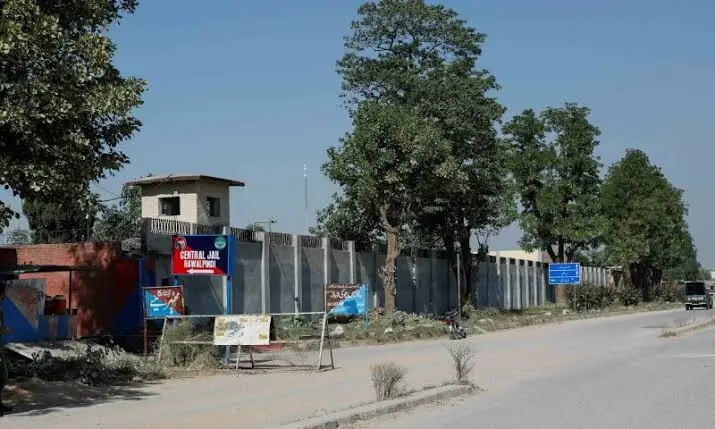
TTAP rejects PTI claims of no prior notice for 10,000-strong demonstration outside Adiala jail
ISLAMABAD: While the PTI leadership distanced itself from the call to gather 10,000 people outside Adiala jail on Tuesday, claiming that National Assembly Opposition Leader Mahmood Khan Achakzai did not inform them, the TTAP spokesperson rejected the claim. PTI founder Imran Khan’s sister Aleema Khan claimed a day earlier that she was approached by Achakzai and told that 10,000 people could gather outside Rawalpindi’s Adiala Jail — where the party founder is incarcerated — if a time was provided. “It had been decided that we will hold a sit-in from 3pm–7pm,” she said. However, PTI Parliamentary Leader in the National Assembly Shahid Khattak, talking to the media on the same day, rejected the suggestion that such an arrangement had been made. “Mahmood Khan Achakzai did not inform us that 10,000 persons had to be gathered; we could have gathered them. Even I could have brought 200 people,” he said. Khattak added that Achakzai should also have informed the party about the planned gathering so that it could mobilise people. On Wednesday, TTAP spokesperson Akhunzada Hussain Yousafzai rejected Khattak’s claims about planned protests outside the prison. “PTI leaders and members had repeatedly requested Opposition Leader Mahmood Khan Achakzai to announce a specific date and time for a protest or sit-in outside Adiala jail. They argued that a fixed schedule would enable them to mobilise and bring a large number of supporters to the venue,” he claimed in a statement. He further claimed that Achakzai conveyed the proposal to Aleema, and she agreed to the suggestion of staging a protest outside Adiala jail at a predetermined time. “During a joint parliamentary meeting of the Senate and the National Assembly held at Parliament House on June 11, which was attended by PTI’s parliamentary leadership, including Chairman Barrister Gohar Ali Khan and Parliamentary Leader in the National Assembly Shahid Khattak, participants were informed that Aleema Khan had endorsed the proposal for a scheduled protest outside Adiala Jail,” Akhunzada said. According to a statement issued by TTAP, the meeting was informed that Aleema had decided that the protest planned for Tuesday would conclude at a designated time. Akhunzada claimed that discussions and decisions had been shared with PTI’s parliamentary leadership and expressed concern over the subsequent remarks made by Khattak. Imran — imprisoned since Aug 5, 2023, for concealing details of Toshakhana gifts — is serving a 14-year sentence at Rawalpindi’s Adiala jail in a £190 million corruption case, also known as the Al-Qadir Trust case . The Islamabad High Court (IHC) has allowed the incarcerated ex-premier to have twice-a-week meetings — on Tuesdays and Thursdays — with his family, lawyers and other associates. Despite the order, Imran has been restricted from meeting visitors for several months. His eye ailment — right central retinal vein occlusion (CRVO) — came to light in late January. His first medical procedure was carried out on January 24, followed by a second dose on February 24 and a third dose on March 23. Over the past few months, the government and the opposition have been engaged in a blame game , with the latter accusing the former of a lack of transparency in not ensuring appropriate treatment for Imran, and not allowing his personal physicians access to him. The government denies these allegations. The opposition has also demanded that the former premier be shifted to Shifa International Hospital, be treated in the presence of his personal physicians and allowed to meet his family.
17 Jun 2026
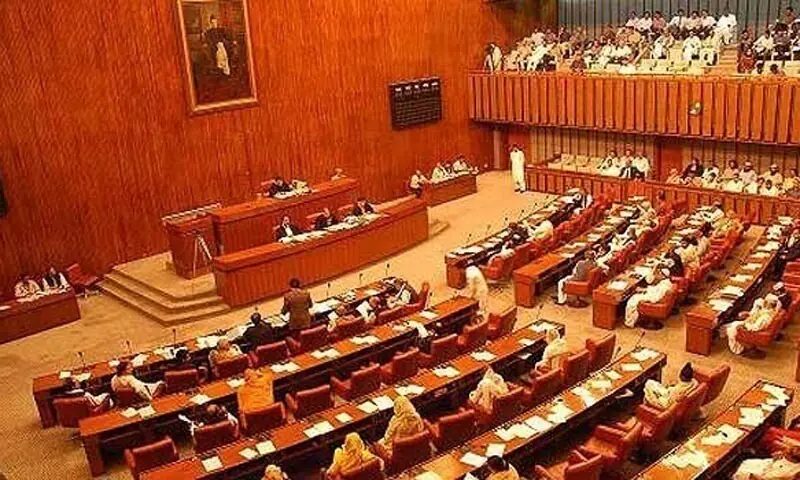
PPP lawmaker calls for separate South Punjab province in Senate
ISLAMABAD: As senators from the treasury and opposition traded accusations during Wednesday’s budget debate in the Senate, PPP Senator Rana Mahmoodul Hassan demanded a separate South Punjab province. “Seven million children are born in Pakistan annually, more than in all of Europe. What are we doing for their employment?” he asked during the budget debate in the House. The senator noted that when a province becomes too large, bifurcation becomes necessary. “We will not stay with ‘Takht-i-Lahore’. We want our province. We want separation from Punjab,” he said. He noted that Multan was historically the capital, and that Bahawalpur supported Pakistan at the time of its creation by paying salaries. He also demanded an industrial zone, a high court, and a separate share in the National Finance Commission (NFC) award for South Punjab, along with agricultural and IT universities. “Bilawal told us to fight for our province. Why is Seraikistan not being made a province?” he asked. Separately, an independent senator from Balochistan claimed that independent power producers (IPPs) were behind the reversal of the government’s solar policy. Senator Abdul Qadir said the government has to pay Rs1.8 trillion in capacity charges. He described IPPs as a “mafia that bulldozes every government” and challenged the government to conduct a forensic audit of IPP agreements. “Because of electricity, both the poor and the rich are suffering,” he said, adding that IPPs had even succeeded in getting the government’s approved solar policy reversed. PML-N Senator Abid Sher Ali said Prime Minister Shehbaz Sharif took charge when Pakistan faced the risk of being placed on the FATF grey list and a Sri Lanka-like situation. He said the premier “saved the sinking boat” and ensured stability and peace. He also criticised the PTI government’s economic team for changing four finance ministers in two and a half years and appointing Nadeem Babar — “who himself was an IPP owner” — as energy adviser. Ali accused the PTI of making a “deal on Kashmir” and releasing Indian Air Force pilot Abhinandan, and added Khyber Pakhtunkhwa had become a “haven for terrorism” under PTI rule. Another PML-N senator, Agha Shahzeb Durrani, alleged that PTI had started work on Pakistan’s denuclearisation. He added that the PTI had posted “corrupt FBR officers” to key posts, and the current government had removed them. The senator further said the PML-N government managed the petrol crisis well and had started work on doubling the size of the Karachi-Quetta highway. In May, a session of the Punjab Assembly erupted into chaos as PPP lawmaker Mumtaz Chang threatened to push for a separate Seraiki province and form an independent government if the grievances of his constituency continued to be ignored. In February, the in-charge of the Inter-Provincial Coordination Committee of the MQM-P, Zahid Malik, accused the PPP of adopting double standards on the issue, questioning why it supported new provinces in South Punjab but adopted a different stance on the matter when it came to Sindh and Karachi.
17 Jun 2026
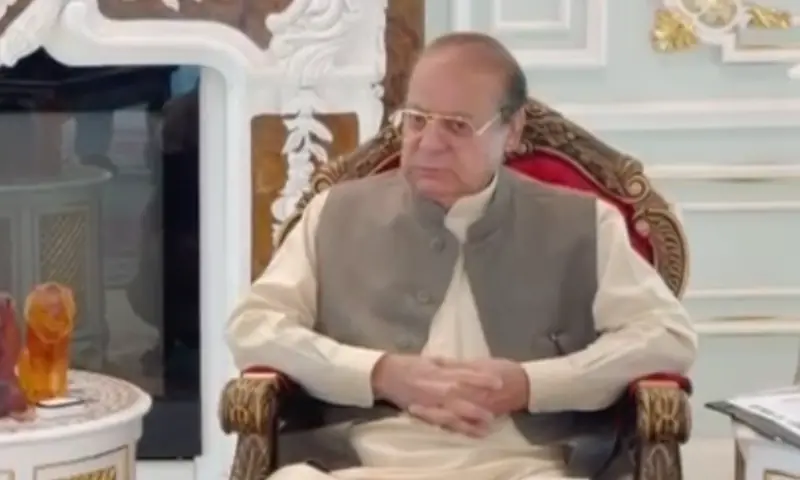
Nawaz urges AJK to end protests, sit-ins and engage in meaningful dialogue with govt
LAHORE: PML-N President Nawaz Sharif on Wednesday expressed concern over the political situation in Azad Jammu and Kashmir (AJK), urging protesters to end sit-ins and demonstrations and engage in meaningful dialogue with the government. “Under the Interim Constitution Act of 1974, the people of AJK enjoy full civil liberties and democratic rights. I urge them to end sit-ins and protests and instead engage in meaningful dialogue,” the elder Sharif said at a meeting in Lahore on Wednesday convened to deliberate the political and administrative situation in Kashmir. The meeting was attended by senior leaders of the PML-N from AJK. The PML-N central spokesperson and Punjab Senior Minister Marriyum Aurangzeb issued a statement after the meeting. The party’s AJK chapter had urged the three-time prime minister to address the emerging situation in Kashmir and play his role in resolving it. “I hope that the people of AJK, the AJK government, the government of Pakistan, and all political parties will collectively contribute to restoring peace in the region and advancing the electoral process,” Nawaz said according to the statement, referring to the AJK elections due at the end of next month. He also stressed that all available resources should be utilised for the welfare of the people of AJK, and that any movement for public rights should be conducted within the constitutional framework. Azad Jammu and Kashmir recently witnessed political and social tensions , including public protests over issues such as the 12 reserved refugee seats in the legislative assembly, inflation, electricity tariffs and the rising cost of living. Several people, including security personnel, lost their lives in clashes that erupted 10 days earlier. Tensions in the region persist. Taking stock of the situation, Nawaz said that PML-N had always maintained a clear and principled stance on the Kashmir issue. He reiterated that the people of the region should be granted their right to self-determination in accordance with the resolutions of the United Nations. “We have always prioritised the constitutional and fundamental rights of the people of AJK, as well as the region’s development and prosperity,” he said, and added the PML-N would continue to play its full role in cooperation with “all democratic forces”. The statement added that the party leader expressed deep sorrow over the loss of lives, including both officials and civilians, in recent incidents. “Such a situation should never have arisen. This country belongs to all of us, and we must live together as brothers,” he said, adding that the people of Kashmir had rendered unparalleled sacrifices for Pakistan. “Pakistan has always regarded the Kashmiri struggle as its own and has consistently supported it. I appeal to the people of Jammu and Kashmir to maintain their ideological and emotional bond with Pakistan and remain peaceful,” Nawaz said. Referring to the prevailing regional circumstances, he said that Prime Minister Shehbaz Sharif’s government and the country’s defence institutions had achieved remarkable successes. “In light of these achievements, there is a need to promote brotherhood, harmony and tolerance in both Pakistan and Azad Jammu and Kashmir,” he said and cautioned against becoming part of any activity that could undermine these objectives. Nawaz returned to Lahore yesterday after spending about three weeks in Switzerland and Saudi Arabia.
17 Jun 2026
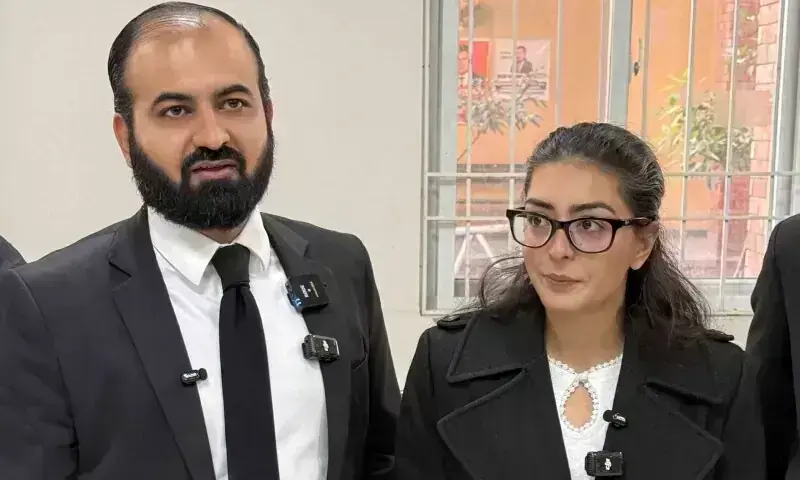
Imaan, Hadi seek early hearing of appeal against IHC decision in social media posts case
ISLAMABAD: Lawyers Imaan Zainab Mazari-Hazir and Hadi Ali Chattha filed a petition in the Supreme Court (SC) on Wednesday, seeking an early hearing of their challenge to a Feb 19 Islamabad High Court (IHC) decision in the controversial social media posts case. On Jan 24, an Islamabad sessions court sentenced Imaan and Hadi to a total of 17 years in jail on multiple charges under the Prevention of Electronic Crimes Act (Peca). In February, the IHC had denied the lawyers’ plea for suspension of their 17-year sentences under Peca. The controversy at the centre of the case stems from a complaint filed under Peca on August 12, 2025, by the NCCIA Islamabad assistant director (investigating officer) before the Cybercrime Reporting Centre, FIA. The complaint accused Imaan of disseminating and “propagating narratives that align with hostile terrorist groups and proscribed organisations”, while her husband was implicated for reposting some of her posts. Filed through senior counsel Faisal Siddiqi, the application on Wednesday sought the fixation of an earlier appeal challenging the sentence under Article 185(3) of the Constitution and requested a hearing next week. Although the high court issued notices to the respondents on the application, it did not suspend their sentences. “It is the settled policy of the Supreme Court that criminal matters were given priority, especially when the matters pertain to bail or suspension of sentence,” the new application said. It also highlighted Section 7 of the SC (Practice and Procedure) Act 2023, which states that any application pleading urgency should be fixed for hearing within a period of 14 days. Imaan and Hadi have been in jail since their arrest in January in a case registered against the two for protesting outside the IHC and allegedly manhandling the IHC Bar Association (IHCBA) president. While the arrest prompted criticism by rights bodies, politicians, and journalists, who stressed the couple’s right to a fair trial, a sessions court sentenced them to 17 years in prison in the social media posts case just a day after the development. The couple had challenged their conviction by filing separate appeals in the IHC on February 7. On April 30, they had moved another appeal in the SC, seeking an early hearing of their pleas against their conviction.
17 Jun 2026
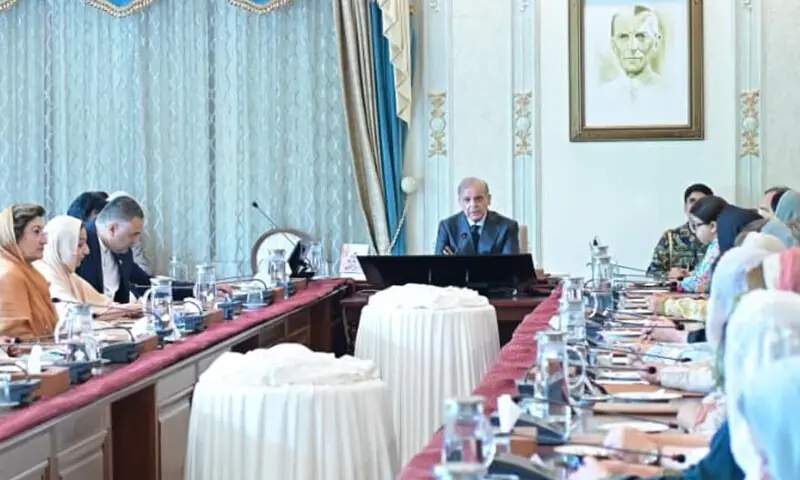
PM Shehbaz decides to transform govt's monitoring mechanism through real-time digital oversight
ISLAMABAD: Halfway through his 5-year constitutional term, Prime Minister Shehbaz Sharif has decided to transform the government’s monitoring mechanism through real-time digital oversight to improve service delivery and public perception. The step is a part of the Digital Nation Pakistan Initiative, whose monitoring model has already been finalised by the Pakistan Digital Authority (PDA). The initiative coincided with media reports about a potential reshuffle in the federal cabinet after the federal budget 2026-27 is passed by the parliament later this month. In a press release issued on Wednesday, the Press Information Department (PID) said that Economic Affairs Minister Ahad Cheema chaired a meeting “to review the Prime Minister’s Office System (PMOS), an innovative AI-powered platform designed to strengthen governance, enhance coordination and improve monitoring of government initiatives across ministries and departments”. Information Technology Minister Shaza Fatima Khawaja, Secretary IT Zarrar Hasham Khan, Chairman PDA Sohail Munir, and senior officers of the Prime Minister’s Office (PMO) and relevant ministries attended the review session. During the meeting, officials from the PDA presented a comprehensive demonstration of the PMOS, the release added. “The participants were briefed on the system’s advanced features, highlighting its ability to connect all federal ministries with the Prime Minister’s Office through a centralised digital platform,” the statement said. It added that the “system enables real-time monitoring of tasks, projects and milestones, ensuring greater transparency, accountability and efficiency in government operations.” The participants were informed that directives issued by the PMO would be communicated instantly to the relevant ministries and departments through the platform. “The system will also facilitate immediate progress tracking and performance monitoring, allowing decision-makers to remain updated on the status of key assignments and initiatives.” Elaborating on the key features of the system, the PID said that PMOS has an automated alert mechanism, which highlights overdue tasks through pop-up notifications on the accounts of federal secretaries and other concerned officials. “This feature is expected to significantly improve the timely execution and follow-up of government directives.” The meeting was also briefed on a sovereign AI-based GPT-powered research system developed by the PDA, the statement said, adding that the tool had been designed to support internal research by utilising previous directives, decisions and official orders, enabling faster access to institutional knowledge and informed decision-making. It further said the GPT system would also act as a virtual assistant for government officers, with a proper understanding of official procedures and workflows. “It will be capable of assisting in and completing official tasks assigned by officers through the use of artificial intelligence, thereby enhancing productivity, efficiency and service delivery across government departments.” Meanwhile, Cheema appreciated the efforts of the PDA in developing the AI-powered PMOS and acknowledged its potential to modernise public sector governance, directing the relevant stakeholders to “further refine and enhance the system to ensure maximum effectiveness, user-friendliness and operational efficiency before its wider implementation,” the release said. “Pakistan is progressing towards an AI-based digital governance system aimed at improving efficiency, transparency and public service delivery,” the minister was quoted as saying. “The Prime Minister’s Office System (PMOS) will serve as a key facilitator in the implementation of the National Digital Masterplan by strengthening inter-ministerial coordination and digital integration,” he added. Cheema stated that citizen-focused digital services, already being delivered through platforms such as Asaan Khidmat Markaz and other digital forums, were part of the government’s broader reform agenda. “Initiatives such as digital tax enforcement systems and other technology-driven governance solutions would continue to expand, contributing to a more modern, responsive and accountable public sector,” he said. The meeting concluded with a commitment to leveraging digital technologies and artificial intelligence to strengthen governance, improve service delivery and promote a more responsive and accountable government framework, the press release said.
17 Jun 2026

Former cricket captain Shahid Afridi visits UN, appreciates Pakistan's diplomatic engagement
Former Pakistan cricket captain Shahid Afridi on Wednesday visited the United Nations (UN) Headquarters in New York and appreciated the Pakistan Mission’s constructive role in fostering dialogue and settling disputes peacefully. In a statement shared on X, the Permanent Mission of Pakistan to the UN said, “Former Pakistan cricket team captain and celebrated all-rounder Shahid Afridi visited the UN Headquarters in New York at the invitation of Ambassador Asim Iftikhar Ahmad, the permanent representative of Pakistan to the UN.” During the visit, Ambassador Ahmad briefed Afridi on the work of the mission, including “Pakistan’s active engagement at the UN in advancing multilateralism, promoting dialogue and diplomacy, and contributing to international peace and security,” the statement said. It added that Afridi “expressed appreciation for the mission’s important work and its constructive role in fostering understanding, dialogue and multilateral cooperation among nations, and advocating the peaceful settlement of disputes”. Meanwhile, the former skipper was given a tour of the UN Headquarters and also briefed on its work and its role in promoting international peace, security, sustainable development and multilateral cooperation, the Mission stated. In a meeting held at the UN headquarters, Ambassador Ahmad welcomed Afridi and commended him for his outstanding contributions to Pakistan cricket and for bringing joy to millions of cricket fans around the world through his dynamic performances and powerful stroke play, it said. The ambassador also appreciated Afridi’s humanitarian and welfare initiatives. “These projects have positively impacted the lives of many people, particularly in underserved communities,” Ambassador Ahmad was quoted as saying. According to the mission, Ambassador Ahmed also underscored the importance of sports as “a powerful instrument of diplomacy that transcends borders, fosters mutual understanding, and brings nations and peoples together”. “He noted that sports can serve as an effective platform for promoting peace, goodwill and international cooperation.” “The visit reflected the shared recognition of the positive role that sports and diplomacy can play in building bridges between peoples and promoting a more peaceful and cooperative international environment,” the statement concluded. Meanwhile, in a social media post on X, Afridi expressed his gratitude for Ambassador Ahmad and the mission for their “warm hospitality”. “It was a pleasure to engage in meaningful discussions on Pakistan’s role on the global stage and the opportunities to strengthen our nation’s positive impact around the world,” he stated. “Proud to see Pakistan represented with such dedication and distinction.” A prominent all-rounder and seasoned sportsman, Afridi, has represented Pakistan in all three formats of the game, featuring in 398 One-Day Internationals, 99 Twenty20 Internationals and 27 Test matches. Having earned the title of ‘Boom Boom’ and retiring from international cricket in 2017, Afridi has been engaged in philanthropic work and also founded a social welfare organisation, the Shahid Afridi Foundation.
17 Jun 2026
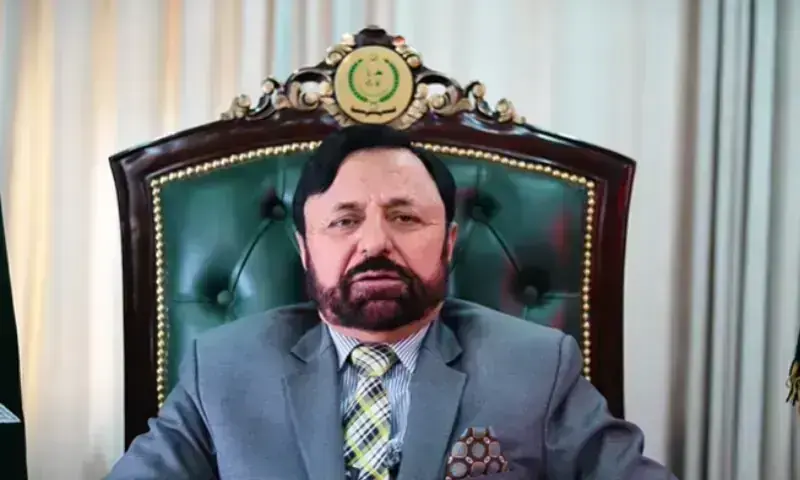
PPP secures 11 seats as GB election chief decides remaining election petitions
GILGIT: Gilgit-Baltistan Chief Election Commissioner (CEC) Raja Shahbaz Khan on Wednesday announced decisions on three pending election petitions, giving the PPP 11 seats. The election chief declared PPP candidate Attaullah the winner from GBA-16 Diamer-II, PML-N candidate Malik Kefayat from GBA-17 and PML-N candidate from GBA-13 Astore-I. The rival candidates had filed petitions with the GB Election Commission, challenging the Form-47 results. After hearing arguments from both sides, CEC Raja Shahbaz Khan had suspended the results and reserved his verdict on the petitions. With the announcement, the PPP has secured 11 seats, the PML-N has secured six, independent candidates — who joined the Istehkam-e-Pakistan Party (IPP) a day earlier — have won four, PTI-backed candidates have won two and the Majlis Wahdat-i-Muslimeen has secured one seat. The GB CEC said the notifications for the successful candidates would now be issued. He said six seats reserved for women and three technocrat seats would be distributed among parties according to the number of their seats after the official notification. It is worth mentioning that the supporters of the independent candidate in GBA-16, Imam Malik, had been protesting by blocking the Karakoram Highway at Chilas and demanding re-polling at specific stations. The GB CEC had earlier ordered re-polling at three stations in GBA-16 but had later rescinded the decision. He had also deferred results for GBA-13 Astore-I and GBA-16 Diamer-II till June 17 (today). According to the Election Commission, the Gilgit-Baltistan Assembly elections held on June 7 witnessed a high voter turnout of 70 per cent, which the CEC had earlier described as a reflection of the public’s deep confidence in the democratic process. However, the Human Rights Commission of Pakistan (HRCP), which observed the elections and had withheld its assessment pending recounting processes and the final consolidation of results, has expressed serious concern over the Election Commission’s decision to suspend re-polling in five constituencies shortly after ordering it and to proceed with the announcement of final results. According to a statement issued by the HRCP on Monday, the initial decision to hold re-polling had prompted some opposition parties and candidates to allege that recounting and related measures could be used to influence electoral outcomes and shape the formation of the government. The commission said that abrupt changes of this nature risk reinforcing existing perceptions of political interference and undermining public confidence in the electoral process and its administration.
17 Jun 2026
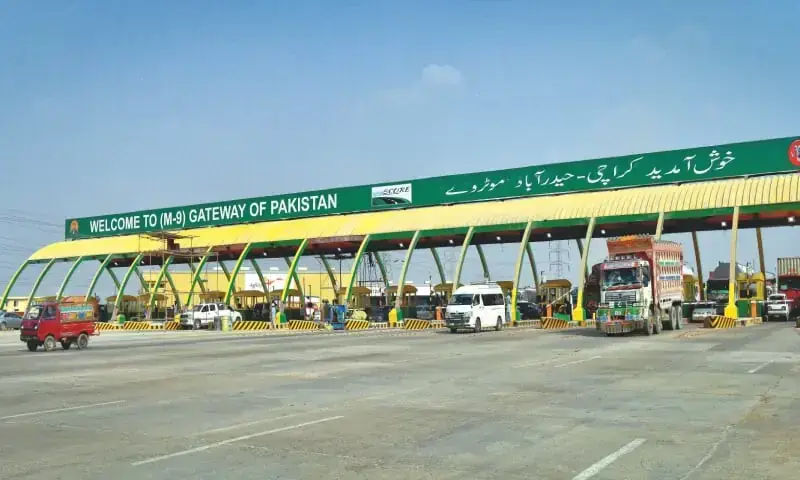
Motorway police make fire extinguishers mandatory for all vehicles
The National Highway and Motorway Police (NHMP) on Wednesday made it mandatory for all vehicles, especially passenger and cargo vehicles, to carry a working fire extinguisher as it announced stricter fire safety rules for commuters. In a statement, an NHMP spokesperson said that all vehicles, especially passenger and cargo vehicles, must carry a working fire extinguisher. “These special safety measures are being implemented to prevent fire hazards during accidents,” the spokesperson said. It said that after June 24, vehicles without an active extinguisher will face strict legal action. Entry of cargo and public service vehicles without a fire extinguisher will be banned at motorways and national highways, the spokesperson said. The spokesperson said that for the sake of public awareness, the motorway police were carrying out a nationwide fire safety campaign till June 24. Drivers were urged to make sure that the fire extinguisher they were carrying was not expired. Expired or non-working units will not be accepted, the spokesperson said. The development comes a week after at least 10 people were killed and 13 others injured when a fire broke out in a van after it fell into a nullah while negotiating a turn on the Islamabad-Murree Expressway near Khajut.
17 Jun 2026
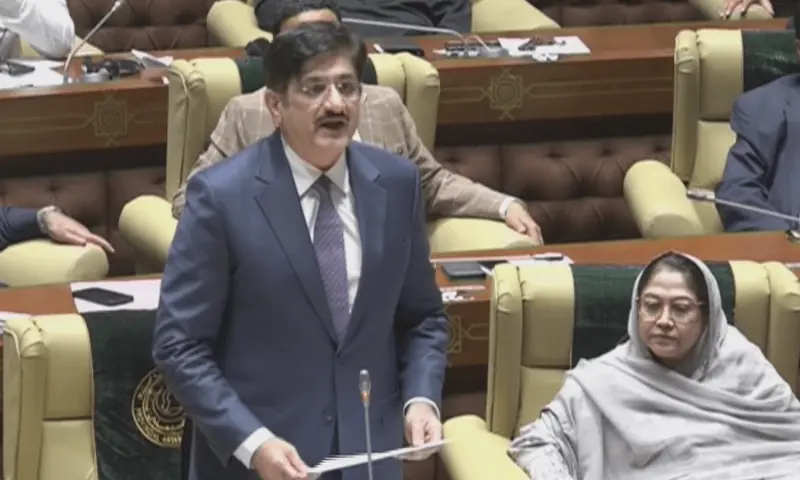
Sindh cabinet approves provincial budget ahead of presentation in assembly
The Sindh cabinet on Wednesday approved the proposed provincial budget for fiscal year 2026-27, state broadcaster PTV reported. It was approved in a session chaired by Sindh Chief Minister Murad Ali Shah, who said that every class had been catered to in the proposed budget and steps were being taken to eradicate poverty from the province, PTV said. The report added that the Sindh government also decided on the minimum wage for workers in the budget. CM Murad, who also holds the portfolio of the finance department, is set to present the province’s budget during the Sindh Assembly session later today. More to follow.
17 Jun 2026
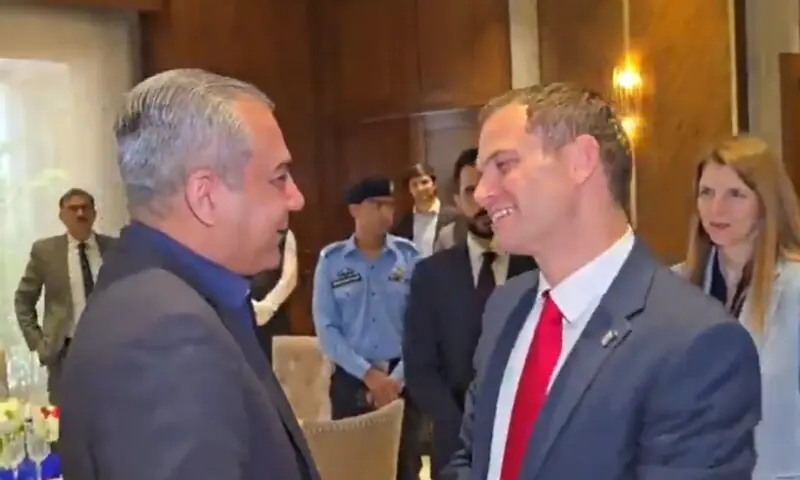
Pakistan, UK agree to expand cooperation on counterterrorism, illegal migration
ISLAMABAD: Pakistan and the United Kingdom on Wednesday agreed to enhance cooperation in counterterrorism, combating illegal migration and human smuggling, institutional collaboration and police training. The understanding was reached as Interior Minister Mohsin Naqvi met British Minister of State for the Middle East, South Asia and the UN Hamish Falconer According to the interior ministry, Falconer appreciated Pakistan’s “positive and significant” role in facilitating the US-Iran peace deal. “Pakistan’s Prime Minister Shehbaz Sharif and Field Marshal Asim Munir played a historic role for peace,” it quoted Falconer as saying. “The US-Iran peace deal has projected Pakistan as a flag-bearer of global peace,” he added. According to the statement, the two leaders also agreed on “enhancing cooperation between the two countries in various fields, including counterterrorism, combating illegal migration, institutional collaboration, and police training”. “Positive results are emerging from the UPSCALE Project and the capacity of Pakistani institutions has improved significantly,” the ministry quoted Naqvi as saying. During the meeting, the interior minister assured that “indiscriminate action was being taken against illegal migration and human smuggling in Pakistan,” it stated. Meanwhile, the two leaders also discussed Pakistan-UK relations and the overall regional situation, the ministry said. “Naqvi reaffirmed Pakistan’s commitment to further strengthening relations with the UK,” the statement said. “Both leaders agreed to work together to address the issue of fake student visas,” the statement said. “Naqvi also emphasised that several terrorist organisations were operating from Afghanistan, and the Afghan government must prevent its territory from being used against Pakistan,” the ministry said. In a meeting with Deputy Prime Minister and Foreign Minister Ishaq Dar earlier this week, Falconer had acknowledged that Pakistan has the right under international law to defend itself against attacks originating from Afghanistan. A day earlier, he had also announced an additional £8 million to support joint UK-Pakistan efforts to combat crime and illegal migration.
17 Jun 2026
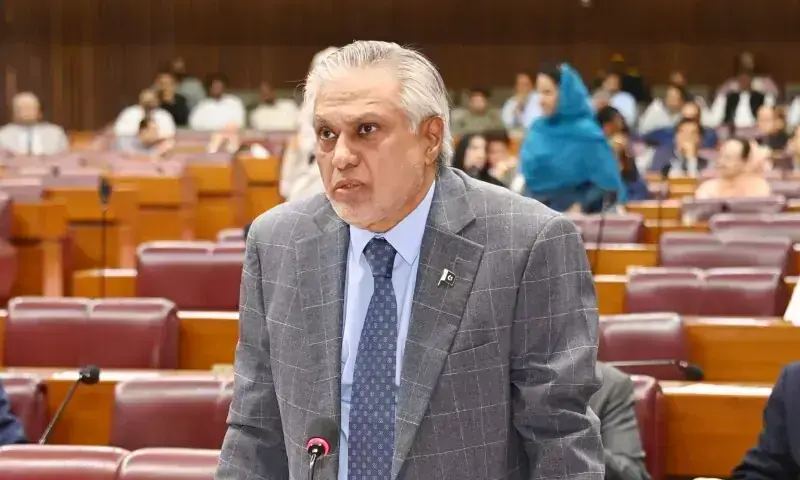
DPM Dar says Pakistan facilitating repatriation of 30 Iranian fishermen, sailors
Deputy Prime Minister and Foreign Minister Ishaq Dar said on Wednesday that Pakistan was “pleased to facilitate the repatriation of 30 Iranian nationals”. In a post on the social media platform X, he said that this number included “eight Iranian fishermen rescued at sea by the British vessel MMA Valour after their boat ran aground, and 22 Iranian crew members from the vessel Lenore/Davina, recently interdicted by US authorities”. “Both groups are expected to transit through Karachi in the coming days,” he said. “We remain in close coordination with the Iranian, United States and United Kingdom authorities to ensure the safe transit and early return of our Iranian brethren to their homeland. Pakistan remains committed to humanitarian cooperation and to extending every possible assistance to our Iranian brothers,” he said. Earlier this month, US forces conducted an interdiction of the sanctioned oil tanker Davina in the Indian Ocean, the US military’s Indo-Pacific Command, which has now reverted back to the name Pacific Command, said. The Davina, a supertanker capable of carrying up to two million barrels of crude oil and also known as the Lenore, was placed under US sanctions in October 2024 for Iranian oil trading, according to ship tracking data. The vessel’s draft indicated that it was almost fully laden with an oil cargo, separate shipping data showed. In May, Pakistan — which is playing the role of mediator between the US and Iran amid the conflict in the Middle East — had facilitated the return of crew members from a US-seized Iranian vessel. The crew were part of a group of 22 people, transferred to Pakistan following their release. According to the Foreign Office, the transfer of crew members was part of “confidence-building measures”. Additional input from Reuters
17 Jun 2026
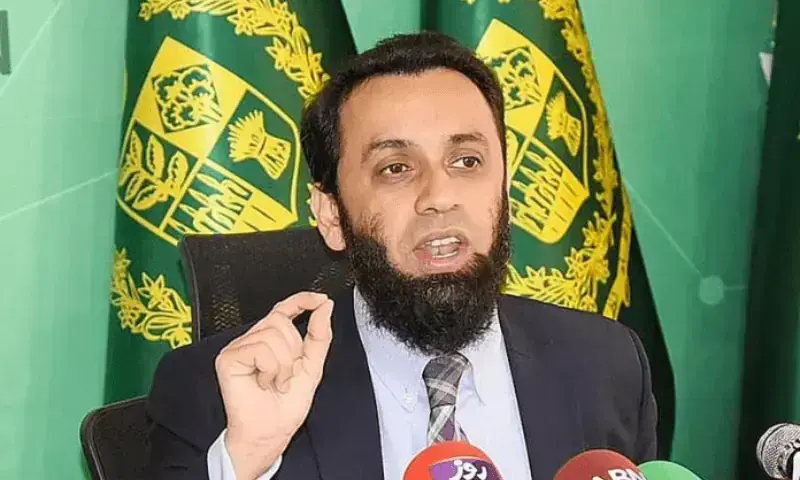
Info minister terms FY2027 budget 'relief-oriented'
Information Minister Attaullah Tarar said on Wednesday termed the federal budget for the upcoming fiscal year “relief-oriented”. He made the remarks while speaking to the media alongside State Minister for Finance Bilal Azhar Kayani. At the outset, the information minister said that certain segments were criticising for the sake of criticising. “When Pakistan was on the brink of default … our macroeconomic indicators were at their lowest,” he said. He alleged that some government officials “went on holiday”, saying that they did not want the country to default during their tenure. He recalled that at the time, no one was ready to work on the economy. “In such a time, it was the leadership of PML-N which stepped in and stabilised the economy as per the vision of Nawaz Sharif,” he said, recalling that when Prime Minister Shehbaz Sharif took charge of the government, several difficulties came up at the time as well. More to follow
17 Jun 2026

Scooty for the beti and EV for the biwi
Esha named her scooty Riri, after herself. It cost Rs420,000 and she hasn’t spent a rupee more since on transport. Every time the scooty hums to life—when the 22-year-old leaves for classes at the College of Electrical & Mechanical Engineering—heads turn. “My friends think it’s cool,” she says. “Young women light up in public. They say it looks easy to handle.” Their reaction means everything to her. In a country where a woman’s movement is still being negotiated, the sight of a young woman riding an electric bike is its own argument. Esha has thought carefully about why that argument meets resistance. “One, the upfront cost. But honestly, why would a family invest in a scooty for their daughter when bhai is around as a free drop service?” she says. The second resistance comes from the feeble ‘ log kya kahenge ’ and ‘ kuch ho jayega road pe ’ fear. And lastly, Esha believes that women’s independence makes men uncomfortable. “The control only works when we’re dependent,” she adds. The economics of freedom are hard to argue with, though. Pakistanis have, in the last year or so, been floored by soaring petrol prices that electric two-wheelers are beginning to find their riders. A monthly fuel bill of Rs12,000 has doubled now. For Esha’s family, the math resolved itself: a steep upfront cost, undeniable long-term savings, a lighter machine that felt safer on the road. She charges the bike every night for a fraction of what petrol would cost, riding more than 60 kilometres without stopping at a pump or asking for a lift. “My family is supportive because they know I’m safe,” she says. Sana, 24, a NUST student from DHA Rawalpindi, came to the same conclusion but through a different door. She didn’t choose her electric scooty because it was trendy. Petrol bikes frightened her: the weight, the kick-start, the quiet dread of breaking down alone. But the scooty felt like something she could manage on her own, without depending on anyone. There’s also a physical safety consideration. “My engineers who wear abayas have suggested designing scooters because they are easier to ride in modest clothing and are socially perceived as more appropriate,” says Dr Azir of the Institute of Energy, Climate and Equity at the University of Lahore. The market was listening. Whether policy has caught up is another matter. Policy: promise and gap The federal government’s PAVE initiative has set an ambitious target: 116,000 electric bikes and 3,000-plus rickshaws for the current fiscal year, a 30 per cent EV sales target by 2030, and a Rs2.5 per litre levy on petrol to fund subsidies. Minister of State Dr Shezra Mansab Ali Khan Kharal says the government is encouraging the provinces to launch women-specific mobility schemes, including subsidised scooters and concessional loans. The on-ground reality has been considerably more modest. As of the last reported period, only 5,409 units had been distributed—roughly 4.5pc of the annual target. Commercial banks approved only around 9pc of EV loan applications, rejecting the rest. Evee showroom in Islamabad In a painful irony, the levy funding EV subsidies falls disproportionately on petrol and diesel consumers—who tend to be middle and lower-income—to subsidise a technology that benefits higher-income buyers more. Structural fixes are underway, including a model according to which people pay the subsidised price directly, and a Rs10,000 upfront scheme for lower-band government employees. But these options assume a person is formally employed and have institutional legibility that many workers do not. The recently announced federal budget offered a modest boost to Pakistan’s electric two-wheeler market by extending existing incentives on completely knocked-down (CKD) kits for electric bikes, three-wheelers and other EVs until June 30, 2027. This means local assemblers can continue importing EV components at concessional duty rates, helping keep prices lower for consumers. The budget introduced no new taxes on electric bikes. While these measures provide stability for the sector, the distributional impact of the budget remains largely unaddressed, raising the question of who actually benefits from it. Every year, the budget is presented, yet little attention is paid to its distributional consequences. For those who already cannot afford an electric bike, the budget does not reduce the upfront costs that keep electric mobility out of reach for many low-income consumers. The extension may ease costs for manufacturers, but its benefits are not guaranteed to reach consumers. On the other hand, Pakistan has nearly 30 million petrol motorcycles which eat up about 40pc of national petrol supplies, draining roughly $6 billion annually in imported fuel, according to Federal Energy Minister Awais Ahmed Leghari. Class, charging, and the limits of revolution Forty kilometres from where Esha rides, Nazia, 30, a house helper from Rawalpindi, makes the same daily commute on a petrol bike that belongs to her brother. She leaves at 8am and returns by 6pm, spending around Rs700 on fuel, contending with pump queues where men stare and workers are hostile, with no slack in her system if she arrives late. The brother gave her the bike out of necessity—he plays snooker while she earns for the household—and taught her to ride it only after she insisted. The daughter of one woman Nazia works for recently bought a beautiful red Honda electric bike. Nazia has thought about this. “Forget buying, even the showrooms feel out of reach,” she says. She has never gone inside one. The batteries don’t last, “like phone batteries” and she cannot afford to be stranded mid-shift. The higher electricity bill from overnight charging, layered onto a household without solar panels and a cost of living already at its limit, produces a dread that subsidised purchasing schemes do not address. And there is so much English written on electric bikes. She doesn’t think she would be able to understand the instructions herself. Nazia is not resistant to electric bikes. She simply doesn’t trust a technology she cannot decipher, afford, or get repaired, in a city without charging stations, while working a job that allows no margin for mechanical failure. Nazia with her brother’s Super Asia CD 70 In Karachi, journalist Anum Razzaque expressed the same hesitancy. “The city’s broken roads, long travel distances, lack of charging stations, and the high cost of batteries make petrol bikes feel far more practical and reliable,” she says. “Even a few minutes of rain can be a problem if the bike shuts off, and without mechanics available, I wouldn’t know how to restart it.” This is not a niche concern. Usama, 28, Islamabad, Yadea Dealer, one of the country’s more established EV brands, says the biggest challenge in Pakistan right now is the charging infrastructure. Electric bikes are better suited to smoother urban surfaces. A just transition or just a transition? On paper, the principles are simple enough: the costs and benefits of an energy shift must be shared fairly, with no one left carrying a disproportionate load. Pakistan’s EV moment, as it stands, hasn’t cleared that bar. Yet inclusion alone won’t resolve the deeper structural question Dr Azir raises: who gets left behind? Without deliberate policy, he warns, the transition fractures into two lanes—one fast and paved for the wealthy, the other a dead end. Pakistan has already rehearsed this inequality. The Audi e-trons arrived first, priced for drawing rooms rather than daily commutes. The technology eventually trickled down. Equity, however, rarely follows uninvited. The fault lines are already forming: rural women excluded as charging infrastructure clusters in major cities; low-income buyers hitting financing walls; informal workers rejected by credit systems built for salaried employees; women without digital banking locked out of app-dependent mobility platforms altogether. And underneath it all, a slow-burning time bomb—battery replacement costs that could convert today’s savings into tomorrow’s debt. Esha with her electric bike Harder still, there are the workers nobody is talking about: petrol pump operators, motorcycle mechanics, station attendants—an entire informal economy quietly facing obsolescence. A genuinely just transition would bring them into the room: converting petrol stations into hybrid energy hubs, reskilling mechanics for EV maintenance, building Urdu-language, audio-guided service infrastructure that women like Nazia could actually navigate. Because transitions, like roads, are never neutral. They are built by someone, for someone. And that someone determines everything that follows. There is a deeper contradiction beneath it all. A scooty charged on a coal-powered grid is not a clean solution; it is a cleaner one. Electrifying transport without decarbonising generation merely shifts dependence; it doesn’t end it. Solarised rooftops, distributed renewables, a genuinely greening grid are not footnotes to the EV story, they are its spine. Pakistan’s ambitions, to be fair, are not small. Climate Change Minister Shezra Mansab Ali Khan Kharal points to over 33 GW of installed solar capacity and a pledge to cut carbon emissions by 50pc by 2035. But ambition and architecture are two different things and the gap between them is where the most vulnerable tend to fall. The electric scooty will not fix Pakistan’s roads, its grid, its gender politics, or its economy. But in the hands of the right policy, the right infrastructure, and the right intent, it could offer something this country has rarely delivered to its women with any consistency: the simple, radical freedom of going where you need to go—charged, unaccompanied, and entirely on your own terms. Header image: Esha, her electric scooty, and Daisy. — all photos by authors
17 Jun 2026
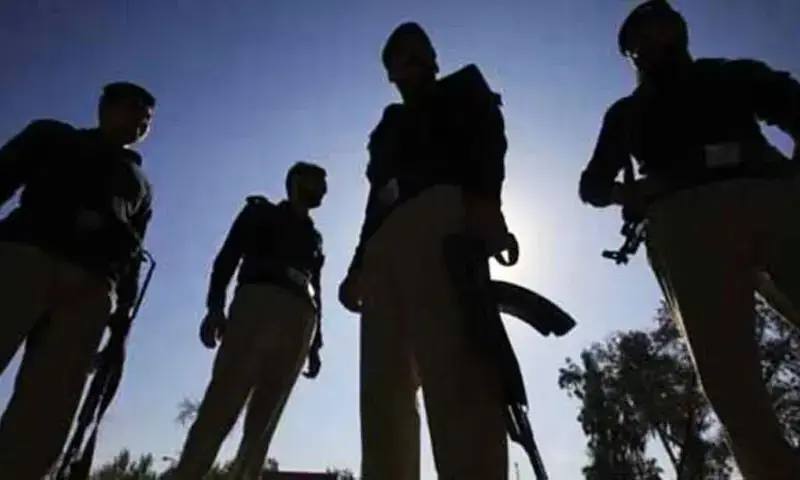
6 suspected terrorists killed by KP CTD in 2 separate operations
Six suspected terrorists were killed by the Khyber Pakhtunkhwa Counter Terrorism Department (CTD) in two separate intelligence-based operations. According to two separate press releases issued by the CTD late Tuesday night, the suspected terrorists belonged to Fitna al-Khawarij — a term the state uses for terrorists belonging to the banned Tehreek-i-Taliban Pakistan. The first statement said the Kohat CTD received information from sources, indicating that terrorists were hatching a plot and had established a checkpoint on the Shakardara Road in an attempt to obstruct the movement of law enforcement personnel. The statement said that upon receiving the information, a Special Weapons and Tactics (Swat) team reached the location, at which the “terrorists opened indiscriminate fire on the CTD personnel”. “In the ensuing exchange of fire, three Fitna al-Khawarij terrorists were killed. Three Kalashnikovs, nine magazines and multiple rounds of ammunition from their possession,” the statement said, adding that other accomplices had managed to flee the scene. A separate press release said that the Mardan CTD received information that a “group of Fitna al-Khawarij terrorists was moving from Mohmand district into Charsadda for carrying out terrorist activities”. “Taking immediate action on this information, teams were deployed to arrest the terrorists by laying an ambush at Shabqadar, Charsadda,” the statement said. However, the terrorists opened fire on the CTD personnel, leading to an “intense exchange of fire”, the statement said. Once it was over, a search operation was conducted and three terrorists were discovered dead, it said. “The slain terrorists included Hayat Khan alias Hayatullah, Asim and Aminullah alias Muawiya alias Qari,” the statement said. “According to preliminary investigations, the terrorists were wanted in multiple terrorism and targeted killing cases,” the statement said. It added that the first was a proclaimed offender and wanted in the targeted killing of religious scholar Maulana Izzatullah, while the second was allegedly involved in attacks targeting police personnel and religious leaders in Khyber district. The statement said that officials recovered three Kalashnikovs and hand grenades from the terrorists, adding that a search operation was ongoing to apprehend those who had escaped.
17 Jun 2026
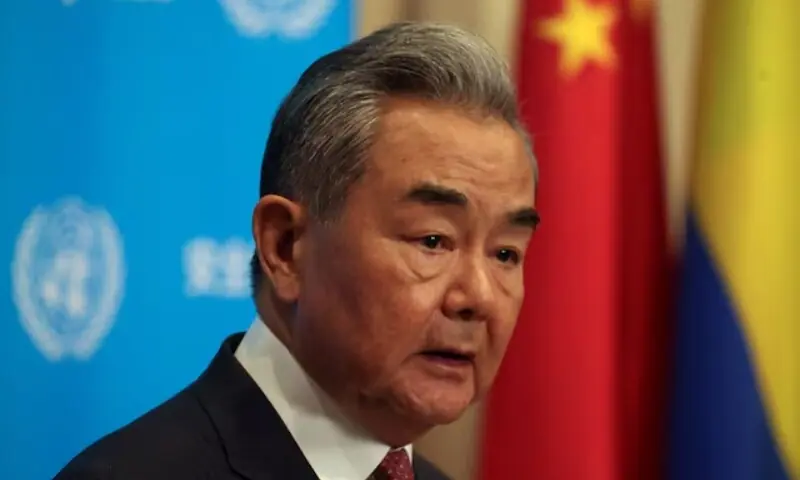
China calls for more Global South voices to be heard at United Nations
Emerging markets suffer from inadequate representation at the United Nations (UN), its authority increasingly challenged by escalating political and economic disputes worldwide, Chinese Foreign Minister Wang Yi said on Wednesday. The comments, featuring brief mention of the Middle East and Ukraine conflicts but few details, came in a rare press briefing in Beijing for the issue of a white paper outlining ways to make global governance more just and equitable. “Countries, whether large or small, strong or weak, developed or developing, are equal members of the international community,” Wang said, calling for more voices to be heard from the Global South. New challenges in quick succession bring intertwining global crises, Wang said, adding, “The ship of civilisation has entered dangerous waters with hidden reefs and violent storms.” The disputes reveal deep-seated conflicts, while “black swan and grey rhino events” emerge continually, he said, referring to unexpected events or threats that are ignored despite their visibility. Wang urged efforts to commit firmly to a ceasefire in the Middle East, calling on all parties to work towards laying the foundation of a “sustainable security architecture in the region”, the official Xinhua news agency said. The white paper aims to build international consensus on effective responses to global challenges, Wang said, and upholding the United Nations’ authority and status is fundamental to the success of the initiative.
17 Jun 2026

Elon Musk's AI tool Grok was used in strikes against Iran: US govt
Elon Musk’s artificial intelligence tool Grok was used in strikes against Iran, the United States government revealed in a legal briefing seen Tuesday by AFP. The June 15 brief defends the gas turbines used by a giant data centre belonging to the trillionaire’s company xAI, which are the target of an environmental lawsuit. In the brief, the US Department of Justice argued that the lawsuit “threatens American national, economic, and energy security by seeking to shut off the power supply for artificial intelligence innovation that supports the Department of War’s military operations”. To support the argument, federal prosecutors presented testimony from Pentagon AI chief Cameron Stanley in which he states, under oath, that Grok is already in use within Project Maven , the US military’s AI-assisted targeting programme that was initially powered by Anthropic’s Claude model. The project’s Maven Smart Systems (MSS) “enabled US forces to deploy over 2,000 munitions to 2,000 distinct targets within 96 hours during Operation Epic Fury ,” Stanley’s statement said. Stanley praised Musk’s technology and “the greatly increased operational efficiency made possible by the Grok Gov Model”. The NAACP, a civil rights organisation defending Black Americans’ rights, is suing xAI and accusing it of operating dozens of turbines without permits in violation of the Clean Air Act. The rights group says they pollute majority Black neighborhoods, but xAI says the turbines are temporary and mobile, and therefore not subject to regulation. At the end of February, the government terminated its contracts with Anthropic after it refused to allow its tools to be used for fully automated strikes or the mass surveillance of Americans. The Pentagon then turned to Anthropic’s competitors, like Google, OpenAI and xAI, to continue its pursuit of AI. At Google, more than 600 employees demanded the company not provide AI to the military for classified operations. Others have raised broad concerns about AI’s threats. The US military’s transition to AI is taking time, and in March the government had to acknowledge that Claude was still being used for the war in Iran. A close ally of President Donald Trump, Musk folded xAI into his space exploration company SpaceX in February, which carried out the largest IPO in history on June 12.
17 Jun 2026

SpaceX buys Cursor for $60bn
SAN FRANCISCO: SpaceX said on Tuesday it will acquire artificial intelligence coding startup Cursor for $60 billion as shares of Elon Musk’s rocket company soared for a third straight session after a record-breaking IPO. Near 1130am (1530 GMT), shares of SpaceX, formally Space Exploration Technologies Corp., stood at $214.29, up 11.2 per cent, and lifting its market value above Amazon to become the fifth largest enterprise in terms of market valuation. Cursor, founded in 2022 and based in San Francisco, specialises in AI for creating software code, particularly for business uses. An acquisition had looked possible after the two companies had announced a partnership in April that included a clause for Cursor to be potentially bought by SpaceX for $60 billion. In a filing with the Securities and Exchange Commission, SpaceX said the all-stock deal was expected to close in the third quarter of this year and that Cursor would become a wholly owned subsidiary. Combining Cursor’s software and product expertise with SpaceX’s “Colossus” AI training supercomputer will enable the company “to build the world’s most useful models,” the companies said in April when announcing their partnership. Cursor had initially emerged as a platform where developers could interface with other AI models, such as Anthropic’s Claude or Google’s Gemini programme. In late October, Cursor’s parent company Anysphere launched its own model, Composer, which has since been updated at a competitively priced level. Cursor’s emergence has coincided with the growth of “vibe coding,” whereby online users ditch written codes and build applications by commands executed by AI. The company has also been boosted by the growing capacity of AI “agents,” which are able to undertake tasks of increasing sophistication well beyond responding to research queries. Cursor described the latest version, Composer 2.5, as a “substantial improvement” over Composer 2. “It is better at sustained work on long-running tasks, follows complex instructions more reliably, and is more pleasant to collaborate with,” according to a May 18 blog post. Growth at Cursor has been accelerated by increased business with the private sector, where there is a greater volume of work and profit margins are more robust compared with individual clients. At its last funding round in November, Cursor was valued at $29 billion. Published in Dawn, June 17th, 2026
17 Jun 2026

Lionel Messi World Cup hat-trick equals goalscoring record as Argentina beat Algeria
Lionel Messi scored a majestic hat-trick to equal the all-time World Cup scoring record, answering doubts about his influence at age 38 and breathing life into Argentina’s title defence with a 3-0 Group J win over Algeria on Tuesday. He drew level with Germany’s Miroslav Klose with 16 goals in total and became the oldest player to score a World Cup hat-trick, exactly 20 years to the day since his first goal at the global tournament. The opening game in Group J at Kansas City Stadium saw another masterclass from the Argentina captain, who turns 39 later this month and was marking his 200th cap for his country as he became the first player to compete at six World Cups. He had the crowd celebrating what they thought was a dream start with a goal in the opening five minutes but it was chalked off for offside. So it felt inevitable that it was the star forward who would rise to the moment for the raucous sea of sky blue and white, with what seemed like every fan in the stands wearing a shirt bearing his name as he gave them another moment of magic. Messi netted his first in the 17th minute when he collected a brilliant through ball from Rodrigo De Paul, who slipped a perfectly weighted pass between Algeria’s back line. Messi drove forward before unleashing a rocket from about 25 yards out that glanced off the fingertips of goalkeeper Luca Zidane — son of France great Zinedine Zidane who was in the crowd — and into the top-right corner. He struck his second in the 60th minute when Alexis Mac Allister fired a low drive from 25 yards that Zidane fumbled badly, the ball spilling awkwardly off his chest and dropping invitingly for Messi, who guided it into the net. Messi almost completed his hat-trick about five minutes later, but Zidane leapt to push his shot over the bar, yet he did find the net again in the 76th minute with another blistering strike, teed up by substitute Nico Gonzalez. Algeria’s Fares Chaibi had briefly celebrated what he thought was the opening goal a couple of minutes after Messi’s disallowed effort, but it was also ruled offside. Algeria fans screamed for a red card when Messi stepped on the calf of Aissa Mandi in the first half, but there was no sanction against him. Argentina are aiming to become the first men’s team to retain the World Cup since Brazil in 1962. They arrived wary of another stumble, mindful of how their past two World Cup campaigns had begun with a shock defeat to Saudi Arabia in 2022 and a frustrating draw with Iceland four years earlier. Questions lingered too over this side’s credentials, with Lionel Scaloni’s team having gone years without facing European opposition until a 3-0 friendly win over Iceland last week, their first match against a European opponent since the last World Cup. On Tuesday, however, those doubts were swept aside as the holders delivered a composed and authoritative performance that signalled they will again be a formidable force. Argentina play Austria on Monday in Arlington, Texas, while Algeria face Jordan the same day in Santa Clara, California.
17 Jun 2026
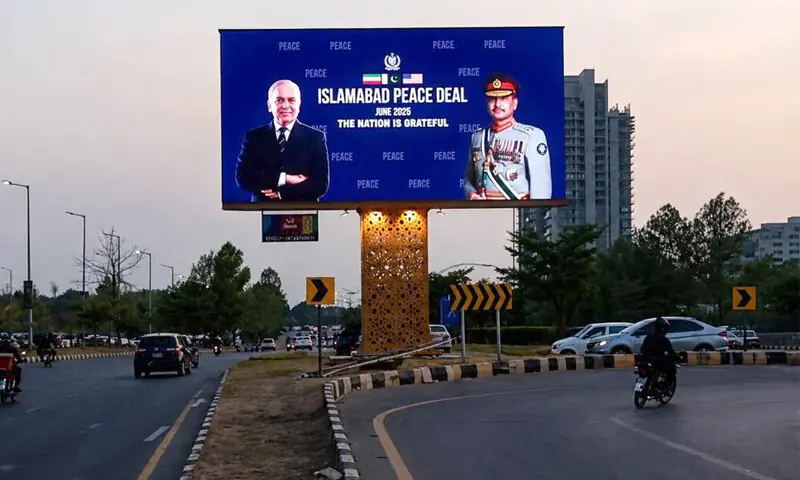
‘Mediation for sake of regional stability, not narrow interests’
ISLAMABAD: The motives behind recent mediation efforts by Pakistan’s civilian and military leadership were aimed at securing regional stability and peace among Muslim countries, rather than pursing narrower interests, a senior security official said. The remarks came at a background briefing for selected journalists, held on Tuesday. There, the official addressed a wide range of issues, including Pakistan’s role in securing peace between the US and Iran and issues arising out of India’s tampering with the Indus basin. The security official said that through consultation with key stakeholders, Pakistan — and Field Marshal Asim Munir in particular — had helped avert a major war that he said had been planned with serious consequences for the region. FM Munir’s “sincerity, competence, brilliance and Allah’s blessings” was credited for what the official called a war “won… without actually being fought”, and described this as “the pinnacle of strategy”. The official said the diplomatic process required “utmost confidentiality, responsibility and caution,” and that Pakistan, as a “responsible mediator,” would not discuss the substance of any talks or next steps in order to avoid speculation. He also credited Muslim-majority countries, particularly Saudi Arabia, with showing what he called “masterly leadership, restraint and strategic patience” in helping avert a war he said could otherwise have pitted Muslim countries against one another. On the Indus Waters Treaty , the official said that Pakistan had also pursued what he called a highly successful legal and diplomatic response to Indian violations of the treaty. He added that whatever needs to be done, will be done to protect Pakistan’s interests whenever it needs to be. He alleged that India, in order to conceal its failures in held Kashmir, was attempting to incite unrest in AJK. The official said twelve reserved seats — an apparent reference to the seats set aside for Kashmiri refugees in the AJK Legislative Assembly — are tied to the Constitution and to Kashmiris’ right to self-determination, and that no group or armed faction could impose its will through force. Published in Dawn, June 17th, 2026
17 Jun 2026
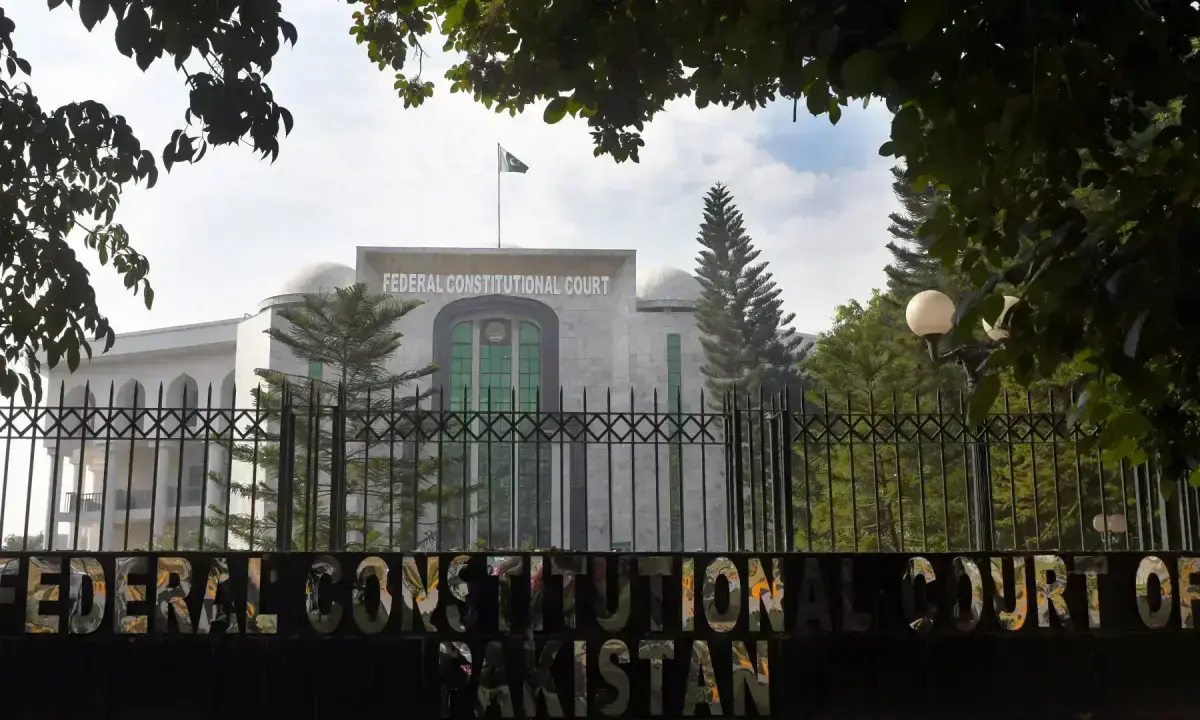
FCC rules income tax on immovable properties ‘confiscatory in nature’
ISLAMABAD: The Federal Constitutional Court (FCC) on Tuesday ruled that Section 7 E of the Income Tax Ordinance (ITO) 2001 was merely illusory since it was confiscatory in nature, imposed upon immovable properties, which neither generate income nor, in certain cases, are capable of generating any income. “The practical effect of such a levy is that a person owning a non-income-generating asset may be compelled to dispose of the asset to meet tax liability,” observed Chief Justice FCC Aminuddin Khan. The judgement came on the day when parliament was debating the finance bill 2026, which includes proposals to implement the May 7 short order in which the FCC had declared Section 7E ultra vires. This section, introduced through the Finance Act 2022, empowered authorities to charge tax on “deemed incomes” on assets and properties. The levy under section 7E operates in a discriminatory manner as it carves out exemptions in favour of certain classes of persons, thereby subjecting similarly placed taxpayers to unequal treatment, emphasised the CJ. The detailed reasons noted that the provision does not withstand constitutional scrutiny since it falls outside the legislative competence of the federal legislature. Justice Aminuddin notes tax raises legitimate concerns regarding excessive fiscal burden, economic redundancy “Where a levy is structured in a manner that taxes both the source of acquisition and thereafter the asset itself without reference to income generation, it raises legitimate concerns regarding excessive fiscal burden and economic redundancy,” observed Justice Aminuddin Khan, who had headed a two-judge Supreme Court that decided several petitions filed by a number of taxpayers against the judgements of the Sindh High Court (SHC) and the Lahore High Court (LHC) as well as the Federal Board of Revenue/Commissioner Inland Revenue (CIR). The detailed reasons noted that subsequent to the 18th Amendment, similar disputes had assumed increased frequency, primarily owing to overlapping assertions of fiscal authority by the federation and the provinces. The consequence, in a number of such cases, is that the taxpayer is compelled to engage in unnecessary and protracted litigation, often being exposed to the risk of double taxation in respect of similar subject matter. This state of affairs not only places an undue and disproportionate financial burden upon taxpayers, but also results in avoidable strain upon the constitutional jurisdiction of the superior courts, manifested through a proliferation of constitutional petitions, CJ-FCC regretted. Such a course is neither conducive to fiscal certainty nor consistent with principles of fairness and orderly tax administration. Though the legislature is competent to classify persons or properties for the purposes of taxation, such classification must satisfy the test of reasonableness, the FCC said. Where exemptions are granted without any discernible principle, or where the classification is arbitrary, artificial, or discriminatory in effect, the same cannot withstand constitutional scrutiny, the FCC emphasised. He said Section 7 E was violative of the fundamental right guaranteed under Article 23 of the Constitution, which secures to every citizen the right to acquire, hold, and dispose of property. Before concluding, the FCC also settled the objection regarding the constitution of the bench, contending, with reference to the Supreme Court Rules, 1980, that the present matter ought to have been heard by a bench comprising not less than three judges, whereas the case was being adjudicated by a two-judge bench, allegedly in violation of the applicable procedural framework adopted by the FCC. While overruling, the FCC explained the objection was devoid of substance since after its establishment, it had adopted the Supreme Court Rules 1980 and accordingly modified Order XI through Dec 2025 notification. It is a settled principle that the constitution of benches is the exclusive prerogative of the chief justice, who is the master of the roster, the judgement said, adding that in the absence of any express statutory or constitutional mandate requiring a bench of a specified numerical strength for the adjudication of the present lis, a bench comprising two members cannot be held to be incompetent. Published in Dawn, June 17th, 2026
17 Jun 2026

Privatising Discos won’t be enough
YEARS before I joined K-Electric, I led a large industrial company facing a choice many Pakistani manufacturers know well: keep relying on grid electricity or invest in captive generation. We chose captive power because it made better commercial sense than buying from the grid at prevailing tariffs and operating conditions. Years later, as COO Distribution at K-Electric, I saw the same issue from the other side. That experience taught me a critical lesson: Pakistan’s power sector is not only challenged by consumers it cannot collect from, but increasingly by the consumers who can pay. As the government moves to privatise electricity distribution companies (Discos), the debate has focused on losses. Can private owners improve collections, reduce theft, and run utilities more efficiently? Those are important questions, but they risk obscuring a deeper one. What happens when a utility steadily loses the customers that make it financially viable? Most reform discussions focus on bad load, electricity that is stolen, unpaid for, or hard to recover. Yet the sector may be overlooking an equally important problem — the gradual loss of good load. That distinction matters because it changes how we think about reform. Pakistan’s power sector does not simply have an inefficiency or a theft problem. Increasingly, it has a customer problem. Not all losses are created equal: Pakistan often treats distribution losses as a single problem, but they fall into two categories. First are technical losses, caused by ageing infrastructure, overloaded transformers, inefficient conductors, poor network design and outdated equipment. Every electricity system experiences them and understands the remedies: modernise networks, upgrade equipment, enforce standards and plan investments carefully. Second are commercial losses, including theft, illegal connections, meter tampering, billing inefficiencies and poor recovery of dues. These are governance failures shaped by weak accountability, poor enforcement, distorted incentives, political interference and affordability pressures. That distinction matters because the two problems require different solutions. Engineers can reduce technical losses. Institutions must address commercial ones. Why cost matters: Commercial losses are often discussed as though they exist independently of electricity prices, but the two are closely linked. When power becomes unaffordable, predictable consequences follow. Some consumers reduce usage, some delay payment, some seek alternatives and some resort to theft. This does not excuse illegal behaviour, but it simply recognises that incentives matter. For industrial consumers, expensive grid power has accelerated investment in captive generation, solar, and other alternatives. For households, rising costs have pushed those who can afford it towards rooftop solar and batteries, while leaving others with few good options. For utilities, both trends weaken the system’s commercial foundations. High electricity prices are therefore not just a result of the sector’s problems; they are increasingly becoming a cause of them. From the perspective of an industrial consumer, investing in captive generation is often a rational economic response. From the perspective of a distribution utility, however, thousands of such decisions collectively erode the financial foundations of the grid. The customers being lost: Large industrial and commercial consumers are the financial backbone of most electricity systems. Their demand is concentrated, predictable, easy to meter and relatively easy to collect from. A single industrial consumer can account for as much demand as hundreds or even thousands of residential consumers. From a utility’s perspective, not all units of electricity sold are equal. A financially sustainable power system does not require every unit sold to be easily recoverable. It requires most sales to be commercially recoverable. For years, industry, large commercial users and low-loss residential areas provided that balance. Today, many of these customers are reducing dependence on the grid because it is no longer their most competitive option. As they leave, the customer mix changes; high-loss consumers make up a larger share of total sales, the financial burden on those who remain increases, tariffs rise further and even more consumers seek alternatives. Viewed this way, Pakistan’s power sector increasingly resembles a business that is losing its best customers while retaining its most difficult ones. A major factor here is technological change. Policy cannot block consumers from adopting new technologies simply because the grid needs their demand. Nor can the sector assume customers will stay connected regardless of cost and service quality. The objective should be to make grid electricity reliable, affordable and competitive enough that consumers choose to remain connected. In a world where demand is no longer captive, the grid must earn its customers. What privatisation can and cannot do: None of this means privatisation is a bad idea. Private ownership can improve incentives, strengthen accountability and speed up decision-making. But ownership alone cannot solve deeper structural problems. Pakistan already has experience with private-sector participation in electricity distribution. Better management may improve performance, but it does not eliminate affordability pressures, difficult customer segments, political realities or regulatory constraints. If years of private sector experience in one utility have not been enough to achieve acceptable loss levels, policymakers should ask what exactly will be different when the next Disco is privatised. Beyond ownership: The real debate should not be about ownership alone, but about sustainability. Technical losses need engineering solutions. Commercial losses need governance solutions. Long-term financial sustainability requires something more: a power system that remains attractive to the consumers who make it economically viable. Pakistan’s power sector does not simply have an inefficiency or a theft problem. Increasingly, it has a customer problem. A utility can survive some bad customers but it cannot survive indefinitely if it loses its good ones. Unless that reality is addressed, privatisation may improve performance, but it is unlikely to deliver the transformation the sector so urgently needs. The writer is a former chief operating officer Distribution at K-Electric and has held senior leadership positions in Pakistan’s industrial and corporate sectors. asifsaad64@yahoo.com Published in Dawn, June 17th, 2026
17 Jun 2026
Spending cuts to hit growth, warns Fitch
ISLAMABAD: Fitch Ratings on Tuesday warned that spending cuts stronger than anticipated, particularly the continued compression in capital expenditure, could weigh on medium-term growth prospects. In its review of the federal budget 2026-27 , Fitch said Pakistan was maintaining a clear commitment to fiscal discipline under the International Monetary Fund programme by targeting a primary surplus of 2pc of GDP and an overall deficit of 3.6pc of GDP. This follows a strong FY26 performance, with a projected primary surplus of 2.5pc of GDP, driven by aggressive spending cuts and a provincial surplus of 1.1pc of GDP, exceeding its expectations. Amid revenue challenges, fiscal consolidation has relied heavily on expenditure compression, particularly cuts to capital spending, as in FY26, Fitch noted. While this has supported short-term deficit reduction, it will be difficult to sustain as a medium-term strategy. “Persistently low capex may weigh on medium-term economic growth, limit future revenue mobilisation, and complicate debt dynamics”, it said, adding that the scope for further reductions was narrowing, heightening the trade-off between fiscal adjustment and growth as spending pressures rise from a suppressed base. Praises fiscal discipline, but sees FY27 tax revenue target challenging On the other hand, it says that the policy momentum of fiscal consolidation improves near-term fiscal prospects, but Pakistan remains relatively vulnerable to inflation and under-performance on tax collection. Therefore, Fitch’s fiscal projections remain more cautious than the government’s, highlighting risks around the key targets. It noted that achieving the FY27 primary surplus will depend on sustained revenue over-performance relative to historical trends, which are challenging given structural weaknesses in tax administration and a limited pipeline of new tax measures. Federal tax collections in FY26 are officially projected to be 0.7 percentage points of GDP below target, underscoring persistent challenges in meeting ambitious revenue goals. The FY27 tax revenue target (10.6pc of GDP) would be a record, building on improved collection in FY26. Non-tax revenues, including profit transfers from the State Bank of Pakistan, are, meanwhile, set to decline in FY27. The reliance on a large provincial surplus is another source of uncertainty, given historical variability and coordination challenges between federal and provincial governments, Fitch observed. Interest costs remain structurally elevated due to Pakistan’s large stock of short-maturity domestic debt and high market yields. A rising policy rate as inflation rises due to higher world energy costs compounds the risk of overspending on interest payments. The FY27 budget’s interest/revenue ratio, projected at 39.1pc is substantially above the median 12.1pc of ‘B-rated peers. This limits fiscal flexibility and crowds out priority spending, forming a weakness in Pakistan’s rating of ‘B-’ with a stable outlook. Pakistan’s overall fiscal deficit at 3.6pc of GDP in FY27 also remains larger than the ‘B’ rating median of 3pc. Published in Dawn, June 17th, 2026
17 Jun 2026
A tentative peace
IN a dramatic turn of events, the US and Iran have agreed on a framework for peace talks . While the details of the deal, reached after months of intense backchannel negotiations mediated by Pakistan and supported by other regional countries, have yet to be made public, this development has raised hopes of ending an irrational war that the US has lost. The tentative pact provides a space of 60 days to conclude a comprehensive peace agreement that remains a significant challenge. There’s still a long way to go before such an agreement is reached. There has been a noticeable shift in President Donald Trump’s previously aggressive tone; however, several complex issues need to be addressed during this period. These include deferred nuclear talks, the future governance of the Strait of Hormuz, the release of frozen Iranian assets and the lifting of the sanctions on Iran. Meanwhile, Israel’s refusal to participate in the process and its ongoing invasion of Lebanon could undermine peace negotiations. Bringing the two adversaries to the negotiating table has been a challenging diplomatic task for Pakistan. Support from regional countries has significantly helped Pakistan in this painstaking process. Although no breakthrough occurred during the first round of peace talks, known as the Islamabad Talks , held in April, the meeting helped diplomatic channels remain open. Pressure was also placed on the Trump administration by the Gulf countries to end the war, which has profoundly impacted the region. Building trust between the two sides remains a significant challenge. Regardless of the outcome of the peace talks, it is clear that the US has lost yet another war of its choosing. Operation Epic Fury, jointly launched by the Trump administration and Israel against Iran on Feb 28, failed to achieve any of its shifting objectives. Despite relentless bombings that wiped out much of Iran’s military infrastructure and eliminated key civil and military leaders, the operation failed to force Iran to capitulate. The US blockade of Iranian ports, intended to strangle the country economically, also proved ineffective. It is clear that the US has lost yet another war of its choosing. Trump miscalculated Iran’s resilience; it was not to be the easy victory he expected, similar to Venezuela . As a result, he had no choice but to agree to a framework for peace talks that were not on his terms, seemingly conceding many of Iran’s demands. Even the nuclear issue, which was presented as the justification for the attack on Iran, has been deferred to upcoming negotiations, effectively aiming to restore the pre-war status quo. Despite its losses, Iran has emerged much stronger from the conflict, and has become a symbol of defiance. A weakened Trump is now left to fight a political battle at home. The highly unpopular and irrational war has divided his support base between anti-interventionists and hawks, who feel disappointed by the peace negotiations. The economic costs of the conflict, evidenced by rising inflation, have further driven down his approval ratings to a historical low. Meanwhile, the war has alienated Washington’s Western allies, who have refused to support what they describe as an illegal conflict. The economies of these countries have been severely impacted, and recovery will take a long time, even with the potential end of hostilities. However, the most significant challenge for the Trump administration is how to prevent Israel, which initially pushed the US into this war, from undermining the peace negotiations. On the day the US-Iran deal was announced, Israel escalated its bombing campaign in Lebanon, claiming that the provisions of the agreement did not apply to it. The cessation of hostilities in Lebanon is reportedly a crucial part of the MoU; however, Israeli Prime Minister Benjamin Netanyahu stated that the country would continue to occupy parts of Lebanon. Several Israeli government ministers have publicly denounced the agreement. National Security Minister Itamar Ben-Gvir argued that Israel should not accept it and called for the military to continue demolishing houses in southern Lebanon and push back the residents. Finance Minister Bezalel Smotrich stated that the deal was detrimental to the world. Some media reports indicated that Trump exchanged harsh words during his conversation with Netanyahu. However, given Israel’s influence over America’s power structure, a rupture in relations between the two allies seems unlikely. Israel continues to pose the biggest threat to peace in the Middle East. The war has dramatically altered regional geopolitics, straining US relations with its Arab and Gulf allies, who have borne the brunt of Iran’s retaliatory strikes on American military bases in their countries. These nations were entirely dependent on Washington for security but found themselves unprotected as Israel’s security was America’s main priority. While some of these countries initially supported the US-Israel war on Iran, their perspective shifted due to the security and economic costs they incurred. Trump’s recent statement that the US would, if necessary, act as a paid police force for the Middle East, reflects his typical business and transactional mindset. In an interview with the New York Times , he suggested making the US “the guardian of the Middle East” in exchange for 20 per cent of the region’s revenues, effectively proposing a mercenary role for America. The Gulf countries have already been paying billions of dollars to Washington for security, but this approach has not been effective. Trump’s latest proposal may prompt these countries to explore alternative regional security arrangements. There are already signs of rapprochement between Iran and the Gulf countries in the post-war regional landscape, which could be a positive development for regional peace and for preventing future conflicts. The latest US-Iran deal has opened channels for meaningful dialogue starting in Geneva this week and is aimed at resolving a conflict that has serious global implications. It is indeed a victory for diplomacy. The Strait of Hormuz has now been opened for shipping, and the lifting of the US naval blockade has begun to ease restrictions on sea traffic from Iran. The pressure on the global economy has eased, yet the process remains tentative, with many obstacles still in the way. The writer is an author and journalist. zhussain100@yahoo.com X: @hidhussain Published in Dawn, June 17th, 2026
17 Jun 2026
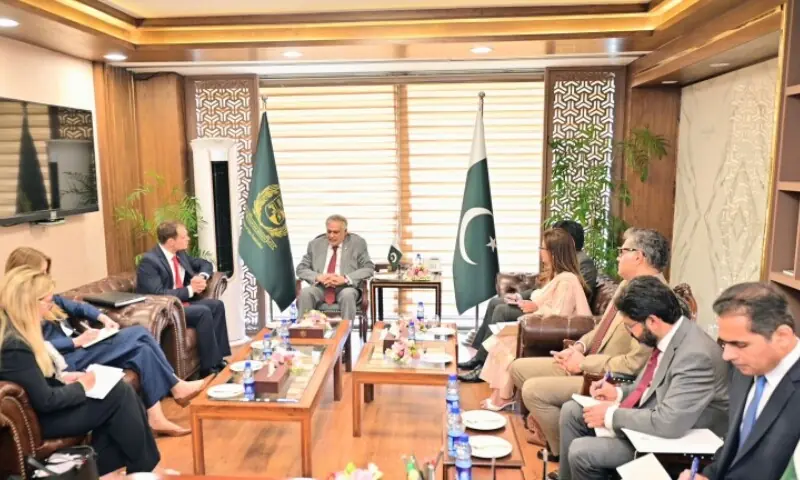
UK announces £8m for anti-illegal migration efforts with Pakistan
• Acknowledges Islamabad’s role in brokering US-Iran peace deal • Both countries reaffirm commitment to economic cooperation and reforms ISLAMABAD: United Kingdom Parliamentary Under-Secretary of State for the Middle East, Afghanistan and Pakistan Hamish Falconer announced an additional £8 million to support joint UK-Pakistan efforts to combat crime and illegal migration and thanked Pakistan for its role in helping facilitate diplomatic efforts that led to US-Iran agreement. According to a statement issued by the British High Commission, Falconer, during his visit to Islamabad, personally thanked Deputy Prime Minister and Foreign Minister Ishaq Dar for Pakistan’s contribution to the diplomatic process. During meetings with Pakistan’s senior leadership, Falconer announced an additional £8 million to strengthen joint efforts against crime and illegal migration. The funding will be used to enhance border management and visa systems and provide technical expertise to assist Pakistani law-enforcement agencies in disrupting human-smuggling and trafficking networks. The minister announced additional funding aimed at strengthening cooperation between the UK and Pakistan to tackle illegal migration to Britain by addressing the factors that drive people to undertake irregular journeys. The package will also support the return of individuals who have no legal right to remain in the UK and finance community-based initiatives in areas considered vulnerable to illegal migration. The programmes will focus on improving identity verification and information-sharing mechanisms, strengthening investigative capacity against smuggling networks and expanding prevention initiatives designed to reduce the risk of exploitation. The two sides held a comprehensive exchange of views on regional developments, Pakistan’s macroeconomic outlook, ongoing structural reforms, fiscal priorities, institutional modernisation and opportunities to further strengthen Pakistan-United Kingdom economic cooperation. The UK welcomed the agreement between the United States and Iran following intensive negotiations involving several partners, including Pakistan. He reiterated the UK’s commitment to promoting stability in the Middle East and said Britain would continue working closely with partners, including Pakistan, to support efforts aimed at achieving lasting peace in the region. Speaking on the occasion, Falconer said the US-Iran agreement represented an important opportunity for regional stability and thanked Pakistan for its role in supporting diplomatic efforts. “The UK-Pakistan partnership is critical for safeguarding global, regional and British national security through close cooperation against terrorist threats, visa fraud and serious organised crime,” he said. “We are taking this partnership to a new level through additional funding aimed at deterring illegal migration and addressing its causes at the source.” He also expressed appreciation for Pakistan’s efforts in facilitating negotiations and said the UK and its international partners would continue working to support regional stability and ensure freedom of navigation in the Strait of Hormuz. Falconer witnessed a live demonstration of joint law-enforcement operations aimed at tackling illegal migration. Supported by the UK, the initiative enables Pakistani authorities to identify and stop non-genuine visa holders at airports, ensuring that only eligible travellers and students proceed to the UK. Meanwhile, the UK Parliamentary Under-Secretary met Federal Minister for Finance Senator Muhammad Aurangzeb at the Finance Division to discuss various aspects of bilateral cooperation. Both countries renewed their commitment to strengthening bilateral cooperation. Published in Dawn, June 17th, 2026
17 Jun 2026
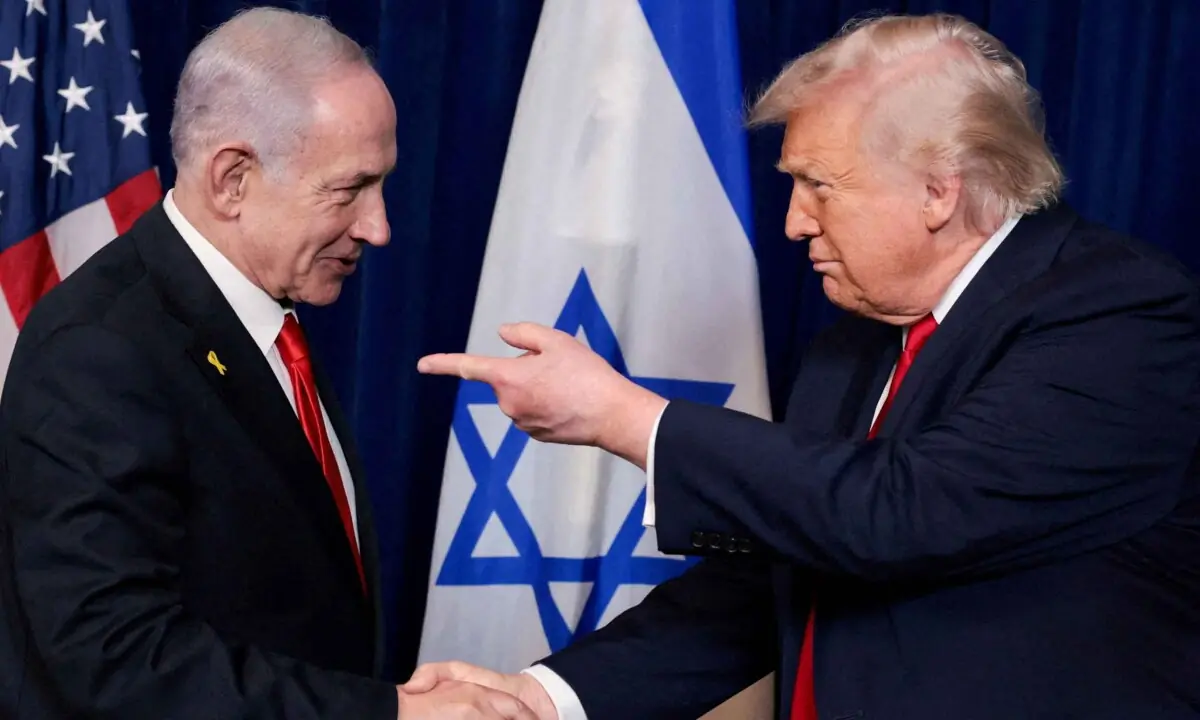
Spoiler alert
AFTER the temporary peace deal between the US and Iran is physically signed in Geneva on Friday, an arduous process of negotiations begins between both parties to flesh out the nitty-gritty of a long-term arrangement for peace. At present, there are many unanswered questions that have been deferred for later, such as the status of the Strait of Hormuz, and the future of the Iranian nuclear programme. Suffice it to say, both parties must exercise a degree of flexibility if there is to be long-term peace between them. Yet both sides, as well as members of the international community, must keep a vigilant eye on one particular party that will do all possible to make sure the peace process collapses: the state of Israel. The reaction from Tel Aviv to the cessation of hostilities between the US and Iran has been negative, for it was fervently hoped by the Zionist regime that America would once and for all destroy their biggest nemesis in the region. That did not happen, and the Islamic Republic has survived the joint US-Israeli assault . There are already signs that Israel will attempt to throw a spanner in the works. For example, the Israeli prime minister has said that his country’s occupation of Lebanese, Syrian and Palestinian territory will continue. In fact, across the Israeli political spectrum — from the far right to more ‘liberal’ segments — there has been great consternation over the peace deal, with many leaders saying they will do what they like, particularly in Lebanon. If they carry out their threats, the peace process could rapidly unravel. While members of the American political establishment — both Republicans and Democrats — often outdo each other in their attempts to please Israel, President Donald Trump has of late been expressing displeasure with his friends in Tel Aviv. Speaking at the G7 summit on Tuesday, Mr Trump said Israel needed to be “more responsible” in Lebanon, while he was reportedly furious with Tel Aviv for attacking Beirut just as the peace deal was about to be announced. Earlier, he had used expletives to express his frustration with the Israeli prime minister. The signing of the accord in Geneva could lead to a historic normalisation between the US and Iran. Conversely, the collapse of talks could precipitate a confrontation more brutal than the recent one, causing economic havoc across the globe. Israel will be using all the poisoned arrows in its quiver to ensure the latter outcome. Pakistan’s foreign minister had in April publicly said that Israel was trying to torpedo the peace process. There is a high likelihood it will resort to such tactics again. Mr Trump made the critical mistake of trusting the Israelis, and going to war with Iran. He must make sure that the error is not repeated. Published in Dawn, June 17th, 2026
17 Jun 2026
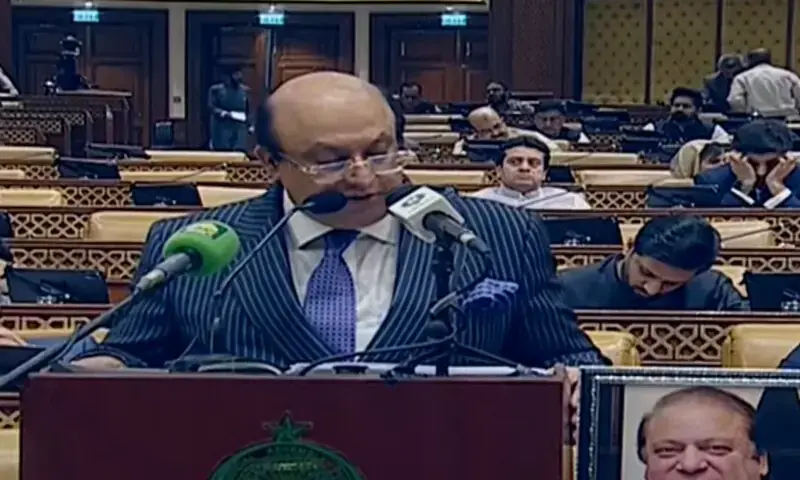
PUNJAB BUDGET 2026-27: Punjab eyes Rs910bn surplus in Rs5.9tr budget
• Minister says no additional tax burden placed on public • Insists budget focuses on welfare, growth, self-reliance • Govt employees get 7pc salary raise; pensions increased by 3.5pc • Province targets Rs1.21tr revenue from own sources • Revenue authority given Rs528.9bn collection target • Rs546bn grant to Centre included for the first time • Education gets Rs750bn; health sector allocated Rs500.82bn • Agriculture, livestock, aquaculture get Rs132.5bn LAHORE: The Punjab government on Tuesday unveiled a Rs5.903 trillion budget for the next financial year, slashing the province’s Annual Development Programme by about 40 per cent to Rs752 billion from the outgoing year’s estimate of Rs1.24tr, while promising an estimated cash surplus of Rs910bn. The government’s total estimated expenditure also went up 9.6pc, or Rs568bn, from the outgoing year’s Rs5.335tr. The budget documents lack full transparency as they gloss over many things, including a Rs588bn drop in the ADP, while the government promised increased development spending, major investments in education, health, agriculture and infrastructure and maintained that no additional tax burden would be placed on the public. Presenting the budget in the Punjab Assembly, Finance Minister Mujtaba Shujaur Rehman said the government had adopted fiscal discipline and administrative reforms to create room for public welfare and development initiatives despite economic challenges. The government said its fiscal strategy was anchored in the principles of “prudent financial management, expenditure rationalisation and revenue mobilisation”. Budget documents show that general revenue receipts are projected to increase from Rs4.74tr in the outgoing fiscal year to Rs5.60tr in the next, supported by growth in federal divisible pool transfers and enhanced provincial own-source revenues. Revenue reforms, including broadening of the tax base, modernisation of tax administration, digitisation of collection systems and improvements in compliance mechanisms, are expected to contribute significantly towards fiscal sustainability. The proposed budget is 10.7pc higher than the current fiscal year’s budget. Current expenditures have been estimated at Rs1.963tr, reflecting a 3.1pc decrease attributed to austerity measures. The government has proposed a 7pc increase in salaries for government employees and a 3.5pc increase in pensions. A major feature of the budget is the allocation of Rs752bn for development spending, down 39.3pc from Rs1.24tr in the outgoing year. The government expects Punjab to receive Rs4.201tr under the NFC Award, against Rs4.622tr last year, while provincial own-source revenue is targeted at Rs1.21tr. The Punjab Revenue Authority has been given a collection target of Rs528.86bn, or 55.4pc more than the outgoing year. Likewise, the Excise and Taxation Department has been given a target of Rs124bn, 77pc more than the outgoing financial year. Provincial non-tax revenue collection is estimated at Rs461.17bn, 52pc more than last year. The minister clarified that this increase in revenue generation would come through broadening the tax base instead of increasing the tax burden on existing taxpayers, as revenue from own resources is likely to rise by over 42pc, from Rs524.7bn in the outgoing year to Rs748.7bn in the new fiscal year. The province will also receive Rs49.84bn under foreign-funded programme loans and Rs140.6bn under foreign project loans. The budget also includes a Rs910bn estimated provincial surplus to comply by the financial framework signed between the federal government and the IMF, while a Rs546bn grant to the federal government, for the first time in the province’s history, is also part of the budget. The government announced that education would remain a top priority, with Rs750bn earmarked for the sector. Key initiatives include the continuation of the Chief Minister’s Laptop Programme, under which 110,000 laptops are being provided, and the Honhaar Scholarship Programme, which has benefited more than 108,000 students. A sum of Rs40bn has been earmarked for the Maryam Centre of Academic Leadership, STEAM laboratories and Nawaz Sharif Centres of Excellence. New autism schools are also planned in every division of the province, while 244 IT labs will be established in colleges at a cost of Rs6.9bn. For the health sector, Rs500.82bn has been proposed. Major projects include the Nawaz Sharif Institute of Cancer Treatment and Research, new cardiac facilities, upgraded teaching hospitals, expanded dialysis and transplant programmes, and the establishment of a Nawaz Sharif Medical District worth Rs169bn. The budget also places strong emphasis on economic transformation through the Punjab Innovation for Value, Opportunity and Transformation (PIVOT) initiative. The three-year plan envisages total investment of nearly Rs1.995tr, including Rs1.09tr in public investment and more than Rs905bn from the private sector. A sum of Rs193bn will be used for subsidised financial assistance to 463 industrial projects that are likely to generate 29,400 direct jobs and $5.6bn in additional export earnings. The government expects the overall programme to generate additional exports worth $16.5bn and create significant job opportunities. To support businesses, the government highlighted interest-free financing schemes under the Asaan Karobar Programme, through which more than 110,000 entrepreneurs have received loans. Agriculture, livestock and aquaculture have been allocated Rs132.54bn. The government plans to expand the Kissan Card Programme, continue subsidised tractor schemes, establish agro-processing parks worth Rs60bn and increase support for climate-resilient agriculture. Local government, water supply and sanitation projects also received significant attention. The government announced funding for the Saaf Pani Programme, the Punjab Development Programme, the Suthra Punjab initiative and low-income housing schemes under Apni Chhat Apna Ghar. Published in Dawn, June 17th, 2026
17 Jun 2026
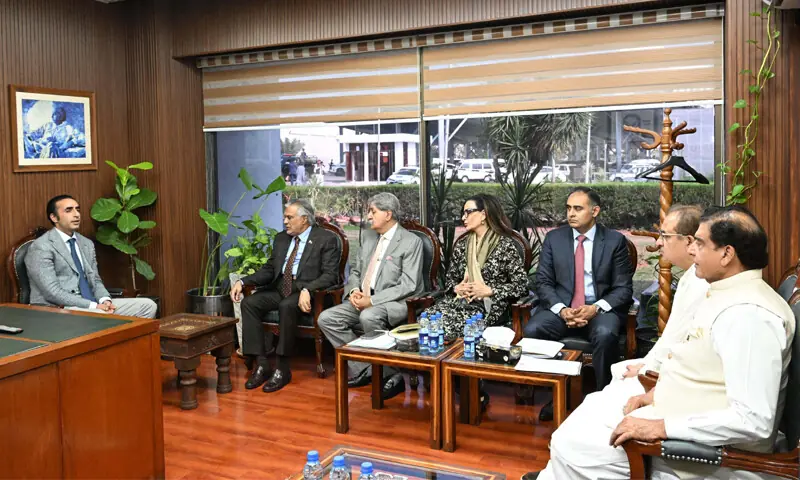
Bilawal warns of NA boycott if PPP’s demands not met
• Party claims budget differs from figures shared during pre-budget consultations • Questions provinces’ capacity to meet IMF-linked revenue targets • Another round of talks expected soon ISLAMABAD: Pakistan People’s Party (PPP) Chairman Bilawal Bhutto-Zardari on Tuesday once again conveyed his concerns over the federal budget to Deputy Prime Minister Ishaq Dar, indicating that he would not speak during the ongoing budget debate in the National Assembly unless all of the party’s reservations were addressed. “Bilawal sahib has decided that he will not deliver his speech unless all promises made by the government with the PPP regarding the budget are fulfilled,” a source close to the PPP chairman told Dawn after the meeting. In the huddle with Dar held at Parliament House, Mr Bhutto-Zardari was accompanied by senior PPP leaders, including Sherry Rehman, Naveed Qamar, Raja Pervez Ashraf and Ijaz Jakhrani. The source said Bhutto-Zardari appeared upset with the budget, stating that it was different from the document shared with the PPP. In fact, the government has shown us something different from what was presented in the National Assembly,” the source told Dawn . He added that another round of talks between Bhutto-Zardari and Dar was expected to be held soon. Later, speaking to reporters after the meeting, the PPP leader expressed hope that their concerns would be addressed. “By the grace of Allah Almighty, our reservations will be addressed. We have again discussed the matter with Dar sb ,” he said. Responding to a question regarding the formation of a government in Gilgit-Baltistan after recent elections, Bhutto-Zardari expressed confidence that the PPP would form its government there. Several rounds of talks had already taken place in recent weeks between the PPP leadership and the deputy prime minister on the budget issue. Sources said the latest meeting indicated that either the government had not incorporated the PPP’s proposals or that key concerns remained unresolved. The discussion also covered expenditure priorities, development spending, including the Public Sector Development Programme (PSDP), and broader economic issues such as fiscal sustainability, public welfare, development initiatives and inclusive growth. The IMF has reportedly asked the federal government to introduce additional revenue measures worth around Rs430 billion in the upcoming budget, along with a similar amount expected from the provinces. In this connection, the PPP asked Dar to suggest how provinces could increase their tax revenues. PPP leaders have opposed new taxes and hoped the government would change its approach to taxation to provide relief to the inflation-hit masses. Another source told Dawn that the PPP team stressed during the meeting that the government should focus on broadening the tax base rather than exerting pressure on the same class. Published in Dawn, June 17th, 2026
17 Jun 2026

BUDGET 2026-27: Auto sector row rocks Senate body
ISLAMABAD: A parliamentary committee on Tuesday witnessed heated exchanges over alleged irregularities in the automobile sector, while recommending relief for exporters, tariff reforms and a review of electricity fixed charges. The Senate Standing Committee on Finance and Revenue, chaired by Saleem Mandviwalla, continued its clause-by-clause review of the Finance Bill 2026. Responding to Senator Faisal Vawda’s allegations, Special Assistant to PM on Industries Haroon Akhtar Khan appeared before the committee with Federal Minister for Science and Technology Khalid Magsi. Mr Akhtar said members had the right to question the ministry but criticised “one-sided allegations”. Mr Vawda said his claims were based on official documents and he would apologise if proven wrong. He later shifted his claim, stating delays in commercial import of used vehicles caused a Rs125bn loss to the exchequer over eight months. Panel seeks zero tax on stationery for educational purposes The special assistant noted Mr Vawda had moved from “corruption” to “revenue loss”. Minister Khalid Magsi assured the committee of an investigation. The committee recommended withdrawal of the Engineering Development Board notification on quality compliance for used vehicle imports. The committee proposed abolishing sales tax on educational stationery, arguing it raises household education costs. Senator Mohsin Aziz called for reducing the rate to zero. The committee also recommended bringing exporters under the Final Tax Regime (FTR) and further rationalising the tax structure to support export-led growth and foreign exchange earnings. Javed Balwani of the Karachi Chamber of Commerce and Industry urged placing exporters under FTR at 1pc. Senator Mohsin Aziz supported it and questioned the delay. Senator Talha Mahmood opposed even 1pc advance tax, warning it would hurt exports. “If you want taxes instead of foreign exchange, impose 45pc and destroy the economy,” he said, demanding 0.5pc and vowing to oppose any higher rate. Senator Abdul Qadir complained FBR was not releasing refunds, contested by Finance Minister Muhammad Aurangzeb who said payments were being made. Mr Talha criticised the process as a “muk muka programme”. Mr Balwani said the FASTER system had improved refund disbursement versus last year. Meanwhile, the National Assembly Standing Committee on Finance and Revenue, chaired by MNA Naveed Qamar, called for fair taxation, proportionate enforcement and stronger safeguards for taxpayers. It expressed concern over steep penalties, expanded enforcement powers and the continued reliance on advance and withholding taxes. Published in Dawn, June 17th, 2026
17 Jun 2026
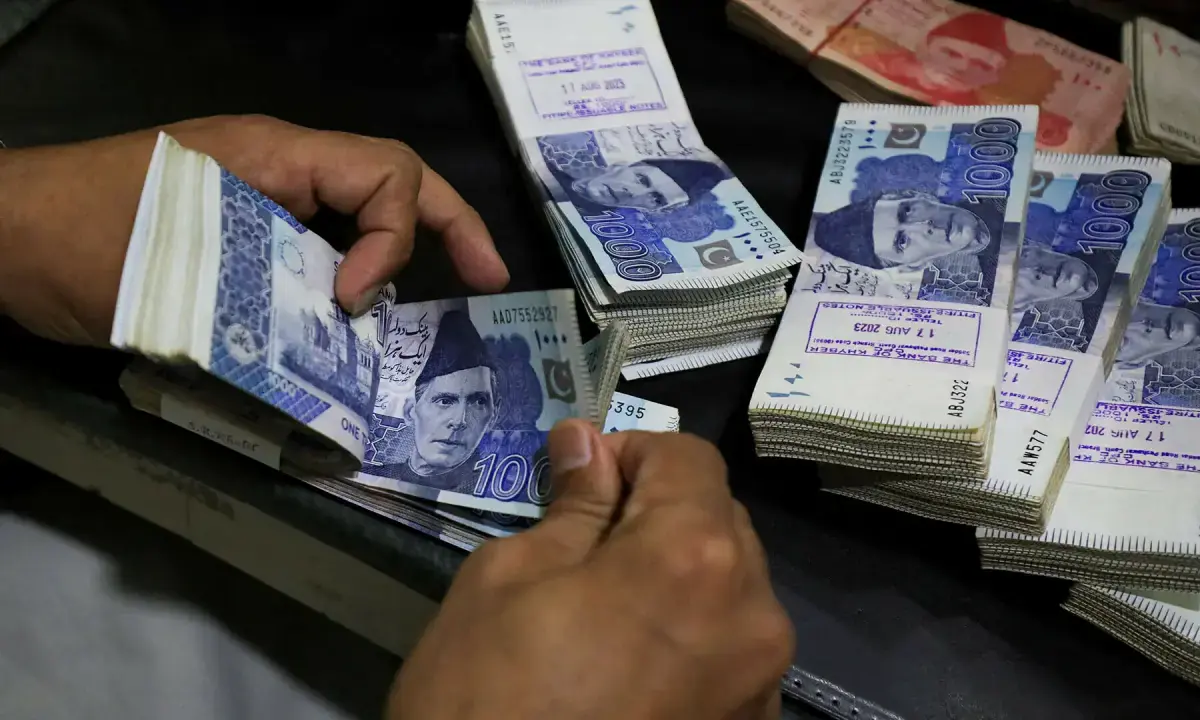
BUDGET 2026-27: Only half of FY26 uplift budget spent in 11 months
• PSDP utilisation from July 2025 to May 2026 stands at Rs529.8bn, against Rs1.01tr allocation • Govt cuts development outlay by Rs173bn to finance fuel subsidies after Mideast conflict pushed up oil prices • Only Rs153.86bn spent on uplift activities in special regions ISLAMABAD: Amid a 17 per cent cut in allocations during the outgoing fiscal year, the government and its agencies struggled to implement the Public Sector Development Programme (PSDP), utilising only about half of the budget earmarked for public welfare projects during the first 11 months of FY26. According to the Ministry of Planning and Development, total PSDP utilisation amounted to Rs529.8bn during the first 11 months of the year, accounting for 52.4pc of the original allocation of Rs1.01 trillion. The utilisation was slightly lower than the 54pc recorded during the same period last year, when PSDP expenditure stood at Rs596bn against an allocation of Rs1.1tr. In the aftermath of the US-Israel attack on Iran, the government slashed PSDP allocations by Rs173bn to provide fuel subsidies as petroleum prices surged. As a result, the actual utilisation improved to 63pc of the reduced envelope of Rs837bn. The government started bulk disbursements to parliamentarians’ schemes, codenamed the Sustainable Development Goals (SDGs) Achievement Programme (SAP), after the first five months of the fiscal year and disbursed about 70pc (Rs44bn) before the close of the third quarter. As of the end of May, the Planning Commission had authorised almost 100pc (Rs63.236bn) of the revised annual allocation, but actual utilisation remained stuck at Rs44bn, or 70pc of the budget. Interestingly, these funds were authorised and spent within a short span of around four months, making it the fastest-executed programme. As of May 31 this year, ministries and divisions had sanctioned disbursements of Rs835.6bn, almost the entire revised allocation of Rs837.16bn, against which actual expenditure of Rs529.8bn, or 52pc of the original allocation, had been reported. The annual PSDP allocation in the budget for 2025-26 originally amounted to Rs1.01tr. Compared to the relatively healthy spending on parliamentarians’ schemes, disbursements to special regions, including Azad Kashmir and Gilgit-Baltistan, struggled. Only Rs153.86bn was spent on development activities in these areas, accounting for 62pc of their annual allocation of Rs249.2bn. Funding for these special areas had already been cut by Rs52bn to finance fuel subsidies. Utilisation remained well behind the disbursement schedule approved by the government and lower than last year’s performance. PSDP expenditure during the first 11 months of the previous fiscal year amounted to Rs596bn, accounting for 54pc of the Rs1.1tr allocation. Under the mechanism announced by the Ministry of Finance for the current fiscal year, the government was required to release 15pc of the budgeted allocation in the first quarter, followed by 20pc in the second quarter, 25pc in the third quarter and the remaining 40pc in the last quarter of the fiscal year. The objective was to ensure that any shortfall in revenue collection could be managed through cuts in development spending while remaining within fiscal targets agreed with the IMF. Under this release mechanism, PSDP spending should have crossed at least Rs878bn, or 87pc of the original allocation. Even under the reduced PSDP envelope of Rs837bn, utilisation should have reached Rs730bn. All 33 federal ministries together utilised only Rs391bn during the first 11 months, accounting for 68pc of their revised allocation of Rs577bn. The two major corporations dealing with physical infrastructure, the National Highway Authority (NHA) and the power sector, together consumed only 53.5pc of their revised allocation of Rs260bn. Of this, the power sector utilised Rs53.7bn against its revised allocation of Rs75bn, reflecting a utilisation rate of 73.5pc. The NHA, on the other hand, spent Rs85bn during the 11-month period, accounting for 46pc of its revised budget of Rs185bn. The all-important water sector utilised Rs69.9bn, or 65pc, against its revised allocation of Rs106.6bn, even as the country continued to rank among water-scarce nations amid infrastructure constraints. Both Pakistan Railways and the Planning Commission utilised Rs15bn each against separate allocations of Rs20bn, reflecting utilisation rates of 75pc. The higher education sector was among the top performers, spending Rs28bn during the first 11 months against its revised allocation of Rs35bn, translating into an almost 80pc utilisation rate. Likewise, the Ministry of Federal Education and Professional Training utilised Rs21bn against an allocation of Rs27bn, or about 78pc. The National Health Services sector utilised Rs3.9bn against an allocation of Rs11.635bn, accounting for just 33pc. Similarly, the Information Technology Division spent Rs4.9bn against an annual allocation of Rs16.5bn, reflecting a utilisation rate of 30pc. It may, however, be noted that the Planning Commission had authorised Rs835.6bn during the first 11 months against the revised PSDP size of Rs837bn, meaning that authorisations were broadly in line with the fiscal release strategy. However, actual utilisation lagged because of resource constraints and the weak implementation capacity of executing agencies. The PSDP portfolio also included 86 foreign-funded projects with a total cost of Rs4.2tr, of which 25 projects were fully foreign-funded while the remaining 61 were implemented with local counterpart financing. For FY26, a rupee cover of Rs229bn was allocated for these projects. The planning ministry authorises one-line releases to all sponsoring ministries and divisions in line with quarterly ceilings set by the Finance Division under the development budget release strategy. Principal accounting officers are empowered to release and sanction funds for both foreign-aid and local components based on the requirements of individual projects. Published in Dawn, June 17th, 2026
17 Jun 2026
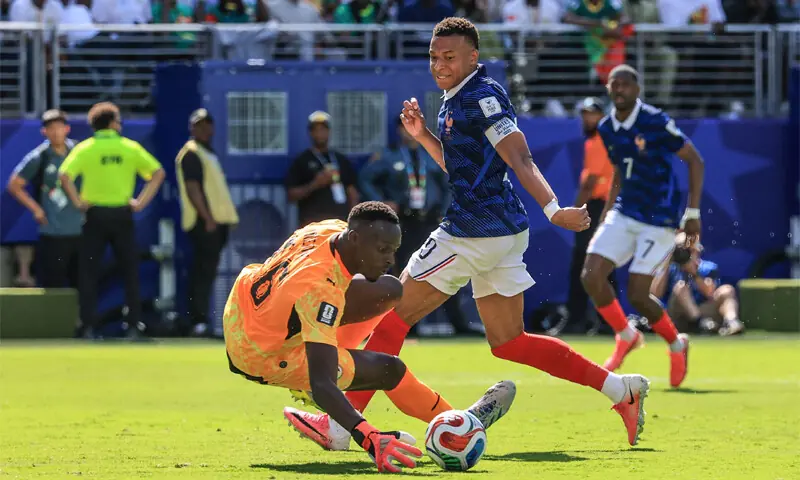
Mbappe’s heroics prove too much as Senegal go down 3-1 to France
EAST RUTHERFORD: Kylian Mbappe scored twice as France shook themselves awake after a sleepy first half on Tuesday to beat Senegal 3-1 in New Jersey Stadium, for a perfect start to their World Cup campaign. While the Africans had looked the stronger team in the first half of the Group I match, the second period was a different matter as French class ultimately proved the difference. Inevitably, it was France captain Kylian Mbappe who broke the deadlock, unlocking the Senegalese defence in the 66th minute for a record-equalling 57th goal for his country. He made a brilliant run to get on the end of a through ball by Michael Olise and he didn’t even look up as he swept it past Edouard Mendy. Substitute Bradley Barcola added a second, and the skipper then broke Olivier Giroud’s record with his 58th goal for France, thanks to a scorching strike from outside the box deep into added time, just seconds after Ibrahim Mbaye’s consolation strike for Senegal. His second goal of the game also moved Mbappe into an elite group of footballers with 15 World Cup goals. He joins the likes of Brazil’s Ronaldo and West Germany’s Gerd Mueller. Only German wunderkind Miroslav Klose has more tournament goals, with 16. “France have been brilliant in the second half. That is what we hoped for and expected. Some of the passing, some of the movement has been outstanding. Senegal have just not been able to live with them. They will regret missing that big opportunity at the end of the first half with Sarr,” England striker Alan Shearer said on BBC Sport. Published in Dawn, June 17th, 2026
17 Jun 2026
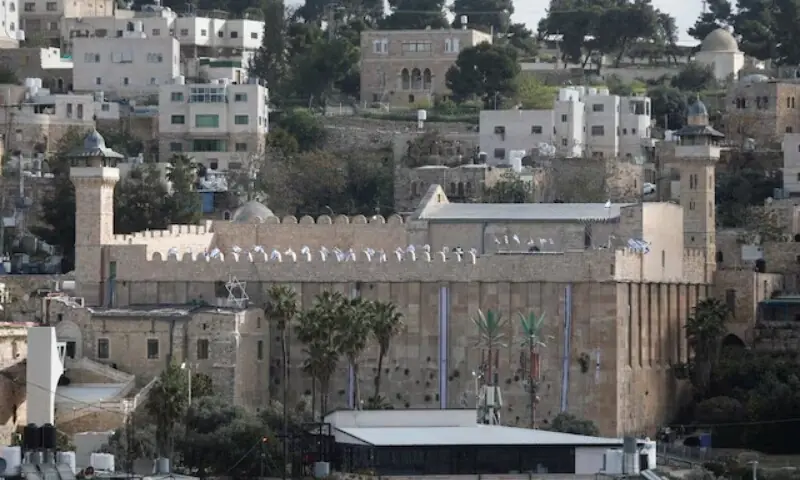
Israel strips Palestinians of control over holy site in Hebron
HEBRON: Israel’s Finance Minister Bezalel Smotrich said on Tuesday he had stripped Palestinians of authority over the site of the Cave of Patriarchs, known to Muslims as the Ibrahimi Mosque, in the occupied West Bank. The move to transfer management of the site to an Israeli committee controlled by the far-right minister, drew swift condemnation from the Palestinian Authority. In a statement posted on his Telegram channel, Smotrich said the site will no longer be administered by the municipality authority in the West Bank city of Hebron. “The meaning of this decision is that many authorities previously granted in Hebron and at the holy sites — including the very foundation of our existence, the Cave of the Patriarchs — are no longer under the control of the Hebron Municipality,” Smotrich said. Smotrich posted his remarks as he attended an event marking the laying of the foundation stone of a new Israeli settlement near Hebron. “This is much more than a planning step, it is a step... of practical sovereignty, of governance,” Smotrich said, according to footage of the ceremony released by his party. Hebron is the largest city in the West Bank, the Palestinian territory occupied by Israel since 1967. The Cave of the Patriarchs sits inside H2, an Israeli-controlled sector of the city housing roughly 40,000 Palestinians alongside some 200 Israeli settler families. It is venerated by Jews, Muslims and Christians alike as the burial site of Abraham and other biblical patriarchs. A 1997 protocol left management of most of the complex in Palestinian hands, an arrangement Palestinian officials say Israel has steadily eroded in recent years. “What Smotrich did is he controls the Higher Planning Council, which set a meeting on Wednesday where they decided that these responsibilities in Hebron will go from the Palestinian municipality of Hebron to Israel,” Yonatan Mizrahi, co-director of Peace Now, an Israeli settlement watchdog, said. Minutes from the planning meeting confirm this decision. The Ramallah-based Palestinian Authority, led by president Mahmoud Abbas, rejected the move outright. “Such unilateral measures are rejected and condemned, and constitute a violation of signed agreements with the Israeli side, as well as a breach of international law,” Abbas’s office said. In a statement, Hebron’s municipality condemned Smotrich’s announcement, which came on the day marking the Islamic new year. Published in Dawn, June 17th, 2026
17 Jun 2026

Microsoft launches AI agent with pay-as-you-go pricing
Microsoft is changing how it charges for its software for the first time in two decades, moving to bill customers with a pay-as-you-go model each time they use its new AI agent. The change, prompted by the soaring cost of artificial intelligence, came Tuesday as the company launched Copilot Cowork — an AI “agent” that can independently carry out office tasks like drafting documents, building spreadsheets and sending emails. The tool still requires a paid Microsoft 365 Copilot subscription, but now every task it runs is billed separately, based on how much computing power it consumes. Copilot Cowork is Microsoft’s take on so-called “agentic” AI, a wave that has gripped Silicon Valley and turned the simple chatbot into an assistant capable of acting on a user’s behalf. Like rival tools on Google’s and Amazon’s enterprise platforms, it can be handed an assignment and run with it on its own, sometimes for several hours. Microsoft says one customer used it to compare nearly 4,000 documents in a matter of hours, and that the assistant can prepare complex meetings by synthesizing emails, internal documentation and calendars. The reason for the new pricing comes down to cost: running these AI systems demands vastly more computing power than a search engine or a chatbot, and usage can vary widely from one user to the next. The new plan will be “like you’re filling up your gas tank at the pump,” Charles Lamanna, Microsoft’s executive vice president for Copilot and agents, told AFP. Under the old system “there’s not one overarching user license that makes sense,” he said, given that different users consume widely varying levels of computing power. The turn is a notable one for Microsoft, whose office software has relied for some two decades on fixed, predictable subscription fees. “This is a big evolution for us … which has been a user subscription-based business for so long, for really like two decades,” Lamanna acknowledged, calling the new approach “the only way to make the model work.” To guard against runaway bills, the service is disabled by default, and companies can cap spending per employee, per team or per department. Microsoft is not alone in taking this route. Its programming subsidiary GitHub moved to usage-based billing in early June, sparking anger among developers, some of whom saw their bills shoot up. Anthropic, one of the United States’ AI flagships, announced in early June that its newest cutting-edge models would soon be billed by usage rather than included in subscriptions, even premium ones. Another way to ease the bill: users will be able to choose which model is used, more or less powerful and therefore more or less expensive. At general availability, Copilot Cowork runs on Anthropic models, including Opus 4.8 and Sonnet 4.6, while customers on the “Frontier” tier can use the state-of-the-art GPT 5.5. A “significantly cheaper” model, named Cowork 1, is coming soon for everyday tasks.
16 Jun 2026
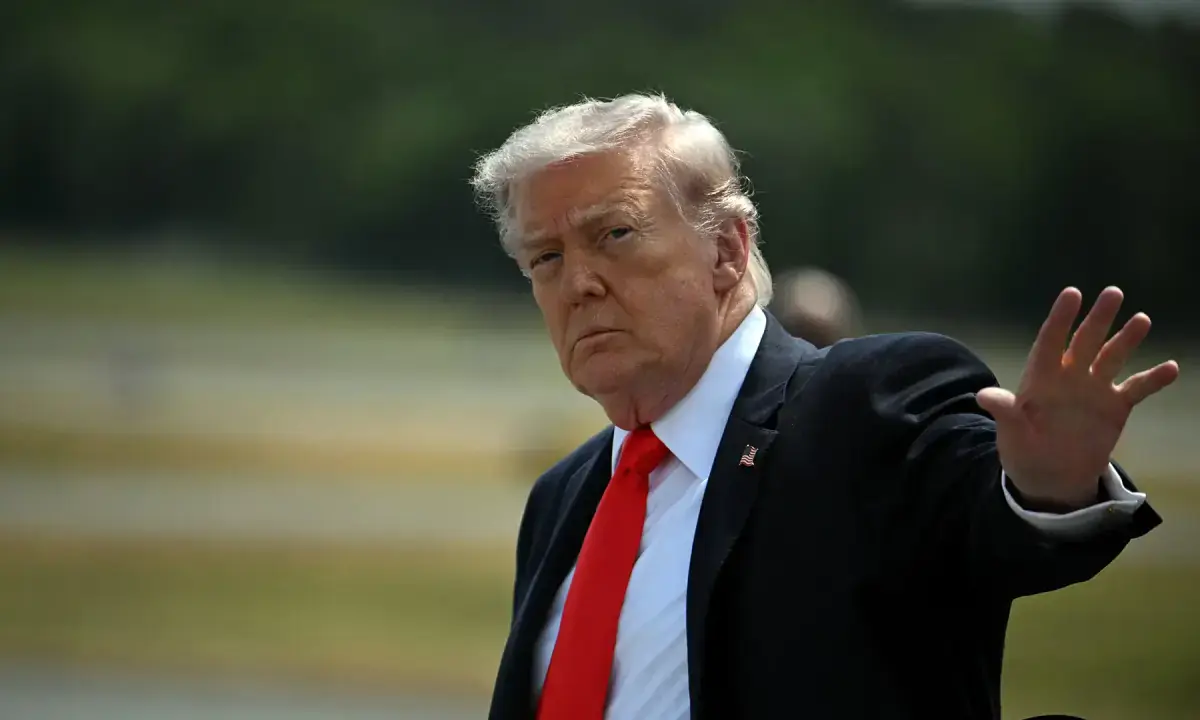
Trump open to congressional review of Iran deal as lawmakers seek details
WASHINGTON: US President Donald Trump on Tuesday signalled his willingness to submit the recently negotiated Iran agreement to Congress for review, as lawmakers from both Republican and Democratic lawmakers demanded access to a deal whose full terms remain closely guarded. Speaking during a meeting with United Arab Emirates (UAE) President Mohammed bin Zayed Al Nahyan in France, Trump suggested he had no objection to congressional scrutiny of the accord, which was announced over the weekend and is expected to formally be signed in Geneva on Friday by Vice President JD Vance. “What I would like to do is send it to Congress and say, ‘You shouldn’t approve it.’ And they will approve it,” Trump said, appearing to joke about the review process. The agreement, signed electronically on Sunday by Trump and Vice President JD Vance, is designed to end four months of military confrontation between Washington and Tehran and reopen the strategically vital Strait of Hormuz. But the administration has yet to release the text of the memorandum of understanding, leaving lawmakers uncertain about the future of Iran’s nuclear programme, sanctions relief and verification mechanisms. The secrecy surrounding the accord has triggered demands for greater transparency on Capitol Hill, where memories remain fresh of the bruising debate over the 2015 Joint Comprehensive Plan of Action (JCPOA) negotiated by President Barack Obama. Senate Majority Leader John Thune said lawmakers lacked sufficient information to judge the agreement. “I don’t know enough about it to say” whether it is a good deal, Thune told reporters. “My understanding of what it entails — again, not having seen anything — I think the issues are going to be compliance and, ‘How you’re going to enforce that and what are the financial incentives the Iranians are going to have from our country?’” Republicans broadly welcomed the apparent diplomatic breakthrough, but several made clear that support would depend on the final details. Senator Lindsey Graham, one of Trump’s closest allies in Congress, called for lawmakers to be given the opportunity to examine the agreement before endorsing it. “The MoU, I want to see it myself. The way Iran describes it is awful. The way we describe it makes sense to me. Let’s look at it and see what it actually is,” Graham said. In a separate statement, he noted that any nuclear agreement with Iran would ultimately require congressional review and approval. “Under our law, any nuclear deal with Iran will be sent to Congress for review and a vote. I look forward to reviewing the final product,” he said, adding that Vice President Vance and other negotiators should personally brief lawmakers. The unease among some Republicans has been reinforced by analyses suggesting that the war failed to achieve its original objective of fundamentally weakening the Iranian state. Writing in Foreign Affairs , Narges Bajoghli and Vali Nasr argued that “the war’s initial aim — to deliver a death blow to the Islamic Republic — has proved unattainable.” Instead, they wrote, “rather than breaking Iran, the crucible of war has transformed it in unanticipated ways.” Such assessments have added to concerns among conservatives who fear the administration may eventually settle for a framework that leaves key elements of Iran’s nuclear infrastructure intact while providing Tehran with significant economic relief. Democrats, meanwhile, welcomed efforts to end the conflict but sharply criticised the administration’s decision to go to war in the first place. Senate Democratic Leader Chuck Schumer urged the White House to provide a full briefing to Congress and questioned the overall wisdom of the military campaign. “There are still many unknowns about Trump’s negotiations with Iran. But we know this for certain: we are worse off than before Trump began this foolish war of choice,” Schumer said. Senator Jack Reed, the ranking Democrat on the Senate Armed Services Committee, argued that the proposed agreement appeared to offer fewer restrictions on Iran’s nuclear programme than the Obama-era accord that Trump abandoned during his first term. “So, we have spent billions of dollars. We’ve lost 14 personnel killed in action, hundreds wounded, and we’ve disrupted the world economy. And we’re getting basically less than what we had under the JCPOA, which President Trump walked away from,” Reed told Fox News . Representative Seth Moulton, a member of the House Armed Services Committee, was even more blunt, describing the emerging arrangement as “basically a surrender document” from Trump to Iran’s Supreme Leader Mojtaba Khamenei. “$100 billion of taxpayer money already put into this war, 14 Americans dead, and we get a deal that just reopens the strait that was already open before he started the war? How is that a win?” Moulton asked. The Trump administration maintains that the agreement represents a significant diplomatic success, ending hostilities and restoring maritime traffic through one of the world’s most important energy corridors. Yet many of the most contentious questions — including the fate of Iran’s enriched uranium stockpile and the scope of sanctions relief — appear to have been deferred to follow-on negotiations expected over the next 60 days. That uncertainty has left both supporters and critics awaiting details of a deal that could soon become the subject of a major congressional battle.
16 Jun 2026
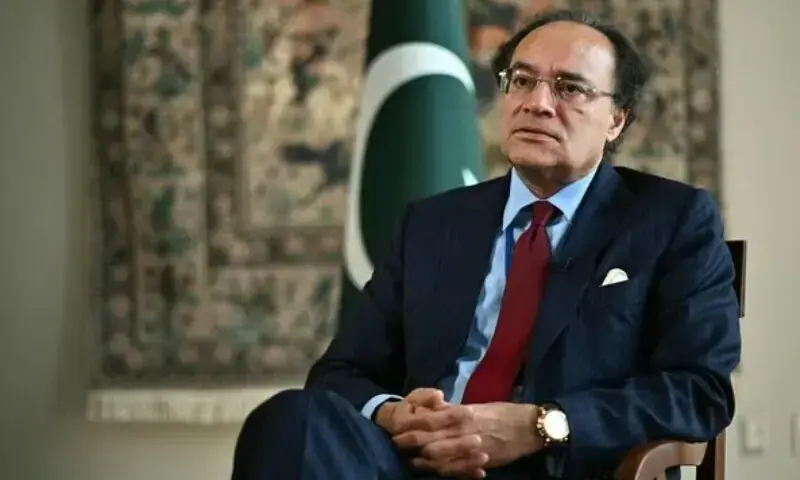
Aurangzeb terms Asaan Tax scheme for traders a ‘paradigm shift’
Finance Minister Muhammad Aurangzeb on Tuesday termed the launch of the Asaan Tax scheme for traders a “paradigm shift”, adding that the government had to start somewhere in its efforts to widen the tax net. In an interview on Geo News programme ‘Capital Talk’, Aurangzeb said: “We kept the tax rate at 1pc for traders because we have to start somewhere. However, it is part of a broader framework to expand the tax net, and we are moving in the right direction.” The finance minister elaborated that he was working on a “new operating model” for tax collection with “no human intervention”. He said that under the new scheme for traders, the discretionary powers of income tax officers would be limited. “There will be a Central Processing Unit that will monitor everything. We have comprehensive data. We have compiled data from third-party sources and tax records, on the basis of which we are examining the issues,” the finance minister said. He said the public had welcomed the budget and that the government’s goal was to accelerate economic growth. “We imposed taxes in FY2024-25 and FY2025-26. However, we have not introduced any new taxes this year.” He further said the government would instead focus on “enforcement and compliance”. “We have a digital product monitoring system; we initiated this in the sugar sector,” Aurangzeb said. “Prime Minister Shehbaz Sharif asked us to implement it in the sugar sector because his family has businesses in the sector.” “Now we are moving into beverages, textiles and other sectors.” Upskilling freelancers The finance czar said Pakistani freelancers, who provide coding services for $10 to $12 per hour, could earn up to $250 per hour through upskilling in blockchain technology. “The Pakistani freelancing community, the third largest in the world, is earning $10 to $12 per hour for coding. Through upskilling or reskilling in blockchain technology, they can earn between $50 and $250 per hour.” He said the issue needed to be viewed in the context of Web 3.0, artificial intelligence and cryptocurrency, as everything is built on blockchain technology. Addressing confusion over whether cryptocurrency is legal in Pakistan, Aurangzeb said: “The government is turning cryptocurrency into a regulated activity and is moving towards tokenisation.” US-Iran deal The finance minister termed the recent signing of the United States-Iran deal a “welcome development”. “It was a welcome development and a proud moment for Pakistan,” he said, adding, “It was also a great moment for the global economy.” Aurangzeb said the deal had also instilled a “positive sentiment” in global markets. Responding to a question about the possible impact of the deal on the country’s economy, he said global oil prices had fallen to $80 per barrel and that the government had been trying to pass on the benefits for the past three weeks. Aurangzeb said the public would be provided relief and the economy would see an upside, adding: “We will definitely see an upside; however, we cannot quantify it.” When asked about the prospects of a US-Iran deal and the lifting of trade sanctions on Iran, he said: “It would be premature to say anything about it. We will have to wait until Friday, when the details of the agreement are unveiled.” However, he said that if sanctions on Iran were lifted, Pakistan would “move with speed on that front” to strengthen its economy. The finance czar added that Pakistan was also in constant discussions with the US on the prospects of expanding the partnership following the deal. “For the next fiscal year, GDP will grow by 4pc and inflation will be 7.5pc,” the finance minister said. Meanwhile, he acknowledged that the closure of the Afghanistan border had affected exports and the country’s strategy of export-led growth. “We can see a huge upside here as well; however, the Taliban government has to act responsibly,” he said. PPP, opposition reservations When asked about a PPP lawmaker’s claim that details of the budget had been concealed before its presentation, he rejected the allegation, saying: “All the details were finalised through consensus on each and every point. There is nothing to hide.” He added that the government was still ready to provide further details if needed and remained open to additional questions. Responding to concerns about rising debt and allegations that the government had failed to address the issue effectively, Aurangzeb said: “We need to look at this in relation to our GDP. Our debt-to-GDP ratio has fallen to 70pc. We are moving in the right direction. Our external debt has now come down to $96 billion or $97bn.” He said that around 40pc to 45pc of the amount had been borrowed from international lenders, while the remainder had come from friendly countries such as China and others. Aurangzeb added that the Roshan Digital Account had surpassed $300 million in investments by overseas Pakistanis in May. “It is a good sign; people are seeing something positive, they are witnessing improvement; there is a reason behind their trust.” For poverty, he said, the government had increased the funds for the Benazir Income Support Programme to Rs838 billion. “Tax revenues have been doubled from 7 trillion in 2025 to 13 trillion in 2026; has it ever happened in history?” he said. KP budget Replying to a question about the Khyber Pakhtunkhwa government’s demand that any contribution to the Centre be made through cuts in development spending and subject to the approval of PTI founder Imran Khan, Aurangzeb said: “In principle, they have no issue with it.” “I had a very good meeting with Chief Minister Sohail Afridi and KP Adviser on Finance Muzammil Aslam,” Aurangzeb said, adding, “All provinces, including KP, have significantly supported us throughout the IMF programme.” “Only the prime minister can make a decision on this demand,” he said.
16 Jun 2026
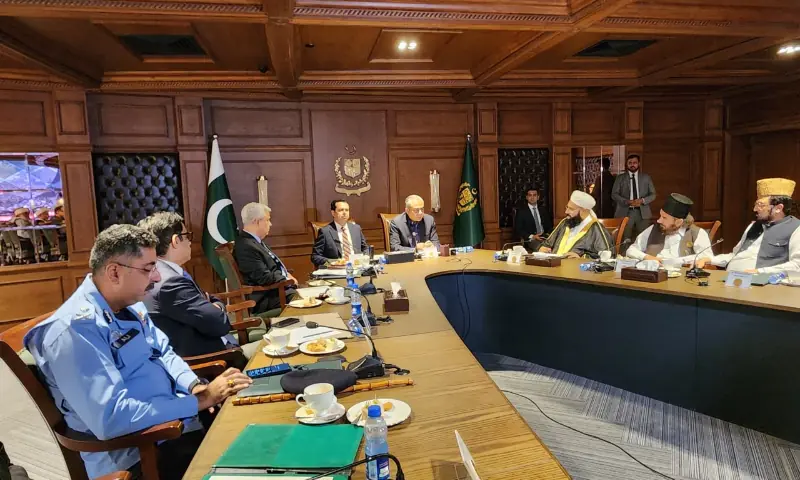
Naqvi vows crackdown on sectarian content online as Muharram Peace Committee meets in Islamabad
ISLAMABAD: Federal Interior Minister Mohsin Naqvi and Minister of State for Interior Tallal Chaudhry on Tuesday chaired a special meeting of the Paigham-i-Aman Committee to discuss arrangements for Muharram and measures to curb sectarian incitement. Muharram is a month of mourning, observed in particular by Shia Muslims worldwide. It commemorates the Battle of Karbala in 680AD, where, amongst many, the grandson of Prophet Muhammad (Peace Be Upon Him), Imam Husain (RA), was martyred. The first of Muharram will fall on Wednesday, June 17 while Ashura will be observed on June 26. The committee discussed in detail steps to promote inter-sect harmony and religious tolerance during Muharram. It decided that action would be taken against those spreading incitement and sectarianism on social media. Naqvi said maintaining strong and sustained contact with the ulema was among the ministry’s priorities. “The Paigham-i-Pakistan Committee will be made active and effective down to the district level,” he said. He said public awareness against terrorism and extremism in light of the Holy Quran and Sunnah was the need of the hour, noting: “There is no room in Islam for rebellion against the state and spreading chaos. The ulema should guide the public in this regard.” The minister announced that a coordinator would be appointed for the peace committee and termed the maintenance of law and order during Muharram a “collective responsibility”. Naqvi also credited Prime Minister Shehbaz Sharif with leading Pakistan’s role in US-Iran negotiations , which contributed to the announcement of an agreement on Monday. He added that Chief of Defence Forces (CDF) and Chief of the Army Staff (COAS) Field Marshal Syed Asim Munir played a key role “as captain on the ground” and said all officials, including himself, had performed their duties “like team players”. “A historic agreement between the two countries was reached as a result of this teamwork,” he said. He added that CDF Munir was a personality trusted by all sides in the US-Iran talks, saying, “Many countries also tried to mediate, but could not succeed.” The minister said the field marshal spoke firmly when needed and pointed out mistakes, which strengthened mutual trust. He recounted that when the ceasefire talks were near collapse, the CDF told Iranian negotiators that on the Day of Judgement they would bear witness that he had tried sincerely to save even a single life, and that the responsibility for war, if it occurred, would lie with them. “These words influenced the Iranian negotiators and talks moved forward,” he said. The meeting was attended by prominent religious scholars, including Allama Tahir Mahmood Ashrafi, Senator Hafiz Abdul Karim, Mufti Abdul Raheem, Allama Arif Hussain Wahidi, Pir Naqeeb ur Rehman, Allama Muhammad Hussain Akbar, Dr Muhammad Raghib Hussain Naeemi, Maulana Tayyab Qureshi, Allama Ziaullah Shah Bukhari, Bishop Azad Marshall, Rajesh Kumar Hirdasani and Sardar Ramesh Singh Arora. Coordinators of provincial and regional peace committees and representatives of registered madrassa boards were also present, along with the interior secretary, additional secretary for religious affairs, information secretary, and Islamabad’s chief commissioner and inspector general of police. Religious scholars at the meeting paid tribute to the prime minister, CDF and interior minister for the peace agreement. Chaudhry said the role of the peace committee was commendable. The meeting concluded with a special prayer for the country’s security, stability and law and order.
16 Jun 2026

India blocks Telegram before retest exam to curb cheating
India blocked access to the Telegram messenger app on Tuesday ahead of a retest of a nationwide medical college entrance examination, following a scandal last month over a question paper leak. The failure of the hugely competitive exam, along with a separate marking fiasco in high school tests, sparked outrage and fuelled youth protests demanding the education minister’s resignation. The electronics ministry issued the order restricting access to Telegram until Monday, the day of the retest. Message-editing features, which allow users to alter existing posts, will remain restricted until June 30. “Both measures have been taken in the interest of public order, in response to the organised use of the platform by cheating rackets to defraud candidates,” India’s National Testing Agency (NTA) said in a statement. The National Eligibility Entrance Test (NEET) is one of the country’s most competitive exams, attracting more than two million aspiring doctors. The NEET exam was scrapped in May following allegations that the question paper was leaked in advance, including reports that it had been circulated through Telegram channels. Responding to the electronics ministry’s decision, Telegram founder and CEO Pavel Durov said the week-long ban “hasn’t stopped anything” but “punishes” 150 million ordinary users of the messaging app in India and “not the insiders who leaked the exam materials”. “The leaks just moved to other apps,” Durov said in a post on X. The Internet Freedom Foundation, a digital rights group, said the ban “is a disproportionate answer to exam fraud”. The intense pressure to succeed in the national exams has fuelled a lucrative industry, with tens of thousands of coaching centres across the country. Fierce competition means that success often comes at a high personal and financial cost — creating opportunities for criminal networks seeking to sell leaked examination papers to the highest bidder. Test pilots India’s Central Bureau of Investigation has arrested the “kingpin” alleged to be behind the leak, naming him as a chemistry lecturer involved in the examination process for the NTA. On Monday, the education ministry launched a website where the public can report “suspicious claims, unauthorised content, or fraudulent activities” related to the NEET exam. Indian air force helicopters were seen on Tuesday readying for the delivery of the test papers, to “prevent any possibility of leak”, The Press Trust of India news agency reported, broadcasting images of preparations in the southern state of Tamil Nadu. Despite rapid economic growth, millions of people in the world’s most populous nation still struggle to find stable and well-paying jobs, fuelling discontent. Students spend years preparing for exams in the hope of securing a professional career, with the pressure intensified by limited opportunities and intense competition. Indian media reported suicides of teenagers following the fiasco over the NEET exam. The NEET scandal came on top of another controversy, related to the online marking system used for tests taken by nearly two million high school students. Many students said the system had assigned incorrect grades or issued results to the wrong candidates. Anger at the exam mishandling has been channelled by the satirical “ Cockroach People’s Party ”, which has won millions of followers on social media since its launch in May. The movement emerged after India’s Chief Justice Surya Kant reportedly likened young people who criticised the government to “cockroaches” and “parasites” during a court hearing, sparking outrage among the youth. Kant later said his comments were taken out of context.
16 Jun 2026
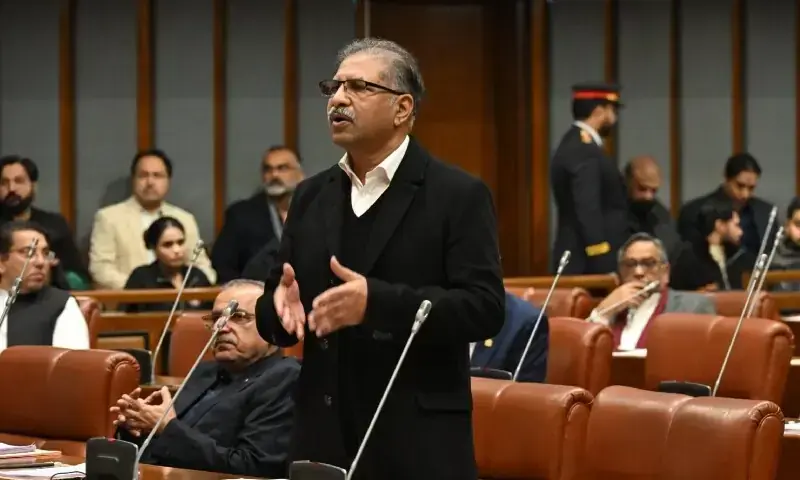
PTI’s Ali Zafar rejects budget, says it achieves neither growth nor public welfare
ISLAMABAD: PTI’s parliamentary leader in the Senate, Barrister Syed Ali Zafar, rejected the budget for 2026-27 as a document that achieves neither public welfare nor long-term growth, calling it a “budget of broken promises” built on “eleven deadly sins”. Speaking during the Senate debate on Tuesday, Zafar said every budget must have two objectives: trickle-down benefits for the poor and a credible strategy for economic growth and job creation. “Unfortunately, this budget fails to achieve either objective. It neither provides meaningful relief to the common citizen nor sets out a credible long-term plan for economic development and job creation,” he said. The senator listed 11 areas he said the government had ignored: long-term growth strategy; industrialisation policy; a plan for agriculture despite rising imports of cotton, wheat and sugar; a roadmap to boost exports; job creation strategy for youth; a plan to expand the IT sector; a solution to circular debt or a coherent energy policy; provision for dams and water conservation amid pressures on the Jhelum and Chenab rivers; response to climate change; strategy for population growth; and education. “Education is the foundation of progress and prosperity, yet the government appears to have neglected it entirely. It is as though the government does not wish to spread the light of knowledge among the people but is instead content to leave them in the darkness of ignorance,” he said. Criticising the government’s approach, he said: “For the last several years, it has looked for solutions only where it finds it easiest — through International Monetary Fund (IMF) programmes and by imposing additional taxes on the public.” He attributed the failure to incompetence rather than ill intent. “One conclusion is unavoidable: the government’s inability to solve the country’s fundamental problems stems from incompetence. “The persistent failure to identify and address the root causes reflects not merely poor policy choices but a broader failure of governance and economic management,” he said. Noting that FY2026-27 is the current government’s fifth budget, Zafar said each had come with excuses instead of results: the first year blamed PTI, the second repeated the same line, the third offered no progress, the fourth blamed the IMF, and now the fifth blames external factors, including the US and Israel. “The real reasons for the government’s failure are much closer to home. The first is incompetence. The second is the absence of political stability. A government that does not enjoy the support of the public cannot provide a compelling vision,” he said, adding that people still regarded Imran Khan as their true leader. The senator said the government had broken 10 “records of failure”. He also flagged seven indicators moving downward: exports, standard of living, economic growth, investment, rupee value, business confidence and government credibility. Mocking the 4pc growth target, he said: “A tortoise with arthritis could move faster,” adding that “for this government, perhaps even standing still is considered an achievement.” Zafar criticised the focus on taxing the salaried class while untaxed sectors remained outside the tax net. “The government appears determined to squeeze the last drop of blood from the bones of the salaried class,” he said, calling repeated tax hikes “madness” when they failed to produce growth. He dismissed the “stabilisation budget” label. “Yes, this is indeed a stabilisation budget — but it is a stabilisation of poverty, a stabilisation of hardship and a stabilisation of the hopelessness faced by ordinary people.” On the primary surplus target, Zafar said it was being achieved by asking families “not to send their children to school, not to spend on their mothers’ medicines and not to meet other basic needs, so that the savings can instead be used to pay debt and interest”. Using another analogy, he compared economic management to a repairman who would never fix a leaking roof but would keep asking for more buckets to be placed under it. “The roof is still leaking. The problem has not been solved. Yet instead of repairing the roof, the government is now asking the provinces to give up the very bricks needed to keep it standing,” he said. Senator Zafar said his rejection of the budget was due to its “harsh and burdensome nature”. Other senators also criticised the budget and the ruling government. Jamiat Ulema-e-Islam-Fazl’s (JUI-F) parliamentary leader in the Senate, Maulana Attaur Rehman, criticised the federal budget and raised concerns over the security situation in Khyber Pakhtunkhwa, adding that economic stability could not be achieved without restoring peace, particularly in KP and Balochistan. He said the law and order situation in KP had deteriorated and that “despair was spreading among the nation,” adding that he felt unsafe when visiting the province. Rehman said a tax had been imposed on tobacco, which is a key crop grown in KP. “We want the country’s security and development,” he said. Referring to Gilgit-Baltistan, the JUI-F leader claimed his party’s candidates had been defeated there through rigging. “This is the same complaint the PPP is making. On election day in Gilgit-Baltistan, the polls were rigged,” he said. PTI Senator Mushal Azam rejected Budget 2026-27, saying it offered nothing for the poor and warning the government of public anger if economic hardship persisted. Azam said, “The people need two meals a day, not lollipops.” Participating in the debate, PPP’s Zameer Hussain Ghumro said the budget should include additional incentives for the welfare and well-being of the people.
16 Jun 2026
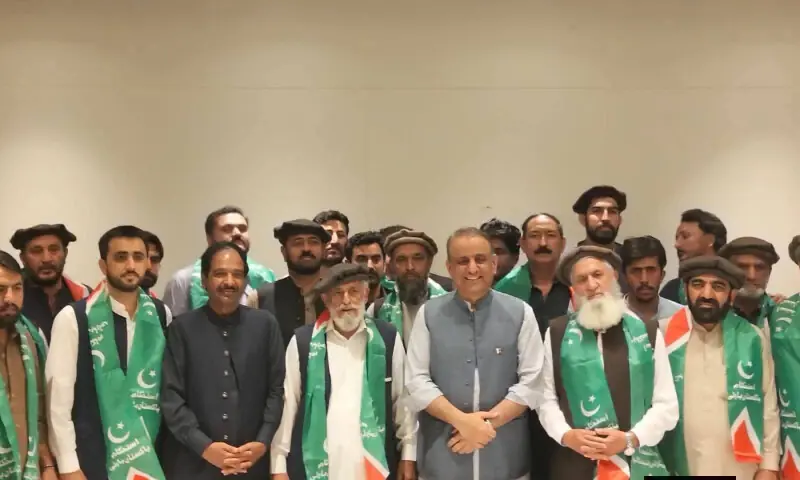
Four independents join Aleem Khan’s Istehkam-i-Pakistan Party in Gilgit-Baltistan
GILGIT: Four independent candidates, who recently won in their constituencies, joined the Istehkam-e-Pakistan Party (IPP) after a meeting with party president Abdul Aleem Khan. The members include Anwar Ali, elected from GBA-23 Ghanche-II; Dr Asad Shafiq, elected from GBA-24 Ghanche-III; Muhammad Dilpazeer, elected from GBA-15 Diamer-I; and Aman Ali Amir, elected from GBA-21 Ghizer. Khan, who is also a federal minister, announced the development on his social media account and congratulated the members. “Representation of Istehkam-i-Pakistan Party in the Gilgit-Baltistan Assembly for the first time will be a welcoming development. With hard work and honesty, the party will fully participate in the development of Gilgit-Baltistan,” he said. During the recent general elections held on June 7, the IPP fielded 16 candidates from 16 constituencies in GB; however, none succeeded in winning. These four independent members of the GB Assembly could play a significant role in the formation of the GB government. Last week, PPP Chairman Bilawal Bhutto Zardari welcomed Prime Minister Shehbaz Sharif’s statement regarding the formation of a government in GB and expressed his gratitude. According to Radio Pakistan , the prime minister assured full support from the PML-N to the PPP on government formation. The prime minister said the PML-N has decided to sit on the opposition benches in the Gilgit-Baltistan Legislative Assembly, but its elected members will vote in favour of the PPP to form the government. In a statement , Bilawal said that recognising the PPP’s majority in GB is the continuation of a democratic tradition and added that the party views the premier’s invitation to form the government as a “positive step”. The PPP won 11 seats, the PML-N six, and independents four. Meanwhile, two PTI-backed candidates and one MWM candidate also won the elections. The results of three constituencies will be announced on June 17. Thirteen members are required to form a government. However, the second-largest party in the GB elections, the PML-N, has invited the PPP — its coalition partner in the Centre — to form the government.
16 Jun 2026
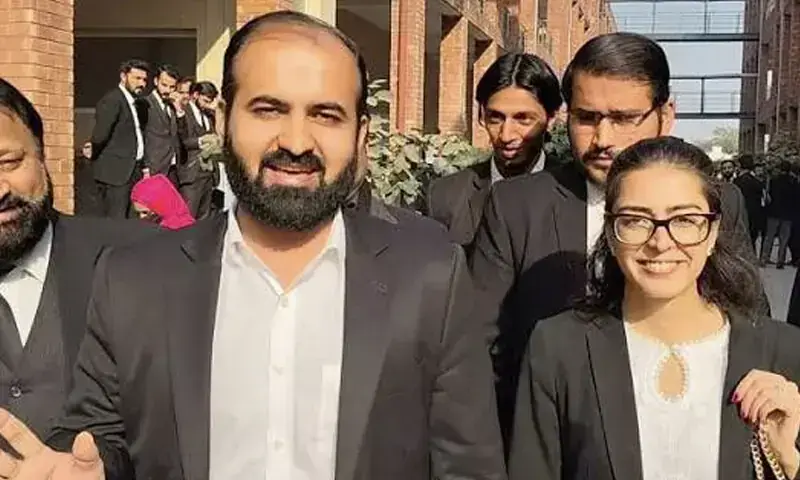
Lawyers Imaan Mazari, Hadi Chattha awarded prestigious human rights prize for advocacy work
Prominent lawyers Imaan Zainab Mazari-Hazir and Hadi Ali Chattha, currently serving jail sentences, have been awarded the prestigious Ludovic Trarieux International Human Rights Prize for their advocacy work, it emerged on Tuesday. According to the official website , the prize is the world’s oldest and most prestigious human rights honour awarded to lawyers, established in honour of French lawyer Ludovic Trarieux who founded the League for the Defence of Human and Citizen Rights in 1898. The first recipient of the award was Nelson Mandela in 1985, while he was imprisoned under South Africa’s apartheid regime. An official press release issued by the Forensic Union for the Protection of Human Rights (UFDU) on Saturday said the award “is presented annually to a lawyer who, through his or her professional commitment, has made an extraordinary contribution to the defence of human rights, the rule of law, and the fight against racism and all forms of intolerance.” The award ceremony took place in Rome, at the Parlamentino Hall of the National Bar Council, in the presence of Antonino Galletti, Coordinator of the European and International Law Commission at the National Bar Council, said the statement. The press release noted that throughout his career, Hadi has represented people accused of blasphemy, victims of sexual violence and enforced disappearances, and death row inmates. Mazari, meanwhile, “has distinguished herself by providing legal assistance to victims of violence and persecution and by supporting vulnerable religious and ethnic communities”, the statement said. “Imaan Mazari and Hadi Ali Chattha have shared a long-standing professional commitment to defending fundamental freedoms, representing journalists, activists, victims of enforced disappearances, and individuals prosecuted for blasphemy charges,” it added, noting that in recent years, this work was set against a backdrop of “growing pressure on lawyers and human rights defenders in Pakistan” according to international organisations and observers. “By awarding the 2026 Ludovic Trarieux International Human Rights Prize, the jury recognised the professional and personal contributions of Imaan Mazari and Hadi Ali Chattha in upholding the rule of law, fundamental freedoms, and access to justice,” the statement said. Mazari’s mother, Shireen Mazari, posted about the award on X, calling it an “immense professional honour” and expressing gratitude for the recognition of her daughter. Meanwhile, the prize for the ‘Bar of the Year 2o26’ was awarded to the South Sudan Bar Association. Imaan and Hadi have been in jail since their arrest in January in a case registered against the two for protesting outside the IHC and allegedly manhandling the IHC Bar Association (IHCBA) president. While the arrest prompted criticism by rights bodies, politicians, and journalists, who stressed the couple’s right to a fair trial, a sessions court sentenced them to 17 years in prison in the social media posts case just a day after the development. The controversy at the centre of the case stems from a complaint filed on August 12, 2025, by the NCCIA Islamabad assistant director (investigating officer) before the Cybercrime Reporting Centre, FIA, under the Prevention of Electronic Crimes Act, 2016 (Peca). The complaint accused Imaan of disseminating and “propagating narratives that align with hostile terrorist groups and proscribed organisations”, while her husband was implicated for reposting some of her posts. In January, the sessions court sentenced the duo to 10 years’ imprisonment under Section 10 (cyber terrorism), five years’ imprisonment under Section 9 (glorification of an offence) and two years’ imprisonment under Section 26-A (false and fake information) of Peca. Subsequently, they challenged their conviction by filing separate appeals in the IHC on February 7. On April 30, the duo had moved another appeal in the SC, seeking an early hearing of their pleas against their conviction.
16 Jun 2026
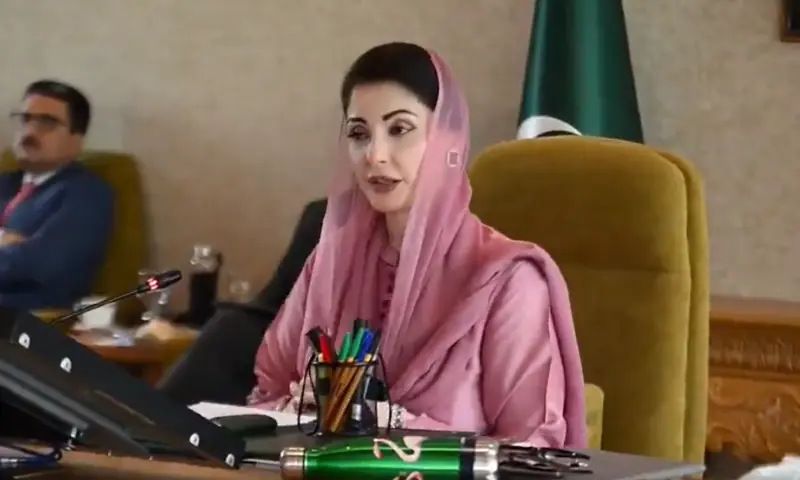
Punjab cabinet approves 'people-friendly' provincial budget for FY2026-27
Punjab Chief Minister Maryam Nawaz Sharif on Tuesday approved a “people friendly” provincial budget for the fiscal year 2026-27 after the 35th meeting of the provincial cabinet accorded its formal approval to the budget document. Addressing the cabinet meeting, the chief minster said the government had made every possible effort to provide maximum relief to citizens and minimise the financial burden on them despite economic challenges and prevailing global conditions. She added that although the province had to allocate a substantial amount as its share to the federation, the government remained committed to safeguarding public interests. CM Maryam said the FY 2026-27 budget had been prepared without imposing any new taxes and was focused on public welfare, development and prosperity. She described it as a budget of hope aimed at delivering relief to citizens through the provinces own resources. The CM directed the Punjab Revenue Authority to take effective measures to enhance revenue generation and strengthen the provinces financial capacity. Expressing confidence in the government’s performance, CM Maryam said she hoped the budget would meet the aspirations of the people as in previous years. She appreciated the collective efforts of the cabinet members and officials, saying the entire team had worked as one unit to prepare a people-friendly budget. She also prayed for the ability to continue serving the people of Punjab with sincerity and dedication. The CM also lauded the efforts of Senior Minister Marriyum Aurangzeb, Provincial Finance Minister Mujtaba Shuja-ur-Rehman, Information Minister Azma Zahid Bukhari, Chief Secretary Zahid Akhtar Zaman, Finance Secretary Mujahid Sherdil and the entire team involved in preparing the budget. More to follow.
16 Jun 2026
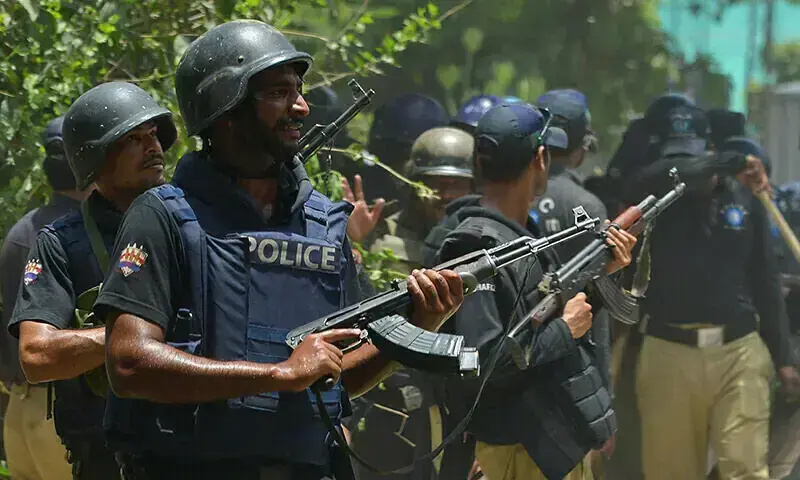
5 suspected militants killed during intelligence-based operation in Attock: CTD
ATTOCK: The Counter Terrorism Department (CTD) on Tuesday said that it had killed five suspected militants during an intelligence-based operation in the border area of Mankor, a remote locality in Attock district’s Jand tehsil. According to a CTD spokesperson, security personnel launched the operation after receiving credible intelligence regarding the presence and activities of militants allegedly involved in planning terrorist attacks in Punjab. As the CTD team moved in, the suspects reportedly opened fire, triggering an intense exchange of gunfire between the militants and law enforcement personnel. The spokesperson said CTD officers responded effectively, resulting in the killing of all five suspected terrorists. A cache of weapons, explosive material and hand grenades was recovered from the site following the operation. Preliminary investigations suggest that the slain militants were allegedly linked to plans for carrying out terrorist activities in Punjab, the spokesperson said. The operation was conducted on the basis of sensitive intelligence reports concerning their movements and operational planning, he added. The spokesperson said authorities had launched an extensive search operation in the border regions of Attock to locate any remaining suspects, facilitators or accomplices who may have escaped during the raid. Meanwhile, Prime Minister Shehbaz Sharif appreciated the department for the successful operation against Fitna al Khawarij in Attock, according to Radio Pakistan . Fitna al Khawarij is a term the state uses for terrorists belonging to the banned Tehreek-i-Taliban Pakistan. In his statement, he lauded the CTD’s professionalism and said that security forces, police and the department were achieving significant successes in the war against terrorism. He expressed resolve to eliminate terrorism in all its forms and manifestations from the country.
16 Jun 2026
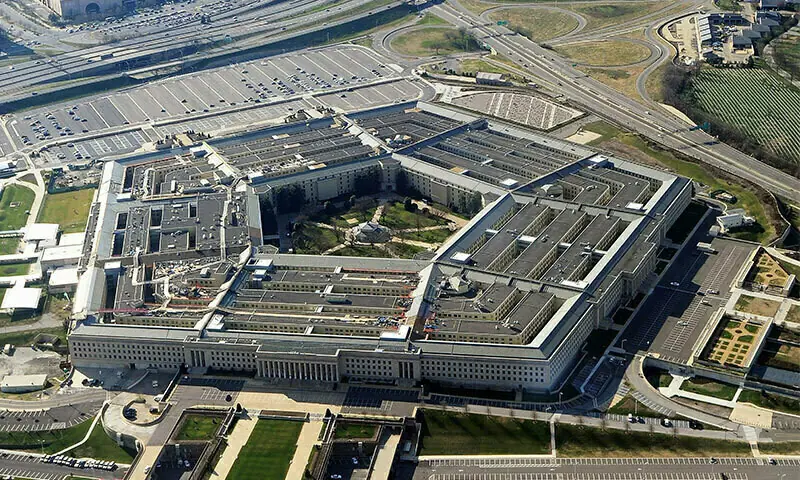
US military to build war-ready stockpile in Australia, documents show
The US military is planning a permanent war-ready weapons stockpile for its Marine Corps on Australia’s southeast coast beyond the range of most Chinese missiles, tender documents show and officials confirmed to AFP . The development of the stockpile, a first for the Marine Corps in Australia, comes as the United States is keen to leverage the continent’s strategic location in the South Pacific to counter China’s rapid military build-up , analysts said. The US Marines Corps began global pre-positioning of military supplies during the Cold War — using floating stores on ships and caves in Norway where weapons, ammunition and vehicles to sustain thousands of troops are kept. The first land stockpile in the Asia-Pacific is expected to open this year in the Philippines, close to potential flashpoints in the South China Sea. Documents published by the US Navy this month show advanced planning for an even larger Australian stockpile, with $30 million allocated to build warehouses and offices in southeastern Victoria state for “critical forward provisioning”. The Australian stockpile, expected to reach full capacity by 2028, will be kept in Melbourne before being moved to US warehouses to be constructed next year at an Australian military base at Bandiana in rural Victoria, tender documents show. Australia does not permit foreign military bases on its soil, a sensitive issue in a country that has a security alliance with the United States and is hosting an increasing variety of US forces on rotation at Australian defence bases. The US Navy is engaging a global defence contractor to employ around 110 engineers, mechanics, material and safety specialists to manage the Australian stockpile, which includes “crew-served weapons”, the documents show. “Marine Corps activities in Australia support integrated global sustainment by maintaining ready-for-issue equipment and supplies for operations and exercises across the Indo-Pacific,” a US Marine Corps Forces Pacific spokesperson told AFP . The spokesperson declined to comment on contract details or force planning assumptions but said Marines equipment is kept at “high readiness”. Contracting arrangements and the operation of the facility would be made in close coordination with Australia’s Department of Defence. “These activities improve responsiveness, strengthen interoperability with allies and partners, and support a range of missions across the Indo-Pacific,” the spokesperson said, using an alternative description for the Asia-Pacific region. US Army trucks were left at the Bandiana base in 2023 after an Australian war game involving US troops held every two years. The Marines stockpile at Bandiana, approved last July, is separate. “Marine Corps and Army equipment programmes are designed to support their respective service requirements and are managed under separate authorities and processes,” the Marines spokesperson said. Australia’s Department of Defence did not respond immediately to a request for comment. Beyond China’s missiles? The Pentagon has asked Congress for $500m next year to improve prepositioning of equipment and fuel across the Asia-Pacific to deter China. Around 2,000 US Marines conduct exercises for six months of the year on the opposite coast of Australia in the northern city of Darwin. A report from the Lowy Institute think tank this week warned that China has the capability to strike northern Australia with ballistic missiles deployed from its South China Sea outposts. Its director of international security, Sam Roggeveen, told AFP that was likely a “relevant consideration” in placing a stockpile in Australia’s southeast. “Once these facilities are operational, they would be obvious targets for China,” he said. The growth of US forces and equipment in Australia is “a major change to Australian policy that ties Australia much more closely to America’s strategic objectives in the region”, Roggeveen said. Australian National University professor of international security John Blaxland said the country’s location is being seen with “a growing sense of significance” given concerns over the vulnerability of the US military base on Guam. “With competition for influence in the Indo-Pacific having reached the highest level in over a generation, it is not surprising that the US Marines might look to Australia to enable such storage,” he said. “Barring a massive increase in Australian defence expenditure, for which there is little political appetite, facilitating greater US investment in Australian real estate is widely considered to be the most prudent approach to take.”
16 Jun 2026
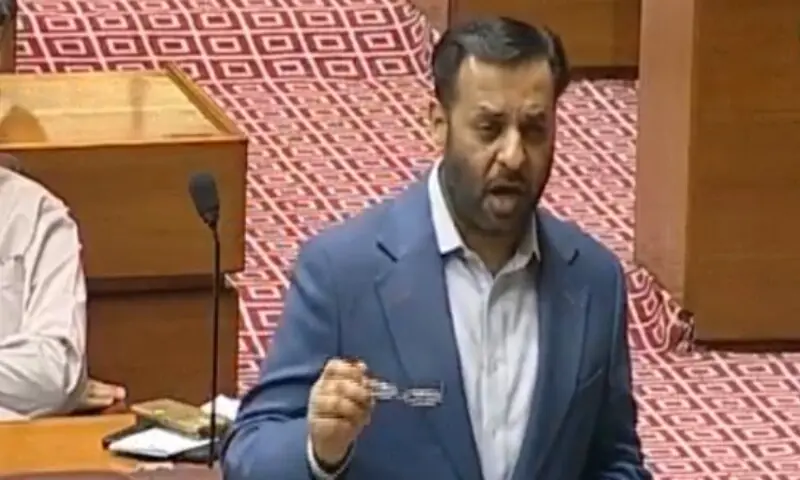
Kamal lambasts 'flawed' NFC award distribution formula
Health Minister Mustafa Kamal on Tuesday criticised the formula of fund distribution under the National Finance Commission (NFC) award — which is based on the size of every provinces’ population — as “flawed”. In his remarks during an address to the National Assembly, where a debate on the federal budget fiscal year 2026-27 was ongoing, Kamal noted that the NFC formula was 82 per cent population-based. “What province will reduce its income by controlling the population?” he asked. “Balochistan is the smallest province [population-wise] and gets the lowest share [in the NFC]. If it wants to get [a larger] share like Punjab, it will have to increase its population,” he pointed out, adding the distribution of funds based on population was the “biggest flaw” in the system. Without mentioning the name of any country, the health minister added that “in our neighbouring country, the weightage of population in the NFC award is 17pc,” while the rest was based on “revenue, backwardness, income and other areas”. More to follow
16 Jun 2026
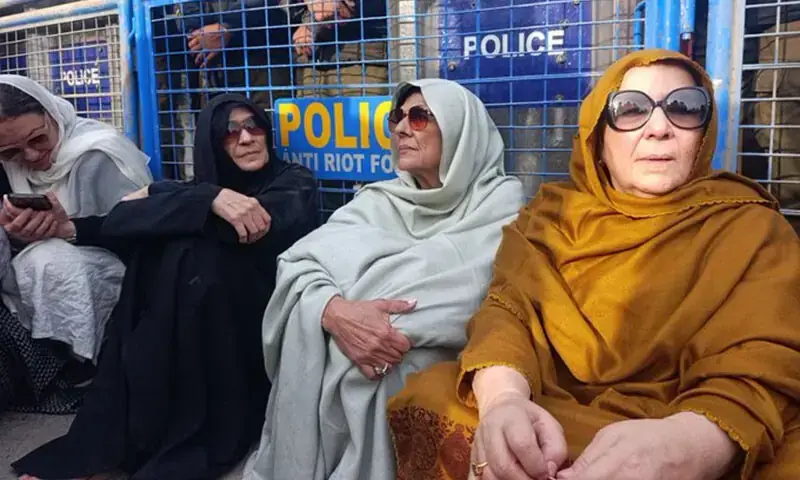
'We do not accept govt's version of events,' says Aleema after Imran taken to hospital for 5th time for eye ailment
PTI founder Imran Khan’s sister, Aleema Khan, said on Tuesday that the government’s version of events was unacceptable after the former premier was taken to the hospital for the fifth time for the treatment of his eye ailment. In a post on X, Aleema said, “We have received reports that Imran Khan was again taken to Pakistan Institute of Medical Sciences (Pims) in the early hours of 15 June. We found out through a tweet by Barrister Gohar on the morning of June 15.” “We reject any medical report generated by Pims regarding Imran’s condition. The same institution has previously made questionable claims, including the assertion that Imran had recovered 90 per cent of his eyesight. Imran himself rejected these claims when his lawyer later met him at Adiala jail,” she said. “A fundamental question remains unanswered: Why does Imran require a fifth injection?” she asked. “We do not accept the government’s version of events. We demand that Imran be examined and treated by independent, qualified specialists at Shifa International Hospital, Islamabad. This is an urgent and immediate priority,” she said. She recalled that a court order had permitted six family members to meet Imran every Tuesday; however, she contended that authorities had violated the order over the past eight months. “My sister, Dr Uzma Khan, has only been allowed to meet him a few times, and her last meeting took place on December 2, 2025,” she said. “We reject the government’s continued use of isolation and deprivation as tools of pressure against Imran. Today, we expect all six family members to be allowed to meet him in accordance with the court’s order,” she said. “The denial of Imran’s rights is not merely a political issue; it is a clear violation of both the jail manual and high court orders,” she said. Aleema said that according to the jail manual, Imran was entitled to a weekly telephone call with his sons; a weekly meeting with family members; a weekly meeting with his legal counsel; access to books and reading material; access to television and newspapers; access to proper medical treatment and regular medical check-ups; and his immediate family members being notified before any medical procedure. She went on to say that court orders stipulated that he be allowed to speak with his sons on the phone and that lawyers, family members and party representatives can meet him on Tuesdays and Thursdays. “We demand the immediate restoration of all of Imran’s lawful rights as a prisoner, with access to independent and professional medical treatment in the presence of family as the highest and most urgent priority,” Aleema said. On Monday, Imran was brought to Pims for a follow-up eye treatment, which included the administration of a fifth anti-VEGF intravitreal injection to him. According to the hospital, he was examined by the ophthalmologists and was found to be clinically stable. Imran last underwent the anti-VEGF intravitreal injection on April 28. His eye ailment — right central retinal vein occlusion (CRVO) — came to light in late January. His first medical procedure was carried out on January 24, followed by a second dose on February 24 and a third dose on March 23. Over the past few months, the government and the opposition have been engaged in a blame game , with the latter accusing the former of a lack of transparency in not ensuring appropriate treatment for Imran, and not allowing his personal physicians access to him. The government denies these allegations. The opposition has also demanded that the former premier be shifted to Shifa International Hospital, be treated in the presence of his personal physicians and allowed to meet his family.
16 Jun 2026
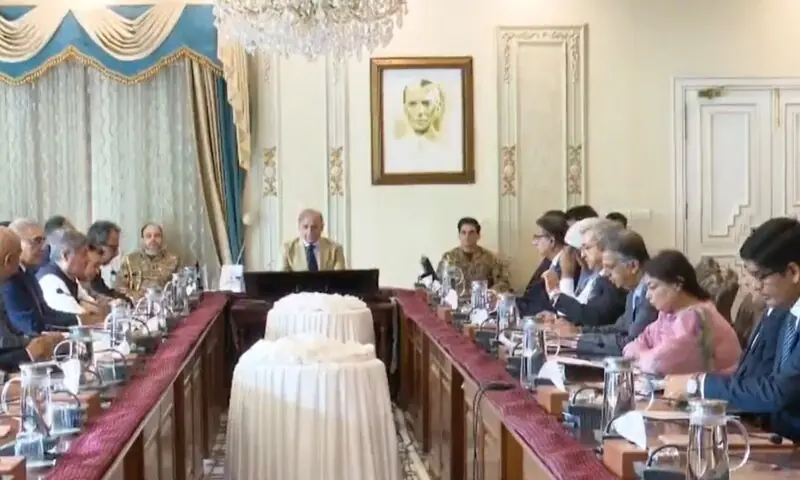
PM Shehbaz says Centre to foot the bill of 100MW solar power project in GB
Prime Minister Shehbaz Sharif on Tuesday said that the federal government would bear the expenses for a 100 megawatt solar power project in Gilgit-Baltistan (GB). The remarks came as the premier chaired a meeting in Islamabad reviewing the project, according to a statement issued by the Prime Minister’s Office (PMO). The prime minister directed that the work on the project be accelerated and completed as soon as possible, adding that an independent third-party validation be conducted to ensure transparency at every stage of the project, the PMO said. During the meeting, the relevant authorities briefed participants on the federal government’s solar energy project in GB, the statement said. The meeting was told that an 18MW solarisation project for government buildings was being implemented across the region. The statement said that the 18MW solarisation project for government buildings in Gilgit and Diamer divisions was scheduled to be completed by December, while the solarisation project for government buildings in Baltistan division was expected to be completed by October. The meeting was also told that work was underway on an 82MW solar energy project for houses in Gilgit, Skardu, Chilas and Khaplo, the statement said. In August 2025, the Executive Committee of the National Economic Council approved the 100MW power project for GB. In December, PM Shehbaz had formally approved the project to ensure uninterrupted, affordable and sustainable power supply to the region.
16 Jun 2026
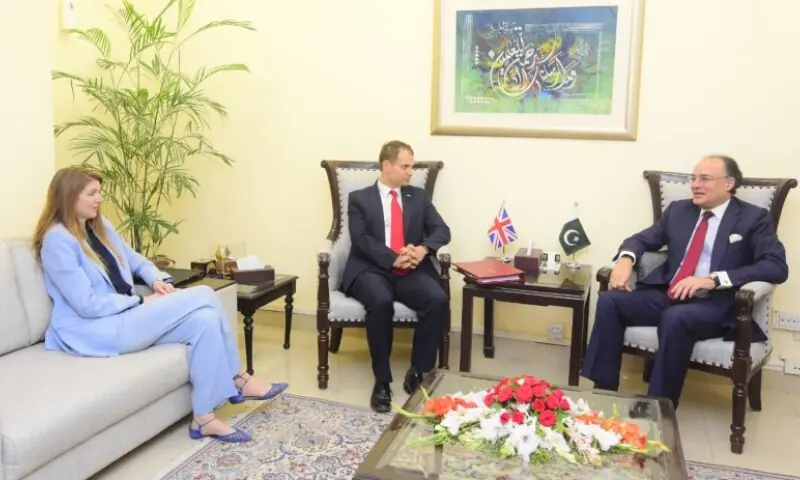
Govt's economic planning mindful of possible external and geopolitical risks, finmin tells UK MP
Finance Minister Muhammad Aurangzeb said on Tuesday that the government’s economic planning and fiscal assumptions had remained mindful of possible external and geopolitical risks, including potential “second-order impacts” arising from prolonged regional uncertainty. The minister made these remarks during a meeting with UK Parliamentary Under-Secretary of State for the Middle East, North Africa, Afghanistan and Pakistan (MENAP), Hamish Falconer MP, held at the Finance Division in Islamabad. The meeting was also attended by British High Commissioner Jane Marriott and senior officials from both sides. According to a statement issued by the Ministry of Finance, the two sides held a “comprehensive exchange” on regional developments, Pakistan’s macroeconomic outlook, ongoing structural reforms, fiscal priorities, institutional modernisation, and opportunities to further strengthen Pakistan–United Kingdom economic cooperation. “The finance minister briefed the visiting delegation on the government’s economic reform agenda and shared key priorities reflected in the budget 2026–27. He reaffirmed the government’s focus on preserving macroeconomic stability, sustaining the economic recovery, accelerating structural reforms, and creating conditions for inclusive and durable growth,” the ministry said. The minister also referred to recent regional developments, including the easing of tensions following the recently agreed understanding between the United States and Iran. “He underlined Pakistan’s consistent support for dialogue, de-escalation, and peaceful resolution of conflicts and noted that Pakistan had actively advocated for reducing regional tensions at an early stage. He observed that prolonged instability in the region carries implications for economic confidence, energy markets, supply chains, and growth prospects across emerging economies,” the statement said. “The minister shared that the government’s economic planning and fiscal assumptions had remained mindful of possible external and geopolitical risks, including potential second-order impacts arising from prolonged regional uncertainty, while emphasising that improved regional stability creates more favourable conditions for investment, trade, and economic activity,” it added. Aurangzeb also briefed the delegation on Pakistan’s ongoing fiscal and institutional reform efforts. He highlighted measures being undertaken to improve revenue mobilisation, strengthen compliance, reduce leakages, and modernise tax administration through greater use of technology, data integration, centralised processing and digital invoicing, the statement said. He emphasised that the reform agenda sought not only to improve revenue performance but also to strengthen transparency, reduce discretionary intervention, and rebuild trust between citizens, businesses and public institutions, it added. “The discussion further covered the government’s broader structural reform program, including privatisation, rightsizing of public sector entities, improving public expenditure efficiency, and expanding digital governance and targeted social protection mechanisms. The minister highlighted progress being made towards technology-enabled service delivery and more efficient allocation of public resources,” the handout said. Meanwhile, Falconer appreciated the government’s commitment to economic reform and acknowledged the “seriousness and breadth of Pakistan’s ongoing transformation agenda”. “He noted the importance of sustained reform implementation, institutional strengthening, and continued efforts to enhance economic competitiveness and governance. He also reaffirmed the UK’s interest in continued engagement and cooperation in areas of mutual economic interest,” the statement said. Both sides reaffirmed their commitment to maintaining close engagement and strengthening Pakistan-UK cooperation in support of sustainable economic growth, institutional development and regional stability, the statement concluded.
16 Jun 2026
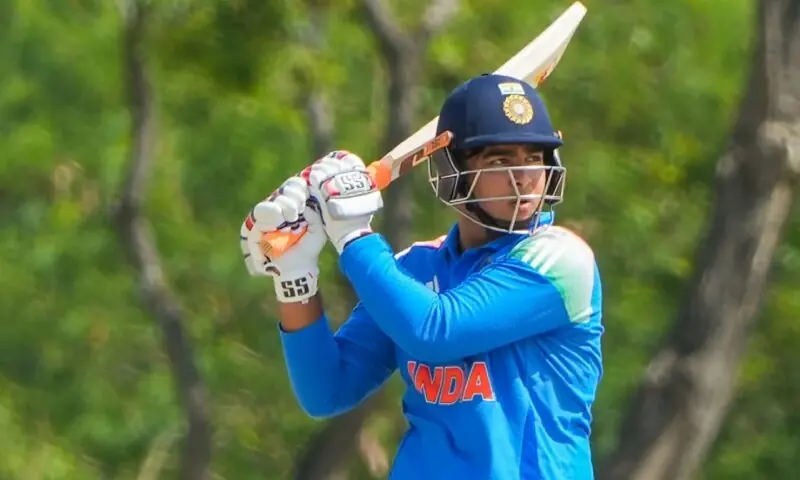
Indian wunderkind Sooryavanshi, 15, loses cool in on-field spat during Sri Lanka match
Fifteen-year-old cricket sensation Vaibhav Sooryavanshi blew his fuse in an India A game in Sri Lanka and pushed an opposition player after a heated on-field exchange. The spotlight has been on Sooryavanshi since his batting heroics in the recent Indian Premier League (IPL) won him a place in India’s senior men’s team for their T20 tour of Ireland and England. But he made headlines for all the wrong reasons after he and a Sri Lanka A player confronted each other, following India’s narrow defeat in a Super Over in Dambulla on Monday. Sri Lanka’s Vishen Halambage exchanged words with departing Indian batters before Sooryavanshi responded and shoved him, according to Indian media and broadcast footage. Sri Lanka A wicketkeeper Niroshan Dickwella stepped in to calm tempers and separated the two players. The teams exchanged handshakes, but TV images showed Sooryavanshi visibly upset. The left-handed opener capped off a stunning IPL 2026 season for Rajasthan Royals, where he amassed 776 runs to finish as the tournament’s leading run scorer. He struck one century and five half-centuries during the season to pick up the Orange Cap for the leading run-getter. He also bagged the IPL’s most valuable player and emerging player prizes. He is in line to become India’s youngest player, surpassing Sachin Tendulkar, the batting great who made his Test debut aged 16 years and 205 days in 1989. India’s senior team will play Ireland on June 26 and 28 in Belfast. The England series will begin on July 1 in Chester-le-Street.
16 Jun 2026
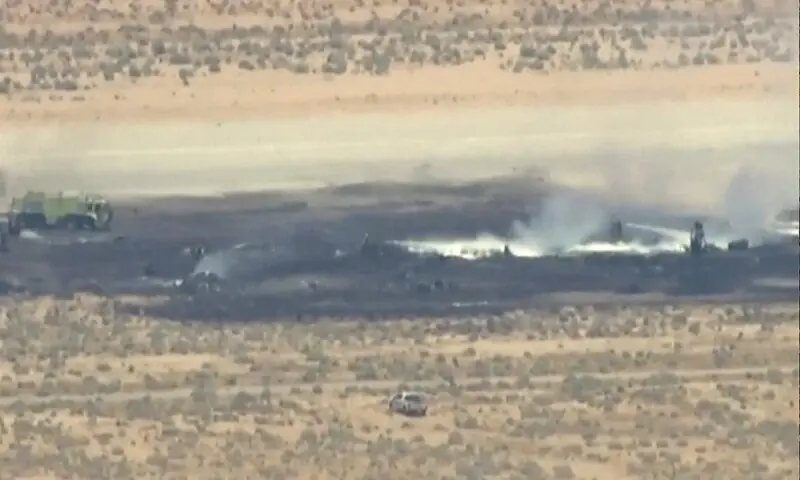
US Air Force B-52 bomber crashes in California, killing all 8 crew aboard
A US Air Force B-52 Stratofortress bomber crashed on takeoff on Monday at Edwards Air Force Base in Southern California’s Mojave Desert, bursting into flames and killing all eight crew members aboard, Air Force officials said. The eight-engine, jet-powered aircraft, built to carry a wide array of nuclear and conventional bombs, was on a routine test mission when it crashed on the runway at Edwards just after leaving the ground, Air Force Colonel James Hayes said at a press conference hours later. A towering pall of black smoke billowing from the crash site was visible for miles immediately after the accident. He said the “mixed crew” aboard the aircraft consisted of government civilians, government contractors and uniformed military personnel. Aerospace giant Boeing, which designed and built the plane, said two of its employees were among the dead. The flight was intended to support a radar modernisation programme, Hayes told reporters. The cause of the crash was unknown and under investigation, he added. Air Force officials did not name the victims, saying they were still in the process of notifying their next of kin. Aerial video footage of the crash scene, about 100 miles north of Los Angeles, showed a charred, smoldering patch of the desert floor larger than a football field as an emergency vehicle was seen driving along the site’s perimeter. From a distance, there were no large pieces of debris readily visible in the footage. Hayes said the crash was quickly “deemed to be unsurvivable”. Because of damage to the runway, he said, “we’re grounding all operations at Edwards Air Force Base” through at least Tuesday, adding that no operations beyond the base would be suspended. Edwards, a sprawling test flight facility established in the 1930s around a dry lake bed, occupies about 481 square miles of the Mojave desert, making it the Air Force’s largest airfield. Its experimental aviation legacy includes the flight by Chuck Yeager in the Bell X-1 aircraft that broke the sound barrier in 1947, test flights of the X-15 aircraft and the first landings of NASA’s space shuttles. Backbone of bomber force The B-52 Stratofortress, a long-range, subsonic aircraft built to carry up to 70,000 pounds of weapons and supplies, has long served as the backbone of the US crewed strategic bomber force, according to the military. The swept-wing aircraft is capable of unleashing the widest range of weapons in the US inventory, from cluster bombs and gravity bombs to precision-guided missiles and nuclear warheads, at altitudes of up to 50,000 feet, according to an Air Force fact sheet. Its combat range extends more than 8,000 miles without refueling. Monday’s incident marked the first crash of a B-52 Stratofortress since the same type of bomber crashed on the island of Guam in May 2016, according to the Bureau of Aircraft Accidents Archives, a Geneva-based organisation that collects global aviation accident data. All seven crew members aboard that aircraft survived. Only H models of the B-52 remain in the Air Force inventory. The aircraft involved in Monday’s crash was assigned to the 412th Test Wing, which is based at Edwards. Most B-52s are stationed in North Dakota and Louisiana.
16 Jun 2026

The Indus Waters Treaty: Correcting the record, preserving the law
On May 9, 2026, Malay Mail published a two-part article by former Indian Commissioner for Indus Waters P.K. Saxena, titled “Indus Waters Treaty: Asymmetric obligations, unequal concessions and Pakistan’s weaponisation” . The article tried to do more than criticise Pakistan. It sought to recast the Indus Waters Treaty as a historical injustice to India, to portray Pakistan’s use of Treaty procedures as obstruction, and to defend India’s decision to hold the Treaty in “abeyance” as a legitimate correction of an allegedly unequal bargain. When such an argument enters the public domain, it carries institutional weight even when formally described as personal opinion. For that reason, the record should be corrected carefully, professionally and firmly from Pakistan’s side. Claims versus facts Water treaties survive because facts are kept straight, obligations are not blurred, and unilateral narratives are not allowed to harden into public assumptions. If a former Treaty official presents safeguards as unfairness, dispute settlement as weaponisation, and unilateral suspension as a right decision, silence would risk normalising a view that is legally unsound and strategically dangerous. The Indus Waters Treaty is too important to be left to grievance writing. Saxena begins with a true fact and then draws the wrong conclusion. India is the upper riparian on the western rivers before they enter Pakistan, and Pakistan’s agricultural heartland depends critically on reliable flows. But that is precisely why the Treaty exists. It was not born out of Indian generosity. It was born out of the acute vulnerability created by Partition and the April 1948 canal-water crisis, when East (Indian) Punjab stopped supplies to West (Pakistani) Punjab after expiry of the temporary arrangement. That episode deprived areas of Pakistan of water at a critical agricultural moment and left a lasting fear that upstream control could be used to decide downstream survival. The Treaty replaced upstream discretion with legal obligation. The Inter-Dominion arrangement of May 4, 1948, recorded a live dispute over East Punjab’s supply of canal waters to West Punjab. The later Treaty superseded that temporary arrangement and fixed a durable settlement. Its purpose was not sentiment. It was certainty. The same correction is needed for the World Bank’s 1954 proposal. Saxena lists elements of that proposal — no Chenab waters at Marala for India, the non-diversion of about 6 million acre feet (MAF) from the Chenab, abandonment of some planned upper-reach developments and no water development in Kutch from the system — as if they prove that India was punished for cooperation. In reality, they prove something else: the Bank’s central idea was mutual independence. Historic withdrawals had to continue, although not necessarily from existing sources, and each country had to control the works supplying its allocated waters. In practical terms, the settlement had to avoid a situation in which Pakistan remained dependent on Indian-controlled works for the water feeding its fields. Pakistan’s caution between 1954 and 1958 was not a strategy of delay for delay’s sake. Pakistan was being asked to give up historic reliance on the eastern rivers. It therefore had to know whether the western rivers, supported by replacement works and storage, could actually sustain the canals and command areas that had depended on Ravi, Beas and Sutlej supplies. A paper allocation that left fields dry would not have been a settlement. It would have been an engineering and human disaster. Insistence on replacement works was not obstruction. It was the basic condition for making the Treaty work. Saxena’s most striking claim is that Pakistan “controls” roughly 80 per cent of the system while India received only about 20pc. This is hydrological arithmetic used as political rhetoric. Pakistan does not physically control the western rivers before they enter Pakistan. India is upstream on substantial stretches of those rivers. Article III of the Treaty therefore requires India to let flow the waters of the western rivers and not interfere with them except for the limited uses expressly permitted by the Treaty. Pakistan is the downstream recipient of a legal entitlement; it is not the upstream controller of the rivers. Quid pro quo It is to be understood that the real bargain was not charitable, nor merely volumetric, it was a quid pro quo. Pakistan placed the Treaty before the Permanent Court of Arbitration as a settlement of three linked bargains: the Peace Bargain, by which the post-Partition risk of upstream physical control over waters being used coercively was converted into a binding legal framework; the Treaty Bargain, by which the six main rivers were divided river-wise — the eastern rivers to India and the western rivers to Pakistan, in each case subject to the Treaty’s express exceptions; and the Western Rivers Run-of-River Hydro Bargain, by which India’s permitted uses of the western rivers, especially hydro-electric generation, were allowed but tightly constrained by Article III and Annexures C, D and E. Though India did not participate in the Court’s proceedings, at the Permanent Indus Commission and in Baglihar Neutral Expert’s proceedings held in 2005-06, India resisted that framing, relying instead on the preamble’s language of “most complete and satisfactory utilisation” and on the optimum development of the rivers, while arguing that Pakistan’s fear of weaponisation was unfounded and that the Treaty was not designed to ensure that India could never diminish flows to Pakistan. The Court’s answer, after considering India’s position available on record, was not to read the preamble as a charter for maximum unilateral development by India, or by either party. It held that complete and satisfactory utilisation is achieved through a stable, final and cooperative delimitation of the parties’ respective rights and obligations. That is why the western rivers cannot be described as waters over which India merely formalised access while they passed through territory administered by it. India obtained legal finality over the eastern rivers after the transition period; Pakistan obtained legally protected access to the western rivers, not as an absolute entitlement to exclude every Indian use, but through India’s obligation to let flow and not interfere except for Treaty-specified uses. The Court stated that, although the Treaty is not a boundary treaty, it has an objective akin in significance and permanence to a boundary treaty because it stabilises the parties’ rights along their frontier in respect of a shared natural resource. It then determined that the object and purpose of the Treaty is not merely to allocate the eastern rivers to India and the western rivers to Pakistan for “complete and satisfactory utilisation”, but also to delimit in considerable detail the obligations of upstream India on the western rivers so as to ensure Pakistan’s safe and continual access to those waters — the outcome Pakistan framed as the Hydro Bargain. Thus, India may generate hydro-electric power on the western rivers, but only through Treaty-conforming projects and within the limits fixed by Article III and Annexure D; those limits are to be strictly construed, though not so strictly as to deny India the capacity to generate hydro-electric power from projects built in conformity with the Treaty. Did India pay more? The financial argument is also distorted. Saxena says India paid around 62 million pounds to support infrastructure in Azad Jammu and Kashmir and, in effect, paid to give away water. Article V says otherwise. India’s fixed contribution was made because Pakistan had to construct replacement works to replace, from the western rivers and other sources, irrigation supplies in Pakistan that on August 14, 1947, had depended on the eastern Rrivers. The money went into the Indus Basin Development Fund administered by the World Bank. The Treaty also states that the contribution did not give India any right to participate in Pakistan’s decisions regarding those works. The 62 million pounds were therefore not charity, not compensation for Pakistan, and not payment for infrastructure in Azad Jammu and Kashmir and Pakistan. They were part of the settlement price of a bargain from which India benefited: the eastern rivers became available to India for unrestricted use after transition, while Pakistan bore the burden of rebuilding a vast irrigation system. The replacement works — including major dams, barrages, a siphon and inter-river link canals —were not symbolic. They were the physical foundation without which the Treaty could not have been implemented. Saxena complains that the Treaty imposes one-directional restrictions on India. In one sense, it does. In law and in engineering, that is the point. India is upstream on the western rivers. A downstream state cannot manipulate upstream flows in the same way an upstream state can affect downstream flows. Restrictions on storage, pondage, outlets, spillways, intakes and operations are therefore not punishments. They are the safeguards that make downstream entitlement real. Nor is it correct that Pakistan accepted no obligations. Pakistan surrendered historic dependence on the eastern rivers, undertook the replacement programme, accepted the end of any post-transition right to releases from the eastern rivers, and remains subject to Treaty obligations on data, cooperation and specified reaches and tributaries. Article VI on exchange of data, Article VII on future cooperation and Article VIII on the Permanent Indus Commission are not ornamental provisions. They are part of the bargain for both sides. Put through the Treaty test This is why the charge of obstructing hydropower must be treated with care. Pakistan does not say India can never build on the western rivers. The Treaty itself permits run-of-river hydropower. But a project is not lawful merely because it is labelled run-of-river. It must comply with Annexure D. Low-level outlets, gated spillways, submerged intakes, pondage, freeboard and operating rules are not technical trivia. They determine how much control an upstream operator can exercise over the timing, volume and reliability of downstream flows. Nor does Pakistan lose the right to object because a project might, in some circumstances, offer regulated-flow or flood-moderation benefits. A project may have possible benefits and still fail the Treaty test. The August 8 2025 Award on General Issues and May 15 2026 Supplemental Award on Pondage are directly relevant here. These awards addressed general questions concerning Annexure D and made clear that the Treaty constraints come first. Contemporary engineering practice cannot override the Treaty. A design is not lawful because it is optimal for India; it must be the design practically achievable within the constraints India accepted. The Court also clarified issues concerning low-level outlets, gated spillways, turbine intakes, pondage and freeboard. That alone defeats the claim that Pakistan’s objections are merely political devices. Saxena relies on Baglihar, Kishenganga, Pakal Dul and Tulbul as examples of systematic obstruction. The more accurate conclusion is that these projects raised real Treaty questions. Baglihar cannot be converted into a general license for all future Indian projects. The Court has rejected that approach, holding that a neutral expert’s determination is binding only for the particular matter decided and is not a standing precedent for every future hydropower design on the western rivers. Equally, Pakistan’s use of Article IX cannot be called weaponisation without attacking the Treaty itself. Article IX was drafted because the parties knew that questions, differences and disputes would arise. The Court’s July 6 2023 Award on Competence rejected India’s objections and confirmed that the Court was competent to hear the disputes placed before it. India’s non-participation does not make Pakistan’s recourse unlawful. It makes the Court’s careful scrutiny of the record even more important — and the Court has recorded that it took steps to understand India’s positions from the available material. Saxena says Pakistan raises a “water aggressor” narrative against an India that has scrupulously complied for decades. Even if India complied during the 1965 war, the 1971 war and the Kargil conflict, that was performance of a binding obligation, not a credit that can later be spent to suspend the Treaty. The facts since April 2025 make the accusation against Pakistan impossible to accept at face value. India announced that the Treaty would be held “in abeyance”. Pakistan replied that “abeyance” has no legal meaning in the Treaty, that Article XII(4) keeps the Treaty in force until terminated by a duly ratified treaty between the two governments, and that baseless terrorism allegations, which Pakistan rejects, cannot be used to suspend a water-sharing treaty outside the Treaty framework. The Court’s Supplemental Award of June 27 2025 supports the essential legal point. The Treaty contains no unilateral power of abeyance or suspension. Article XII(4) reflects the intention that the Treaty continues in force unless terminated by mutual treaty. The Court also held that India’s abeyance position could not affect the Court’s continuing competence. That conclusion matters because it rejects the idea that a party can escape Treaty procedures by announcing a unilateral political position after dispute settlement is already underway. Human rights concerns The human-rights dimension is not rhetoric. The UN Special Procedures communication dated October 16 2025 and made public in December 2025 recorded that the Indus rivers irrigate about 18 million hectares of farmland in Pakistan, around 80pc of its arable land, and contribute substantially to Pakistan’s economy. It warned that disruption through pondage filling, reservoir operation, gate releases or sediment releases could affect rights to water, food, livelihood, work, environment and development. Water should not be used as a means of political pressure. That is not Pakistan’s propaganda; it is a sober human-rights concern. Recent correspondence reinforces why the Treaty machinery is essential. In May 2025, Pakistan raised serious concerns over abnormal Chenab flows at Marala, including a peak of 78,276 cusecs followed by a decline to 1,527 cusecs, with insignificant rainfall indicated by available records. Similarly, Pakistan wrote to India again in December 2025 when pronounced and abrupt variations were observed in the Chenab River at Marala, with flow dropping as low as 870 cusec. In May 2026, Pakistan once again wrote about abrupt variations at Chakothi on the Jhelum and Marala on the Chenab, including a fall at Marala from 21,887 cusecs to 5,689 cusecs within the event window. Pakistan sought explanations, operational data and inspections. These are not theatrical objections. They are the requests a downstream Commissioner must make when sudden variations affect barrage and canal management and when Treaty compliance has to be verified. With these recent developments, including India’s announcement of the diversion of Chenab into Beas, India’s argument that Pakistan’s fear of weaponisation was unfounded is now far from hypothetical. The same is true for project information. When reports appeared regarding Dulhasti Stage-II, Pakistan did not reject development in principle; it asked for formal Treaty notification, design particulars, pondage and operational data, and consultations. When reports emerged about Sawalkot, Pakistan asked for information and latest status. When the NHPC issued a tender concerning making the Salal dam undersluices operational, Pakistan invoked both the Treaty and the 1978 Salal Agreement, which required the outlet works to be permanently closed with concrete plugs except under tightly defined conditions and consultation. Requests for data, inspection and consultation are the opposite of obstruction. They are Treaty implementation. The development question Saxena’s development argument is also overstated. He says Rajasthan and parts of Punjab remained arid and that Indian Illegally Occupied Jammu and Kashmir’s (IIOJK) hydropower potential was suppressed. But India received unrestricted use of the eastern rivers and retains defined rights on the western rivers. The Treaty does not ban development in IIOJK. It regulates it because India is upstream and Pakistan is downstream. If development is delayed because designs seek more storage, control or operational discretion than the Treaty permits, the problem is not Pakistan’s objection. The problem is the design. Nor does the clean-energy argument alter the law. Renewable energy is important, but it cannot erase Treaty limits. The Treaty already permits hydropower. It simply requires India to build and operate projects within agreed safeguards. Energy security cannot be achieved by converting a run-of-river exception into an upstream storage entitlement. The renegotiation correspondence further weakens the claim that Pakistan refused engagement. India issued notices in 2023 and 2024 seeking review and modification under Article XII(3), later adding grounds such as demographics, clean energy, security and transitional provisions. Pakistan repeatedly said it was open to hearing India’s concerns, asked India to identify those concerns clearly, and emphasised that the Permanent Indus Commission was the proper initial forum for technical and Treaty-related engagement. Pakistan also made clear that openness to hear India could not be treated as automatic commencement of modification negotiations without a shared understanding of the grounds. It is legal discipline, not an evasion. The terrorism allegations are the most dangerous part of Saxena’s thesis. He invokes such allegations to argue that goodwill between Pakistan and India no longer exists. Pakistan has condemned terrorism and has rejected India’s allegations and their attempted linkage to a water treaty. The preamble’s reference to goodwill and friendship is not a termination clause. If India believes a Treaty breach exists, Article IX gives it a mechanism. If it wants modification, Article XII(3) provides the route via a duly ratified treaty concluded by both governments. What India cannot do is convert unrelated security allegations into a unilateral license to suspend water obligations. Calling abeyance “the right decision” does not create a legal power. Treaties are made precisely so that obligations survive political crises. The Treaty has endured wars and crises because it is structured as law, not charity. It does not assume friendship. It creates obligations despite mistrust. It does not prohibit India from development. It regulates development where India has upstream control and Pakistan bears downstream risk. It gives Pakistan legal protection against interference with rivers on which its people depend. That is the difference Saxena’s article misses. If every Treaty safeguard is described as unfairness, every Pakistani objection as obstruction, every arbitral proceeding as weaponisation, and every unilateral Indian step as legitimate self-correction, then law is replaced by upstream discretion. That is exactly what the Treaty was designed to avoid. The Indus Waters Treaty was not an Indian subsidy to Pakistan. It was a settlement of competing rights and existential vulnerabilities. Pakistan’s position is therefore straightforward: honour the Treaty, share the data, allow inspections, resolve questions through the commission and Article IX, and build only what the Treaty permits. That is not weaponisation. It is the rule of law.
16 Jun 2026
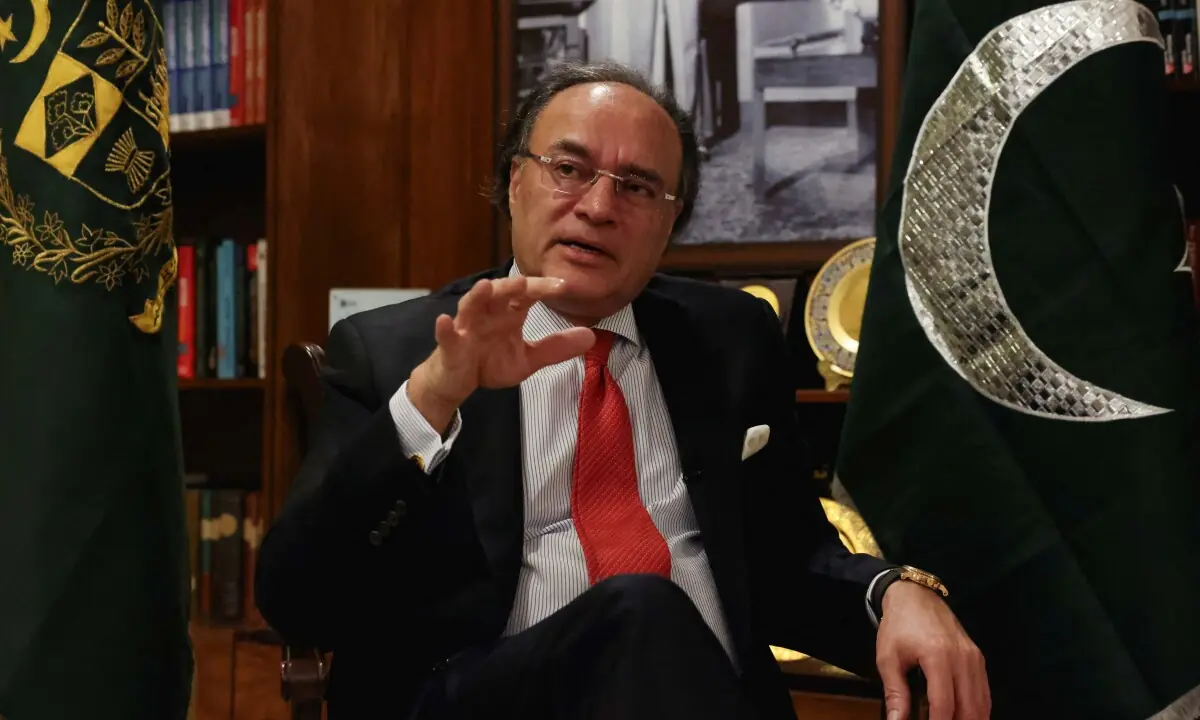
Aurangzeb sees budget upside from US-Iran deal, but says 'way too premature' to revise projections
Pakistan could improve economic projections for 2027 after the end of the Iran war, but it is still too early to revise the budget, Finance Minister Muhammad Aurangzeb told Reuters , hours after the US and Iran signed a deal to end the fighting. Damaged energy infrastructure meant supply chains would take time to return to normal, after the conflict pushed inflation back into double digits, Aurangzeb said. “We were looking at how we manage the second, third-order impact in case this conflict continues,” he said. “The energy infrastructure has been hit. And therefore, it will take time before we return to normalcy in terms of supply chains.” He added, “I do see upsides in what we have projected for next year,” but cautioned it would be “way too premature” to revise the budget. The budget for the upcoming financial year, presented in Parliament on Friday, targets growth of 4 per cent and inflation of 8.2pc. It raised defence spending by 18pc to Rs3 trillion, while relying on higher tax revenue to keep a $7 billion International Monetary Fund (IMF) programme on track. Commercial borrowing to change creditor profile Islamabad may use commercial borrowing in fiscal year 2027 to change its creditor profile without increasing overall external debt, Aurangzeb added in comments on Monday. “Ideally, what we want to do is to see if we can replace some of the bilateral through commercial,” he said. “We do not intend to increase the size of our external debt.” Pakistan repaid $3.4 billion in bilateral deposits from the United Arab Emirates last month but has also tapped the emirates’ commercial banks for financing, reflecting the creditor-profile shift Aurangzeb wants to formalise. It plans further Panda Bond, Eurobond, US dollar and first rupee-linked, dollar-settled issues, though the sizes have yet to be decided, he said. The FY27 budget envisages $2.82bn in commercial and eurobond financing, while Pakistan has approval for $1bn equivalent in Panda bonds after a $250 million debut that was 95pc backed by the Asian Development Bank and the Asian Infrastructure Investment Bank. Interest has surged in Pakistan’s burgeoning defence industry after last year’s conflict with India , but Aurangzeb said it was too early to project any defence-export upside. The government’s immediate focus is on allocations, given two “active” borders, he added, as the country is flanked by Afghanistan and India. Pakistan has also moved to formalise the digital asset sector this year, for example by signing pacts with Binance and World Liberty Financial . Aurangzeb said Pakistan would regulate crypto, tokenisation and digital-asset exchanges before taxing the sector, saying revenue gains would follow once it was formalised. “Yes, at some point we have to bring it into the taxation timeframe,” he added. “But this was not the time to do it.”
16 Jun 2026
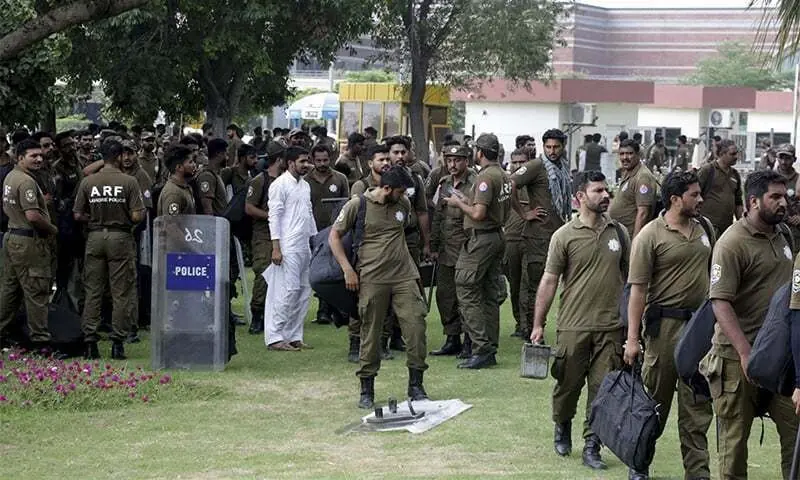
Hafizabad DPO changed after ‘row with MPA’s son over office toilet use’
LAHORE: A BS-18 police officer, Kamran Hamid, was ‘removed’ from the post of Hafizabad district police officer (DPO), allegedly following an altercation with a local MPA of the ruling party, who is also close to the politically influential Tarar family, after he was held guilty in an inquiry conducted by Punjab Inspector General of Police (IGP) Abdul Kareem on the orders of Chief Minister Maryam Nawaz. The CM had directed the Punjab police chief to hear both parties and find out who was responsible for the “dispute over the use of the DPO office’s toilet by the PML-N MPA’s son”. Giving details, a senior police officer told Dawn on the condition of anonymity that the dispute erupted when PML-N MPA Shahid Bhatti visited the Hafizabad DPO’s office, along with his young son and some complainants from his constituency. He says that the MPA had visited the office of (now former) DPO Kamran Hamid as the CM had issued instructions to ruling party parliamentarians to get locals’ police-related matters resolved in the presence of the head of the respective district police. The officer says that as the meeting was underway, the young son of the PML-N MPA entered the office, while attending a call on his mobile phone. He says the MPA snubbed his son for using a mobile phone in the DPO’s office and told him to disconnect the call. The official says that the youth later went to the retiring room of the DPO, probably to use his toilet. As he came out of the retiring room, the DPO inquired as to why he used his “personal” washroom without his permission. The MPA’s son replied in the same tone that it was a public office, and not the DPO’s “personal” washroom. The DPO was not expecting such an embarrassing response in the visitors’ presence. The officer says that both sides exchanged words over the issue and reportedly the police officer, in a fit of rage, asked the MPA’s son to “get lost”. The MPA, he says, intervened, advising his son to stay calm and leave the office, in an attempt to defuse the tension. As the MPA left the DPO’s office, some of the area people, who were accompanying him, declared the DPO’s conduct as an insult to “a key political figure of the area”, fanning the tension. Subsequently, the officer says, a leader of the Pakistan Tehreek-i-Insaf (PTI) uploaded a critical social media post, titled “get lost”, along with a picture of a toilet commode, further fanning the dispute. The officer says that the MPA later brought the matter to the notice of PML-N senior politician Saira Afzal Tarar, who took it up with the Punjab chief minister. Meanwhile, the influential political family began lobbying for the DPO’s transfer, as the issue became talk of the town in Hafizabad, where the PML-N workers had already launched a vigorous social media campaign against the police officer. Later, the MPA, along with his son, visited the office of Punjab Inspector General of Police (IGP) Abdul Kareem and complained about the “unacceptable attitude” of the Hafizabad DPO. On being inquired, the DPO reportedly briefed the IGP that he had only objected to the use of his office washroom because some of his personal belongings were lying in his retiring room, besides official files. However, the officer says, the IGP was dissatisfied by the explanation given by the police officer and reported his findings to the CM. He says that in the light of the IGP’s report, Mr Kamran Hamid was later transferred from the post on CM’s orders. He was posted in the Punjab Safe Cities Authority (PSCA), a relatively low-profile position. Soon after the transfer, a post attributed to a member of the Tarar family appeared on social media, saying “now you get lost” — an apparent taunt to the outgoing police officer. The episode was widely discussed on social media, with many users questioning Mr Hamid’s conduct, also sparking a debate on the “right” of the members of the public to use govt officials’ washrooms. There are reports that a group of senior police officers came out in the defence of Kamran Hamid and requested the IGP to post the young officer against a better slot for the sake of the dignity of the department and the Police Service of Pakistan (PSP). Published in Dawn, June 16th, 2026
16 Jun 2026
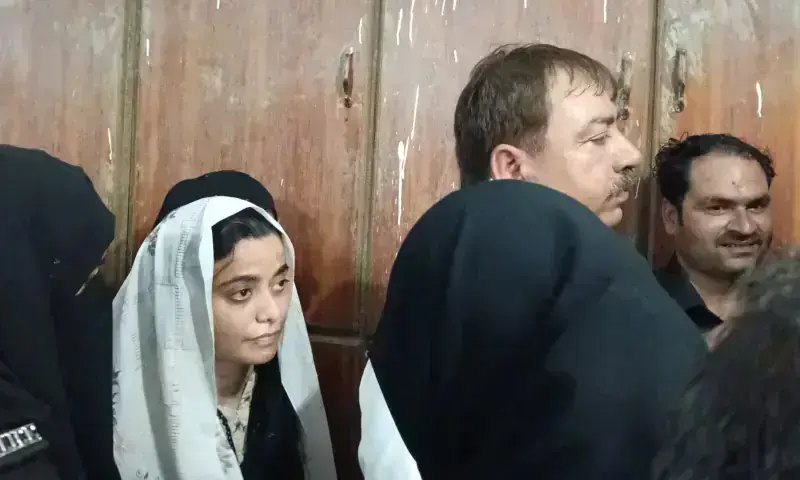
Pinky’s long-running drug network targeted elite areas, students: IO
KARACHI: The investigating officer (IO) of a case against alleged cocaine dealer Anmol Pinky on Monday filed an interim charge sheet, stating that the accused had been involved in drug trafficking for the last 16 years and she used to supply narcotic substances in posh areas, as well as among university and school students. The charge sheet was submitted before the judicial magistrate (South). The IO also sought time to submit the final report, stating that he was awaiting forensic reports and responses from the concerned departments regarding the suspects’ travel history and assistance in the investigation. However, due to the absence of defence counsel, the court adjourned the matter till June 20. In the interim charge sheet, the IO has placed three suspects — Humaira, Sabra and Aina — in Column-II with red ink, while three suspects, Humza, Aqib and Aizaz, have been placed in Column-II with blue ink as their whereabouts are not known. Meanwhile, four others, including Anmol, are in jail on judicial remand. Interim charge sheet filed in court The IO stated in the challan that during the investigation, it was revealed that the prime suspect had learnt to make narcotic substances (cocaine) from her ex-husband, Rana Nasir. After their separation, she allegedly established her own drug trafficking network in posh areas, as well as among university and school students and at parties, through her accomplices. In the initial days, Pinky, with the help of her accomplice Sabra, used to traffic drugs from Lahore to Karachi through local buses, for which she paid Sabra Rs50,000 per trip. However, after Pinky’s bank accounts were frozen in a case registered by the Anti-Narcotics Force in 2019, she allegedly opened bank accounts in Sabra’s name, which were used for drug-related transactions. The IO further stated that cheques bearing Sabra’s name were also recovered from Pinky at the time of her arrest. However, when Sabra was arrested in a drug case in Lahore in 2024, Pinky allegedly recruited Humaira for trafficking. According to the IO, Humaira used to transport drugs to Karachi through drug riders and was paid Rs60,000. He added that this was also corroborated through phone chats. Pinky also used to pay Rs70,000 to her other accomplice, Aina, who used her network to supply drugs from Lahore to customers in Karachi. Regarding the modus operandi, the IO claimed that the prime suspect used online platforms, including WhatsApp, to traffic drugs. If buyers needed drugs, they would contact Pinky through WhatsApp, and she would ask them to transfer the payment to the bank accounts of her accomplice Zeeshan and his brother Sohail. After the transaction was completed, Zeeshan would share the screenshot with Pinky for confirmation. It was also revealed that a rider, Sameer, who had been arrested in a case registered at Darkhshan police station, also had bank accounts opened in his name by Pinky. The IO further stated that the ATM cards linked to those accounts remained in Pinky’s possession. During the interrogation, Zeeshan and Sohail disclosed that Pinky’s brother, Nasir, used to work at their shop. They further stated that they used to transfer the alleged drug proceeds into the said accounts after taking their share. The IO also interrogated Sameer, who disclosed that, on the instructions of the prime suspect, he used to supply drugs. The IO further stated that Pinky had been booked in a total of 27 cases registered in Punjab and at police stations in Karachi from 2018 to 2026. Furthermore, Pinky’s four brothers had also allegedly been booked in nine cases registered in Lahore and Karachi. Meanwhile, the IO stated that Pinky allegedly used to sell cocaine in boxes labelled with her name, charging Rs20,000 per gram for the “simple” category and Rs40,000 per gram for the “golden” category. Mentioning two of her accounts, which were frozen by the Anti-Narcotics Force in connection with the case, it was revealed that one account in Lahore showed total credits of over Rs60 million, while the second account reflected total credits of Rs218,511. Later, on Monday, the court adjourned the hearing on an application seeking permission to record the voice samples of suspects in the drug case, as defence counsel failed to appear. The matter was fixed for June 20. Published in Dawn, June 16th, 2026
16 Jun 2026