
What one summer STEM program is doing to expand high schoolers’ horizons
For 67 years, the nonprofit Summer Science Program International has offered five weeks of study to high school juniors with interests in science — all in a collaborative spirit and to an intentionally diverse population, the organization says. This year, 720 students will participate in the program, which is offered at 13 college campuses from Colby College in Maine to Albion College in Michigan, and from Hendrix College in Arkansas to University of Guelph in Ontario, Canada. This year’s class is the largest in the program’s history. The program has seen somewhere between 65% and 80% of past participants in any given year continue on to pursue STEM fields, according to data SSPI has collected. Topics include astrophysics, bacterial genomics, biochemistry and cell biology. “We are not a competition model. We identify students, and they come and participate as a team,” said Amy Kim, chief program officer at SSPI. “It’s not about what [college] you’re going to go to after high school. It’s about ‘Throw them in a lab, give them the tools they need, and let them experience failure.’” As such, SSPI tries to bridge the equity gap in the STEM field by casting a wide net in selecting students, Kim said. “We try to service students who have never had this opportunity. Students who are smart, want to work hard and are interested in science exist everywhere.” That includes, for example, students from low-income communities and from rural communities, she said. Looking for solutions A chemist by training, Kim said that she and her husband, a physicist, often discuss the fact that successful scientists do not have to be extremely intelligent. “The most important trait, in my opinion, is that you need to be willing to do something really hard,” she said. “You’re going to be faced with a lot of failure. You’re going to have to be OK with it, and find other resources to solve the problem. Science is hard, but you can learn the tools, form teams and get help to solve the problem. Very rarely do scientists do something by themselves.” Although a high percentage of students who have gone through the program have entered the STEM field, that’s not necessarily the goal — and it has benefits for those who don’t, too, Kim said. “What we recognize is that doing a science program like ours gives them an opportunity to practice problem-solving skills that they may not have had,” she said. “That is a valuable skill for them to have, regardless of what they become in their future. It’s something we try to do, and it’s something that a lot of our underrepresented students are drawn toward.” Understanding artificial intelligence Like educational programs everywhere, SSPI has needed to adjust to the age of artificial intelligence — which, like the internet itself, has created research opportunities but also spawned false information, Kim said. “Our message shouldn’t be that you should never use [AI],” she said. “You should understand how it works, what are its limitations, and what are the best-case scenarios.” Promising use cases for AI include a doctor doing diagnostic work, Kim said. “No human brain can maintain millions of scientific articles on rare cases,” she said. “AI will be excellent for that. It can store a lot of information.” To do outreach to prospective students, SSPI often partners with its university campus hosts to encourage those in the community and around the state to apply, Kim said. “There are a couple ways they can [help spread the word],” she said. “If there are Title I school districts, that can help because we want to serve students of need. … One other thing we try to do is hire undergraduate and graduate students as faculty, to build a knowledge base and infrastructure in local communities. With different partnerships and agreements, it’s our goal to reach students who haven’t had an opportunity like this before.”
17 Jun 2026

Illinois passes law defining play-based learning
Dive Brief: The Illinois state legislature passed a bill in late May that defines play-based learning as either “guided play” or “student-initiated play,” putting Illinois with a small handful of states to have codified such definitions. HB 4577 , which awaits the signature of Gov. JB Pritzker, further delineates guided play as “intentional teacher-directed play with activities set up and led by a teacher that are aligned to learning goals or standards,” and student-initiated play as “child-selected opportunities to build, pretend, create, move, or explore in an environment intentionally curated by a teacher to align with learning goals or standards.” The Illinois chapter of the nonprofit Teach Plus, among other groups, advocated for the bill’s passage, which comes amid findings in recent years that play-based learning bolsters language skills as well as cognitive and social development. Dive Insight: Under legislation passed in 2023, the state of Illinois required districts to develop full-day kindergarten no later than the 2027-28 school year and strongly suggested — but did not require — that kindergarten “should” be play-based. That legislation, however, did not define what “play-based” should mean. As a result, districts in the state were saying that they wanted to implement play-based learning but didn’t know exactly what the legislature had in mind, said Aubry Stapleton, Illinois early childhood education policy manager at Teach Plus , who helped advocate for the recent bill. The Illinois State Board of Education has created the Kindergarten Individual Development Survey to assess readiness for kindergarten, she said. ”Kindergarten classrooms need to be play-based to get the best out of that assessment. Districts were saying they were struggling with that,” said Stapleton. “We wanted something that made sense for people who didn’t know what [play-based learning] means, and so people already doing play-based learning can see that they’re living within that definition.” New Hampshire, the first state to mandate play-based learning, developed a definition with the help of a couple universities after hitting the same dilemma, Stapleton said. She added that Connecticut also requires play-based learning, while Oklahoma has passed a definition without requiring its use, and Iowa also recently passed a bill to mandate specific amounts of play-based instruction for preschool and kindergarten students. As of 2025, only 89 of the 700-plus districts in Illinois have implemented play-based learning across the board, Stapleton said. “Otherwise, it varies, based on the teacher.” In some kindergarten classes, she said, students fill out “a lot of worksheets, sitting at the table, with the teacher talking to them and teaching them,” which can create behavioral challenges. With play-based learning, students are usually not sitting at a table except for during an art project, she added. But beyond that, students move from center for center, and the teachers move around, sometimes guiding play and sometimes letting students initiate. “You might engage in the play, but it’s totally based on what they’re doing,” Stapleton said. “If they ask a question, you’re there to answer it and enhance learning that way. But you’re not guiding it, you’re not telling them what to do.” If a student needs to learn comparison words, for example, a teacher might sit down with them at the block center and build a wall, asking students questions as they go or offering advice such as where to place a block because it is bigger. The Illinois law probably gets more into the “nitty gritty” by dividing the definition into two types of play-based learning, but advocates wanted to make sure the definition was clear, since educators sometimes use the same terms in different ways, Stapleton said. “That means different things to different people based on what they’ve done in their schooling,” she said. “Some people hear ‘free play’ and they think, ‘free-for-all,’” Stapleton said. “We tried to stay away from words that already had a definition in somebody’s head that was totally different from what we were trying to say. We were trying to make this a very accessible definition for people who didn’t know what play-based learning was and were coming to this new.”
17 Jun 2026

Gender-neutral pronouns in French exams: how language classrooms respond to linguistic change
PeopleImages/Shutterstock When an exam board for England, Wales and Northern Ireland recently clarified that students are now permitted to use gender-inclusive or gender-neutral forms in French, Spanish and German exams, it marked more than a technical adjustment to assessment criteria. These updates highlight an important fact about the nature of languages. They are not fixed systems but evolving, social practices. The exam board guidance has not been universally embraced . Allowing references to diverse gender identities is perceived by some opponents to be ideologically driven. It has also been criticised that these novel forms, such as the French gender-neutral pronoun “iel”, are not widely used or endorsed by authorities (yet). These arguments surface some common misunderstandings of how languages work and what language education is for. Two fundamental insights of sociolinguistics – the academic discipline that studies language in its social contexts – are that languages are as diverse as the people who use them, and they are constantly changing and shifting. The ‘rizz’ of languages Languages are not neatly defined, unambiguous systems, but rather complex and dynamic. How we express ourselves is influenced by a range of factors including geographical regions, social aspects and identity, formality, medium and context – as well as individual preferences. Consider the differences between varieties of English spoken around the world, or the way you speak in a formal work meeting compared with how you talk to your friends in a café or pub. In addition, languages are constantly evolving and adapting. Youth language and slang are well-known and frequently discussed examples of language change. In 2025, I took part in a radio debate about the decision to include Gen-Z slang words like “skibidi”, “delulu” and “rizz” in the latest edition of the Cambridge Dictionary, a dictionary for learners of English. The discussion asked a central question about the purpose of dictionaries: do they tell us how languages should work, or how they actually do work? And which is it that language learners need? At the core of this question lies an important distinction that linguists make: prescriptive versus descriptive approaches to discussing language. Prescribe or describe? Prescriptivism is an approach that focuses on standardised rules and norms, telling us (that is, prescribing) how to express ourselves in a way that is considered “correct”. Descriptivism, on the other hand, observes and describes how a language is really used and acknowledges its variable, constantly evolving nature. In dictionaries, both approaches have their place, but we need to be clear what the purpose of any given dictionary is. Language classrooms may, for good reasons, lean towards a prescriptive approach . Exams need clear marking criteria. Learners need stability, especially at the beginning. There are also very practical considerations: you can’t teach everything, especially with limited contact time and set curricula to be covered – so how do you choose? As a teacher, how do you stay on top of all these new developments? These are all valid points and the answers are not always straightforward. On the flip side, you could argue that language teaching should represent languages the way they really are, and learners should be introduced to their nuances . Languages are not just transactional tools for ordering food or asking directions (although they are that too, of course!). Importantly, they are a means through which people describe their lives, relationships and identities. If teaching and assessment materials only reflected a narrow slice of this, they would fail to represent cultures, societies and communication authentically. Be it in films, social media or interactions with other users of the language, learners encounter not just textbook-standard language, but a wide range of forms and styles. The annual German youth word of the year competition, for example, is a great resource for students to learn slang words that are popular among young German speakers. In 2025, shortlisted words included “checkst du”, meaning “get it?” or “do you relate?” ‘Checkst du?’ Dragon Images/Shutterstock It’s easy to see why it’s important to equip learners with the means to express themselves flexibly and appropriately in a range of different contexts and situations. Ultimately, it’s about finding the right balance between prescriptivism and descriptivism in language education. This, as is often the case, is easier said than done. In my view, though, the exam board guidance did not deserve the criticism it received. After all, the guidelines afford students the freedom to express themselves flexibly using gender-neutral forms, without mandating it. This approach empowers learners to express themselves in a way that reflects their own identities if they wish to do so. Relatable classrooms Allowing and modelling inclusive language is a way to ensure that all learners see themselves reflected and respected. It helps create environments where students are able to engage fully and relate to the content, which is a core part of responsible curriculum design. Language both reflects and shapes social reality. Therefore, excluding diversity from language teaching risks perpetuating invisibility and bias. It may also create an unrealistic, unrelatable and potentially rather bland curriculum. And this is where some of the real potential lies. Creative, culturally rich and linguistically diverse content, which reflects current shifts in societies and empowers learners to connect them to their own experiences and realities, may be just the recipe to make learning a language even more exciting . Sascha Stollhans does not work for, consult, own shares in or receive funding from any company or organisation that would benefit from this article, and has disclosed no relevant affiliations beyond their academic appointment.
17 Jun 2026
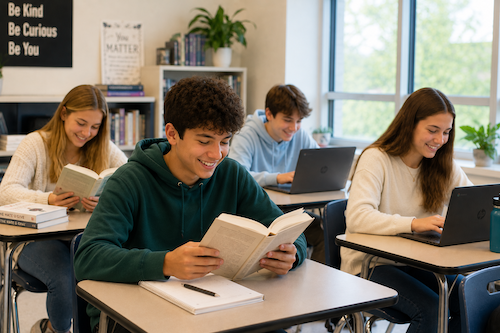
6 keys to building a high-impact summer reading program
Key points: A successful summer program can’t focus solely on assessment scores 5 ways to make reading click for teens Why schools and public libraries must unite–in summer and all year long For more news on summer literacy, visit eSN’s Innovative Teaching hub In 2023, Bob Bolduc, the founder of Hope for Youth and Families, identified a gap in our student’s reading success here in Springfield, Massachusetts. He sought to identify a solution that would specifically support middle school students reading below grade level, and in 2024 partnered with Storyshares and HILL for Literacy to create an intensive, four-week summer literacy program. That summer, students who completed the program showed twice as much growth in their MAP scores as their peers had shown during the entire school year. The next summer, students showed the same impressive growth. Here are the essential lessons that school districts can learn from our experience of creating a summer literacy program that makes an enormous difference in the lives of students and families. Connecting with families Our program typically includes between 120 and 150 students recruited from schools throughout our community. Most of our families speak two languages, so we have a Spanish speaker on staff to help us cross the language barrier. We first connect with families by holding open houses and online meet-and-greets multiple times throughout the year. We let families know that our program supports academics and gives students a safe place to be–and they can enroll at no cost. This makes a big difference in Springfield, which is one of the poorest cities in the state. Small groups working at a ‘perky pace’ Our program is modeled on high-intensity tutoring delivered in a small-group class setting. In each classroom, we have about 15 students with two to three adults who are trained in all of the materials, pedagogy, and skills. We aim for a 5:1 student to teacher ratio, and we achieve this by combining licensed educators with interns who are interested in youth development and literacy education. The Literacy Intervention for Teens (LIFT) curriculum we use is built specifically to provide high intensity and scaffolded instruction, while also keeping what Dr. Anita Archer calls “perky pace.” This means teachers may spend 20 minutes on direct instruction, then incorporate practice and choice after that. Choice is key: Students in this program tend to have low confidence because they’ve repeatedly been told that they’re not good at reading, and teachers build their confidence both by offering them materials that they can read and want to read. Age-appropriate printed materials Our program serves students in grades 4 to 8, and over the years we have built a library of ebooks and printed books that are content-appropriate for that wide range of ages. We don’t ask our older struggling readers to read books about butterflies and The Cat in the Hat . Instead, we offer them stories about kids like them who are going through the dilemmas of being a pre-teen or a teen, and that helps them establish a connection with the reading materials. We print all our materials for our students who prefer physical books over ebooks, and this year for the first time, we are using paper workbooks to show students’ progress. Using workbooks also allows students to stay organized and to look back and see the results of the work they’ve done. Strategic assessments In addition to the workbooks, we also track students’ growth with traditional assessments. In the past, we have used CORE and DIBELS to assess students’ reading speed, fluency, and comprehension. Because our program is short, we try to do the initial assessment on the first day of programming and the final assessment as close to the end of the last week as possible. Pairing reading with creative writing A successful summer program can’t focus solely on assessment scores. It has to be fun, too. Our students relish the opportunity to be creative, so our program pairs reading with creative writing. Many of our students look forward to creative writing because they can write whatever they want in response to a teacher’s prompt. Writing is engaging because it’s not graded and it allows them to put into practice what they’re learning about reading. Students’ creative writing may not be finished by the end of class, or it may be a little wandering, but they’re proud of it, and they’re so excited for that opportunity. I’ve often had students run up to me and say, “Look what I wrote!” This shows them that reading can lead to powerful personal connections. Providing local role models Many of our interns are from the area. Our students see themselves in these near peers, and they believe that “if you can do this, I can do it too.” It’s often easier to relate to somebody who’s close to your age, so our interns become role models for our students making those near-peer connections and fostering a positive culture in the classroom. For schools and districts considering launching a summer literacy program, I can say from experience that it takes hard work and organization, but it’s worth every second you put in. When middle schoolers can read proficiently, they have so many more options for the next chapter of their lives. I remember one student who was in the program the first summer. He was going into 9th grade and was reading very close to grade level, but he wasn’t quite there. We worked extensively on his reading comprehension and stamina. When I visited his school in the fall, he said to me, “I want you to know I’m out of remedial English. And because of that, I got to choose an elective, and I’m in Junior ROTC. I love it! I never thought I’d be able to do something like that.”
17 Jun 2026
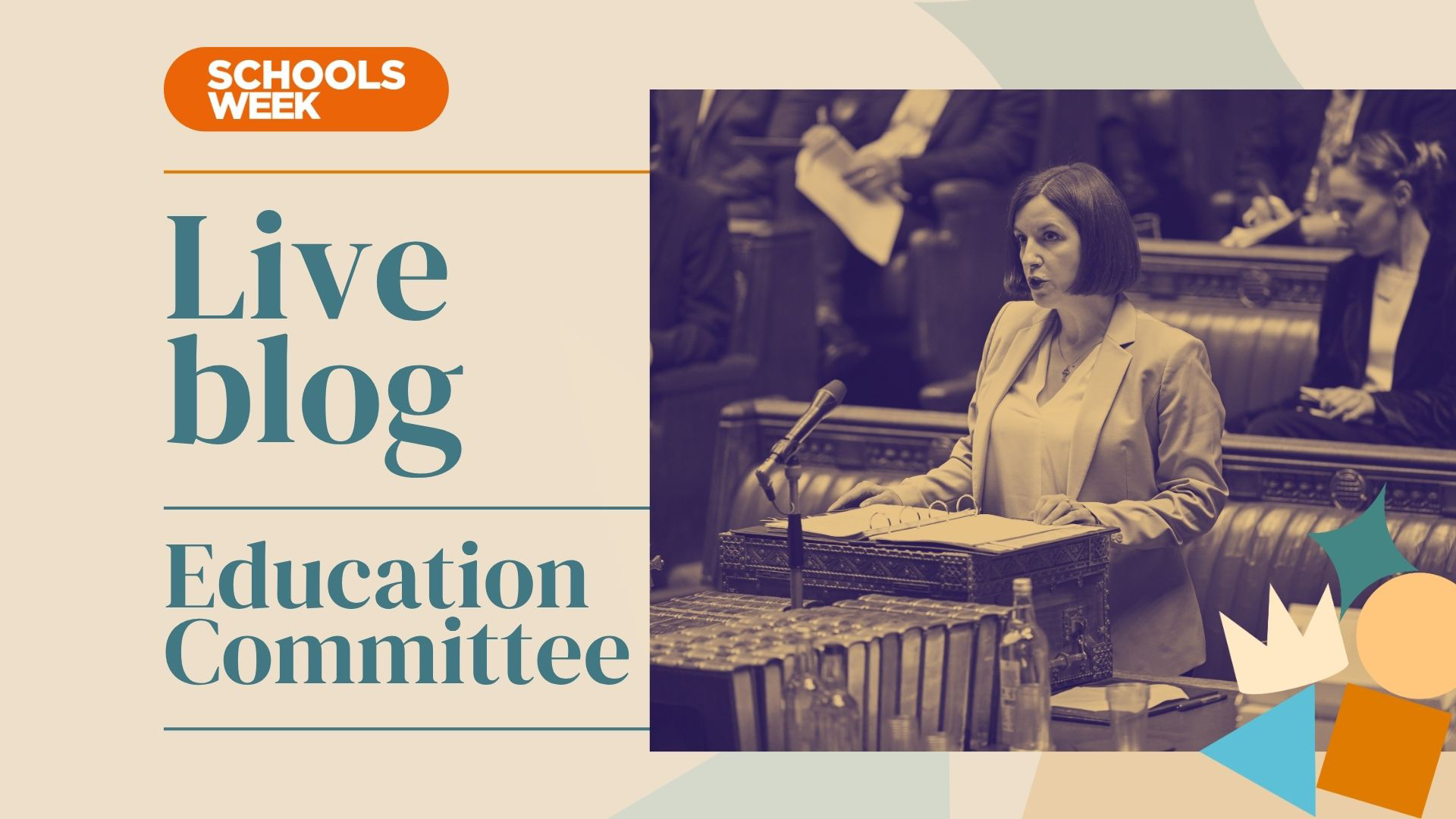
Bridget Phillipson at education committee: Live blog
Education secretary to be quizzed by MPs on SEND, teacher recruitment and curriculum reforms The post Bridget Phillipson at education committee: Live blog first appeared on Schools Week .
17 Jun 2026
Australian firm's involvement in school curriculum rewrite comes under scrutiny
NZ companies were not offered the job because the ministry was already working with Learning First, the Education and Workforce Select Committee has heard.
17 Jun 2026

Hong Kong teachers to undergo 30-hour digital training amid AI push in schools
Hong Kong teachers will have to complete at least 30 hours of digital education training every three years, as authorities unveil a blueprint to boost the use of technology in schools. As part of the initiative, primary and secondary schools will also be required to incorporate digital elements into their annual school development plans, while an innovation and technology curriculum will be rolled out for pupils. The move came as the Curriculum Development Council released the Blueprint for...
17 Jun 2026
The AI Literacy Gap No One Expected
While Gen Z may be advanced at generating quick outputs or using free LLMs for surface-level tasks, they need to develop critical thinking, communication, and analysis skills.
16 Jun 2026
Beyond Tudor Queens And Suffragettes: Reclaiming Women’s Place In The History Curriculum
The post Beyond Tudor Queens And Suffragettes: Reclaiming Women’s Place In The History Curriculum appeared first on TeachingTimes .
16 Jun 2026
Guidance: Key stage 4 qualifications, discount codes and point scores
Approved key stage 4 qualifications, discount codes and point scores for reporting in the 2014 to 2028 school and college performance tables.
16 Jun 2026

Cleared UPSC Prelims 2026? AIR 1's Mains preparation tips you should follow
UPSC topper Anudeep Durishetty offers a strategic roadmap for Civil Services Mains preparation. He emphasizes a structured approach to General Studies, stressing syllabus mastery and daily answer writing. Durishetty highlights the crucial role of current affairs, advising integration with static subjects. He urges aspirants to prioritize consistency over perfectionism, advocating for regular revision and mock tests for success.
16 Jun 2026

Are we ready for a revolution in teaching engineering?
Engineering professor Beverley Gibbs argues that the time has come to rethink the engineering curriculum
15 Jun 2026
Are we ready for a revolution in teaching engineering?
Engineering professor Beverley Gibbs argues that the time has come to rethink the engineering curriculum
15 Jun 2026

Week In Review: Proposed Ed Department cuts and school nurse burnout
Most-clicked story of the week: Recent but separate survey findings from both the National Association of School Nurses and Soliant Health, a healthcare staffing provider, are raising red flags about districts’ ability to retain school nurses and, ultimately, to sustainably take care of students. For example, just 8% of school nurses said they plan to stay in the education sector until retirement, Soliant found. NASN’s preliminary survey data also shows that 66% of school nurses plan to stay in schools for three to five years. Number of the week: 10% The percentage that the U.S. Department of Education’s budget would face in funding cuts for fiscal year 2027, under a bill approved on June 9 by a Republican majority on the House Appropriations Committee. The legislation proposes $71 billion for the Education Department in FY27, a notable decrease from its $79 billion this fiscal year. The bill now goes to the full House as the Senate will hash out its own version of a Labor, Health and Human Services Education and Related Agencies FY27 appropriations bill in the coming months. Districts face more federal scrutiny over DEI, LGBTQ+ issues Three superintendents were grilled by Republican lawmakers in a June 10 House hearing on Capitol Hill over their districts’ inclusion policies, particularly over topics involving LGBTQ+ affirming practices and curricula that reflect diverse student populations. The district leaders from Chicago Public Schools, San Francisco Unified School District and Virginia’s Loudoun County Public Schools defended and stood by their policies. Democratic House representatives said during the hearing that they’d rather focus on improving academic achievement and addressing the Trump administration’s effort to shutter the U.S. Department of Education instead of "divisive culture war" conversations. Meanwhile, the U.S. Department of Justice announced on June 8 that it’s launching compliance review investigations into four California public school districts over their LGBTQ+ policies. San Francisco USD is one of the four districts included in these department investigations. The districts will be assessed on whether they permitted parents to opt out of instruction related to sexual orientation and gender ideology and if transgender students are allowed to use bathrooms, locker rooms and athletic rooms based on their gender identity rather than their biological sex. The U.S. Department of Education’s Office for Civil Rights announced on June 8 an investigation into a suburban Denver school district’s “rampant racially-discriminatory programming.” Cherry Creek School District’s initiatives being probed by the Education Department include a parent group called the “Voices of Color Committee” and a teacher training that instructs the U.S. was founded on white supremacy. Where hope and concerns persist in students’ academic recovery Assessment data from the Nation’s Report Card released by the National Center for Education Statistics found reading scores for 9-year-olds increased in 2025 compared to both 2022 and 1971, a hopeful sign for student academic gains. Still, 13-year-olds showed no significant improvement in their reading scores since 1971. Lewis Ferebee, the outgoing chancellor of District of Columbia Public Schools and the incoming CEO of EdReports, highlighted in an opinion piece for K-12 Dive on June 10 how DCPS students made historic gains in both English language arts and math following the pandemic. Ferebee credits the improvements to a focus on strategic planning and programming. Nationwide, however, the Annie E. Casey Foundation reported on June 8 that the decline in children’s well-being between 2019 and 2024 as measured by four indicators — education, health, economic well-being, and family and community — saw the sharpest score drop with education. Among those findings, the foundation’s 2026 Kids Count Data Book reported that the percentage of 4th graders not proficient in reading rose from 66% in 2019 to 70% in 2024, and the percentage of 8th graders not proficient in math also increased from 67% to 73%.
15 Jun 2026

The AI syllabus in legal education
15 Jun 2026

FRA chairperson discusses insurance sector cooperation with Russian central bank deputy governor
Islam Azzam, Chairperson of the Financial Regulatory Authority (FRA), received a Russian delegation headed by Alexey Guznov, Deputy Governor of the Central Bank of Russia, in the presence of Ahmed Abdel Aziz, Deputy Chairperson of the FRA; Mahmoud Gabrial, Assistant Chairperson of the Authority; and Abeer Saleh, Adviser to the FRA Chairperson. During the meeting, the two sides discussed prospects for cooperation in the insurance sector and other areas of mutual interest. The discussions highlighted the overlap between the mandates of the Central Bank of Russia and Egypt’s Financial Regulatory Authority in several fields, including insurance, finance, and the promotion of financial literacy. The meeting also reviewed recent developments in non-banking financial markets in both Egypt and Russia, as well as opportunities to strengthen coordination and exchange expertise, particularly in light of both countries’ membership in the BRICS grouping and the shared objectives among its member states. Azzam reaffirmed the FRA’s commitment to enhancing cooperation with international regulatory and financial institutions in a manner that keeps pace with global developments, supports the growth of non-banking financial activities in Egypt, and promotes innovation and sustainable development across the sector. For his part, Guznov said Egyptian-Russian relations continue to advance across various fields, supported by the shared commitment of the political leadership in both countries. He noted that this momentum creates favourable conditions for expanding economic cooperation and strengthening ties between Cairo and Moscow. The post FRA chairperson discusses insurance sector cooperation with Russian central bank deputy governor first appeared on Dailynewsegypt .
13 Jun 2026

Why sleep literacy should be a part of all academic curricula
Addressing the issue of late-night gadget use requires institutional awareness and academic engagement
13 Jun 2026
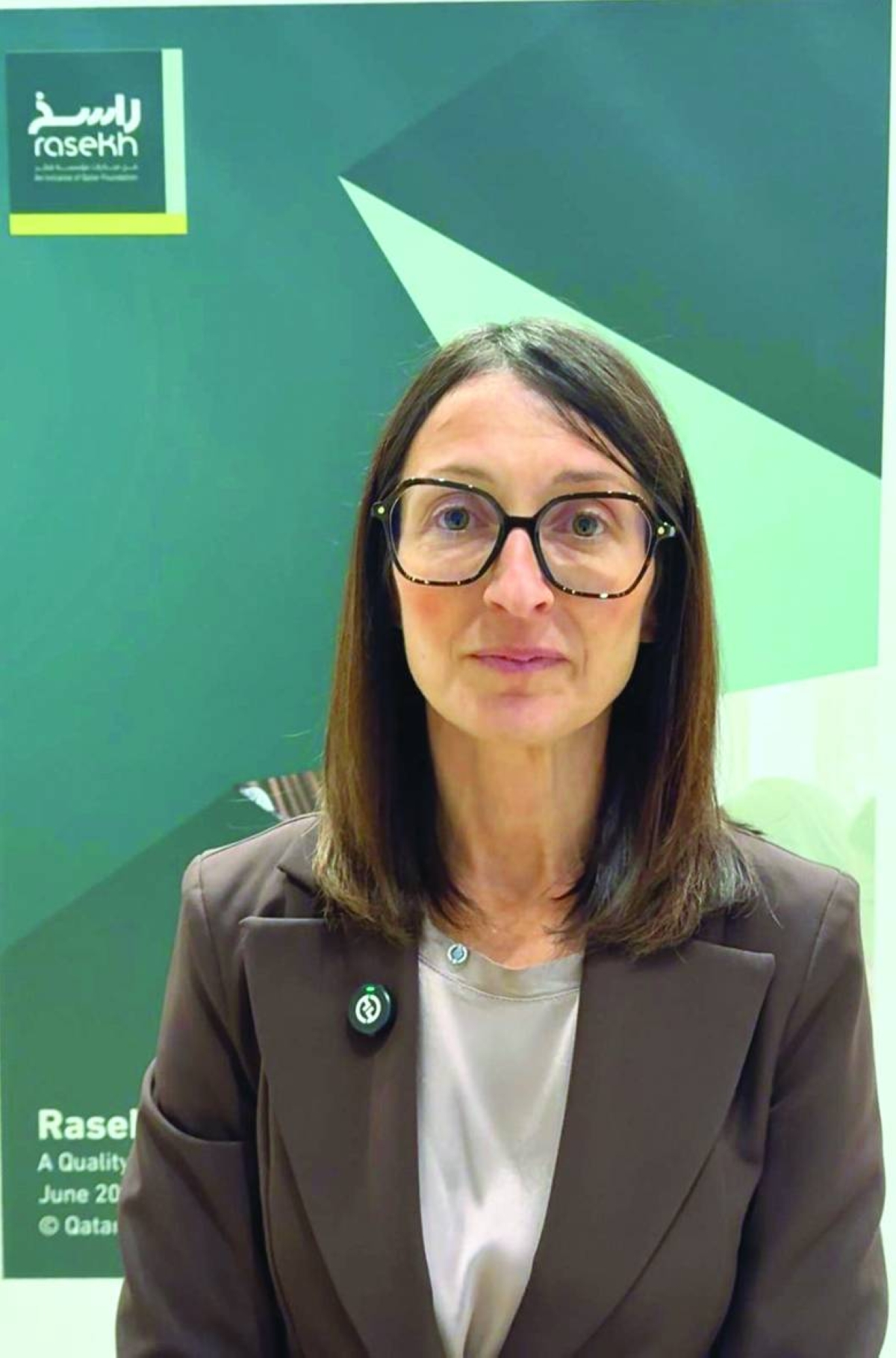
Qatar's diverse classrooms need stronger language foundation
Students in Qatar should build strong foundations in Arabic and their mother tongue before expanding into other languages, a Unesco education official has said, highlighting language's role in identity and learning. Speaking to Gulf Times, Farida Aboudan, head of Education Sector at Unesco's Regional Office for the Gulf States and Yemen, stressed that language should be viewed as far more than a communication tool, particularly in countries with diverse student populations such as Qatar. 'Language is not only a means of communication, it's not only a means for teaching and learning,' she said. 'It is the foundation of identity, the cultural aspects of people, the context they live in, their communities, their societies and their history.' Aboudan’s comments come as Qatar continues to host learners from a wide range of linguistic and cultural backgrounds, creating a unique educational environment where local identity and global learning increasingly intersect. She noted that Unesco has worked on language and education programmes for more than 70 years and recently reinforced its position through updated guidance highlighting the importance of multilingual education. According to Aboudan, preserving Arabic and encouraging the use of learners' mother tongues should remain a priority, even as students acquire international languages such as English and French. 'In Qatar we have learners from different backgrounds and it's important to preserve and encourage the use of Arabic and the use of mother tongue more generally,' she said. 'At the same time, other languages will help students in their careers and professional progression.' She emphasised that strong literacy and language skills in a student's first language can support wider educational achievement. 'The principle is that we need to start with the mother tongue,' Aboudan explained. 'We need to ensure that learners have a strong foundation and strong skills in their mother tongue and then we can move ahead with more success in other domains of education as well.' Looking to the future, she pointed to what she described as a growing localisation trend across Gulf education systems. Traditionally, Aboudan said, national schools have primarily used Arabic while international schools have relied on English, French or other dominant languages. However, she believes the region is increasingly moving towards educational models that blend international standards with local culture, values and languages. 'We combine global standards with local knowledge, local values and local languages,' she said. 'We need to start from what learners already know, from their families, communities and places.' Aboudan also highlighted the emergence of place-based education, an approach that connects learning to students' local environments and experiences. She described the trend as a positive development for the Gulf region, saying that it can help students remain connected to their identity while preparing them for an increasingly globalised world.
12 Jun 2026
Qatar's diverse classrooms need stronger language foundation
Students in Qatar should build strong foundations in Arabic and their mother tongue before expanding into other languages, a Unesco education official has said, highlighting language's role in identity and learning. Speaking to Gulf Times, Farida Aboudan, head of Education Sector at Unesco's Regional Office for the Gulf States and Yemen, stressed that language should be viewed as far more than a communication tool, particularly in countries with diverse student populations such as Qatar. 'Language is not only a means of communication, it's not only a means for teaching and learning,' she said. 'It is the foundation of identity, the cultural aspects of people, the context they live in, their communities, their societies and their history.' Aboudan’s comments come as Qatar continues to host learners from a wide range of linguistic and cultural backgrounds, creating a unique educational environment where local identity and global learning increasingly intersect. She noted that Unesco has worked on language and education programmes for more than 70 years and recently reinforced its position through updated guidance highlighting the importance of multilingual education. According to Aboudan, preserving Arabic and encouraging the use of learners' mother tongues should remain a priority, even as students acquire international languages such as English and French. 'In Qatar we have learners from different backgrounds and it's important to preserve and encourage the use of Arabic and the use of mother tongue more generally,' she said. 'At the same time, other languages will help students in their careers and professional progression.' She emphasised that strong literacy and language skills in a student's first language can support wider educational achievement. 'The principle is that we need to start with the mother tongue,' Aboudan explained. 'We need to ensure that learners have a strong foundation and strong skills in their mother tongue and then we can move ahead with more success in other domains of education as well.' Looking to the future, she pointed to what she described as a growing localisation trend across Gulf education systems. Traditionally, Aboudan said, national schools have primarily used Arabic while international schools have relied on English, French or other dominant languages. However, she believes the region is increasingly moving towards educational models that blend international standards with local culture, values and languages. 'We combine global standards with local knowledge, local values and local languages,' she said. 'We need to start from what learners already know, from their families, communities and places.' Aboudan also highlighted the emergence of place-based education, an approach that connects learning to students' local environments and experiences. She described the trend as a positive development for the Gulf region, saying that it can help students remain connected to their identity while preparing them for an increasingly globalised world.
12 Jun 2026

Classroom to College: A tough Leaving Cert week as core subjects finish
Classroom to college widget letterbox wide
12 Jun 2026
Nigeria: MTN Nigeria Committed to Transparency, Consumer Education - CEO
[Vanguard] MTN Nigeria, MTNN Plc, has expressed its commitment to transparency and consumer education in its drive to strengthen trust, and promote greater digital literacy as data continues to play a central role in everyday life.
12 Jun 2026
What you need to know about the September 2026 updates to education inspections
Today we’ve published our annual updates to the education inspection materials under the renewed education inspection framework (EIF). They cover early years settings , state-funded schools , non-association independent schools , further education (FE) and skills providers and initial teacher education (ITE) providers . These updates apply to inspections from September 2026. Until then, our inspectors will continue to use the existing materials. In future, we aim to update the education inspection materials (the toolkits, operating guides and inspection information documents) on an annual basis. We’ll publish the changes in advance, ready for them to come into effect in September each year. Over the last few years, Ofsted has embarked on a journey of significant change, leading to the launch of the renewed EIF in November 2025. We remain committed to strengthening relationships and building trust with the professionals we inspect and regulate, as well as with children and learners, and their parents and carers. Listening to feedback is central to this commitment. In this post, we explain some important themes you will see in the changes. Please read the summary of changes on GOV.UK for the full list of updates. How we are reflecting updated government guidance Our toolkits are grounded in the statutory and non-statutory guidance from the Department for Education. This means that each year, as part of our updates, we will reflect how the relevant guidance has changed or will change in the next academic year. This will allow us to reflect it in our inspection practice at the appropriate time. We always recognise where guidance is new. We won’t expect you to have a perfect policy, perfectly enforced, as soon as the guidance changes – and we won’t hold you to account for reforms that haven’t happened yet. You can read more about these updates in our change notes. Achievement and context in school inspections We often hear about context in relation to the ‘achievement’ evaluation area. I spoke about this extensively in my recent speech at the Schools and Academies Show . Context is any information that helps us interpret our evidence fairly. It is part of inspection, but never pre‑determines the grades we give. Our understanding of context develops through conversations with leaders, what we see on inspection and the broad range of evidence we gather. Often, this is straightforward and informs ‘what’ we do – for example, adapting our activity to the size or type of the setting we are inspecting. But, when context becomes more complex, it shapes how we evaluate what we see. Together with the Department for Education, we have created a new statistical model to group similar schools together. This provides additional information to help leaders and inspectors understand how well pupils in one school are achieving compared to schools with a similar context. This has also been reflected in the updated state‑funded schools toolkit, particularly around what published and official data indicates about achievement over time, including when compared to similar schools, and how inspectors gather evidence about disadvantaged pupils’ attainment and progress. We’ve updated the early years part of the toolkit with regard to Early Years Foundation Stage Profile data and the proportion of children reaching a good level of development compared to the national average. A focus on inclusion across all inspections When we refer to inclusion, we mean it in its widest possible sense. So, when we talk about knowing your children and learners, we mean those who are disadvantaged, who have SEND or who are known to children’s social care – but it does also go beyond the statutory groups. There are different reasons that children and learners may need support and could benefit from inclusive practice. That’s why we have a fourth ‘contextualised’ group – those facing other barriers to their learning and/or wellbeing. We have listened to and reflected on what we have learned in the first seven months of the framework. We have introduced the term ‘leaders who have an inclusion role’ within our inspection materials. This is because inclusion is the responsibility of all leaders and staff within a setting, and we want to encourage inspectors and leaders to consider this evaluation area for those within the ‘contextualised’ group and look at those with other leadership roles, beyond that of the SENCo. For example, this may be the designated teacher or the inclusion lead. Learning walks in inspection of schools and further education and skills providers Our renewed methodology places collaboration and professional dialogue at the heart of our inspection practice. This has meant more opportunities for joint activities between leaders and inspectors, such as learning walks. Within the smallest schools, we recognise that leaders have also felt the need to undertake these learning walks. We’ve heard that this has added pressure and workload to the day-to-day running of schools, as has trying to match the number of available leaders to the number of inspectors. We’ve updated our operating guides for state-funded schools, further education and skills providers, and non-association independent schools to guide inspectors on the range of leaders who can accompany them on learning walks. We also guide inspectors to use regular reflection meetings to ensure leaders remain aware of what inspectors have seen and heard during these activities. Our updates have also clarified the particular focus of learning walks on ‘curriculum and teaching’ and ‘achievement’ evaluation areas, tailored by discussions with leaders in the planning call. There will continue to be opportunities to gather evidence against the other evaluation areas. Data alongside report cards We are proud of the new report cards which provide an overview of the grade profile as well as the narrative detail to explain the grade given in every evaluation area. This is also the first time we have published data alongside our inspection outcomes, to continue providing comparative contextual detail to support parents and carers in understanding a school or setting’s performance. However, we’ve heard that it would be helpful to provide more guidance to make it clearer where the data that sits alongside the report card comes from. We will be publishing guidance to support those who use and read our report cards to understand this feature better. We also heard that it was not as helpful to have national data comparisons for special schools, so we have already started to remove these from report cards. Find out more You can familiarise yourself with the updates for early years settings , state-funded schools , non-association independent schools , further education (FE) and skills providers and initial teacher education (ITE) providers . We also have a separate blog post about how safeguarding underpins the early years changes . These changes include reflecting updates to the Early Years Foundation Stage around safer sleeping and eating in registered early years settings. The safer sleeping and eating changes are also included in our updated state‑funded schools toolkit, to inform how we inspect school-based nurseries and maintained nursery schools. Remember, all changes to the toolkits only apply from September 2026.
12 Jun 2026

Test yourself on the past week’s K-12 news
How well did you keep up with this week’s developments in K-12 education? To find out, take our five-question quiz below. Then, share your score by tagging us on social media with #K12DivePopQuiz.
12 Jun 2026
GCSE natural history proposed subject content
We are seeking views on the proposed subject content for a new GCSE in natural history.
12 Jun 2026

Yongsan District enlists foreign envoys to inspire next generation
In Yongsan District, a bustling central neighborhood known as the diplomatic heart of Korea's capital, high school classrooms are about to transform into makeshift international summits. Mundane lesson plans will be replaced by global statecraft starting next Tuesday, as the Yongsan District Office launches its 2026 Ambassador Invitation Lecture Series. The unique educational program leverages Yongsan's high concentration of diplomatic missions — home to 48 embassies — to foster global literacy and international awareness among local middle and high school students. This year, the initiative will bring foreign envoys and cultural attaches directly to four selected schools, beginning on June 16 at Shingwang Girls’ High School. The inaugural lecture will feature Fanni Perjes, a cultural officer from the Liszt Institute Hungarian Cultural Center Seoul. Subsequent lectures will rotate through Boseong Girls’ High School, Yonggang Middle School and Sunrin Internet High School, with different nations represented at each institution. For the opening session, Perjes will bypass dense dip
12 Jun 2026

Think leprosy is gone? Kelantan recorded eight new cases last year
KOTA BHARU, June 12 — Leprosy still exists in Kelantan with eight new cases recorded last year, despite many believing that the disease had been eradicated and was no longer a public health problem. Kelantan health director Datuk Dr Mohd Azman Yacob said the number involved an incidence rate of 0.37 cases per 100,000 population, while at the national level, 381 new cases were reported in 2025 with an incidence rate of 11.5 cases per 100,000 population. He said a total of 516 leprosy patients were still receiving treatment in Malaysia last year with a prevalence rate of 0.15 per 10,000 population, while the prevalence rate in Kelantan was 0.06 per 10,000 population, lower than the World Health Organization (WHO) target of less than one case per 10,000 population. “Leprosy or Hansen’s Disease is an infectious disease caused by the bacteria mycobacterium leprae and can be spread through airborne droplets from patients who have not received treatment when coughing, sneezing or talking. However, this disease can be completely cured if patients receive treatment consistently,” he said in a statement in conjunction with the Kelantan State Level World Leprosy Day 2026 and the Tumpat District Level Health Literacy Meet yesterday. He said among the common symptoms of the disease are reddish or white patches or rashes on the skin that do not itch and are accompanied by loss of sensation in the affected area, in addition to causing nerve damage, muscle weakness and facial nerve paralysis if left untreated. Dr Mohd Azman said family members and close contacts of patients are at high risk of contracting the disease, hence early detection, contact screening and immediate treatment are very important to prevent transmission in the community. He said the Ministry of Health is also implementing the provision of Single Dose Rifampicin (SDR) to eligible close contacts to reduce the risk of infection. Meanwhile, he said the theme for this year’s World Leprosy Day, “Leprosy Is Curable, The Real Challenge Is Stigma”, aims to raise public awareness that leprosy patients should not be ostracized because the disease is not caused by race, heredity or retaliation for certain actions. At the same event, the Tumpat District Level Health Literacy Interview Programme was also held to increase the community’s ability to obtain, understand and use health information to make the right decisions regarding personal, family and community health. Various activities were provided including health forums, health and dental check-ups, blood donations, Rahmah sales and health literacy quizzes. — Bernama
12 Jun 2026

IIM Lucknow opens admissions for BS in AI and Business Analytics programme; check details here
The Indian Institute of Management Lucknow has launched a Bachelor of Science programme in Artificial Intelligence and Business Analytics for Class 12 graduates who have qualified JEE Advanced. The inaugural batch will admit 60 students. A key feature is the option to transition into a Tech-MBA programme after the third year, creating a dual-degree pathway. The curriculum combines AI, machine learning, data analytics and management education, with applications open until July 3, 2026.
11 Jun 2026
Accredited official statistics: Vocational and other qualifications quarterly: January to March 2026
Numbers of certificates issued for vocational and other qualifications in England (excluding GCSEs, AS and A levels, Advanced Extension Awards, apprenticeship end-point assessments, Extended Project Qualifications and T Level Technical Qualifications).
11 Jun 2026
AI for Good: Young robotics innovators gear up for finals
When countries teeter on the brink of famine, artificial intelligence (AI) and robotics can save lives and strengthen livelihoods. Agricultural robots reduce water use, improve efficiency, cut waste and contamination, and monitor soil and crops in real time. That is why thousands of young people around the world have spent months designing, building and programming robots that can help overcome food-security challenges. With just weeks to go until the AI for Good Global Summit , the best teams are packing their robotics gear and preparing to take the stage in Geneva, Switzerland. An estimated 250 students from 50 countries are taking part in the Robotics for Good Youth Challenge Grand Finale 2026 , put on by the International Telecommunication Union (ITU) and the UN Food and Agriculture Organization (FAO) as part of the summit between 7 and 10 July. The challenge brings together the next generation of AI and robotics innovators to showcase their creations, exchange ideas and compete for honours in one of the world’s leading educational robotics championships. See robotics for good in action in ITU’s photos collections here . The top prize will be delivered by AI Skills Coalition Goodwill Ambassador will.i.am at the event closing ceremony. For participants, coming to Geneva follows months of teamwork, creativity and problem-solving. For ITU, the challenge exemplifies a global drive to develop skills early and give all young people the opportunity to thrive in an AI-driven future. The UN’s leading robotics challenge Launched by ITU in 2024, the Robotics for Good Youth Challenge aims to make AI and robotics education more accessible while inspiring young people to use technology to address real-world problems. The initiative has expanded rapidly to reach more than 18,000 participants across over 50 countries through 75 local chapter events. More than 2,000 teams have taken part in competitions, workshops and training activities to foster technical skills and future-readiness. Each year, participants are challenged to design robotic solutions linked to a global issue. Along the way, they develop expertise in robotics, AI and engineering while strengthening skills like critical thinking, teamwork, project management and digital literacy. Unlike many robotics competitions, the challenge allows teams to design and build robots using locally available materials and technologies rather than relying on a single mandatory kit. The platform-agnostic approach reduces barriers to participation, encourages innovation and promotes sustainable practices through the reuse of materials and hardware. Empowering future innovators The Robotics for Good Youth Challenge demonstrates how hands-on learning can inspire young people to become creators, not just users, of emerging technologies. By encouraging youth from diverse backgrounds to tackle global challenges, the challenge aims to help build a future where AI and robotics are accessible to everyone and improve people’s lives. The AI for Good also summit hosts a Youth Zone with four days of programming for young people comprising more than 50 youth-focused workshops, presentations and hands-on learning experiences. Sessions will cover AI literacy, computer vision, machine learning, sustainability, cybersecurity and trustworthy AI and more. Along with exploring how emerging technologies can help address pressing challenges for humanity, young participants can present projects in the Youth Zone, engage in discussions on the future of AI and robotics, and connect directly with United Nations representatives, industry leaders and researchers. “The experience offers students a unique opportunity to see how their ideas fit into a broader global conversation about technology for sustainable development,” says Frederic Werner, ITU’s strategic engagement chief and AI for Good initiative co-founder. Looking ahead: Robotics for health emergencies As finalists prepare to compete, ITU is already launching the next chapter. The 2026–2027 edition focuses on health emergencies, as ITU partners with the World Health Organization (WHO) for a challenge to develop robots to support healthcare systems, emergency response, and community resilience. Organizations around the world can host local chapter events, helping bring robotics and AI education to even more young people. Express interest in hosting a youth robotics challenge for your community. Students without access to a local competition can participate online and submit video demonstrations of their projects for international judging. Learn more about the Robotics for Good Youth Challenge Register for the AI for Good Global Summit Header image credit: ITU The post AI for Good: Young robotics innovators gear up for finals appeared first on ITU .
11 Jun 2026
Namibia: Kharas Youth Desk Hosts Leadership Training
[New Era] The Kharas governors' Youth Desk hosted a leadership and financial literacy training at the Keetmanshoop multi-purpose youth centre on Friday.
10 Jun 2026

How 2 schools are dialing back screen time
Districts and schools trying to cut down on screen time in the classroom are trying a variety of approaches, from reading on the rug and in front of the classroom, to hands-on activities like penmanship, art projects and board games. These changes are happening as some parents, state policymakers, federal leaders, and more recently, a national teachers union have called for more limits on screen time and school-issued devices in classrooms, particularly for younger students. At McPherson Middle School in Kansas, students turned in their Chromebooks before the winter holiday break, retaining the ability to check them out for homework and in-class projects during the spring semester. School leaders hope the pivot away from screens will boost learning and student mental health with tasks like penmanship. McPherson Middle School began its shift in January and has needed to determine how to provide students with rapid feedback when assignments are no longer being completed online, said Principal Inge Esping. “Folks have relied heavily on veteran teachers to create systems and rethink what we used to do” before online grading, she said. “They’re developing systems of, ‘What are the assignments that demonstrate deeper knowledge?’ And giving grades on those, rather than all of the small, daily assignments.” To date, students seem to be enjoying the penmanship activities, with half of students in an English language arts class recently choosing to handwrite their thesis papers when also given the option to type, Esping said. “They feel more focused and engaged during class times,” she said. “And teachers are using more graphic organizers to not only teach handwriting skills but how to organize notes and things like that.” Teachers have cut back on screens more than she initially envisioned, and students have appreciated the mental health boost from the drop off in online communication, which sometimes led to cyberbullying , Esping said. “They’ve commented that we’ve taken that ability away,” she said. “They have so little time [on the screens] that they focus on the task at hand — a quick check of their grades, or a quick check of email.” At Floyd M. Jewett Elementary School in northern Michigan , where more than 65% of 3rd through 5th graders were either “partially proficient” or “not proficient” on state English language arts tests in the 2024-25 school year, Chromebooks and iPads have been mostly removed from classrooms this semester in favor of books and other tactile materials. Superintendent Jack Ledford of Mesick Consolidated Schools, a Michigan district with about 500 students total, said the policy change came in February after he talked with the elementary school principal about the literacy scores. While it varied somewhat by teacher, students were spending a significant amount of time on their Chromebooks and relatively little time hearing their teachers read books to them. “To me, that used to be a staple of elementary classrooms,” he said. “I think reading to kids is a great motivator. So I said, 'let’s then flip that script and take the Chromebooks away. ... I know it’s February, the middle of the year, but let’s start that as soon as we can, talk about this with staff, and explain our reasoning.'” The gamified aspects of screen time release dopamine “hits” that can become addictive, Ledford said. “The games are much more inviting than physical books,” he said. To counter that, he said, “We’re equipping classrooms with books that are high-interest,” such as the “Captain Underpants” series and “Junie B. Jones,” with plans to add professional development in the near future. Jewett Elementary has emphasized fine motor skills like penmanship as well as art projects that involve cutting and pasting, Ledford said. “I talked to teachers in our junior and senior high building and asked how many kids could read and write in cursive. They said, ‘Basically no one,’” he said. “The more I dug into it, the more I saw the social aspect, the mental health aspect — there are so many layers to this, where technology is an obstacle to child development.” Ledford has begun to put together plans for the junior and senior high building for the 2026-27 school year, which will not eliminate Chromebooks but require that they be used very intentionally. While the district hasn’t formalized lesson plans, scope and sequence, “We needed to start somewhere,” Ledford said. “We thought, the best time to do it is right now. We brainstormed different ways to roll this out to staff because we thought we would get more pushback. We haven’t. They’re very much on board.”
10 Jun 2026

The homework conundrum: Quality or quantity?
Quality is more important than quantity when it comes to assigning homework to students, experts say. “The point is not about the ‘right number of minutes,’” said Joyce Epstein, a professor and co-director of the Center on School, Family, and Community Partnerships at Johns Hopkins University School of Education. Research suggests that educators should work toward better homework, not more homework, Epstein said. Teachers need to connect homework to big-picture learning goals and show students the purpose it fulfills beyond busywork, said Denise Pope, senior lecturer at Stanford Graduate School of Education. In addition, they should offer extremely clear instructions and differentiate as much as possible. “You probably don’t want to be grading homework, and never use it as a form of assessment,” she said. Debunking the fixed-time rule The concept of 10 minutes per grade level per night for homework is not based on strong research, said Katie Newhouse, a professor and director of special education programs at New York University’s Steinhardt School of Culture, Education, and Human Development. As a ballpark, Newhouse said, she recommends about 60 to 90 minutes total for high school students, or about 20 to 30 minutes per subject, and “maybe not every subject has homework every night.” For younger students, Newhouse suggests 30 to 60 minutes tops. “For that age group, it’s more about finding ways to understand what they’re learning,” she said. The 10 minute-per-grade idea is an extrapolation of a study that said two hours per night was the maximum likely to produce benefits for high school seniors, Pope said. And there’s certainly something to the idea that younger children should have less, she said. But there isn’t much research tying homework to efficacy or achievement, she said, adding, “It should be developmentally appropriate, things kids can do on their own.” Epstein, who along with colleagues has developed a program called Teachers Involve Parents in Schoolwork , said many educators don’t pay enough attention to the fact that struggling middle and high school students stop doing homework “because it does not interest them or they think it will not help them.” “A fixed-time rule is not wise," Epstein said. Instead, she said "good design and understanding of children’s needs, abilities and talents" all need to come into play. She added: “There is not one way to assign homework. Rules just make for the same assignments over and over again — which can get boring.” Accounting for inequities in students’ lives Pope, who co-wrote a 2020 white paper on features that make homework effective and helped create a 2024 guide for teachers about homework , agreed there is no right answer about time-on-task. She added that it’s difficult to research this — in part because that would require students or parents to keep logs and factor out time spent, for example, texting with friends or being otherwise distracted while doing homework. The amount of homework assigned should take into account inequities in students’ lives, or the fact that older students might have an after-school job or have to care for younger siblings while parents are at work, Newhouse said. She suggested a “flipped classroom” approach where work is assigned for classtime, with students asked to watch lectures at home. Or, Newhouse said, assignments could be made on Monday to be due on Friday — enabling students to pace themselves — with daily check-ins to ensure progress. “There’s autonomy around 'this is the deadline,' which is connected to how the world can be,” she said. Also speaking to potential inequities among students, Pope said not every student has a quiet place to do homework, or tools like rulers, computers or working internet available. In addition, high school students may work an after-school job until late at night, "and then they’re coming home and starting their homework,” she said. “This is where I get really nervous when people say, ‘Homework is 10% of your grade.’”
10 Jun 2026

Report Finds Students Aren’t Reading For Fun – Maybe Science Of Reading Advocates Should Push Class Time For That As Well As Phonics?
As anyone who has been reading the news today knows, the feds issued a report today that, among other things, found that young people aren’t reading much for fun. Reading for pleasure is sharply down among schoolkids, report shows is from NBC News. I think many aspects of the Science of Reading movement have been positive. However, at least from what I’ve seen and heard, some advocates have not supported the idea of making class time available for students to read books of their choice – or at least haven’t been as vocal about that as they have for interventions like phonics instruction. When I was in the classroom, “warm-up” time was always ten-or-fifteen minutes of students reading what they wanted. I would spend that time checking in with students and helping them find books (including many I would purchase myself)) they found engaging. Not that I think standardized test scores are the be all, end all of things, but here’s another excerpt from the NBC News article: Students who read in their free time are more likely to score higher on standardized tests than their peers who read less frequently, according to the NCES report. I’m adding this info to The Best Resources Documenting The Effectiveness of Free Voluntary Reading .
10 Jun 2026
Guidance: Key stage 4 qualifications, discount codes and point scores
Approved key stage 4 qualifications, discount codes and point scores for reporting in the 2014 to 2027 school and college performance tables.
10 Jun 2026

Uptick in children and teenagers enjoying reading for first time in 5 years
More than one in three now say they like picking up books in their spare time, according to a literacy charity.
10 Jun 2026
South Africa: How a Classroom Programme Is Tackling Maths Gaps and Youth Unemployment in SA
[Daily Maverick] As youth unemployment scales new heights and foundational literacy falters, the JumpStart Foundation's dual-intervention model turns jobless school-leavers into academic lifelines.
10 Jun 2026

Türkiye’s first nuclear plant reaches new testing stage
Türkiye’s first nuclear power plant has completed another key stage in preparations for commissioning, with mock nuclear fuel assemblies loaded into the reactor pressure vessel of Akkuyu’s first unit.
10 Jun 2026

9-year-olds show some growth as 13-year-olds stagnate in NAEP long-term trends
Dive Brief: Reading scores for 13-year-olds have shown no significant improvement since 1971, a trend that comes alongside double-digit declines since 1984 in the share of both 9- and 13-year-old children who say they read for fun almost every day, according to a long-term federal assessment released June 10 as part of the Nation's Report Card. However, reading scores for 9-year-olds — who were just beginning elementary school when buildings reopened after COVID-19 — rose in 2025 compared to both 2022 and 1971. Scores were higher for this cohort both on average and among lower-performing students. For 13-year-olds — who were gaining foundational reading and math skills when the pandemic hit — the 2025 results revealed no measurable score changes compared to 2023, when the assessment was last conducted for this age group. And the cohort showed lower reading scores on average compared to 2020. Dive Insight: The long-term assessment — which tracks reading and math performance by age rather than grade — offers a five-decade perspective on student learning in the U.S., having been first administered in 1971. The latest study, released by the National Center for Education Statistics, assessed some 15,000 9-year-olds and 16,000 13-year-olds between 2024 and 2025. It is part of the Nation's Report Card, but separate from the main National Assessment of Educational Progress. The average scores in 2025 for 9-year-olds were 4 points higher in reading and 4 points higher in math compared to 2022, the last time that age group was assessed. Lesley Muldoon, executive director of the National Assessment Governing Board , which sets the policies and standards for this and other federal assessments, attributed these reading gains partly to "a significant movement nationwide to focus on early literacy," including a focus among states on the science of reading. "We're seeing gains on average and for our lower-performing students in both reading and math compared to the last time we assessed students of this age," Matthew Soldner, a cting director of the Institute of Education Sciences and acting commissioner for the National Center for Education Statistics , told a June 8 press conference. "The story is very different for our nation's 13-year-olds." For that older group, scores did not change for either reading or math since they were last assessed in 2023. In fact, scores in 2025 dropped in both subjects compared to prepandemic scores in 2020. The pandemic "complicated" 13-year-olds' experiences, Soldner said. "However, we can clearly see that this isn't just a pandemic story." Declines for that age group began in 2012 for both subjects, according to NCES data. National assessment leaders did not provide an explanation as to why scores have been stagnant or declining. Last month, a separate study published by research centers at Harvard and Stanford universities suggested that the drop in academic achievement in the wake of COVID-19 was part of a learning recession that began in 2013. That means the decline predated the pandemic and coincided with a dismantling of test-based accountability and a rise in social media use, the researchers said. "The lack of progress among 13-year-olds raises huge questions and ought to serve as a catalyst for change," said Muldoon, noting that students who took the long-term assessment as 13-year-olds are now in high school. "We won't have them for much longer." Results from the Nation's Report Card in 2025 showed that high schoolers were graduating with weaker reading skills , with nearly a third of 12th graders scoring below basic level in reading. . Meanwhile, as reading performance for 13-year-olds shows no growth and 9-year-olds' performance fluctuates compared to when the long-term assessment first began tracking their performance over five decades ago, the percentage of both groups saying they read for fun on a daily basis continues to decline . Some 37% of 9-year-old students reported reading for fun almost every day in 2025, down from 42% in 2020 and 53% in 1984. For 13-year-olds, the percentage is even lower: Only 14% percent reported reading for fun almost every day last year, compared to 17% in 2020 and 35% in 1984. "It's important to remember correlation is not causation," Soldner said. "But student experiences are at the very least context for trends we observe." Students, meanwhile, may also be reading few full books in the classroom. Nationally representative data released by the Rand Corp. last month showed that most middle and high school English language arts teachers — 90% — assigned at least one full book to students in the 2024-25 school year. However, teachers serving historically marginalized students — such as students of color, those experiencing poverty, students with disabilities and multilingual learners — assigned fewer full books, according to the data.
10 Jun 2026

Why these MOE teachers left familiar classrooms to teach the Singapore curriculum overseas
About 30 out of 33,000 MOE teachers are posted overseas. Overcoming differences in culture and teaching styles, they tell CNA why they chose to make the move.
9 Jun 2026
Even in Math, Teachers See a Chance to Boost Students' Reading Skills
Minnesota middle school teachers spread foundational literacy skills across academic classes.
9 Jun 2026
Even in Math, Teachers See a Chance to Boost Students' Reading Skills
Minnesota middle school teachers spread foundational literacy skills across academic classes.
9 Jun 2026
Transparency data: Privacy information: early years foundation stage to key stage 3
Details of the personal data the Department for Education (DfE) processes for learners from the early years foundation stage to key stage 3.
9 Jun 2026
Transparency data: Privacy information: key stage 4 and 5 and adult education
Details of the personal data the Department for Education (DfE) processes for learners in key stage 4, key stage 5 and adult learners.
9 Jun 2026
Kenya: Metropol DRB, Postbank Partner to Boost Youth Financial Literacy
[Capital FM] Nairobi -- Metropol Credit Reference Bureau (CRB) and Postbank Kenya have signed a Memorandum of Understanding (MoU) under the Jipange Leo, Jenga Kesho campaign to promote financial literacy among Kenyan youth.
9 Jun 2026
GCSE computing entries drop by 10,000 in two years
The once popular subject has seen a sharp decline in entries since 2024 The post GCSE computing entries drop by 10,000 in two years first appeared on Schools Week .
9 Jun 2026
Mind The Digital Gap – Next Stop, Digital Literacy
The post Mind The Digital Gap – Next Stop, Digital Literacy appeared first on TeachingTimes .
9 Jun 2026
Africa: Proposed School History Syllabus Focuses On Africa As the Main Story, Not a Sidebar to Western History
[Daily Maverick] The move from the old curriculum is contentious, but is also a necessary and useful redirection.
9 Jun 2026
Official Statistics: Provisional entries for GCSE, AS and A level: summer 2026 exam series
Number of provisional entries by age group and subject for GCSEs, AS and A levels in England for the summer 2026 exam series.
9 Jun 2026

CBSE’s marking mess drives Bengaluru students to Karnataka’s PU colleges despite losing admission fees
Concerns over evaluation errors in CBSE’s on-screen marking (OSM) system are prompting Class 11 students in Bengaluru to shift from CBSE schools to PU colleges. Parents and students fear lower scores in core subjects such as Physics, Chemistry, and Mathematics could affect professional course admissions, where board marks are considered alongside CET scores. School administrators report multiple withdrawals despite fee losses, while educators say the controversy is hurting CBSE admissions and may have a greater impact next year.
9 Jun 2026

Pahang Sultan opens first Islamic religious primary school in Cameron Highlands
CAMERON HIGHLANDS, June 9 — Sultan of Pahang Al-Sultan Abdullah Ri’ayatuddin Al-Mustafa Billah Shah today officially opened the first Pahang Islamic Religious Primary School (SRAIN) at its temporary premises in Golden Hill, Tanah Rata, Cameron Highlands. His Royal Highness arrived at the school at 10.20 am and was received by Pahang Islamic Religious Department (JAIP) director Datuk Ahmad Khirrizal Ab Rahman. Also present was the State Islamic Religious Affairs, Rural Development and Orang Asli Affairs Committee Datuk Seri Syed Ibrahim Syed Ahmad. At the event, Al-Sultan Abdullah was briefed on the establishment and planning of the school, as well as presented donations from the Pahang Islamic Religious and Malay Customs Council, amounting to RM1270,402 for the purchase of a van, RM11,000 from Bank Rakyat for the purchase of a smart board and 14 tablets through the zakat programme of Tablet Genius Sdn Bhd. Speaking to reporters afterwards, Ahmad Khirrizal said JAIP intends to expand the SRAIN model to other districts in Pahang. “We have plans to establish similar schools in other districts. The next location may be Kuantan, before expanding to other districts across the state. “Our goal is to have a Pahang Islamic Religious Primary School in every district, managed directly by JAIP,” he said. A view of the State Islamic Religious Primary School (SRAIN) in Tanah Rata, which was officiated today by the Sultan of Pahang, Al‑Sultan Abdullah Ri’ayatuddin Al‑Mustafa Billah Shah June 9, 2026. — Bernama pic Commenting on a proposal raised by the Sultan during the briefing session, Ahmad Khirrizal said JAIP would work towards introducing Chinese language studies into the school curriculum. “The department will strive to realise Al-Sultan Abdullah’s aspiration. We will identify qualified teaching personnel to implement the programme at the school, insya-Allah,” he said. He added that plans are already underway to construct a permanent campus for SRAIN at Taman Royal Lily, in the Cameron Highlands. “The proposed development will cover an area of 10 acres and will form part of an integrated project alongside the construction of a new mosque complex in Cameron Highlands,” he said. The establishment of SRAIN in the Cameron Highlands reflects Al-Sultan Abdullah’s vision of developing well-structured and high-quality Islamic educational institutions comprising both primary and secondary schools to meet the educational needs of the Muslim community in the highlands. The school officially began operations on January 4, 2026, with an inaugural intake of 14 Year One pupils and is currently staffed by seven teachers. The school offers the National Primary School Standard Curriculum (KSSR), Quran and Fardu Ain Classes (KAFA), as well as the Special Al-Quran Memorisation Programme (Tahfiz), providing students with both academic and religious education under one institution. — Bernama
9 Jun 2026
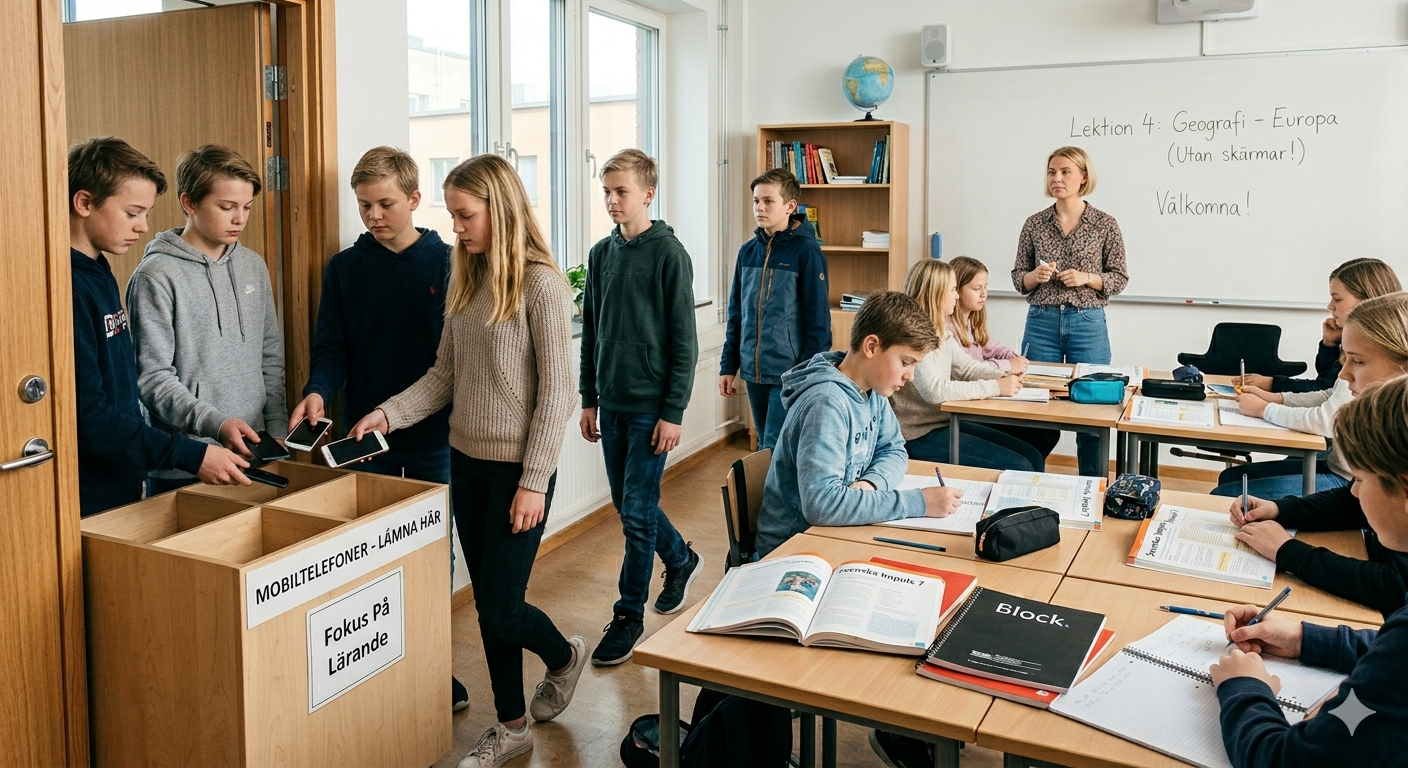
Sweden to ban mobile phones in schools— Full list of countries who have done so
Sweden is preparing to ban mobile phones in schools starting next academic year, aiming to boost reading time and traditional learning methods. This decision stems from concerns over declining literacy skills among students, particularly younger ones. The move aligns with a global trend of restricting phone use in educational settings to minimize distractions and enhance learning.
9 Jun 2026
Accredited official statistics: Key stage 2 attainment 2026: national headlines
Provisional national headline results for the 2026 national curriculum assessments at key stage 2.
8 Jun 2026
Guidance: Phonics screening check data collection: guide
Guide for local authorities to help them complete and return the 2026 phonics screening check data collection.
8 Jun 2026
Accredited official statistics: Vocational and other qualifications quarterly: January to March 2026
Numbers of certificates issued for vocational and other qualifications in England (excluding GCSEs, AS and A levels, Advanced Extension Awards, apprenticeship end-point assessments, Extended Project Qualifications and T Level Technical Qualifications).
8 Jun 2026

‘Mother recipes’ integrated into gastronomy high school curriculum
Gastronomy high schools across Türkiye have begun putting “mother recipes,” traditional home-cooked dishes passed down within families, into practice as part of a broader effort to preserve culinary heritage.
8 Jun 2026

Labour doesn't seem to like Send schools for kids like mine – but here's what we'll lose if these precious places are forgotten | John Harris
An autism school in Wiltshire exemplifies what’s so different about education in a tailored environment, and the outcomes for children speak for themselves In the old Wiltshire milltown of Calne, there is an autism specialist school called the Springfields Academy . About 250 children and young people between the age of four and 19 go there. Class sizes are no larger than 12. In each room, every child has their own dedicated table. There are no end of seating options, described by the headteacher, Nicola Whitcombe, as “wobble stools, wobble cushions, ball chairs, standing desks and booths”, with “pods” elsewhere for one-to-one teaching. And across a broad, multi-level curriculum based around personal development, every lesson follows the same basic structure. “From an autistic perspective,” she says, “that’s really important: ‘I know I’m going into the same thing, so therefore I feel safe.’” Every year the school takes in a lot of primary school leavers who would find a mainstream secondary pretty much impossible. “If you’ve got five different lessons in a day, in five different classrooms with five different teachers, and this before we’ve talked about the corridors, and the smells, and where you have lunch – it’s overwhelming,” Whitcombe said. “So at our school, we have to get our environment right.” Over the past six years , no one who has been to Springfields has begun post-school life as a Neet (not in education, employment or training) – which is quite some achievement. John Harris is a Guardian columnist Continue reading...
7 Jun 2026

TN Govt calls for compulsory PE lessons for classes 6-12 in all schools, details on unutilised playgrounds
The Tamil Nadu school education department has mandated physical education classes for grades 6-12, urging schools to utilize playgrounds effectively and offer special sports coaching. The department aims to ensure PE classes are conducted by qualified teachers following the prescribed curriculum, addressing concerns about subject teachers taking over PE sessions.
7 Jun 2026
Anxiety, hope, action: how young people are responding to the climate crisis
The post Anxiety, hope, action: how young people are responding to the climate crisis appeared first on Cambridge International Education blog .
5 Jun 2026
Test yourself on the past week’s K-12 news
How well did you keep up with this week’s developments in K-12 education? To find out, take our five-question quiz below. Then, share your score by tagging us on social media with #K12DivePopQuiz.
5 Jun 2026
Headlines
Calling counselors The Job Colorado’s Community College of Aurora is one of several colleges working to make the costly and inflexible path into counseling more manageable. New initiative builds rural colleges’ strategic planning capacity and leadership expertise EdNC A new three-year initiative will help North Carolina’s rural community colleges build sustainable leadership structures and strategic planning capacity. How skill concentration sets tech and healthcare sectors apart Indeed’s Hiring Lab A new analysis shows that while most U.S. occupations require a diverse mix of skills, nearly a quarter of examined roles are “skill-concentrated,” meaning a single category accounts for more than 50% of all required skills for that role. Big steps taken toward nuclear energy output in New York WSYR The New York Power Authority is inviting New York State-based training providers to apply for $40 million in workforce development funding. The investment over four years aims to build New York’s nuclear talent pipeline by supporting training, hands-on experience, paid internships and job placement in critical construction and operations roles. Commentary: A fragile foundation: The skills gaps holding adults back Lumina Foundation (blog) Community colleges are playing a critical — and often unrecognized — role in minimizing that growing gap among adult learners. Because of their strong ties to local communities, they’re well-positioned to support adult learners by integrating foundational literacy, numeracy and digital skills directly into workforce training rather than treating them as separate requirements. The post Headlines first appeared on Community College Daily .
4 Jun 2026