
: Die Stimme der Betroffenen
Das Gewalthilfegesetz soll Beratung und Schutz für Frauen sichern. Betroffene sehen jedoch Lücken und fordern strukturelle Veränderungen mehr...
17 Jun 2026
Fending off summer melt
The Community College of Rhode Island (CCRI) has a warm-blooded approach to help stave off summer melt. Meet CeCe, an emotional support dog who is cared for by a campus police officer and visits all the college’s four campuses and attends special events – but also has become a recruitment tool. The loveable gold retriever is among the tools used to encourage students to enroll and attend classes this fall, helping to resolve a problem that likely causes a quarter of prospective community college students to simply not show up. The challenge is summer melt – that nettlesome problem of students who’ve shown interest or even enrolled but, for a variety of reasons, have decided not to attend as the first day of classes approaches. As one part of a campaign targeting those students who might “melt,” CeCe helps “to foster a welcoming campus environment, increasing engagement and broadening the college’s reach across platforms,” said Amy Kacerik, associate vice president for student affairs at CCRI. “ Our students are managing work schedules, caregiver responsibilities and other commitments, making it challenging to stay on top of enrollment tasks,” she said. “While CeCe was not initially brought to CCRI to drive recruitment or enrollment, she has quickly become an effective tool for student engagement and enrollment outreach. She serves as another touchpoint that helps students feel connected to CCRI before classes begin.” CCRI and other community colleges are making a connection between students and the campus with an array of supports and nudges, hoping to combat summer melt, which is gaining attention as pressure on higher education enrollment – and some of the reasons for students to have second thoughts – both increase. The summer melt problem Katherine Meyer, a fellow at Brookings who researches key higher education issues like summer melt and efforts by colleges to keep students on track, says recent data show that while the numbers are hard to track, colleges overall lose about 10% to 20% of their prospective students prior to the start of the year, and community colleges may lose 27% and in some cases as high as 40% percent . “Navigating the complexity of college admissions and enrollment can be a challenge for any prospective student, but it’s even harder for those planning to attend community college,” she says, noting that community college students are more likely to have less knowledge about the enrollment process and less time and support to navigate it. “The community college staff may not be able to offer as much outreach or orientation either, and the students don’t have a trusted adviser to turn to for specific help with paperwork or to offer encouragement,” Meyer says. Lisa Matye Edwards, vice president for student affairs for Arapahoe Community College (Colorado), says prospective students may have family or employment commitments that conflict with college office hours, juggle overlapping course schedules or simply don’t have time to manage the process. Other hurdles include overall cost, noncredit developmental programs (which can discourage students) and concerns in some cases about immigration enforcement activities, according to officials. “If classes conflict with work schedule or childcare becomes an issue, a person who perhaps doesn’t have a connection to a college is more likely to not enroll or stay enrolled – and community colleges in the past have not had mechanisms to monitor those issues like our four-year friends,” Matye Edwards says. She adds that open-access community colleges are typically very supportive once students enroll, but sometimes “almost allow too much freedom versus structured and clearly communicated pathways.” She believes that is changing. A variety of challenges Tara Zirkel, director of strategic research at EAB , has studied the issue from multiple perspectives and surveyed community college students about their enrollment experiences. She points out that at a time when college value is being questioned and the demographic cliff is looming, the issue becomes even more concerning. “For community colleges, summer is a critical window to keep new students engaged and ensure they complete their enrollment steps before fall,” she says. “Many students, especially first-generation or those juggling work and family commitments, struggle to navigate deadlines, financial aid requirements and course registration.” Her team’s survey of 1,000 community college students about enrollment concerns showed that: More than half of students seriously considered not attending. About a quarter said they were frustrated by the enrollment process and also by choosing a major. 73% said a personal interaction was extremely important and a similar number expected it to take place within 24 hours. However, only 21% received a response in that time frame, and 27% of respondents said it took more than a week. Seven percent never received a reply at all. Figuring out how to pay for college was significantly discouraging for another 19%. Family obligations were a serious concern for about a quarter of the students. About 18% doubted whether they even belonged in college. Her research concluded that students want a faster, more personalized interaction and that many are “one obstacle away from opting out entirely.” “If community college doesn’t have a solid communication plan, the student and their family may re-think the decision and feel like they are not college-ready,” Matye Edwards says. “They may not know what to do, so they miss out on critical activities like registering for class or filing the FAFSA.” What works Like staff at many community colleges, Kacerik and her team at CCRI try to keep prospective students engaged in a number of ways – beyond the use of CeCe. They have recently enlisted a customer relationship management platform that provides proactive, personalized, 24/7 support. “AI virtual agents respond to student questions at any time, helping students navigate enrollment, financial aid, registration and campus services at times that work for them,” she says. “Messaging is dynamically tailored to each student’s profile, needs and progress, enabling targeted outreach that enhances engagement, persistence and successful outcomes.” Meyer has written about the value of “nudges” and stresses that messages to students should be “timely, relevant and actionable.” Automated systems provide students accurate information faster and reduce the load on the college staff, while potentially gathering data about where prospects find gaps in the information the college is offering, according to Zirkel, who also has written about key ways AI can be used to reduce summer melt. “The student gets the information and can spend time with the college staff having a deeper conversation or covering other concerns,” she says. Matye Edwards says her team contacts prospects at specific points to ask if they need assistance and how best it can be delivered. For instance, if an admitted student has not done an orientation, registered for classes or handled school financing, they might get a reminder and be offered a virtual counseling session. CCRI also is proactive in contacting students with paid messages in a variety of platforms. Also, AI can make creating a two-year plan or class schedule easier by quickly generating several options for students and advisors to consider. “By combining 24/7 access to information, personalized communication, course planning assistance and structured enrollment guidance, AI can help students navigate the transition into college more smoothly,” Zirkel says . Closer ties with high schools College officials can also reduce that burden, Zirkel says, by partnering with school counselors so that high schools have good information for their students and are prompted to encourage them to attend, even despite the counselor’s large caseloads and traditional 10-month schedule. She says some community colleges hold special informational sessions for high school counselors that often feed into their college, ensuring they can both address some concerns and have a stronger connection to the college. In addition, Zirkel notes that community colleges, like CCRI with CeCe, are increasingly trying to create a stronger brand and attachment to their campus with students and high school counselors, which is typically more prevalent in four-year schools. The post Fending off summer melt first appeared on Community College Daily .
17 Jun 2026

America is finally realizing what community colleges have been doing all along
Employers continue to be concerned that recent college graduates are unprepared for today’s workplace. A recent survey conducted by Lumina Foundation and Gallup found that a little more than half of employers say American colleges and universities are producing students with the skills they’re seeking. Even more worrisome, nearly 70% of employers say recent college graduates need at least a moderate amount of additional training after they’re hired so they can succeed in their new job. Another recent survey from the National Association of College and Employers found that while employers put a premium on communication, critical thinking and professionalism, they believe about half of new college grads are lacking these crucial workplace skills. As companies voice growing frustration that traditional degree programs are failing to not produce enough job-ready talent, another type of institution has long delivered results from the margins: community colleges. Made to order Two-year colleges are uniquely positioned to help fill these talent gap. Their programs are built around in-demand skills, employer partnerships and alignment with industry needs — all in service of producing talent ready for real jobs. They stand ready to become the partner of choice in developing the next generation of skilled workers if employers and policymakers are willing to meet them halfway. Community colleges are accessible, affordable and hyper-focused on ensuring their graduates find employment. Today, these institutions enroll about 6.5 million students , or roughly 40% of the nation’s undergraduates. For these learners and their communities, two-year colleges already quietly serve as vital workforce engines. For example, the City Colleges of Chicago system, where I recently served as executive vice chancellor and chief student experience officer, focuses many of its campuses on specific industry sectors. These institutions design associate degree and career certificate programs, apprenticeships and employer partnerships that guide students into in-demand local jobs. At the Dawson Technical Institute at Kennedy-King College , students can complete an apprenticeship and certificate track in construction and utility trades. At Olive-Harvey College , a new building dedicated to transportation, distribution and logistics supports programs aimed at filling the region’s more than 100,000 open TDL jobs. Daley College ’s advanced manufacturing programs connect learners directly to well-paying jobs in a sector hungry for talent. Non-profit and employer partners Community colleges across the country have partnered with Education Design Lab to reimagine their missions to better serve the needs of present-day learners and employers. These efforts focus on creating stackable credentials, designing applied learning opportunities and strengthening student supports. All of this is happening even as many community colleges are grappling with lean staffing, limited budgets and few resources relative to the breadth of their mission. As academic programs become more closely aligned with industry needs, nonprofit organizations increasingly serve as intermediaries between community colleges and employers, helping translate education into workforce opportunity. Organizations like One Million Degrees (OMD), which I now lead, acts as a bridge by supporting career development and durable training that prepare students for work-based learning and employment. At City Colleges of Chicago, for instance, OMD supports a six-week pre-internship program that prepares and screens students for internship placements with a range of public- and private-sector employers. Employers can help by investing more directly in community college talent pipelines by co-designing curriculum, expanding paid work-based learning opportunities and hiring directly from two-year programs. The technology giant Siemens recently announced plans for a new national initiative to expand access into in-demand, high-paying electrical careers. Working with Wake Technical Community College and other partners in North Carolina, Careers Electric aims to prepare 25,000 people in 10 years for employment in energy, healthcare manufacturing and infrastructure sectors. Similarly, the Volkswagen Group of America has partnered with Chattanooga State Community College in Tennessee to create an academy that combines classroom work with paid hands-on training on-site at a local plant. Policymakers’ role To better align employer needs with student aspirations, policymakers should advance strategies that more effectively connect education and the workforce. This includes supporting community colleges as they expand high-wage, high-demand programs. It also includes encouraging the growth of paid internships and work-based learning opportunities through incentives for colleges and employer partners, particularly given strong evidence that such experiences predict career success, especially early on. Finally, policymakers should invest in intermediaries that help colleges and employers align hiring needs with student preparation. When community colleges are fully recognized and funded as a vital backbone of our talent ecosystem, the result is a win for the workforce and the entire economy. Embracing the rich potential of community college talent and institutions is an economic imperative. As the country seeks to build a stronger economy, a powerful workforce engine is already running. It’s time to fuel it. The post America is finally realizing what community colleges have been doing all along first appeared on Community College Daily .
17 Jun 2026
Headlines
Commentary: Adults want to go back to school. We should make it easier. Lumina Foundation (blog) The gap between interest and enrollment reflects a growing mismatch between the realities of adult learners’ lives and how colleges are designed to serve them. How states can address broadband worker shortages Pew (blog) Credentialing programs that encompass a variety of skills benefit workers by giving them portability across roles or sectors. Programs at Southwest Virginia Community College and Northshore Technical Community College in Louisiana offer examples. Commentary: Alamo Colleges opens new gateway to workforce opportunity San Antonio Express-News (subscription required) The Alamo Colleges District’s new Alamo Technical Institute will make it easier for anyone to upskill, reskill or pivot in the workforce. A first for the district, ATI will offer a single point of access for acquiring short-term credentials. Students are using a ‘backdoor’ to attend their dream schools Wall Street Journal Ashley Bottoms never planned on attending community college, and dreamed of going to Texas A&M. She was initially distraught to be offered a dual-enrollment program between a nearby community college, Blinn, and Texas A&M. But she has come around. New dual enrollment fee, more student service cuts included in Pima Community College budget Arizona Luminaria Dual-enrollment courses cost Pima $1.7 million a year and high school teachers require special certification to teach the specified courses, which either they or their districts pay for. The new $10-per-credit fee could bring in $372,000. KCTCS marks largest graduating class in its history with more than 25,000 students WDRB The Kentucky Community and Technical College System said this week that preliminary numbers show 25,013 total students graduated between its 16 colleges during the 2025-26 school year. That’s a 2.4% increase — 600 more students — compared to the previous year. It’s also the most students in the system’s history. Maricopa Community Colleges expands low-cost bachelor’s degrees Axios Phoenix The Arizona college system has announced that it’ll add three additional bachelor’s degree programs next spring: exercise science, health services leadership, and law and legal studies. The post Headlines first appeared on Community College Daily .
17 Jun 2026
Newsmakers
New CEOs Eric Bishop will become the permanent president of Riverside City College on July 1. He has served as the California college’s interim president since August 2025. “Bishop brings extensive experience in higher education leadership, student services, enrollment management, athletics, legislative engagement and community partnerships,” the Riverside City College District said in a statement. Prior to serving as interim president, Bishop joined the district in 2024 as its interim vice chancellor of educational services. Earlier, Bishop was interim vice president of enrollment management for the University of La Verne. He began that role in 2022, after serving as superintendent/president of the Ohlone Community College District (California) from 2020 to 2022. Bishop also served for 13 years at Chaffey College in various roles, including associate superintendent of student services and legislative engagement, dean of the Fontana Campus, interim dean of physical education and athletics, director of student discipline and grievance, and vice president of student services. Susan Rogers will become president of Central Maine Community College on August 10. She is currently chief of staff and vice president for institutional effectiveness at Dutchess Community College in New York, a position she’s held since 2022. Rogers previously was interim vice president of instruction and learning at Dutchess. Prior to that, she was a faculty member and division chair for social sciences, sustainability and entrepreneurship at SUNY Sullivan, where she received the SUNY Chancellor’s Award for Excellence in Faculty Service in 2014. At Sullivan, Rogers helped design and implement an innovative first-year-experience program focused on student belonging, engagement and success, oversaw the expanded community presence of the culinary program, and led institutional strategic planning processes for campus and community members, according to a release. Rogers was part of the first New York State Student Success Coaching Academy cohort in 2019, which was based on a national training program by Jobs for the Future and Achieving the Dream. “It’s invaluable to have a college president with first-hand experience from the classroom to the leadership team,” said David Daigler, president of the Maine Community College System. “Her focus on student success, academic excellence, employer-focused workforce training programs, her coaching skills and collaborative approach, and her experience leading major strategic initiatives will all be tremendous assets to the CMCC community.” Chris Treadway is the new president of BridgeValley Community and Technical College in West Virginia, effective July 1. He is currently vice chancellor for community and technical college education for the West Virginia Community and Technical College System. “His combination of improving opportunities for students, statewide leadership experience, policy expertise, and a deep understanding of the mission of community and technical colleges will benefit our college and the state of West Virginia,” the college’s Board of Governors said of Treadway in a release. “He has a strong record of advancing higher education initiatives, supporting workforce development, and prioritizing student success, all of which made him our unanimous choice to successfully lead BridgeValley.” Prior to serving as vice chancellor, Treadway led the West Virginia Higher Education Policy Commission’s Division of Policy and Planning, where he oversaw development of Explorer, the state’s interactive higher education data portal, and helped lead creation of West Virginia’s statewide higher education funding formula, according to a release. Earlier in his career, Treadway was director of the West Virginia STARBASE Academy, a federally funded Department of Defense STEM outreach program hosted by the 130th Airlift Wing of the West Virginia National Guard. Kudos Curtis L. Ivery , chancellor of Wayne County Community College District (WCCCD) in Michigan, is a recipient of the 2026 Civil Rights and Social Justice Award from the National Education and Empowerment Coalition. The annual award recognizes innovators, scholars, activists, educators, individuals and organizations whose body of work and personal example promote human dignity, civil and economic rights, and social justice. The coalition noted Ivery’s distinguished leadership in higher education and his decades-long commitment to expanding educational opportunities, advancing equity and championing economic mobility for underserved communities. Under his leadership, WCCCD has emerged as a national model for educational access, workforce development and community empowerment, the coalition said. CEO on the move Timothy L. Taylor , who has served as president of Shawnee Community College since 2020, will become chancellor of Illinois Eastern Community Colleges on August 15. During Taylor’s tenure, the Illinois college expanded educational opportunities for students, strengthened relationships with K-12 school districts, enhanced partnerships with employers, community organizations and public agencies, and more. Prior to Shawnee, Taylor was president of Michigan’s Oakland Community College for four years and president of Frontier Community College (Illinois) for six years. He has also served as dean of business and technology programs at Richland Community College (Illinois), associate dean of industrial occupations, agriculture and apprenticeship at Blackhawk Technical College (Wisconsin), CEO departures David Daigler , who has served as president of the Maine Community College System (MCCS) since 2019, plans to step down at the end of the 2026-27 academic year. Daigler has guided the seven-college system through the pandemic without layoffs or permanent program cuts, oversaw multiple years of record high enrollments, signed historic new transfer agreements with public and private colleges and universities in Maine, and successfully collaborated with Gov. Janet Mills to ensure her Maine Free College scholarship proposal became permanent, the system said in a release. One of Daigler’s signature accomplishments was growing a decades-old, modestly state-funded short-term workforce training program (Maine Quality Centers) into a $150 million grant-fueled initiative, dubbed the Harold Alfond Center for the Advancement of Maine’s Workforce, that vastly expanded the colleges’ short-term workforce training programs, MCCS said. The center is on track to train more than 100,000 Mainers by 2030. Daigler joined MCCS in 2003 and served for 15 years as its vice president and chief financial officer. “David has been a tremendous leader in a consequential and difficult period, deftly handling the pressures of the pandemic, political turmoil, and dramatic swings in economic factors in Maine resulting from the pandemic,” said Peter DelGreco, chairman of the MCCS board of trustees. “The board could rely on his outstanding stewardship and his ability to advance a bold vision that expanded and grew the system to better serve students and the state, delivered in an authentic, personable way that invited collaboration and enthusiasm.” Sen. Susan Collins (R-Maine) also gave kudos to Daigler, noting his steady leadership, deep understanding of Maine’s workforce needs and commitment to expanding educational opportunities across our state. “I’ve appreciated working with Dave to expand short-term workforce training programs, strengthen Pell Grants and the TRIO program, and make important investments to modernize and develop new infrastructure, equipment and programs throughout the system,” she said in a statement. “His work has helped tens of thousands of Mainers gain the skills they need to succeed while supporting the businesses and communities that depend on a well-trained workforce.” Sandra L. Kurtinitis , who has led the Community College of Baltimore County (CCBC) for more than two decades, has announced her plans to step down July 31, 2027, to begin a one-year sabbatical before officially retiring on July 31, 2028. Kurtinitis has served as president of CCBC since 2005 and is a respected educator and leader committed to access, workforce development and student success. She guided the merger of what were once three distinct community colleges into one premier institution with a reputation that extends from the local community to the national stage. Kurtinitis has guided the college through significant growth and transformation, expanding opportunities for more than 50,000 students annually and strengthening the college’s role as a vital economic engine for the region, according to CCBC. She championed the college establishing an Honors College, strengthened transfer and workforce pathways, increased dual-enrollment opportunities and built strong partnerships with employers and community organizations. Under her leadership, CCBC received the prestigious Kohlberg Prize for the college’s work in championing issues related to student veterans. Prior to CCBC, Kurtinitis was president of Quinsigamond Community College in Massachusetts for 10 years. She also spent 22 years at Prince George’s Community College in Maryland, where she was an English professor and department chair. Kurtinitis has been a leader on the national level, too, serving on the American Association of Community Colleges (AACC) board of directors, including board chair in 2018-19. CCBC was a finalist for AACC’s 2024 Awards of Excellence in the category of Exemplary CEO/Board Relationship. Kurtinitis was also a finalist for the Awards of Excellence CEO of the Year in 2022. Appointments Jillian Bumpus is now vice president of economic and workforce solutions at Bristol Community College in Massachusetts. She previously was a workforce manager at Health Research, Inc./New York State Department of Health. Clayton Railey III will serve as interim provost and vice president for learning at Anne Arundel Community College (Maryland), effective July 1. He retired in 2024 from Prince George’s Community College (Maryland), where he was executive vice president and provost. The post Newsmakers first appeared on Community College Daily .
17 Jun 2026

The People Behind the Programs: 2025–26 Techniques Year in Review
From September 2025 through May 2026, Techniques followed educators, program leaders and advocates as they worked through some of CTE’s most enduring questions: What does it take to build pathways that reach every learner? How do learning spaces and experiences shape what students believe is possible? As ACTE marks 100 years of service, these questions feel more relevant than ever. Techniques: Our CTE Year in Review The best CTE stories are never only about programs. They’re about the people inside them — what they built, what they believed, and what they refused to give up on. These eight articles are a record of that. Want to see your work in the next Year in Review? Learn more about writing for Techniques . Skills Over Stigma High-quality CTE is a promise. For justice-impacted learners, the stakes of that promise are especially high and the barriers especially real. The author of this article in Techniques writes from experience: As someone who has been justice-impacted and now focuses on education and reentry, they know firsthand what is at stake. It’s a compelling case for building pathways that recognize skills over stigma. READ MORE Leading the Change The narrative around CTE is changing, and the NextLevel Postsecondary CTE Fellowship alumni are leading that transformation. They come from all over the country and from institutions of all sizes. And their students, they say, have been their greatest teachers. This annual feature in Techniques celebrates the education leaders who are challenging outdated perceptions and building dynamic pathways. READ MORE Student-Centered Work Work-based learning is most effective when it encourages learners to explore their interests. Meaningful career exploration often depends on the freedom to question, refine and redirect — and that may look different for different students. This article in Techniques looks at what it takes to design experiences that meet students where they are and help them move toward what’s possible. READ MORE High-Quality CTE By Design Wraparound supports are often treated as supplemental. The truth is, they are central to keeping students engaged and on the path to program completion. When those supports are embedded into program design from the start, something changes. For students, for programs and for the communities counting on both. This article in Techniques looks at what it takes to make that shift and why it matters. READ MORE Meaningful Student Experiences The strongest CTE programs begin with a curricular vision, and the spaces that house them should reflect it. This article in Techniques offers a practical roadmap for facilities design that rarely requires new construction, starting instead with a fresh look at what’s already available. The goal, as the author writes, is to help students see themselves in future careers. The right environment can make that possible from the moment they walk in. READ MORE A Century of Storytelling Data helps make the case for CTE. Stories help people remember why it matters. As ACTE marks its 100th anniversary, this article in Techniques explores how the Association is harnessing storytelling as advocacy through the human touch of documentary film. The result is a portrait of CTE that makes its impact visible, relatable and personal, connecting a century of educational leadership to the students, educators and communities still writing the story. READ MORE Challenges & Opportunities Rural CTE programs face serious headwinds. As workforce numbers dwindle and services grow even more limited, communities have learned to brace for closure. This article in Techniques offers a practical framework for turning program impact into data administrators can use. The result is a story that goes far beyond graduation day — one that connects student success to workforce development and long-term community investment. READ MORE No More Revolving Door She left her career in insurance to become a CTE teacher. Two days into the school year, she resigned. This article in Techniques uses that story as a window into a pattern that is far more common than it should be. Drawing on original research, the author offers CTE leaders a blueprint for keeping industry experts in the classroom, built on the finding that when induction is treated as an experience rather than a checklist, they stay. And when they stay, students and programs thrive. READ MORE Lia Milgram is managing editor for ACTE. Read more in Techniques. Test text The post The People Behind the Programs: 2025–26 Techniques Year in Review appeared first on ACTE Online .
16 Jun 2026

Improving STEM career readiness: Lessons from Denmark
After a year in Copenhagen, Denmark, as a Fulbright Scholar, Saint Paul College (SPC) biology professor Kristyn VanderWaal Mills returned with a clearer picture of how different education systems prepare students for careers in science and technology. Kristyn VanderWaal Mills By comparing Københavns Professionshøjskole (KP) with the Minnesota college, she explored a simple yet important question: how do we best prepare students for real-world STEM jobs? What she found is encouraging. Students in both places are learning many of the same essential skills, but SPC could also consider practical changes to make the learning experience more connected, clear and career-focused. “Meaningful international exchange thrives not through completion of a research project, but through creating space to examine familiar practices and collaborate,” VanderWaal Mills said. Building global lab skills At the center of this work were two projects. The first, called the LabBridge Virtual Exchange, brought students from Denmark and SPC together online. They discussed lab techniques, shared how their programs worked and practiced communicating about science professionally. What started as structured conversations quickly turned into something more natural. Students stayed engaged, continued discussions outside scheduled meetings and became more confident speaking about their work. For many, it was their first time working with peers from another country, and it made their learning feel more relevant and real. Comparing workforce skills The second project, the Technological Literacy Project, looked more broadly at the skills students need for modern laboratory careers. Faculty, researchers and industry professionals contributed insights about what matters most on the job and how those skills are taught. What stood out was that there weren’t significant differences between Denmark and the United States in expectations. In both places, employers value strong lab skills, clear communication, teamwork and critical thinking. In other words, the core goals are well aligned. The difference lies more in how students get there. Building a pathway forward from coursework to career Denmark’s structured model makes the connection between classes and careers clear from the start, helping students understand exactly what they are working toward and how each part of their program supports that goal. While SPC offers valuable flexibility, aligning courses more intentionally and emphasizing communication skills and industry perspectives could create a more connected, career-focused experience. These adjustments would make learning more relevant and help students better translate their education into real-world success. Looking ahead, the opportunity for SPC is not to become more rigid, but to combine flexibility with clearer pathways and stronger connections to careers. Programs like the LabBridge Virtual Exchange demonstrate that simple, affordable approaches, such as global collaboration, can boost confidence, engagement and communication skills. By strengthening course alignment, expanding hands-on learning, building industry partnerships and continuing to offer global opportunities, SPC can create a more intentional and supportive experience that prepares students for today’s workforce. The post Improving STEM career readiness: Lessons from Denmark first appeared on Community College Daily .
16 Jun 2026
Headlines
Community colleges are kind of underrated The Indicator from Planet Money (National Public Radio) Community colleges are hot right now, growing faster nationwide than four-year colleges. So we decided to call a few of them in Minnesota and see if this checks out. And we ended up at Normandale Community College, south of Minneapolis. In California’s ‘Lithium Valley,’ students are training for jobs that haven’t yet materialized Hechinger Report In the southeastern corner of the state, colleges quickly created workforce training programs in response to a promised new lithium industry. Years later, they’re still waiting for jobs to arrive. California lawmakers pass budget with billions more for education as Newsom negotiations begin EdSource Marking the start of two weeks of intensive negotiations, the California legislature passed a state budget this week with higher revenue projections than those proposed by Gov. Gavin Newsom, providing several billion dollars in additional spending for TK-12 and community colleges in 2026-27. The post Headlines first appeared on Community College Daily .
16 Jun 2026

Proteste im südafrikanischen Soweto: Damals für Freiheit, heute gegen Migranten
Fünfzig Jahre ist der Schüleraufstand von Soweto her. Der Kampf um Perspektiven richtet sich nun nicht gegen die Regierung – sondern gegen Ausländer. mehr...
16 Jun 2026

Innenministerkonferenz ab Mittwoch: Abschiebefantasien der Union
Auf der Innenministerkonferenz wird erneut über die Rückkehr von Syrer*innen in ihre alte Heimat diskutiert.Konflikt ist dabei vorprogrammiert mehr...
16 Jun 2026
Snapshots
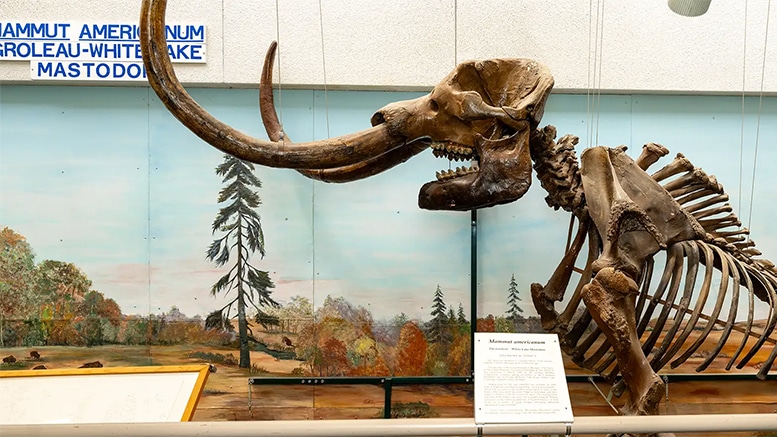
Photos from institutional members of the American Association of Community Colleges . Oakland Community College’s Groleau-White Lake Mastodon, nicknamed “Elmer,” will be loaned to the Cranbrook Institute of Science. It is a first step to grow a partnership between the two organizations, said Peter Provenzano, Jr., chancellor of the Michigan college. “We’re already exploring joint programming and other exhibits that will expand educational opportunities for the community,” he said. (Photo: OCC) Keith Richard, the new vice chancellor for workforce strategy and innovation for the Colorado Community College System, has begun visiting colleges across the system, including Front Range Community College, where President Colleen Simpson (center) showed how her college is preparing students for careers in Colorado’s fastest-growing industries and discussed the evolving needs of the community and employers. (Photo: CCCS) Tulsa Community College’s Metro Campus was right on the parade route for Route 66’s Classic Car Centennial Parade, celebrating the 100th anniversary of Route 66. (Photo: TCC) Ohio’s Sinclair Community College and SNC, the global aerospace and defense company, were joined by Lt. Governor Jim Tressel (seated, left) to announce the launch of the SNC-Sinclair Academy, establishing the Dayton region’s first employer-co-designed aviation workforce pipeline. (Photo: SCC) Representatives from Zimmer Biomet brought medical equipment to Florence-Darlington Technical College’s surgical technology bootcamp for students to test and train on. (Photo: FDTC) Bjorn Watne, chief information security officer for INTERPOL, recently visited Houston City College to discuss the growing importance of international cooperation in combating cybercrime and protecting critical information systems in an increasingly connected world. (Photo: HCC) Employees from TTM Technologies recently completed HAZWOPER safety training at Chippewa Valley Technical College’s new Safety Training Center, designed to provide hands-on, real-world learning opportunities for businesses and employees across the region. (Photo: CVTC) Caterpillar Youth Welding Apprenticeship graduate Allan Morales poses for a photo following his apprenticeship graduation last month. Morales was among a group of high school students who received training, education credits and credentials from Central Carolina Community College, as well as paid apprenticeship experience and preferred employment opportunities from CAT. (Photo: CCCC) An art student completes a painting at Maryland’s Carroll Community College, which has robust visual and performing arts programs. (Photo: Tabitha Whissemore/AACC) San Diego Mayor Todd Gloria and San Diego Community College District Chancellor Gregory Smith have signed a memorandum of understanding to assess the feasibility of a project to transform the city’s Golden Hall into a museum and educational center as part of a comprehensive plan to remake the downtown Civic Center complex. The facility would showcase rotating displays from Mesa College’s world art collection. (Photo: SDCCD) The post Snapshots first appeared on Community College Daily .
16 Jun 2026

+++ Nachrichten im Ukraine-Krieg +++: Moskauer Ölraffinerie bei ukrainischem Drohnenangriff in Brand geraten
Die Ukraine attakiert wieder die russische Öilindustrie mit Drohnen. Lukaschenko: Ukraine und Riussland müssen Kompromisse schließen. Selenskyj bei G7-Gipfel. mehr...
16 Jun 2026

: Wo die Jungadler fliegen
mehr...
15 Jun 2026
Collaborating community colleges
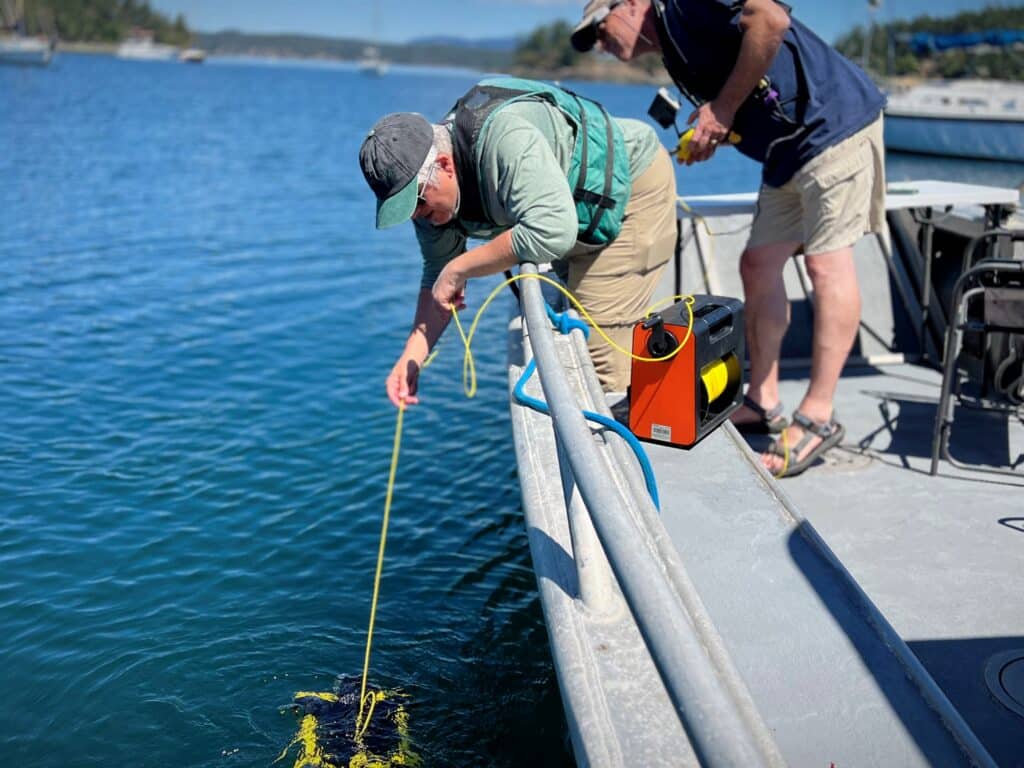
Corey Homer, president of Sussex County Community College (New Jersey), had been thinking about the success of the drone training program at nearby Warren County Community College – considering how his students could benefit from such a pathway, but aware that it would be hard to duplicate. Homer mentioned the thought to Will Austin, president at Warren, who is credited with building his college’s unmanned aircraft systems program (WarrenUAS), which had become one of the best in the country over its five-year history. “President Homer suggested that, as community colleges, we should serve our students and the taxpayers by collaborating rather than competing,” Austin said. “We agreed that we could consider each other’s strengths and align our institutions to truly be of service to both communities and the students at both schools.” The result is a unique collaboration that this fall will allow students from each college to access strong specialized programs at the other campus. Leveraging strengths Homer and Austin communicate often about their two campuses, located about 30 miles apart in the rural northwest farmland of New Jersey, about two hours west of New York City. The colleges, both with enrollment under 3,000, have collaborated in other ways, including through seminars on regional topics such as growing the area’s agriculture sector with sophisticated new practices. “Warren has a nationally recognized drone technology program, while Sussex has established strengths in exercise science,” Homer said. “Rather than duplicating programs, we discussed ways that students could complete their general education requirements closer to home before transferring to the partner college for specialized training.” The partnership “creates a more affordable and accessible pathway for students while leveraging the strengths of both institutions,” he said. Warren County Community College officials prepare a submersible drone. (Photo: WCCC) The collaboration begins this fall, working in the same way a transfer might from a two-year college to a four-year institution, with the student fully enrolled in, and graduating from, the school where they complete the specialization. “It’s a win-win-win for our colleges, our students and our communities and taxpayers,” Homer said, noting that it improves the schools’ images and heightens the interest in both by expanding their offerings while growing the community perception of the institutions as being creative and expansive but efficient. Austin noted that the two are considering other ways they could similarly work together to allow students to tap academic offerings or other programs at the two colleges. “I only see cost savings in a partnership such as this, where both institutions can concentrate on their strengths and, through collaboration, where economies of scale can be used to potentially save each of us money,” he said. Wider benefits Under the arrangement, Sussex students interested in pursuing an associate of science degree in unmanned systems can begin their studies at Sussex and transfer to Warren for one more year to complete the core coursework in drone technology. Likewise, Warren students pursuing an associate of science degree in exercise science can complete their general education requirements at Warren before transferring to Sussex to complete the specialized exercise science portion of the program. Marianne Van Deursen, provost/vice president of academics at Warren, noted that the collaborative arrangement has a number of benefits, including to taxpayers. “At a time when many students and families are questioning the affordability and value of higher education, the two schools are demonstrating how community colleges can work together to expand access, reduce costs, and create innovative educational pathways that directly serve regional workforce needs,” she said. Van Deursen added that the arrangement benefits taxpayers by allowing more students to pursue specialized academic pathways within the regional community college network rather than requiring out-of-county chargeback arrangements if they enroll in institutions outside the immediate service area. That can mean additional county chargeback expenditures. Unmanned systems technology is one of the fastest-growing career fields, supporting industries such as infrastructure inspection, agriculture, construction, environmental sciences, public safety, energy, cinematography, and search and rescue. Students in the program gain access to a fleet of more than 80 unmanned systems at Warren throughout their training, housed in two cutting-edge facilities. Students are provided hands-on learning opportunities at Sussex’s Human Performance Lab. (Photo: SCCC) Meanwhile, Warren’s Academic Affairs Division has experienced growing student interest in exercise science and related health and wellness career pathways, which the college couldn’t always address, Van Deursen said. At Sussex, exercise science students benefit from modern instructional spaces and hands-on learning opportunities within the college’s Human Performance Lab, which features advanced fitness assessment labs, rehabilitation equipment and functional training areas. The facility prepares students for careers in health, fitness, wellness and related fields. With a foundation in exercise science, graduates can pursue careers in personal training, athletic coaching, physical therapy, sports medicine, and other health-related professions or transfer to a four-year institution, Homer said. The post Collaborating community colleges first appeared on Community College Daily .
15 Jun 2026
Nationaler Bildungsbericht: Einmal benachteiligt, immer benachteiligt
Trotz vieler Reformen kommt Deutschland bei der Chancengerechtigkeit nicht voran. Bund und Länder setzen auf mehr Investitionen in Kitas. mehr...
15 Jun 2026

Queer- und transinklusive Geburtshilfe: „Wir wollen endlich sichere Geburtsräume für alle Körper“
Doula Gem Kocher kritisiert transfeindliche und rassistische Strukturen und erklärt, wie queere Geburtshilfe funktioniert. mehr...
15 Jun 2026
Headlines
Colleges are finally making it easier to transfer academic credits Washington Post Schools are launching efforts to simplify this common path through higher education, seeking to boost enrollment and reach a wider mix of students. More students, more certificates — and more budget headaches for Tarrant County College Fort Worth Report Tarrant County College District’s proposal for fiscal year 2027 captures its complicated budget picture: The college is enrolling more students and awarding a record number of degrees and certificates, but changes in state funding and uncertainty over property tax values are straining the district’s finances. The future of healthcare careers: Why rad tech and surg tech matter more than ever MidlandTech (YouTube video) Midlands Technical College President Gregory Little chats with leaders from Lexington Medical Center to discuss the growing demand for radiologic technologists and surgical technologists, the healthcare workforce shortage, and how education and healthcare partnerships are creating real solutions for South Carolina’s future. The federal government is offering new job-training grants. California says it’s not ready yet CalMatters The federal government is set to expand financial aid for students in short-term job training programs starting July 1, but Californians may have to wait until the fall to benefit because of administrative and regulatory challenges. Commentary: It’s time for the state to fund Maricopa community colleges AZcentral.com (subscription required) Maricopa County Community Colleges are seriously underfunded. It’s time for the state to step up and make a commitment to our students’ and state’s future. Arizona is counting on it. The post Headlines first appeared on Community College Daily .
15 Jun 2026
America doesn’t need more credentials. It needs a talent operating system
On July 1, 2026, one of the most consequential workforce development policies in decades will take effect. On this day, after years of bipartisan advocacy, the Workforce Pell Grant program will officially go live. As part of a multi-federal agency vision for workforce development, known as “ America’s Talent Strategy: Building the Workforce for the Golden Age ,” Workforce Pell will undoubtedly serve as a game-changer in America’s efforts to institutionalize workforce development programming at scale . Workforce Pell will serve as a game-changer because it will require state governments to assume operational accountability for academic programming at public institutions within their states, and to ensure the return on investment for learners in the form of economic mobility and employment upon completing such programming. However, the real question is: Has the infrastructure been implemented across the American higher education system to ensure the program’s success? The answer, at least today, is no. Winning trust Improving the public’s trust in higher education requires outcomes. Students are seeking economic mobility. Policymakers are seeking accountability. Employers want employees, and across the country, the available skilled workforce is shrinking. And this is where the opportunity lies. America’s community colleges are inherently suited to function as economic infrastructure in the Workforce Pell era. Furthermore, Workforce Pell is widely seen as a win for community colleges, given the sector’s ability to respond quickly through programmatic development to meet workforce needs. The long-term strategic question before community colleges now is, what part do they play in the growing talent economy? The answer: To act as talent operating systems that link education with opportunity, enabling community colleges to serve as workforce placement engines. An integrated ecosystem A talent operating system goes beyond just being a collection of academic programs. It functions as an integrated ecosystem that links learners, employers, workforce agencies, data systems and educational providers within a coordinated framework to accelerate employment, enable career mobility, and adapt flexibly to labor market demands. Workforce Pell’s success depends on collaboration beyond educational institutions alone. Employers should move past merely recruiting talent and instead act as co-designers of talent pipelines. The institutions that thrive in the Workforce Pell era are those that develop workforce programs in partnership with employers, rather than working independently. In this new model, employers participate in defining necessary skills, shape curriculum development, validate workforce needs and establish clearer pathways to jobs and career progression. Transforming educational accountability Following the negotiated rulemaking for higher education, which was initiated in 2025 , H.R.1, known as the One Big Beautiful Bill (OBBB), allows students to receive Pell grants for eligible workforce programs that meet a determined instructional time threshold (150-599 clock hours in length or an equivalent number of credit hours) and that takes at least eight weeks, but less than 15 weeks of instructional time to complete. Of the programs that meet Workforce Pell requirements , programs will be held accountable thanks to rigorous student outcome standards, primarily in three key areas: Value-added earnings : This figure represents the difference between the adjusted median earnings of student completers during the earnings measurement period and 150% of the U.S. poverty guidelines for a single person in that tax year. Completion rate : Each year, 70% of program participants are required to complete the program within 150%S of the standard duration. Employment rate : Each year, 70% of program graduates are required to be employed in the second quarter after completing the program. While not an apples-to-apples comparison, let’s take a moment to put these standards into scope against the statistics of the federal financial aid program, known as FAFSA . Federal Pell Grant recipients, who receive funding solely based on their financial need, largely attend for-profit colleges, private institutions and public two-year colleges. The “ Report on the Condition of Education 2026 ” recently published by the U.S. Department of Education, shows that over eight years, the completion rate for two-year students receiving Pell grants was 6 percentage points higher than for nonrecipients (37% vs. 31%). Let that sink in for a moment. The newly established Workforce Pell completion rate targets a minimum threshold of 70%, which, compared with current Pell recipient completion rates, creates a performance gap of roughly 33-39% (based on the recipient-to-non-recipient comparison dataset ). While it would have been helpful to combine this data with employment rate comparisons between community college Pell recipient graduates and non-Pell recipients, such information is nationally limited. It is, however, worth noting a few things. For one, according to the Brookings Institute , Pell recipients tend to enroll in majors that result in lower earnings after graduation, for both Pell grant and non-Pell grant recipients. Furthermore, their researchers found that Pell recipients earn approximately 11% less than non-Pell recipients several years after graduation. Secondly, last year, the Federal Reserve Bank of Richmond published that community college Pell recipients have lower overall postsecondary “ success ” rates than non-Pell students. The key point is that the revised Workforce Pell graduation and employment standards are designed to address a longstanding gap in performance and the return on investment (ROI) for learners after program completion. Moreover, it necessitates a transformative advancement for institutions to sustain instructional integrity while enhancing completion rates. In the years ahead, institutions will increasingly be judged not by how many students they enroll, but by how many students they help reach economic mobility. Such a shift will require institutions and their boards to rethink long-standing assumptions about success, accountability, and mission. The start of America’s new talent operating system If you were asked to describe America’s human capital strategy, what would your answer be? At scale, such a strategy would explain how the country prepares its current, emerging and pivoting workforce through intentional academic and career-centered educational models that include a system for identifying learners’ skill sets, locations and interests, and for matching those learners directly with workforce needs or further incentivizing them to continue their long-term career climb toward economic mobility, based on intentionally designed employee growth and development systems. The question, however, is whether a system remotely similar to this currently exists. To my knowledge, the answer is no. As America works to establish such a system, especially given the national demographic realities currently underway and their effects on the national employee ecosystem, Workforce Pell stands as a strong pilot test for the country to identify examples of excellence at the state level for the rest of the country to follow regarding academic program accountability, data systems development and state-led college-to-career pipeline growth and development. What remains unknown is just how long the federal government will fund this pilot phase and how long the federal government will accept that, without proper intervention, several states will fail to develop adequate systems to meet the charge. States that thrive during the Workforce Pell era will do more than just approve or deny programs. They will develop integrated data systems, coordinate workforce priorities across agencies, and establish smooth pathways between education and employment. Essentially, Workforce Pell serves as a gauge of a state’s capacity , vision and execution as much as it measures institutional effectiveness. Community colleges’ role America’s community colleges are once again stepping into a crucial role. This time, they are invited to collaborate on innovative solutions to address a vital issue that will influence the nation’s economic and geopolitical future. For many years, higher education has primarily been assessed by metrics such as enrollment, graduation rates and credentialing. However, Workforce Pell marks a shift towards a new standard in which institutions will be evaluated based on employment outcomes, income gains and social mobility. The focus is no longer solely on whether students complete their programs, but whether those programs genuinely enhance their lives. Ultimately, Workforce Pell is pushing the nation to face a hard truth. America isn’t lacking in credentials , but in systems that reliably link talent to opportunities. Workforce Pell’s success will be rooted in states, employers and educational institutions collaborating to create what America has long needed: a national talent operating system. The post America doesn’t need more credentials. It needs a talent operating system first appeared on Community College Daily .
15 Jun 2026
Headlines
Hyde-Smith helps introduce bipartisan community college agricultural education bill American Ag Network The Community College Agriculture Advancement Act (S. 4730) would amend the National Agricultural Research, Extension, and Teaching Policy Act of 1977 to give community colleges greater access to federal grant funding to develop and expand educational programs focused on careers in the agricultural sector. Boeing announces pay-as-you-learn program with job offers in Huntsville AL.com Boeing and Drake State Community & Technical College will announce this week a new technical apprenticeship program in Huntsville. How one college is rethinking free tuition Inside Higher Ed Austin Community College pairs free tuition with wraparound supports like childcare and food access, contributing to higher enrollment and improved completion rates. Tennessee Board of Regents approves tuition increases for community colleges, technical schools Johnson City Press Tuition and mandatory fees at Tennessee’s community colleges and technical schools will rise by about 3.6% next academic year under a budget plan approved Friday by the Tennessee Board of Regents. Anthropic announces ‘Claude Corps’ to teach nonprofits to use AI more effectively Associated Press Anthropic will donate $150 million to launch a fellowship program that places people early in their careers with nonprofits around the country to help them use artificial intelligence more effectively in their work. The skills people still perform better than AI, according to workplace experts Associated Press Some workplace experts argue that with more businesses adopting AI tools, soft skills such as empathy, critical thinking and ethical decision-making are worth cultivating to help employees become indispensible. Federal bill targets ‘ghost students’ as Minnesota community colleges crack down FOX 9 KMSP The Minnesota State system flagged more than 7,700 suspected “ghost students” during the 2024-2025 school year. Pima Community College board approves dual-enrollment fee for high school students KOLD In Arizona, nearly 7,000 Pima County students are dual-enrolled and must now pay $10 per credit hour starting fall 2027. The post Headlines first appeared on Community College Daily .
15 Jun 2026

Landtagswahlen in Nordrhein-Westfalen: Das ist ja fast klassenkämpferisch
Jochen Ott soll die SPD als Spitzenkandidat aus dem Umfragekeller holen. Und dann fordert er auch noch CDU-Ministerpräsident Hendrik Wüst heraus. mehr...
13 Jun 2026

: Wo man sich grüßt
Eine gute Nachbarschaft muss gar nicht frei von Konflikten sein. Im Gegenteil. Wie man aber in der Stadt und auf dem Land zusammenkommt, ist durchaus unterschiedlich. Berlin-Kreuzberg ist halt nicht so wie Altranft in Brandenburg mehr...
12 Jun 2026
: Gedeiht in Tunesien die Zukunft der Landwirtschaft?
mehr...
12 Jun 2026

: Merkst du schon was?
Junge Menschen erkranken immer öfter an Depressionen, aber die Psychiatrie versteht sich immer noch vor allem als Notfallgeschäft. Durch bessere Früherkennung ließe sich eine Menge Leid verhindern mehr...
12 Jun 2026

: Siewarleichte Beute
Ende April wurde in Passau eine Frau, die seit sechs Jahren in einem Traditionsgasthaus angestellt war, abgeschoben. Seither probt der Wirt den Aufstand mehr...
12 Jun 2026

: RekasuchtdieLiebe
Singles sind zunehmend genervt von Dating-Apps, sie sehnen sich nach echten Begegnungen. Und probieren neue Formen des Kennenlernens aus mehr...
12 Jun 2026

: Leben in der Horizontalen
Wenn das Krankenbett zum Zentrum der Existenz wird, verändert das auch Wahrnehmung und Weltbezug. Davon erzählt in Berlin eine Ausstellung im Medizinhistorischen Museum mehr...
12 Jun 2026
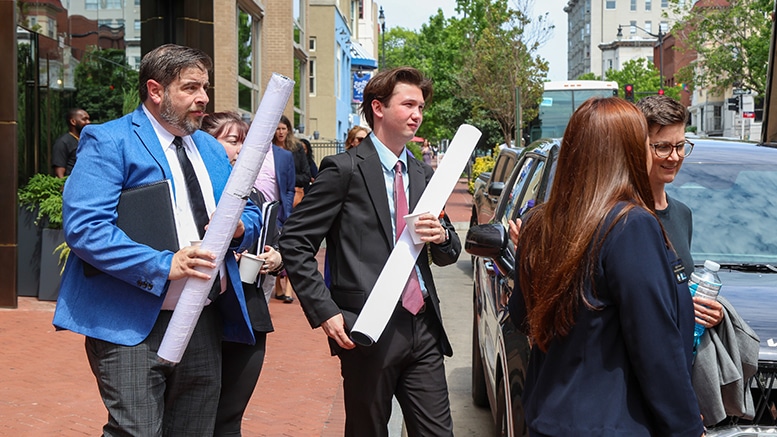
Snapshots: The 2026 CCIC poster showcase
On Tuesday, student teams that comprised the 12 college finalists for the 2026 Community College Innovation Challenge pitched their STEM-related solutions for real-world problems during a poster session held at the Cannon House Office Building on Capitol Hill in Washington, D.C. Below are photos from the event. (All photos by EPNAC.com) The post Snapshots: The 2026 CCIC poster showcase first appeared on Community College Daily .
12 Jun 2026
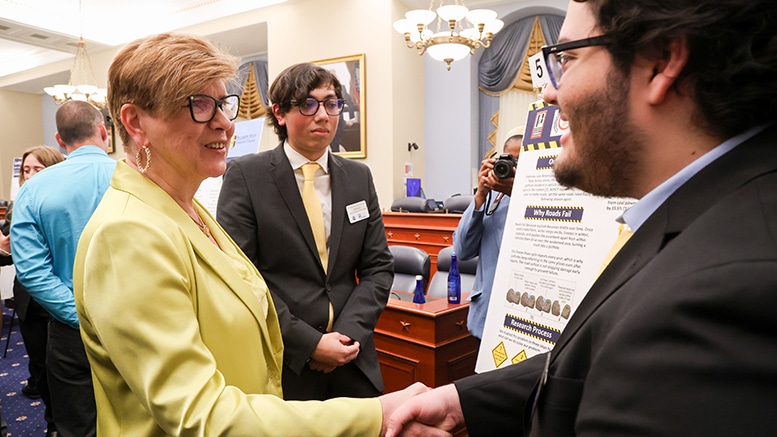
Creativity, innovation come together for CCIC teams
Twelve teams of community college students from across the United States spent months using creative thinking and classroom learning to design innovations to solve real-world problems. On June 9, they had the opportunity to showcase their projects at a poster session on Capitol Hill in Washington, D.C. The teams of students – along with their faculty mentors – are finalists in the annual Community College Innovation Challenge (CCIC). The program is led by the American Association of Community Colleges (AACC) in partnership with the National Science Foundation (NSF). While in Washington, D.C., the teams also participated in a “boot camp” where experts gave advice on making and selling their STEM-based ideas. Besides pitching their projects during Tuesday’s poster presentation, they made a final push to a panel of judges on Thursday before it would determine the winning teams. Passion projects There were projects designed to test and filter water, to filter microplastics out of washing machines, to keep roads smooth and to prevent power outages. One project aimed to prevent people from being scammed, and another was designed to aid rescue teams in locating drowning victims. What they all had in common was creativity, the application of STEM learning and a lot of passion from the students. “You have distinguished yourself as creative thinkers and problem solvers,” AACC President and CEO DeRionne Pollard told the students during the event. James Moore, III, assistant director for the directorate for STEM education at NSF, told the students to stay the course. “We get to the top with creativity and innovation,” he said. Finding their ‘why’ The CCIC project ideas weren’t random; for students, they were personal. Students from Henry Ford College live about an hour from Flint, Michigan, where clean drinking water can still be an issue more than 10 years after the city’s water crisis began. It’s what inspired them to create SuClara, a smart water testing and filtration system. The project is designed to improve public health and reduce the use of bottled water. The rise of AI data centers in Secaucus, New Jersey, inspired a team of students from Hudson County Community College to design a hybrid immersion-cooling system for use in data centers to save water and energy. Rep. Nellie Pou (D-New Jersey) visits with the student team from Passaic County Community College, who highlighted their idea to reimagine road materials using fly ash. (Photo: Epnac.com) Shawnee Community College (Illinois) student Robert Edwards worked for 25 years in retail management and has seen grocery stores come and go. “I understand the indicators when a store is about to close,” Edwards said. And he understands what happens to communities when residents don’t have access to fresh food. Edwards wants to prevent food deserts, so he went back to school and now is working with his teammates to use aggregated data to help community and state leaders understand where food deserts may pop up. “Food access is infrastructure,” teammate Ty Schuetz said. The San Jacinto College (Texas) team created TrustLine, a phone app designed to keep people from getting scammed through phone calls, texts and emails. A team member’s mother-in-law had gotten scammed and it raised the question, why aren’t there any solutions that are proactive in preventing scams, rather than reactive? And in California, Josiah Chun’s father is living with Parkinson’s, which inspired him to learn more about neuroscience. “I went on a quest for knowledge to learn about the brain,” Chun said. He and his teammates from Pasadena City College created Cortexa to bring neuroscience education to schools. The interactive learning tool processes signals from brainwaves and triggers LED lights embedded in clothes or displays, helping students get excited about neuroscience and showcasing neurotechnology. Spreading education Cortexa isn’t the only project looking to increase access to educational tools. The team from SUNY Broome wants to ensure everyone has an opportunity for hands-on quantum optics education. They’re creating inexpensive classroom kits with open-source classroom guides so students can learn about lasers and more. “Quantum technology is challenging, but the curriculum doesn’t have to be,” said student Alexandra Bouillon. And the Pellissippi State Community College team understands that STEM learning isn’t always accessible for people with disabilities – particularly those who are visually impaired. They’re using what they learned in a 3D-printing class to lower barriers. They created 3D-printed models – which include Braille labels – to allow for hands-on learning in math and engineering classes. And the winners are… The first-, second- and third-place winning teams and their innovations are. First place: SUNY Broome Community College (New York) Project: Hands-On Quantum Education Second place: Springfield Technical Community College (Massachusetts) Project: HydroShield Third place: De Anza College (California) Project: The Micro-Buoy In addition, Passaic County Community College (New Jersey) took home the Innovation Growth Award, which recognizes a team for its exceptional growth, responsiveness to feedback and continuous improvement throughout the competition. The post Creativity, innovation come together for CCIC teams first appeared on Community College Daily .
12 Jun 2026

: Angeschaltet, ausgeschaltet, ferngesteuert
Cosey Mueller macht Musik gegen die falschen Gefühle, die Social Media generiert. Jetzt ist ihr viertes Album „Embodiment of Denial“ erschienen mehr...
11 Jun 2026
Five steps to strengthen dual enrollment
Community colleges have earned their current moment in the sun. While private four-year institutions are seeing enrollment decline and public universities have grown modestly, community colleges have surged. They’ve added 173,000 undergraduate students last fall, nearly double the increase at public four-year schools. National Student Clearinghouse data also show that undergraduate certificate programs at community colleges grew 12.1% this spring. That’s the fastest growth of any credential type in any sector. Short-term credentials tied to the workforce grew 28% in a single year. What’s behind this? Cost is part of the answer. At two-year public schools, tuition and fees averaged $4,150 for 2025–26, against $11,950 at four-year public colleges and $45,000 at private institutions. Workforce relevance is another part. Students want credentials that lead somewhere quickly, and community colleges are delivering them. Finally, there’s a less-discussed third force that deserves more attention. The boundary between high school and community college is dissolving, and community colleges are the institutions on the other side of it. Strong dual-enrollment interest Look at dual enrollment, which allows high school students to earn college credit before graduation. It nearly doubled over the past decade, reaching 2.8 million students in 2023–24. Community colleges serve 71% of those students. High school students are now more than one in five community college enrollments. According to Clearinghouse fall 2025 data, dual enrollment was 38.4% of community colleges’ total enrollment increase. Community colleges aren’t just serving more students. They’re serving younger ones and building the first step of the postsecondary pathway career ladder before high school is finished. That’s the right instinct. For first-generation students, working family’s children or young people who’ve never seen themselves as college-bound, the most important step on the opportunity ladder is the first one. Dual enrollment, done well, builds that rung early. Students arrive at community colleges having already earned credits and navigated a college course. They’ve begun to see themselves as capable of more. Research confirms the effect. Dual-enrollment students show stronger postsecondary enrollment and degree completion rates than comparable peers who did not participate. Addressing the challenges For community colleges, this means the work of expanding access and building pathways now begins in high school corridors and guidance counselor offices, not just on their campus. But while the enrollment surge is real, so are two problems that threaten to limit what it means. The first is access. Black, Hispanic and low-income students are underrepresented in dual enrollment even as programs have expanded. One part of the problem is that in some states, students and families still pay to participate. This creates an immediate barrier for the students these programs most need to reach. Another dimension of this access problem is that many parents, especially those who never attended college, simply don’t understand how dual enrollment works or what it can do for their children. That’s not a marketing failure. It’s a relationship failure, and community colleges are the ones best positioned to fix it. The second problem is quality. Fewer than half of the states currently have comprehensive policies governing the quality of dual enrollment programs. Rapid growth and inconsistent oversight have produced a two-tiered system of strong programs in well-resourced communities and weaker ones everywhere. And even as community college enrollment rose, the awarding of associate degrees fell between 2013-14 and 2023-24. More students entering doesn’t mean more students finishing. There’s also a policy opportunity worth naming. Under the Workforce Pell provisions of recently enacted federal legislation, students enrolling in workforce training programs at community colleges are eligible for Pell Grant funding, previously limited to degree-seeking undergraduates. That change, combined with a growing dual-enrollment pipeline, creates a potential opening for community colleges. They can serve students earlier, through dual enrollment and serve working adults better, through short-term credentialed pathways supported by federal aid. The pieces are in place. What remains is connecting them with intention. Checklist for improvement Here are five steps that community colleges can take to make dual enrollment a genuine access tool for quality programs. Eliminate student costs for participation. Dual enrollment shouldn’t require families to pay out of pocket. States and institutions that have moved to free-access models have seen broader and more diverse participation. Extend dual enrollment deliberately into underserved schools. Growth concentrated in well-resourced districts doesn’t count as expanding access. Dedicated outreach staff, transportation support and intentional partnership with K-12 underresourced are necessary, not optional. Align dual-enrollment coursework with credit-bearing pathways. Credits earned in high school should transfer cleanly and count toward certificates, associate degrees and further study. A student who earns 15 credits before graduation and can’t apply them upon arrival has been shortchanged. Build advising bridges, not just credit bridges. Research on students who leave college without a credential reports that stopping out is driven by financial hardship and life circumstances, not by academic failure. Students who begin through dual enrollment need sustained advising that follows them from high school into community college and beyond. Establish quality standards with teeth. State policies should set clear expectations for faculty qualifications, course rigor, and student outcomes — and apply them consistently across programs, regardless of the wealth of the school district being served. The words “fastest-growing sector” are a description, not an achievement. The achievement comes when the students who most need a first rung on the opportunity ladder are the ones most likely to find one that leads them to a better life. The post Five steps to strengthen dual enrollment first appeared on Community College Daily .
11 Jun 2026
Headlines
Some high school grads head to trade school vs. college Good Morning America Enrollment at community colleges focusing on vocational and trade program has growth 38% since 2021, new national data show. Poll: Some Mass. families shy away from 4-year degrees, but community college plans rise WBUR Massachusetts parents are increasingly seeing community college, rather than a bachelor’s degree, as the next step in their children’s education, according to a survey released Wednesday by EdTrust and MassInc Polling. High school’s partnership with community college puts students ahead Spectrum News 1 “So we’ve seen quite the uptick in enrollment, which is really awesome,” said Hailey Warren, associate director of Early College Pathways at Onondaga Community College (New York). “And I think that’s really where we’re at. Parents, students want a low cost option.” Commentary: A little perspective Midlands Technical College (blog) This year’s SkillsUSA National Championship offered a powerful reminder of what happens when hard work meets purpose, writes Midlands Technical College President Greg Little. Housing has become an imperative for student success, argues community college president Jeff DeFranco International Business Times Student housing, according to Lake Tahoe Community College President Jeff DeFranco, has often been treated as an auxiliary service in higher education, one that’s important but separate from the academic mission itself. This assumption, he believes, is no longer indicative of the reality students face today. The post Headlines first appeared on Community College Daily .
11 Jun 2026
US House passes bill to combat ‘ghost’ federal student aid applicants
A bill to crack down on financial aid fraud passed the U.S. House on Wednesday. The measure , which passed 249-172, would require the U.S. Department of Education to set up an identity fraud detection system for the Free Application for Federal Student Aid, better known as FAFSA. Nearly 40 Democrats voted for the GOP-led bill. The bill safeguards against fraudulent “ghost students,” which lawmakers say have cost taxpayers millions of dollars by applying for federal student aid and college under stolen identities and enrolling in classes, only to later disappear with such funds. The measure would codify a FAFSA fraud detection tool already underway at the Education Department and comes as President Donald Trump’s administration pursues a sweeping anti-fraud effort across the federal government. Related article: ED’s plan to weed out fake student aid applications Rep. Burgess Owens, who sponsored the measure, said during floor debate Tuesday that his bill “builds on the good work already done by the Trump administration to protect taxpayer dollars and help safeguard the integrity of the student aid system by ensuring federal aid goes to real students.” The Utah Republican added that his legislation “takes a straightforward approach, identifies suspicious student aid applications and ensures these applications are for who they say they are before dollars go out the door.” A similar, bipartisan effort was introduced in the U.S. Senate earlier this year. Education Secretary Linda McMahon said her department was “proud” to see the House pass the bill, which she said “will cement our ongoing efforts to eliminate fraud, waste, and abuse by requiring screening for suspicious federal student aid applications,” in a Wednesday statement. “Since Day One, the Trump administration has been committed to restoring existing fraud detection capabilities while building the most comprehensive fraud-detection system in the Department’s history,” she said. Fraud detection system Under the bill, the education secretary would be required to use the identity fraud detection system to assess each FAFSA submitted on or after October 1. If a “reasonable suspicion of identity fraud” on the FAFSA is presented, the secretary must notify the applicant and the schools designated on the application that they are subject to “additional identity verification requirements” before they can receive federal financial aid. The bill also requires both an annual audit of the system and a report to Congress on its effectiveness. The measure loops in provisions from a separate bill from Pennsylvania GOP Rep. Glenn “GT” Thompson that also aims to combat student aid fraud. That includes a requirement that the Education secretary prioritize program reviews of institutions that have “demonstrated a pattern” of providing federal financial aid to students whose FAFSA “presented a reasonable suspicion of identity fraud.” ‘Vague enforcement standards’ Rep. Bobby Scott, ranking member of the House Committee on Education and Workforce, voiced his opposition to the measure during floor debate Tuesday, saying the bill “could reasonably be viewed as part of a broader strategy to weaponize student aid.” The Virginia Democrat noted that while preventing federal student aid fraud and protecting taxpayer dollars “is always a good idea,” the bill’s “creation of vague enforcement standards and punitive mandates without clear guidance” for schools and students could make it more difficult for legitimate students to access aid in order to attend college. Scott also pointed to the Education Department’s April launch of an identity fraud detection system, saying Congress should allow the tool to operate and wait for the agency to evaluate the results. “Codifying this new system without assessing its effectiveness just doesn’t make any sense,” he said. The post US House passes bill to combat ‘ghost’ federal student aid applicants first appeared on Community College Daily .
10 Jun 2026

Tiktok-Videos über erfolglose Jobsuche: #Arbeitslos
30 Jahre alt. Masterabschluss. Grundsicherung. Auf Tiktok dokumentieren junge Menschen ihre erfolglose Jobsuche. Und fragen sich, was schiefläuft. mehr...
10 Jun 2026
Headlines
Undocumented students may no longer be welcome in Florida colleges, adult education Miami Herald For undocumented immigrants trying to learn English, earn a high school-equivalency diploma or take the first step toward college, Florida is proposing changes to its education rules that critics say will turn classrooms into another immigration checkpoint. Commentary: AI is eliminating entry-level jobs. Education needs to fill the gap Fast Company As employers reduce entry-level hiring, colleges and universities must rethink how students gain the skills and experience once built through jobs. River Parishes Community College expands process technology program WAFB This fall, the Louisiana college is adding more options, including night classes at a high school for working adults and parents who can’t make daytime courses. Mentors help Cape Cod students stay the course in community college Cape Cod Times Advocates for a Community College Education provides mentoring and scholarships for Cape Cod high school students to continue their education and succeed at Cape Cod Community College. SUNY chancellor on the future, and growth despite challenging time WXXI The year ahead will bring a renewed focus on student performance, by improving advising, the first-year student experience and easing the transfer process, says SUNY Chancellor John King. The post Headlines first appeared on Community College Daily .
10 Jun 2026
House committee passes ed funding bill
The House Appropriations Committee approved the all-important Labor, Health and Human Services, and Education (LHHS-ED) fiscal year 2027 appropriations bill on Tuesday on a party-line vote. The bill is now set to be considered by the full House. Though the committee engaged in an hours-long markup during which it considered many amendments, not much about the bill changed from its initial version reported on last week in CC Daily. Most amendments were offered by committee Democrats to restore spending cuts contained in the bill and make other changes, and nearly all those amendments were voted down. A few more details Though most of the bill’s details were already known, a few more programmatic funding levels were revealed in the committee report that was released just prior to the markup. The report includes funding levels for each of the Higher Education Act Title III and V programs, though in all likelihood, most of these funds will be aggregated and awarded through a large Strengthening Institutions Program (SIP) competition . The SIP program itself received a $10 million increase. Most of the other programs were level-funded. As reported earlier, the bill includes a one-year fix for the looming Pell Grant shortfall that would be covered for by permanently eliminating subsidized undergraduate Direct Loans. An amendment offered during markup to reverse this elimination was defeated. The bill was changed to include language that would characterize graduate-level nursing programs as professional programs, and therefore eligible for larger student loan caps. Language was also added to push back against the Trump administration’s changes to the TRIO program. Slower on the Senate side While the House Appropriations Committee is approving legislation, things are on a much slower track in the Senate. Unlike the House, the Senate Appropriations Committee endeavors to produce bipartisan spending bills because they would not pass the Senate otherwise. However, Senate appropriators have not yet agreed to overall funding levels for defense and non-defense programs. As a result, previously scheduled markups have been delayed. No date has been set for markup of the LHHS-ED bill. The post House committee passes ed funding bill first appeared on Community College Daily .
10 Jun 2026
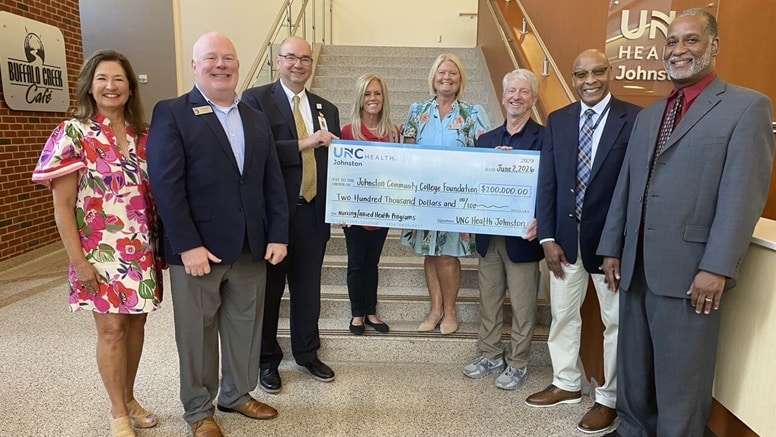
Funding roundup
The Community College of Beaver County (CCBC) Foundation announced a $50,000 leadership gift in support of the Pennsylvania college’s “ Future Takes Flight ” Aviation Capital Campaign, marking the first public contribution toward the initiative. The investment will fund the purchase of a new air traffic control tabletop simulator to enhance hands-on learning opportunities for students attending CCBC’s James M. Johnson School of Aviation Sciences. The training tool aims to replicate real-world runway environments, including layouts modeled after Beaver County Airport, Pittsburgh International Airport and the Federal Aviation Administration training academy in Oklahoma City. The “Future Takes Flight” campaign supports the development of a new 30,000-square-foot Aviation Sciences Center at the Beaver County Airport. Arizona A $16 million grant to Maricopa Community Colleges and the Maricopa Community Colleges Foundation (MCCF) aims to help more students earn a degree or transfer. The investment from Arnold Ventures marks the largest single contribution from a philanthropic organization in the Maricopa system’s history. Funding will support the launch of Commit2Completion at three colleges: Glendale Community College, Phoenix College and Scottsdale Community College, with plans to expand the program across the system’s 10 colleges. Commit2Completion is based on City University of New York’s (CUNY) Accelerated Study in Associate Programs (ASAP), which is a proven model to improve outcomes for first-time, full-time students by combining academic pathways with advising and support that helps them stay enrolled, complete on time and advance into in-demand careers with higher wages. Massachusetts The estate of Maureen Wilkens has made a $20 million bequest to the Cape Cod Community College Educational Foundation, marking the largest gift in the foundation’s history and doubling its endowment. The donation will support a range of priorities aligned with Wilkens’ vision for opportunity and community impact, including scholarships, academic and career programs, capital projects and investments in essential learning resources, according to the college. Known for her generosity, strong spirit and deep commitment to Cape Cod, Wilkens passed away in 2025, at the age of 90. “This gift reflects Maureen’s deep belief in the power of a community college education,” said Sara Anton, CEO of the Educational Foundation. “She was a tireless champion for the students at the college and our community, and this incredible gesture expands what is possible for the foundation and the college for years to come.” North Carolina Golden LEAF has awarded Gaston College and Roanoke-Chowan Community College each $1 million to grow their healthcare training programs. The colleges will use grant funds to purchase and install training equipment, such as simulators. Both colleges are expanding their healthcare programs with new training facilities. Their grants were part of $6 million in funding approved today by the Golden LEAF board of directors to support job creation, economic investment, workforce preparedness and agriculture projects across North Carolina. * * * Wake Tech Community College is partnering with Wake County Public Schools on their WakeWorks Youth Apprenticeship Academy, a new partnership that will let students earn tuition-free college credits, pick up industry credentials and collect a paycheck before they even graduate. Bloomberg Philanthropies is backing the effort with a $4 million grant — the largest investment in Wake Tech’s history — and leaders say the academy will start with about 60 juniors in January 2027 and serve roughly 250 students over three years. Bloomberg Philanthropies. Wake County is one of nine regions in Bloomberg Philanthropies’ $90 million national skilled trades initiative. Houston City College is the lead for another region. (See item, below.) The new Wake County program will expand college and career pathways for students, providing opportunities to earn college credit, gain hands-on skilled trades experience and prepare for such high-wage, in-demand careers as automotive technicians, construction workers, electricians, HVAC technicians, plumbers and welders. “Through this partnership with Wake County Public Schools, we are creating a powerful new model that allows students to begin building meaningful careers while still in high school,” said Wake Tech President Scott Ralls. * * * Johnston Community College’s (JCC) nursing and allied health programs got a boost recently with a $200,000 commitment from UNC Health Johnston. The philanthropic support will ensure that JCC continues to provide its students with the best learning opportunities possible as they pursue their careers in healthcare. Photo: Johnston Community College Texas Houston City College (HCC) has received a $17 million investment from Bloomberg Philanthropies for a new regional workforce initiative. The investment is the largest ever received by HCC, college officials said. The Gulf Coast TradeUp Careers initiative is part of a new $90 million national effort from Bloomberg Philanthropies to change how high school students prepare for and enter Registered Apprenticeships and careers in the skilled trades. Gulf Coast TradeUp Careers, spearheaded by the Gulf Coast Region Apprenticeship Hub, will help expand workforce infrastructure, apprenticeship pathways, employer engagement and student access throughout Greater Houston and the Gulf Coast region. The program plans to serve more than 1,350 career and technical education students over three years. “As employers face growing demand for skilled workers, this initiative helps strengthen the talent pipeline while creating meaningful pathways to family-sustaining careers,” said Jenny Kane, who leads the Career and Technical Education Portfolio at Bloomberg Philanthropies. The initiative is being developed through collaboration among HCC, employers, workforce organizations, school districts and regional partners to create a connected workforce ecosystem. Virginia Southwest Virginia Community College (SWCC) has received more than $1.8 million by the Appalachian Regional Commission (ARC) for its new project, Career Pathways for Advanced Manufacturing and Trade-Based Technicians. The grant comes through ARC’s POWER (Partnerships for Opportunity and Workforce and Economic Revitalization) Initiative. It will fund new faculty and staff positions, upgraded equipment, expanded training capacity and certification opportunities. SWCC, along with partners in Virginia, will expand and enhance programs aligned with regional employer demand, including advanced manufacturing and electrical/electronics, precision machining and welding, automotive tech and HVAC. The college plans to offer new programs in robotic welding, data center operations and technician entrepreneurship. The initiative also will introduce new associate of applied science programs, expand training capacity and embed industry-recognized certifications to ensure students graduate workforce-ready. “This investment will help us expand high-quality career pathways and give students direct access to family-sustaining careers. It also helps us meet employer needs and support the long-term economic health of Southwest Virginia,” said SWCC President Clint Hayes. The post Funding roundup first appeared on Community College Daily .
10 Jun 2026
Colleges celebrate firsts with prison education programs
Though many colleges provide education programs for people in prison, some colleges are celebrating firsts this commencement season. Helping students build a future In New York, Borough of Manhattan Community College (BMCC) held its first commencement ceremony inside a correctional facility on May 8. BMCC in 2024 joined John Jay College’s existing Prison-to-College Pathways Pipeline (P2CP) program at Otisville Correctional Facility. The program offers the City University of New York’s (CUNY) first and only degree-granting program inside a New York state correctional facility: an associate degree in liberal arts. During the May 8 ceremony, eight graduates — including five who are now out of the facility — were recognized, according to a press release . “This program is not about where you began. It is about where you are going. It is about the future you are choosing to build,” BMCC President Anthony Munroe told graduates. Graduate David called the commencement one of the happiest moments of his life. “Programs like this one are important. It teaches us how to get back into the community and how to represent ourselves in the community,” David said. “What I hope for my fellow graduates, my peers in the audience and soon-to-be graduates, is that we continue to help each other and that as we grow, we grow together.” Marking a milestone Illinois Central College (ICC) marked a milestone on May 12 as the inaugural cohort of its Prison Education Program (PEP) graduated at the Federal Correctional Institution (FCI) in Pekin. Twenty students — 13 men and 7 women — earned their business specialist certificates. “Standing at the front of that classroom, I did not just witness incarcerated individuals earn a higher education credential. I witnessed resilience rewrite its story, potential break through barriers, and human dignity rise higher than any wall meant to contain it,” said program instructor Elizabeth Godinez, assistant professor of business, legal, and information systems. FCI Pekin and ICC began a partnership in 2023. ICC spent more than 18 months working alongside federal partners to develop the in-person, credit-bearing program, secure Higher Learning Commission approval, navigate federal regulatory requirements and obtain authorization from the U.S. Department of Education for Pell Grant eligibility. Now, students can pursue college credentials that support employment opportunities, continued education and long-term economic mobility. Students in the program completed 30 credit hours across 10 college-level courses delivered over approximately two years. Coursework included accounting, business math, management, customer service, finance, sales, marketing, human resource management and technology. The Business Specialist certificate is designed for entry-level employment and serves as a direct pathway toward an Associate in Applied Science degree at ICC. First associate degrees conferred On June 9, nine students at Deer Ridge Correctional Institution received associate degrees from Central Oregon Community College (COCC). These are the first-ever degree awards conferred at the institution. COCC introduced a fully accredited, cohort-modeled associate degree program in the spring term of 2024. Of the approximately 1,100 adults in custody at Deer Ridge, some 30 are enrolled during the academic year, taught by COCC instructors who travel to the site, according to a press release from the college. Students can take classes in biology, history, communication and human development. The degree is a transfer award, allowing students to continue their college studies upon release. “This program exemplifies COCC’s commitment to educational access, and we’re so excited to reach this milestone with our first graduating class,” said Tony Russell, instructional dean at COCC. The college has provided services at Deer Ridge since 2008, including a GED prep program, Adult Basic Skills classes and a welding program. The post Colleges celebrate firsts with prison education programs first appeared on Community College Daily .
10 Jun 2026
Headlines
Mississippi higher education leaders talk enrollment cliff, consolidation Magnolia Tribune Over the last decade, Mississippi has seen 63,000 fewer students enroll in public K-12 schools, according to data from the Mississippi Department of Education. That is, in part, attributed to a decline in birth rates. However, Mississippi’s community colleges and universities are not currently experiencing the effects of the predicted enrollment cliff. Northwest Arkansas Community College board approves student housing location, funding model Arkansas Democrat Gazette The Arkansas college has settled on a location and funding model for its first planned on-campus student housing facility. NJ AI Hub unveils statewide community college AI partnership Patch.com New Jersey’s 18 community colleges are getting a new statewide framework for AI education. The New Jersey AI Hub and the New Jersey Council of County Colleges announced AI Ready NJ. Among its priorities are helping faculty integrate AI into teaching, building institutional capacity for AI education and expanding learning opportunities tied to workforce needs. Jefferson Community College launches summer academy for young women in STEAM WWNY The New York college will host its first Future Women in STEAM Summer Academy, offering young women entering grades 8-10 a chance to explore science, technology, engineering, art and math. The post Headlines first appeared on Community College Daily .
9 Jun 2026
Aspen Prize finalists announced
The Aspen Institute today named the 10 community college finalists for the 2027 Aspen Prize for Community College Excellence. The Aspen Prize , which is backed by $1 million in award funds, honors colleges that achieve strong outcomes, focusing on whether students complete credentials that lead to bachelor’s attainment and jobs that pay family-sustaining wages. The finalists have adopted reforms and practices to improve both completion and post-completion outcomes. The 10 finalists are: Chippewa Valley Technical College (WI) Forsyth Technical Community College (NC) Lorain County Community College (OH) Mississippi Gulf Coast Community College (MS) Patrick & Henry Community College (VA) South Puget Sound Community College (WA) Stanly Community College (NC) Tallahassee State College (FL) Tri-County Technical College (SC) Wallace State Community College-Hanceville (AL) “Student outcomes like those we see at the 10 finalists cannot be achieved without major reforms to programs of study, student advising systems, and other college practices that we know make a difference,” said Josh Wyner, executive director of the Aspen Institute College Excellence Program . Strong outcomes Looking closer at those student outcomes, Mississippi Gulf Coast, Patrick & Henry and Stanly community colleges, for example, have high and improving completion outcomes, well above the national rate of 37% of students completing a community college credential within four years. Stanly Community College has a 49% completion rate and the completion rate at both Mississippi Gulf Coast and Patrick & Henry community colleges is 47%. Finalist colleges also contributed to strong labor market outcomes in their regions. Chippewa Valley Technical College graduates’ median earnings are 21% ($9,000) more per year than the living wage in the college’s service area. And when looking at transfer and bachelor’s completion outcomes, about 35% of community college students transfer to a four-year college or university within four years of first enrolling. Of those, 54% complete a bachelor’s degree within six years of first enrolling in community college. But finalist colleges are improving on those rates. At Tri-County Technical College, 58% of students transfer and 77% of those transfer students complete a bachelor’s degree within six years. Meanwhile, between 2020 and 2025, Forsyth Technical Community College has increased the percentage of transfer students completing a bachelor’s degree by 11 percentage points, from 47% to 58%. Elevating the work The Aspen Prize selection process began in October 2025, when Aspen applied a formula assessing student outcomes to select 200 colleges and invite them to apply for the Prize. From the 170 that applied, a 15-member independent selection committee chose 25 semifinalists — and now 10 finalists — based on comprehensive outcomes data and evidence of the practices that led to those outcomes. In fall 2026, teams of experts will conduct in-depth site visits to each finalist institution and review additional data. “We’re excited to dive in and learn more about how these colleges accomplished these outcomes so that we can elevate their work and enable 1,000 community colleges nationally to achieve similar success,” Wyner said. The Aspen Prize winner will be announced in April 2027. To support community colleges in assessing their student outcomes, Aspen has developed a free benchmarking tool that includes the full set of metrics used to evaluate nearly 1,000 community colleges. The tool allows institutions to compare outcomes with top-performing peers, incorporating both data from federal sources and from the National Student Clearinghouse. The post Aspen Prize finalists announced first appeared on Community College Daily .
9 Jun 2026

: Sehnsüchtige Dekorwelten für Klerus und reiche Mäzene
Er war erzkatholisch, antimodern und baute gern fürs Großbürgertum: Barcelonas gefeierter Architekt Antoni Gaudí starb am 10. Juni vor 100 Jahren mehr...
8 Jun 2026
Headlines
Why has youth unemployment risen so dramatically? It may not be AI. HR Dive Artificial intelligence can’t explain the disparity in hiring between generations, an analysis from the Federal Reserve Bank of New York noted. Community colleges advocate for NSF program Inside Higher Ed Two-year colleges are calling for a funding increase for a National Science Foundation workforce program. They worry rapid-fire changes at the NSF could hamper the program’s positive impact on their institutions. Ahead of Workforce Pell, NC community colleges discuss efforts to leverage student data and reenroll adult learners EdNC Efforts to reenroll adult learners, particularly those in continuing education programs, is the focus of NC ReconnectEd, a community of practice composed of colleges participating in the statewide effort to reenroll adult learners known as NC Reconnect. Joint high school and community college enrollment up in Iowa KTIV The number of high school students who are also taking community college courses at the same time continues to rise. The post Headlines first appeared on Community College Daily .
8 Jun 2026
Renewing America’s advanced manufacturing workforce: A community college imperative
The United States is experiencing a resurgence of manufacturing investment. New semiconductors, electric vehicles, batteries, advanced materials and clean energy facilities are emerging across the country. Federal initiatives such as the CHIPS and Science Act of 2022 have accelerated these investments, underscoring the continuing importance of manufacturing to economic competitiveness, supply chain resilience and national security. The success of this manufacturing resurgence depends not only on capital investment and technological innovation but also on the availability of skilled talent. Workforce shortages have emerged as a significant constraint on growth. Advanced manufacturing increasingly requires workers who can operate automated systems, analyze data, troubleshoot robotics and adapt to evolving technologies. As production environments become more sophisticated, demand for these skills continues to outpace supply. As key providers of workforce and technical education, community colleges are well-positioned to prepare the next generation of technicians, technologists and manufacturing professionals. Their ability to respond to evolving workforce needs will influence not only student success but also regional economic growth and the long-term strength of American manufacturing. The changing nature of manufacturing The image of manufacturing as repetitive assembly-line work does not reflect reality. Today’s advanced facilities integrate robotics, automation, artificial intelligence, the Internet of Things, additive manufacturing and sophisticated data systems into nearly every aspect of production. Employers increasingly seek workers who can combine technical knowledge with digital literacy, problem-solving skills and a commitment to continual learning. The advanced manufacturing technician may spend as much time interacting with software, sensors and automated systems as with traditional machines, tools and dies. Consequently, workforce preparation must align with the technologies transforming production environments. The talent challenge According to Deloitte and the Manufacturing Institute, manufacturers will need approximately 3.8 million additional workers between 2024 and 2033. If current trends continue, nearly 1.9 million of those positions could remain unfilled, potentially reducing U.S. economic output by as much as $1 trillion by 2030. Manufacturers consistently cite talent shortages as a major barrier to growth. Unfilled positions can reduce productivity, delay expansion plans, strain supply chains, and limit the return on substantial public and private investment. For community colleges, the workforce shortage presents a strategic challenge and a significant opportunity to strengthen their role in regional economic development. Meeting labor market demand requires close alignment between educational programs and industry. This includes modernizing curricula, investing in laboratories and equipment, expanding experiential learning, and integrating industry-recognized credentials into academic pathways. Community colleges that respond effectively to these needs can enhance students’ economic mobility while advancing regional economic growth and industrial competitiveness. Learning from emerging models Community colleges nationwide are adopting innovative methods to prepare the advanced manufacturing workforce. The Federation for Advanced Manufacturing Education (FAME), founded by Toyota and now active in several states, combines classroom learning, paid employment, technical training and professional development. The Northwest Louisiana FAME chapter, offered through Bossier Parish Community College and local manufacturing partners, integrates an associate degree with paid industry experience to provide a direct pathway to employment in advanced manufacturing. Other institutions are tailoring workforce strategies to address regional industry needs. In New York, community colleges such as Mohawk Valley Community College partner with manufacturers and semiconductor firms to support registered apprenticeships and workforce pathways in CNC machining, mechatronics, and semiconductor production. In Arizona, Maricopa Community Colleges have created accelerated semiconductor technician pathways aligned with the needs of major employers, including Intel and TSMC. Together, these examples show that strong advanced manufacturing talent pipelines result from ongoing collaboration among educational institutions, industry, and public-sector partners. Rethinking workforce education Emerging workforce models highlight a broader challenge for community colleges: educational systems designed for relatively stable labor markets must now respond to industries characterized by continuous technological change. In advanced manufacturing, evolving technologies and shifting skill requirements demand a workforce capable of learning and adapting throughout a career. This reality requires a more agile approach to workforce education. Curriculum development should be informed by ongoing employer engagement, learning experiences should reflect modern production environments, and educational pathways should support both traditional students and working adults. The objective is not merely workforce preparation but workforce adaptability. Industry-integrated learning models One promising approach is the teaching factory model. Rather than relying primarily on simulated classroom exercises, students engage with authentic industry challenges using contemporary technologies and production processes. This approach emphasizes applied problem-solving, enabling students to develop technical expertise alongside critical thinking, teamwork, communication and diagnostic skills in environments that closely reflect workplace expectations. The model strengthens connections between educational experiences and workplace expectations. As manufacturing systems become increasingly sophisticated, industry-integrated and experiential learning models will play a growing role in workforce development. Whereas teaching factory models integrate industry problems into the learning environment, work-based learning models embed learning directly within the workplace. Building sector-focused pathways Traditional technical degree programs continue to play a significant role in workforce preparation. Community colleges should expand stackable credentials, industry certifications and short-term workforce programs that facilitate entry into high-demand occupations while maintaining clear pathways to further education and credential attainment. Sectoral workforce pathways that align education and training with specific industries and integrate technical instruction, career readiness, employer engagement and student support provide an effective mechanism for linking workforce entry to continued educational advancement. Empirical evidence demonstrates that sectoral programs lead to significant improvements in employment and earnings, particularly for adult learners and individuals pursuing career transitions. Typically ranging from several weeks to one year, these programs prepare students for occupations in industrial maintenance, automation, robotics, quality assurance and semiconductor manufacturing while maintaining opportunities for continued credential attainment and degree completion. Similar models are being adopted in other sectors. For example, California’s AgTEC consortium aligns community college curricula with workforce needs in agricultural technology and food systems, demonstrating how sector-focused pathways can connect educational programs to regional industry demand. Such approaches enable community colleges to respond more effectively to evolving workforce requirements while strengthening connections between education, employment and regional economic priorities. Work-based learning and degree apprenticeships Work-based learning should be a central component of advanced manufacturing education. Apprenticeships, internships, cooperative education and employer-sponsored training programs enable students to develop technical competencies while earning wages and gaining industry experience. The College of DuPage ‘s Project Hire-Ed Apprenticeship Program illustrates the value of this approach. Through partnerships with regional employers, students receive paid on-the-job training while earning college credit toward certificates and degrees. The program integrates academic learning with professional practice, allowing students to apply classroom knowledge in authentic workplace settings while reducing financial barriers to educational attainment. Such models strengthen workforce preparation by aligning education with industry needs. Students gain relevant experience and career opportunities, while employers help develop a skilled workforce and build sustainable talent pipelines. Expanding awareness of manufacturing careers Addressing workforce shortages requires attention not only to skills development but also to awareness of manufacturing career opportunities. Many students and families still view manufacturing as traditional industrial work, even though the sector has become highly automated and technology-driven. Modern manufacturing facilities increasingly rely on robotics, automation, artificial intelligence, additive manufacturing, semiconductor technologies and digitally integrated production systems. Careers in these fields often provide competitive wages, opportunities for advancement and long-term stability. Community colleges can expand awareness of these careers through dual-credit programs, career exploration initiatives, summer academies, industry partnerships and community outreach. Early exposure to modern manufacturing environments and career pathways helps students and families better understand the industry’s evolution while strengthening future talent pipelines. The road ahead The future of American manufacturing will depend as much on talent development as on technological innovation. Investments in facilities, equipment, and advanced technologies can expand production capacity, but a skilled workforce remains the essential driver of long-term competitiveness and economic growth. Community colleges are uniquely positioned to meet this challenge. Through sector-focused workforce strategies, work-based learning, industry partnerships and flexible educational pathways, they can help align talent development with the evolving needs of advanced manufacturing while expanding opportunities for students and communities. As the nation seeks to strengthen its manufacturing base, the question is no longer whether workforce development matters, but whether educational institutions can respond with the speed, scale and adaptability required by a rapidly changing economy. The answer will influence not only the future of American manufacturing but also the extent to which community colleges can help shape a skilled workforce capable of sustaining the nation’s economic and technological leadership. The post Renewing America’s advanced manufacturing workforce: A community college imperative first appeared on Community College Daily .
8 Jun 2026

Alexander Zverev gewinnt French Open: Der Beharrlichste
Alexander Zverev gewinnt nach etlichen Anläufen in Paris mit 29 Jahren sein erstes Grand-Slam-Turnier. Der Weg dahin ist einer mit vielen Turbulenzen. mehr...
8 Jun 2026
How federal grantmaking may change
The Office of Management and Budget (OMB) last week published a 444-page Notice of Proposed Rulemaking (NPRM) addressing the “uniform guidance” that covers grant administration across the federal government. These blanket policies will potentially affect all federal grant programs for which community colleges apply. The NPRM has two primary aspects: one concerns the processes the government itself uses to make funds available to awardees, and the second concerns conditions applying directly to grantees. Generally, this proposed regulation aims to centralize and systematize federal grantmaking. To a large extent, OMB has always had this role. The voluminous regulation cannot be captured in this summary, but here are some of the main features most relevant to community colleges . Regulatory background The rule comes in the wake of a series of unconventional and disruptive actions taken by the Trump administration in managing grants, beginning in its first days. A major aspect of the proposed changes is to vest greater authority over grant-making decisions to political appointees. That said, the grantmaking process itself has never been apolitical, irrespective of who controls the executive branch. Executive branch agencies have always been given (or taken) some degree of flexibility to structure grant competitions to align with their priorities. Because of this, and because of the numerous steps that are taken between congressional funding and a campus receiving an award, the full implications of this proposed rule remain unclear, stipulating the clear interest of the current administration to centralize and simplify grants administration and to advance its own priorities through the establishment of political screens on grant awards. Some of the proposals will unquestionably make it more complicated and uncertain for federal grantees. This includes the possibility of unanticipated grant terminations. Key provisions The media has focused on the proposal’s “anti-DEI” and related provisions, and some of its aspects fall into that category. However, as with other policies that the president has advanced, the bottom line is that institutions have always needed to comply with Title VI of the Civil Rights Act and related statutes, and the Constitution, and they continue to do so. Also of note is the fact that in this regulation the administration is explicitly not establishing new policies on indirect cost reimbursement. Given Trump’s previous efforts to cap indirect cost reimbursement at 15%, this is a political and substantive victory. Community colleges aren’t front and center in the indirect cost debates, but they are definitely affected by federal policy in this area. Next steps Comments on the NPRM are due July 13. The American Association of Community Colleges (AACC) will submit comments, perhaps in concert with other higher education groups — the regulation itself affects a huge array of entities, public and private. AACC will help its members submit comments on their institution’s behalf. OMB plans to finalize the rule before the end of this fiscal year and implement it on October 1. The post How federal grantmaking may change first appeared on Community College Daily .
8 Jun 2026
Headlines
Advocates ask court for chance to defend Texas Dream Act, in-state tuition for undocumented students Texas Tribune Students, immigrant-rights advocates and Austin Community College asked the 5th U.S. Circuit Court of Appeals last Thursday to let them defend the Texas Dream Act that has helped thousands of undocumented students afford college. Reynolds vetoes new rules for high schoolers taking community college classes KIWA Radio Iowa Gov. Kim Reynolds has rejected two new rules for students who are taking community college classes while they’re still in high school. One bill would have let school boards ask parents to reimburse the district if their child fails or drops out of a community college course. The other bill would have required high schoolers to attend in-person classes (if both online and in-person classes are offered), unless their superintendent approved the online option. West Georgia Technical College launches a new apprenticeship program in LaGrange LaGrange Daily News West Georgia Technical College and Dow Jones launch a six-month LaGrange printing plant apprenticeship offering $20–$22/hour hands-on training in press operations and digital production. Delaware County Community College and partners unite to build America’s shipbuilding workforce VISTA Today As the United States works to strengthen domestic shipbuilding capacity and maritime competitiveness, two federally funded workforce initiatives are demonstrating how national collaboration can support this critical industry. Campus connection: Explore Harford Community College’s community travel programs WJZ-9 Harford Community College designs its travel program, making it easy for people to explore museums, theaters, historical sites and Instagram-worthy destinations without the stress of driving, planning or organizing logistics themselves. The post Headlines first appeared on Community College Daily .
7 Jun 2026

Newsmakers
New CEOs Kirk Bennett will become the next president of Western Technical College in Wisconsin on August 1. He is currently vice president of administrative services at Lone Star College (LSC)-Montgomery in Texas. Bennett brings extensive leadership experience in higher education, with a strong background in workforce development, academic and administrative leadership, and student-centered programming, according to a release from the college. “Kirk stood out for his commitment to students, collaborative leadership style, and understanding of the critical role technical colleges play in strengthening communities and workforce development,” said Kevin Hennessey, chair of the college’s board. Bennett has served in higher education for 18 years, including more than 11 years with LSC-Montgomery. He previously was the college’s dean of instruction. Prior to that, he was at Portland Community College (Oregon), serving as director of corrections education and workforce development. Reetika Dhawan is the 10th president of Arizona Western College (AWC), representing the college’s first female president and first immigrant president. She previously was the college’s CEO of its Entrepreneurial College and vice president of workforce. Dhawan is a nationally recognized workforce development leader, having expanded AWC’s impact on student success, workforce development and regional economic growth. “Her experience as a faculty member and her deep understanding of our institution and the communities we serve position her to lead with insight, authenticity, and a strong commitment to student success,” said District Governing Board Chair Dennis Booth. Dhawan joined AWC in 2008 as an adjunct instructor in mathematics and physics, and has served in various leadership roles with increased responsibility, including dean of career and technical education and associate vice president for workforce development. She began her teaching career in India in 2001, moving to the United States in 2007 and teaching math in high school before teaching at Arizona State University and the University of Arizona. Stacy Pfluger has been named president of Bakersfield College (California), where she has served in an interim role. The Kern Community College District noted Pfluger’s focus on student achievement, academic excellence, workforce development and community engagement over her career. “Dr. Pfluger’s leadership has consistently reflected a steady, thoughtful and deep commitment to the students and communities we serve throughout her career in higher education,” said District Chancellor Steven Bloomberg. Before her interim role, Pfluger was vice chancellor of educational services and student success for the Kern Community College District. Before joining the district, she was provost at Southeast Arkansas College, where she led initiatives focused on student retention, academic assessment and institutional effectiveness. Earlier in her career, she spent 14 years at Angelina College in Texas in a variety of academic leadership roles, supporting faculty collaboration, according to a release. Pfluger also serves on the boards of the Kern Economic Development Corporation and the American Heart Association, and volunteers with the Higher Learning Commission and the Accrediting Commission for Community and Junior Colleges. Chantae Recasner is now the 16th president of Olympic College . She is the first African American to lead the Washington college. Recasner previously served as interim president of Seattle Central College since 2024. Recasner brings more than 20 years of higher education experience and leadership, including roles as tenured faculty, dean of instruction and vice president of instruction, according to a release. She also has served K-12 and higher education in various roles. Recasner joined Seattle Central in 2023 as vice president of instruction. Previously, she served at Western Governors University (WGU) as the equity research manager. Prior to that, Recasner was dean for academic success at Northeast Lakeview College in the Alamo Colleges District in Texas. She also had a stint at Austin Community College in Texas as dean of faculty and instructional development. Interim CEO Heather Kruse is now interim president of Phoenix College in the Maricopa County Community College District. She previously was vice president of student affairs at the Arizona college, a position she has held since 2018. Kruse has served in the district for more than 28 years and has a record of student-centered leadership, institutional effectiveness and a deep commitment to student success, according to a release from the district. “What excites me most is not just our history, but the momentum we are building through student success, workforce partnerships, and a shared commitment to expanding opportunity,” Kruse said in the release. Kruse has been with Phoenix College for nearly 12 years, previously serving as dean of students. Prior to that, she was at Paradise Valley Community College for more than a decade, serving as director of student development and director of student life and leadership. Tanya Millner will become interim president of Anne Arundel Community College on July 1. She is currently the Maryland college’s provost and vice president of learning, a post she has held since 2021. Anne Arundel’s board of trustees selected Millner based on her institutional knowledge, academic background and commitment to students, according to a release. Previously, Millner was associate vice president for teaching and learning at Connecticut State Colleges and Universities. She also served for 17 years at Manchester Community College in Connecticut, serving as professor, academic division director, chief academic officer and dean of academic affairs. Retirement announcement Luis Pedraja , president of Quinsigamond Community College (QCC) in Massachusetts, has announced his plans to retire on July 31, 2027 in order to spend more time with family and to focus on several long-planned writing projects. He will conclude a decade of leadership that included institutional growth and new initiatives focused on student success. Since assuming the presidency in 2017, Pedraja led QCC through a period of significant advancement that include the Covid pandemic, rapidly transitioning to remote learning while maintaining academic continuity, student services and workforce responsiveness, according to a release. During Pedraja’s tenure, QCC expanded its workforce and community partnerships to better align academic programs with regional labor market needs, and advanced equity and inclusion through the creation of an Access, Opportunity and Compliance department, the college said. QCC also launched key student support initiatives, including the Student Success Center, First Generation Center, Welcome Center, the Auxilium Center for Entrepreneurship at QCC, and the HomePlate Food Pantry and Resource Center. Enrollment at QCC has reached its highest level since 2012, driven in part by expanded access to higher education through statewide initiatives like MassEducate and MassReconnect. Prior to QCC, Pedraja was interim vice chancellor of academic affairs at the Peralta Community College District in California. Earlier, he was provost and vice president of academic affairs at Antioch University Los Angeles and vice president at Middle States Commission on Higher Education. Appointments Charles Frame is now vice president of administration at Minnesota’s Normandale Community College . He has more than 10 years of experience at Normandale, including his most recent position as dean of recruitment and outreach. Maurice A. Jones has been named senior vice chancellor for strategic partnerships for Virginia’s Community Colleges , effective June 10. He previously was president and CEO of FirstGen Forward in Washington, D.C., from April 2024 to June 2025. Jones has also served as Virginia’s secretary of commerce and trade and as deputy secretary for the U.S. Department of Housing and Urban Development in the Obama administration. Kristina Perez is now senior director of development at the Houston City College Foundation after serving in the interim role. She previously was CEO of Zenith Learning, an education organization. Keith Richard has been appointed vice chancellor for workforce strategy and innovation with the Colorado Community College System . He previously was vice president of research at the Florida Chamber of Commerce Foundation. William Seiler is the new vice president of administrative services at Westmoreland County Community College in Pennsylvania. He joined the college in 2025 as director of accounting and controller. The post Newsmakers first appeared on Community College Daily .
7 Jun 2026

: Blutige Saboteure im Zwielicht
Die Wahrheit über Wegwerfagenten als typisches Produkt der neoliberalen Gig Economy mehr...
7 Jun 2026

Deeskalationsversuch in Hamburg: Wenn aufgestauter Zorn explodiert
Erst Geschrei, dann schlägt eine Niqab-Trägerin die Frau, die sie beleidigt hat. Versuch der Rekonstruktion eines Konflikts, der zeigt, was schiefläuft. mehr...
7 Jun 2026

die gute nachricht: Die Wasserrettung bekommt mehr Nachwuchs
mehr...
5 Jun 2026

: Hier spricht diePolizei
Die Gewerkschaften DPolG und GdP haben ihre Kommunikationsstrategien perfektioniert – und tragen populistische Narrative in die Medien und die Politik. Wie schaffen sie das? Eine Datenrecherche mehr...
5 Jun 2026
House releases FY27 funding bill
The House Appropriations Committee on Thursday released the all-important Labor, Health and Human Services, Education and Related Agencies fiscal year (FY) 2027 appropriations bill . The bill, which the Labor-HHS-ED subcommittee will mark up on June 5 , incorporates some of the cuts proposed by the Trump administration but also includes funding increases for some key community college priorities. Community college advocates anxiously awaited to see how the bill would address the looming $16-plus billion Pell Grant shortfall. The measure would provide $250 million in additional funds for the program, enabling a $50 increase to the Pell Grant maximum award, bringing the maximum to $7,445. While President Donald Trump asked for $10.5 billion to address the Pell Grant shortfall, the House draft would close the gap by ending subsidized undergraduate Direct Loans for new borrowers starting July 1, 2027. These savings would generate $16.3 billion of mandatory funds for Pell Grants in FY27, and $1.2 billion each year thereafter. This would largely eliminate the shortfall, but will face strong opposition, making its prospects in the Senate unclear. How other programs fare As was done last year, the bill leaves the door open for nearly all Higher Education Act Title III-A and V funds, which are typically divided among several Minority Serving Institutions programs, to be funneled into a super-sized Strengthening Institutions Program. (The FY26 competition is ongoing; colleges are encouraged to file applications.) The bill also would provide $11 million more for this function than was provided in FY26. Tribal Colleges and Historically Black Colleges and Universities got bumps of $4 million and $1 million, respectively. But the legislation would cut the Supplemental Educational Opportunities Grant program by 40% (to $546 million) and Federal Work Study by 26% (to $908 million). Funding for other programs in the higher education account is not spelled out in the bill but rather in a committee report that will be released next week. However, according to a fact sheet released by appropriations committee Democrats, TRIO and GEAR-UP would each see increases by $6 million, while nixing HEA Title VI international education programs. Boost for Perkins The bill includes a slight increase of $8 million for Perkins career and technical education programs, but it would eliminate the Adult Basic Education program, according to the Democrats’ fact sheet. This is in keeping with the administration’s request. There is no indication that Trump’s proposal to move all Perkins funds to secondary institutions was endorsed by the subcommittee. This has been a concern for community college advocates, though the same proposal was rejected last year. In both dollar and percentage terms, the Department of Labor (DOL) fares the worst of the three major agencies funded by the bill. It would cut DOL funding by $3.7 billion, or 27%. Two of the Workforce Innovation and Opportunity Act formula programs – Youth and Adult – would be eliminated, while funding for Dislocated Workers is steady. $10M more for SCCTG Community colleges are extremely pleased to see an increase of $10 million for DOL’s Strengthening Community Colleges Training Grants program, to $75 million. AACC members advocated aggressively for this increase, following three years of level funding. Funding for DOL apprenticeships would also increase by $5 million, to $290 million. Assuming subcommittee approval, the full Appropriations Committee will take up the bill on June 9 . The Senate has not scheduled a markup on its corresponding bill. Jim The post House releases FY27 funding bill first appeared on Community College Daily .
5 Jun 2026

: „Feminismus bedeutet Aushandlung“
Sind Linke und FLINTA die besseren Chef*innen? Steff Urgast und Dana Müller schreiben in ihrem Buch: nein. Wie sich das ändern kann, erzählt Müller im Interview mehr...
4 Jun 2026

: Blaulicht-Alarm in Sachsen-Anhalt
Am Sonntag will der Polizist Uwe Arendt Landrat in Sachsen-Anhalt werden – für die als rechtsextrem eingestufte AfD. Der Fall wirft die Frage auf: Wie demokratisch stabil ist die Polizei dort? mehr...
4 Jun 2026

Q&A: Forward-thinking and future-ready
Bob Johansen There is no other choice for community college leaders than to be forward-thinking. Bob Johansen, a distinguished fellow with the Institute for the Future. will discuss how forward-thinking leaders can ensure their colleges are future-ready. Johansen, who spoke at a session during AACC 2026 in Seattle this spring, answers a few questions about navigating chaos, the dominance of artificial intelligence and resilience. ( Editor’s note: This interview comes from AACC’s Community College Journal. It has been updated for clarity. ) * * * In this BANI ( brittle, anxious, nonlinear and incomprehensible) world, can leaders find a way to plan for the future while mired in the daily chaos? In our book [ Leaders Make the Future:10 New Skills to Humanize Leadership with Generative AI ], we develop a Positive BANI. Below is our checklist that will help you flip the BANI threats to positive: Brittle: Be bendable, with resilient clarity stories — but nobody can have certainty. Anxious: Be attentive, with active empathy and kindness for people and communities. Nonlinear: Be neuroflexible, with practiced improv techniques. Incomprehensible: Be interconnected, to see whole systems with full-spectrum thinking that avoids outdated categories and labels. The BANI Future will reward clarity but punish certainty. The American Association of Community Colleges released a report and tools in the fall – “Resilient by Design” – to help colleges become more resilient. Are there exercises colleges can do or tools they can use to build resilience? I like the “ Resilient by Design ” framing. We say leaders need to tell resilient clarity stories. You need to be very clear about the direction you want to go, but very flexible about how you get there. All leaders need to be great storytellers. Our brains are wired for stories; if people don’t hear stories, they make them up. Artificial Intelligence isn’t going away, and a lot of colleges are grappling with how (and if) to use it – both in the classroom and in administrative offices. What advice do you have for college leaders when it comes to AI? The best advice is to be open-minded and experimental. It is too early to be certain about much of anything. We’ve just finished a new book on the impacts of Generative AI on leaders and leadership. To the right is a summary of our findings. The [first list, below] is the typical portrayal and issues that are being discussed regarding GenAI. The [second list] is our forecast of where we will be 10 years from now. AI will certainly be important for college leaders, but you will need to prototype your way to success. In Silicon Valley, some of us follow the motto “fail early, fail often, fail cheaply.” Beware of people who think they understand this new medium; nobody truly understands where it is going yet. GenAI: What will be the biggest impacts on leadership for the BANI Future? Present-forward view from 2025: Efficiency and speed Prompts and answer-finding Automation Certainty seeking Personal agents Guardrails needed Avoiding hallucinations Increasingly secular worldview Future-back view from 2035: Effectiveness and calm Mind-stretching conversations Your augmentation Your clarity story Human/agent swarms Bounce ropes with stanchions Meaning-making Re-enchanting our world The post Q&A: Forward-thinking and future-ready first appeared on Community College Daily .
4 Jun 2026
Headlines
Calling counselors The Job Colorado’s Community College of Aurora is one of several colleges working to make the costly and inflexible path into counseling more manageable. New initiative builds rural colleges’ strategic planning capacity and leadership expertise EdNC A new three-year initiative will help North Carolina’s rural community colleges build sustainable leadership structures and strategic planning capacity. How skill concentration sets tech and healthcare sectors apart Indeed’s Hiring Lab A new analysis shows that while most U.S. occupations require a diverse mix of skills, nearly a quarter of examined roles are “skill-concentrated,” meaning a single category accounts for more than 50% of all required skills for that role. Big steps taken toward nuclear energy output in New York WSYR The New York Power Authority is inviting New York State-based training providers to apply for $40 million in workforce development funding. The investment over four years aims to build New York’s nuclear talent pipeline by supporting training, hands-on experience, paid internships and job placement in critical construction and operations roles. Commentary: A fragile foundation: The skills gaps holding adults back Lumina Foundation (blog) Community colleges are playing a critical — and often unrecognized — role in minimizing that growing gap among adult learners. Because of their strong ties to local communities, they’re well-positioned to support adult learners by integrating foundational literacy, numeracy and digital skills directly into workforce training rather than treating them as separate requirements. The post Headlines first appeared on Community College Daily .
4 Jun 2026

Beginn des Frauenstudiums: Als Frauen Doktorinnen wurden
Als erste Frau im deutschen Sprachraum wurde Nadeschda Suslowa 1867 an der Universität Zürich im Fach Medizin promoviert. Tausende weitere folgten. mehr...
4 Jun 2026
Certificate programs continue to lead enrollment growth
Enrollment in certificate programs at community colleges continues to show big gains, increasing 12.1% this spring compared to last spring, according to a final spring enrollment tally from the National Student Clearinghouse (NSC) Research Center. That’s a boost of 82,873 students for a total 767,662. The certificate program gains were higher than new enrollments in community college associate-degree programs, which saw an additional 60,274 students (a 1.5% increase) this spring compared to last year. Still, far more students enroll in associate-degree programs at nearly 4.2 million. Overall, community college enrollments continue to outpace the higher education sector, with a spring-to-spring increase of 3.1%, compared to 1.0% for all institutions, according to the report. The pace, though, is slightly lower than in the two previous springs, which saw increases of 4.7% in 2024 and 5.1% in 2025. Most sectors also experienced smaller increases this spring than in the last two springs. The findings also show that dual enrollment continues to drive enrollment at all types of institutions, but particularly at community colleges, which saw this spring an 11.4% increase (103,056 additional students), surpassing more than 1 million total students. Last spring, the increase was 4.3% (or 37,341 students) and 9.9% (78,531) in spring 2024. Increases at all types of colleges Enrollment increases this spring occurred at community colleges with all types of focus — high transfer (5.5%), high vocational (2.8%) and mixed transfer (1.8%). During a Zoom briefing on Wednesday with reporters, NSC Research Center officials noted the figures indicate that students are still interested in transferring to a four-year institution, even as more are seeking a technical education and certificate route. “Students are continuing to see the community college as a viable pathway into that four-year degree,” said Matthew Holsapple, the center’s senior director of research. Two-year colleges’ health professions programs continued to see strong enrollment gains at 7.1%, or 53,628 additional students. The programs also saw a continued increase at four-year institutions and primarily associate-degree-granting baccalaureate institutions. In addition, mechanical and repair technologies/technician programs at community colleges saw a strong enrollment boost at 9.8% or 11,934 students. Liberal arts and sciences, general studies and humanities — which comprise the largest share of community college majors at 1.4 million — saw a 1.3% increase (or 18,766 students). Meanwhile, enrollment in computer and information science programs at community colleges dropped -11.2% or 24,679 students, following a similar trend across all types of institutions. Other findings Community college enrollments among White students continued to decline this spring (-1.1% or 21,688), dropping below 2 million. Meanwhile, Hispanic student enrollment at community colleges continued its post-Covid surge, up 6.5% (89,088), to about 1.4 million. In spring 2022, it was 1.1 million. Black students at community college also saw a slight increase this spring (4.2%, or 29,828, to 740,343). Urban community colleges — which comprise 51.5% of total community college enrollment with 2.9 million students — saw a 5.7% increase spring-over-spring. Rural colleges, with 590,540 students, saw a 7.4% increase. Part-time enrollment continued to outpace full-time enrollment at community colleges. Part-time enrollment increased 3.3% (increasing by 122,0537 students to 3.8 million), while full-time student enrollment edged up 2.6% (increasing by 50,067 to almost 2 million). The post Certificate programs continue to lead enrollment growth first appeared on Community College Daily .
3 Jun 2026
Headlines
Alamo Colleges confronts $28M budget deficit as tax revenue falls short San Antonio Report Stagnant property values, slow residential property sales, new tax exceptions and funding changes have Alamo Colleges District officials preparing to address an imminent $28 million budget shortfall for fiscal year 2027. Ghost students steal identities and financial aid, then disappear. Utah Rep. Owens wants to stop them Deseret News A proposal from Rep. Burgess Owens (R-Utah) would establish an identity verification system to ensure bad actors aren’t stealing federal financial aid. Commentary: If higher education wants to rebuild public trust, start with making college affordable Hechinger Report Initiatives like SUNY Reconnect, a free community college program that covers tuition, fees, books and supplies for adults 25 to 55 years old pursuing associate degrees in high-demand fields, are also opening doors for many who once believed a postsecondary degree was out of reach. Commentary: Workforce Pell opens new possibilities for tribal colleges and communities American Indian Higher Education Consortium (blog) One important provision recognizes tribal governments within the Workforce Pell approval process. While this may appear technical on the surface, it represents something much larger. The post Headlines first appeared on Community College Daily .
3 Jun 2026
Diving into ED’s new data
The Education Department’s “Report on the Condition of Education 2026” has some interesting findings regarding two-year colleges in areas of enrollment, outcomes and earnings. For example, between academic years 2013-14 and 2023-24, the number of awards conferred by postsecondary institutions increased at every award level — except associate degrees. In 2023-24, 982,100 associate degrees were conferred — a 2% drop from the 1 million conferred in 2013-14. At the same time, conferred certificates rose 23% (from 969,300 to 2 million) and baccalaureates increased by 5%, (from 1.9 million to 2 million). The report noted that the Covid pandemic disrupted completion, and other data have shown that community college students were especially affected. ED also found that four-year institutions conferred significantly more certificates and associate degrees over the 10-year period. The percentage of certificates they conferred increased from 11% to 27%, while the percentage of associate degrees conferred rose from 29% to 39%. A look at enrollment The enrollment section of the report shows that more than a quarter (29%) of public two-year college students participated exclusively in distance education. At private nonprofit two-year institutions, it was 44%. But it was private for-profit four-year institutions with the highest overall rate: 73%. In terms of immediate enrollment in college after high school in 2024, a significantly higher percentage of students enrolled in a four-year institution. And while the percentage of students enrolled in two-year institutions did not measurably differ across racial/ethnic groups, Hispanic students had a one-percentage edge over White students (22% vs. 21%). They were followed by Black students (18%) and Asian students (16%). The report also provided findings on undergrads’ entering and attendance status from 2009-10 to 2016-17, so the data is pre-Covid. In the two-year sector, there was an increase in first-time, full-time students (from 25% to 35%) and first-time, part-time students (from 18% to 23%). At the same time, there was a drop among non-first-time, full-time students (from 18% to 16%) and non-first-time, part-time students (from 40% to 25%). On to outcomes ED also looked at the distribution of two-year students who completed, remained enrolled and transferred over an eight-year period (2009-10 to 2016-17). What was eye-catching in this data set was the percentage of students whose enrollment status is unknown, ranging from 29% for non-first-time, full-time students, to 55% for first-time, part-time students. The department also examined the outcomes of two-year students who received Pell grants over the eight-year span. Their overall completion rate was 6 percentage points higher than that of nonrecipients (37% vs. 31%). Pell recipients had a higher rate of earned certificates than nonrecipients (12% vs. 8%) and a higher rate for associate degrees or higher (25% vs. 23%). However, the transfer rate from two-year institutions was about 8 percentage points lower for Pell recipients than for nonrecipients (21% vs. 28%). The ED report also examined median annual earnings in 2024 by institution type. Not surprisingly, earnings increased with each degree attained, from some-college/no-degree ($49,800), to associate degree ($52,500), to $74,500 (bachelor’s degree). What stood out in these data was the discrepancy between males and females at every level of education attained. For associate-degree attainment, men earned a median of $61,200, while women earned $46,000. The post Diving into ED’s new data first appeared on Community College Daily .
2 Jun 2026
Reporter’s notebook
Federal funds for three CCRC projects reinstated Senate bill would create workforce training partnership grants Boggs family creates scholarship endowment Plan moves forward to bring pro baseball to college campus Federal funds for three CCRC projects reinstated After most of its federal funding was cut last year, the Community College Research Center (CCRC) at Columbia University reports that funding will likely be reinstated for three projects. In a blog post on its website, CCRC said it was informed this spring that it would again receive federal funding for its: Evaluation of the Federal Work-Study program in a large postsecondary education system. Evaluation of Virginia’s Get a Skill, Get a Job, Get Ahead (G3) program , which offers financial assistance to low-income students seeking short-term job training in high-demand fields Research network on Covid pandemic recovery strategies implemented by states and colleges. “At a time when the value of higher education is increasingly called into question, these projects will spotlight efforts to help students earn credentials and succeed in the labor market,” CCRC Director Thomas Brock wrote. “We are grateful for the opportunity to resume this work and are committed to producing findings that inform federal and state policy and improve local practice.” Last year’s cuts to its federal funding prompted CCRC to stop work on several projects and reduce its staff and draw on its reserved emergency funding. Senate bill would create workforce training partnership grants A recently reintroduced bipartisan Senate bill would provide grants to support partnerships between community or technical colleges and workforce development partners to strengthen the pipeline for in-demand jobs. Sen. Susan Collins (R-Maine), Maggie Hassan (D-New Hampshire), Todd Young (R-Indiana) and Tim Kaine (D-Virginia) last month reintroduced the Gateway to Careers Act to assist individuals who are unemployed or underemployed by strengthening job training and removing barriers to their completing a degree or credential, according to a release. The legislation would provide grants to help with overcoming challenges such as housing, mental and substance use disorder treatment, career counseling, childcare, transportation and more. The American Association of Community Colleges (AACC) is among the bill’s supporters. Boggs family creates scholarship endowment George Boggs, who served as AACC president and CEO from 2001 to 2010, and his wife, Ann, are donating $100,000 toward a new endowment with Phi Theta Kappa Foundation (PTK) to support high-achieving community college students through scholarships. The foundation plans to launch a matching campaign to support the George and Ann Boggs Family Endowment. “Community colleges change lives every day,” said Boggs, who joined the PTK board in 2006 and has served as its board chair since 2015. “Ann and I are honored to support students as they pursue their goals and create brighter futures for themselves and their communities.” Plan moves forward to bring pro baseball to college campus The Hillsborough College board of trustees has approved a ground lease agreement with the Tampa Bay Rays baseball club, moving forward a plan to build the team’s new ballpark on the grounds of the Florida college coupled with mixed-use development. “This is an important step in what continues to be a transformational opportunity for Hillsborough College,” said President Ken Atwater. “As we move forward, our priority remains clear: ensuring that this partnership enhances the student experience, expands access to innovative learning environments and strengthens our role as a driver of workforce development and economic growth in Tampa Bay. This is a once-in-a-generation opportunity to invest in our students, strengthen our college and surrounding infrastructure to help shape a brighter future for Tampa Bay. We respectfully encourage our elected officials to support this project and keep it moving forward.” In January, the college signed a nonbinding memorandum of understanding with the Major League Baseball club to potentially develop a new ballpark, mixed-use development and new facilities for the college on its 113-acre Dale Mabry Campus. The ground lease does not carry a direct monetary cost for the college, according to a release. If funding contingencies are met, the project is expected to “support significant state investment” in rebuilding and modernizing the Dale Mabry Campus, it said. The post Reporter’s notebook first appeared on Community College Daily .
2 Jun 2026