
Australia
261 stories

Sydney’s UNSW overtakes University of Melbourne in global rankings for first time
University of New South Wales ranks 19th in QS World University Rankings, with nine Australian universities achieving record-high positions Get our breaking news email , free app or daily news podcast The University of New South Wales has overtaken the University of Melbourne for the first time in a prestigious world university rankings list. UNSW ranked 19th in the QS World University Rankings, an improvement of one place for the Sydney university on last year’s result and 30 places since 2017. Continue reading...
17 Jun 2026

Teaching methods: Teaching at an online school
Image supplied.
17 Jun 2026

Australia news live: Non-stop Sydney-London flights delayed again; anti-abortion bill blocked in SA
Qantas now says first Project Sunrise flight due to take off in November 2027. Follow today’s news live Get our breaking news email , free app or daily news podcast Good morning and welcome to our live news blog. I’m Martin Farrer with the top overnight stories and then it will be Nick Visser with the main action. The first bill to re-criminalise abortion in the nation’s history passed South Australia’s upper house last night – but failed in the lower house despite the support of the premier and opposition leader. More details soon. Continue reading...
17 Jun 2026

Researchers gear up as Aus joins Horizon Europe
Australian academics will be able to access a significantly larger pool of money for research and development after the Albanese government concluded negotiations to join Horizon Europe, the European Union’s $155bn research fund. Australia will have access to Pillar II of the program, Competitiveness and Society, which funds innovation in areas with high societal impact, such as clean energy transition, digital services, healthcare, defence strategies and space travel. Professor of mental health and deputy director of the University of Canberra’s Health Research Institute, Luis Salvador-Carulla, has been conducting research through Horizon Europe since 1994. Professor Salvador-Carulla’s research led to the development of Empower , a platform that promotes health and wellbeing in the workplace, which won the 2023 Malaspina award for contributing to the scientific relationship between Spain and Australia. The professor previously had access to a funding pool of $1 million to $2 million a year, but the Horizon Europe partnership means he could participate in projects that receive up to $15 million a year. “This is massive. It’s a game changer … with a scaling up system that’s very different to what we are using in Australia, because its’s for a global market of around 500 million people,” he told Campus Review . “And, these projects have to be developed in partnership with other countries, so it’s also critical for cutting-edge innovation, and it also involves companies and industry. “It’s the most significant initiative in research funding in decades in Australia.” Professor Elaine Wong researches immersive technologies. Picture: University of Melbourne. It’s a similar story for University of Melbourne communications engineer Professor Elaine Wong, who said she has a better chance at securing Horizon Europe research funding now Australia has joined the fund, and is no longer just a third-party member. Professor Wong develops immersive technologies, including virtual reality and augmented reality tech, and is excited by the possibilities of working with a larger pool of researchers. More on this story: What is the future of scientific research? | Innovative Research Universities rebrands | Research rejected for ‘security reasons’ “Imagine at the next World Cup, being immersed on a field with the teams and running alongside the teams, playing a particular game,” she explained. “I can’t do this alone in Australia. I would love to pick the brains of my collaborators overseas. “With Horizon Europe, it’s more about translation and impact … whatever we come up with, there is a pathway for translation, there’s a pathway for impact, because we are partnering up with vendors, operators and industry.” Professor Kishan Dholakia researches light and how it can be used in medicine, energy production and more. Picture: Adelaide University. Professor Kishan Dholakia is an expert in photonics, or the science of light, and leads the Centre of Light for Life at Adelaide University. “Light is all around us, up to one in six jobs directly or indirectly depend on something to do with light,” he said. “It helps with our daily shopping, it helps with solar energy conversion, it also helps incredibly in healthcare, as well as optical communication, like Zoom and Teams, so we can communicate with people around the world. I work in areas related to imaging, or seeing small things that are the size of cells, and I’m interested in using that to give biologists and clinicians better insights into early diagnosis for disease.” Professor Dholakia, who has also worked in Europe at the University of St Andrews in Scotland, said Australia now has access to global knowledge. “Science is highly collaborative, and some of the biggest and most difficult questions can only be resolved by proper collaboration and putting the brightest minds together,” he said. “For things like climate, energy, critical technologies, mineral technologies, health, and agriculture, we can contact the best people in all European countries and work with them for shared success in these areas.”
17 Jun 2026

Assessments not preparing students for AI: Danny Liu
A sector expert has called on curriculum and assessment bodies to update how students are tested to ensure they are properly learning about artificial intelligence and other emerging technologies. One of the most eminent voices on AI in education, the University of Sydney’s Professor Danny Liu, said assessments in schools and universities still test outdated assumptions about what students need to know and are able to do. In a session at the EduTech conference in Sydney, Professor Liu said the past three years of AI disruption should be used as an opportunity to update assessments as a whole, not just in relation to testing AI competency. He said testing has long been dominated by ‘stuff’ – the content – and later by ‘skills’ such as communication and collaboration. Students should instead be tested on the process of learning, or ‘self’, he said, which includes “knowing about who you are as a person, learning how to self-regulate, how to persevere, have grit, and also, most importantly, learning how to keep on learning,” he said. “We say we want balanced people who are really good at knowing themselves, but then in assessments, we sit students through exams, where they have to cram knowledge, then spew that out to us in a multiple choice format. Professor Liu said long exams only test retained knowledge. Picture: iStock/kontrast-fotodesign. “We are measuring stuff, maybe a little bit of skills, but we are not doing what we say we want to be doing. “What are we doing through things like the HSC and the VCE? We're sitting students through three-hour exams, which are potentially not aligned with what we actually want to do.” More on this story: AI use up, digital literacy down | No urgent action on generative AI in schools | My daughter proves AI won’t replace teachers Part of the problem is the amount of time it takes for curriculum bodies to update content and assessments, Professor Liu said. The Australian Curriculum, Assessment and Reporting Authority (ACARA) updates the K-12 curriculum every 10 years, and states and territories then devise assessments as the curriculum is implemented. University assessments are reviewed every seven years. The professor was part of the group that wrote the Castlereagh Statement , a green paper on how to create a coordinated national plan on AI. It recommended the way students are assessed be updated more frequently. It also recommended assessments be redesigned to measure and reward the process of learning, instead of just output, and that AI detection tools, which it said measures cheating not learning, be phased out. The statement also proposed how AI could be better taught from early childhood to post-secondary education, among other changes to education. After consultation with teachers, academics and industry, the group will produce a white paper to present to government. “We see a desire to build and nurture students who are caring, kind, compassionate, adaptable individuals, but our curriculum is preparing them to be rote memorizers, to be people who are good at communicating, but maybe not so courageous,” he said. Comments in this article do not reflect the position of the individual's employer.
17 Jun 2026

Australia news live: US marines plan permanent weapons stockpile in Victoria; Pauline Hanson to address National Press Club
Tender documents show plans for store beyond the range of Chinese missiles, report says. Follow today’s news live Get our breaking news email , free app or daily news podcast Good morning and welcome to our live news blog. I’m Martin Farrer with the top overnight stories and then it’ll be Nick Visser with the main action. The US military is planning a permanent war-ready weapons stockpile for its Marine Corps in Victoria beyond the range of most Chinese missiles, tender documents show according to reports this morning. Continue reading...
16 Jun 2026

Paedophile teacher William ‘Rob’ Gilfillan sentenced for sexual offences against two Victorian schoolgirls in the 1980s
Former PE teacher will serve time for crimes perpetrated at Traralgon high school in Gippsland concurrently with prior 48-year sentence Follow our Australia news live blog for latest updates Get our breaking news email , free app or daily news podcast A former physical education teacher serving Australia’s longest sentence for child sexual abuse offences against his daughter has been sentenced to seven-and-a-half years for “brazen and forcible” sexual crimes against two schoolgirls in his care in the 1980s. In December, William “Rob” Gilfillan was found guilty of indecent assault of a person under 16 and sexual penetration of a child under 16. The five counts against two victims took place at Traralgon high school in Gippsland, Victoria. Continue reading...
16 Jun 2026
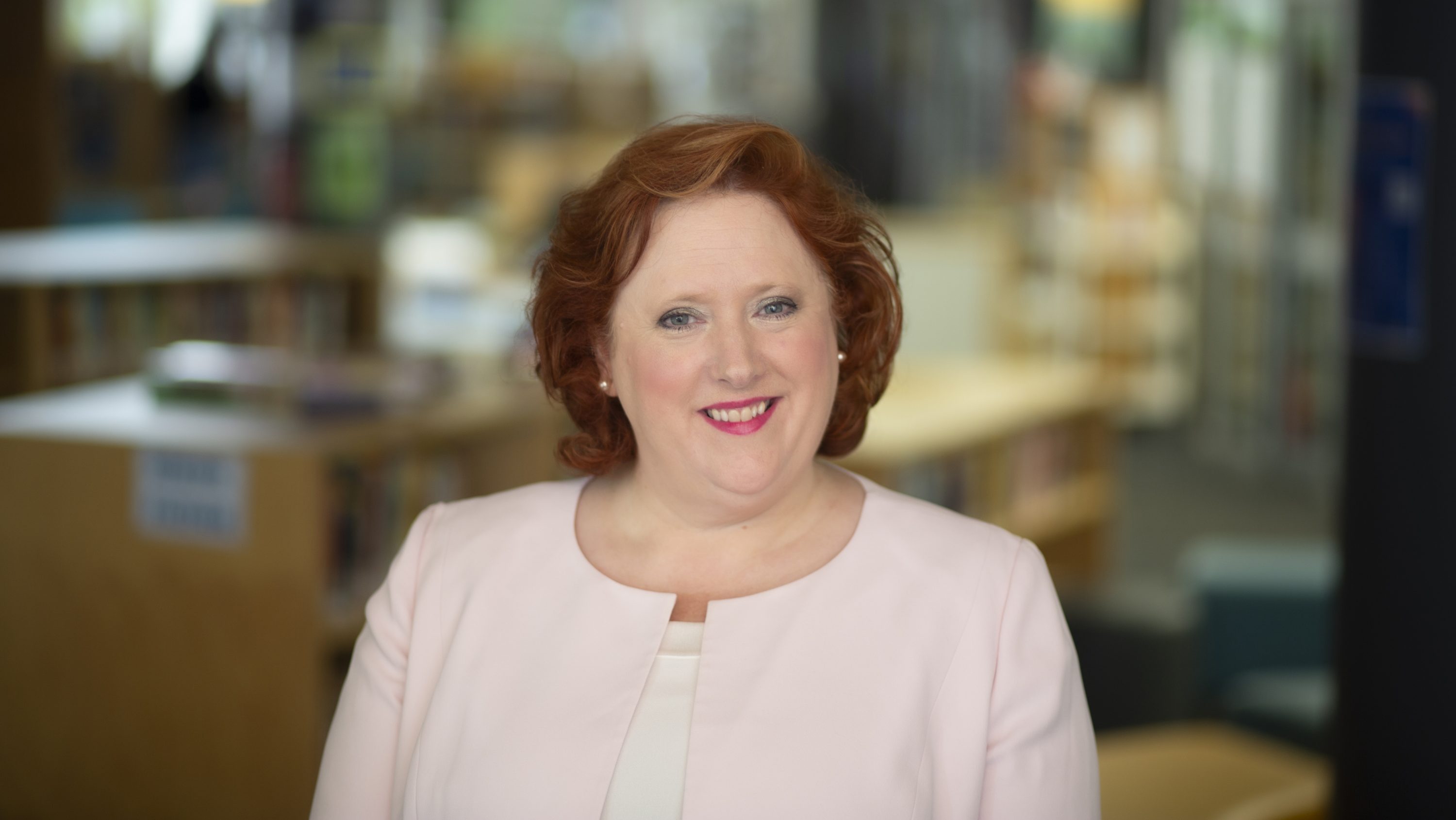
‘Eyes up, screens down’: New device rules in Vic
All Victorian students must have planned ‘device-free time’ each day in strict new rules announced by the education minister on Monday. The device restrictions aim to intentionally remove students from devices in classrooms from Term 1, 2027. Teachers could instead use whiteboards or paper, or organise group debates, practical experiments or performances, a statement from Education Minister Ben Carroll said. The minister estimated high school students would spend no longer than two hours a day on devices, although details will be released after consultation with schools. Previously announced policies also limit Year 3 to 6 students to 90 minutes of screen time per day from 2027. Students in Prep to Year 2 will have minimal exposure to devices. “There shouldn’t be any more than two hours. We want eyes up, screens down. A full reset in the classroom is so important – for behaviour, for calmness, for the students’ own mental health – the focus needs to be on the most important adult in the classroom, and that’s the teacher, and that’s why we are moving down this with a relentless focus on excellence inside every classroom,” Mr Carroll said. Melbourne school principal Lorna Beegan said learning must be at the core of the policy. Picture: Supplied. “The big tech giants, their algorithms, they do not have these young people’s best interests at heart. They’re focused on eyeballs, and we’re focused on their minds and their hearts for the future.” Principal of Strathcona Girls' Grammar in Melbourne Lorna Beegan, said reducing screen time is not at odds with innovation. More on this story: A revolution is happening in ed-tech | Parents asked to delay smartphone use in kids | Vic appoints first minister for boys “I see it as a deliberate prioritisation of human capabilities that will define the future,” she said. “I applaud the move if learning is at the core. With information overload instantly accessible, giving our students time to stop, to think, to judge, to wrestle with ideas, to adapt, to explore, to imagine becomes essential to shaping skilled, confident, creative and critical thinkers who can navigate life’s complexities with resilience and purpose. Our students need to know how to use technology and when to turn it off. “The quality of a student’s thinking will soon carry greater weight than the quantity they can recall, convincing schools to respond by deliberately limiting screen time in favour of sustained attention, curiosity and active engagement for the new types of assessment and life skills that are emerging.” Neurodiverse students who need technology to learn would be exempt from the rule, as would students studying science and technology. Victoria has also banned mobile phones, smart watches and wireless earbuds in all schools.
16 Jun 2026
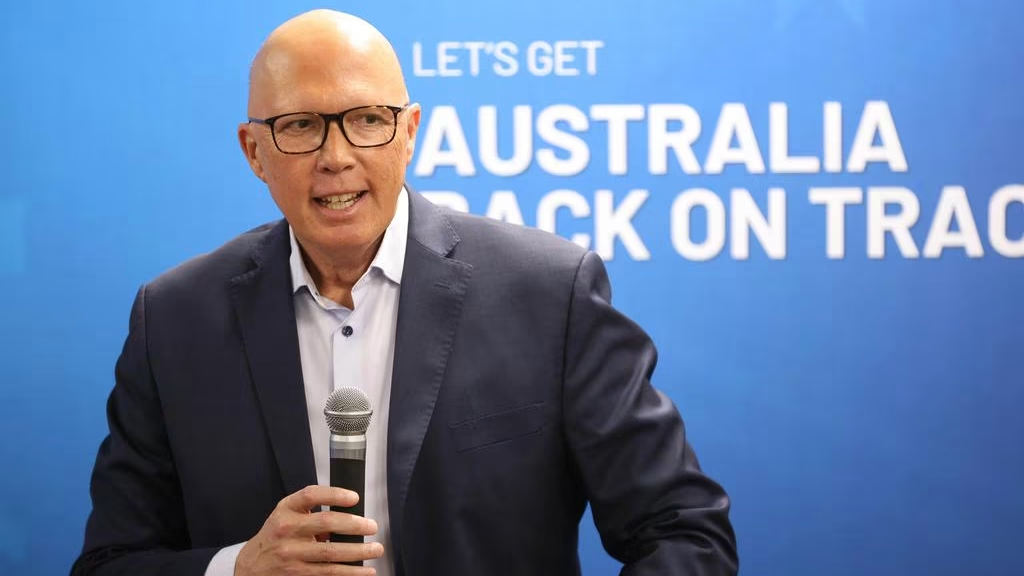
Brisbane student allegedly planned terror attack
A Brisbane private school student allegedly discussed bombing a major public event and targeting people linked to Peter Dutton’s Liberal Party after becoming fixated on the Unabomber, a jury has been told. The now 16-year-old boy, who cannot be identified due to his age, is standing trial in the Brisbane Supreme Court charged with committing acts in preparation for, or planning, a terrorist act. He has pleaded not guilty. In her opening address to the jury on Monday, Crown prosecutor Sally Flynn alleged the teenager spent months researching explosives, purchasing materials, testing chemical reactions and planning a future attack targeting either a Labour Day March or people associated with the Liberal Party. The court was told the investigation began on July 25, 2024, when the boy’s friend, a fellow student, contacted Queensland Police about concerns over conversations he had allegedly been having with the defendant. That report triggered a police investigation, which was later taken over by the Queensland Joint Counter Terrorism Team. Search warrants were executed at the homes of the boy’s Brisbane addresses, where police allegedly seized books about terrorism, diaries, electronic devices and materials prosecutors allege were linked to explosive-making. When officers searched one property, they allegedly detected a chemical odour coming from a rubbish bin, prompting the evacuation of occupants and the attendance of Queensland Fire Department specialists. The jury heard allegations that the teenager researched the Liberal Party and Peter Dutton before his arrest. Picture: Damian Shaw. Testing later identified calcium hypochlorite, a common pool chlorine product, wrapped in aluminium foil inside the bin. The Crown alleges forensic examinations of the boy’s phone, school laptop and iPad uncovered extensive material relating to bombs, terrorism and Ted Kaczynski, the American domestic terrorist better known as the Unabomber. Jurors were told the teenager allegedly downloaded Kaczynski’s manifesto, Industrial Society and Its Future , and later obtained another Kaczynski book, Anti-Tech Revolution: Why and How . Ms Flynn told the jury terrorism expert Professor Andrew Silke is expected to give evidence that the boy had absorbed aspects of Kaczynski’s anti-technology ideology. She told the jury the Unabomber’s goal was the “complete and permanent destruction of modern industrial society in every part of the world”. Among the messages allegedly found on the boy’s devices were references to Kaczynski and discussions about using violence against influential figures. In one WhatsApp exchange allegedly sent to a friend in August 2023, the boy wrote: “We need to mail bombs to people who have high influence on industrial society.” Another message allegedly stated: “Sadly Bunnings doesn’t sell ammonium nitrate fertilizer.” The jury heard the boy allegedly later sent a TikTok message declaring: “The Unabomber was right.” Other material allegedly found on his devices included memes referencing pipe bombs and diary entries in which he suggested Kaczynski “might have been right”. The Crown alleges the teenager downloaded the Unabomber’s manifesto and other writings by Ted Kaczynski. Picture: Elaine Thompson. The Crown alleges the planning intensified in 2024. Jurors were taken through a series of WhatsApp conversations between the boy and his friend in which the pair allegedly discussed bomb-making methods, explosive materials and chemical reactions. In one March 2024 exchange, after receiving a photograph, the friend allegedly asked: “Are you making a bomb?” The boy allegedly replied: “per chance”. The court was told the teenager later wrote in a diary: “I now have my hands on some nitrate for my little future project.” The pair allegedly exchanged messages about different types of explosives, sourcing chemicals and testing reactions. The Crown alleges the teenager also researched the annual Labour Day march in Brisbane, which attracted about 20,000 people in 2024. In an April 2024 WhatsApp conversation, the boy allegedly messaged his friend: “I have an idea ... Labour Day March in Brisbane.” He then allegedly added: “We strike there.” The prosecution alleges the teenager later researched the event route, “bomb attacks in Australia” and explosive materials. A diary entry allegedly included a hand-drawn sketch depicting an explosive device detonating on Boundary St, one of the roads along the Labour Day parade route. The jury also heard allegations the teenager researched the Liberal Party and opposition leader Peter Dutton during a period when Mr Dutton’s proposed nuclear power policy was receiving significant national attention. The Crown alleges the future terrorist act being planned involved either “an attack or attacks using a bomb in a public place” or attacks on premises or people associated with, or perceived to be associated with, the Liberal Party. Ms Flynn told the jury the prosecution case centres on allegations the boy spent four months researching, purchasing equipment for and testing explosives while preparing for a future terrorist act. The trial, expected to run for about 10 days, continues on Tuesday.
16 Jun 2026
Intl student refunds new financial risk for unis
International education is one of Australia’s most economically significant sectors, generating approximately $55bn in export income in 2024–25. With that scale comes greater scrutiny, complexity and competition. Governments have tightened migration settings, institutions are competing harder for enrolments, and students are making decisions with a sharper focus on return on investment, safety and post-study outcomes. In response, universities have invested heavily in recruitment strategies, global agent networks and digital enrolment systems. Yet, one operational area remains overlooked: international student refunds. What happens when a student withdraws is not a simple administrative task. In today’s regulatory and reputational environment, refund management sits at the intersection of compliance, fraud prevention and student experience. When refunds become high-risk transactions Refunds arise for legitimate reasons including visa refusals, course changes or personal circumstances. In 2024–25, more than 23,000 visa applications were not granted, each requiring funds to be returned, often across borders, currencies and financial systems. What appears straightforward quickly becomes complex. Refunds are governed by a patchwork of requirements spanning consumer protection, cross-border payments, anti-money laundering (AML), tax and data privacy. Some jurisdictions require funds to be returned to the original payment method, while others impose strict documentation and reporting thresholds. Students now expect the same transparency they experience in consumer banking or e-commerce. Picture: iStock/AiMuse. These requirements continue to evolve alongside geopolitical tensions and financial crime controls. For institutions recruiting globally, the compliance burden multiplies, and processes that work in one region may introduce risk in another. Despite this, many institutions still rely on manual workflows, email chains and spreadsheet reconciliation; approaches that are increasingly strained under higher volumes and tighter scrutiny. The student experience in moments of uncertainty For students, requesting a refund is rarely routine. It often coincides with stress, whether from a rejected visa, financial hardship or unexpected personal circumstances. Navigating complex processes in a new country, often in a second language, can amplify that pressure. More on this story: Student-visa appeals swamp tribunal | New courses for int’l students on hold | New three-tier visa processing practice starts At the same time, expectations have shifted. Students now expect the same transparency they experience in consumer banking or e-commerce: confirmation of receipt, status tracking and clear timelines. When institutions cannot provide visibility into where funds are in transit, uncertainty grows. Enquiries increase, frustrations escalate, and what should be a straightforward transaction becomes a reputational risk. As global competition for international enrolments intensifies, these operational touchpoints matter more than ever. The escalating threat of refund fraud Beyond compliance and experience, fraud is an increasing concern. International education has become an attractive target for financial criminals. Institutions have reported cases of fraudsters impersonating students to redirect refunds, using stolen credentials to submit false claims, or manipulating students into sending payments to third parties. Refund management should embed verification and fraud controls into workflows. Picture: iStock/Iqbal Nuril Anwar. In Australia, incidents have involved fraudulent refund claims of up to $50,000 per case. These are not isolated losses. They trigger investigations, regulatory reporting and significant administrative burden. Refund processing also involves sensitive personal and financial data. Institutions must protect that information while ensuring funds are returned accurately. The more manual the process, the greater the exposure. In an environment of heightened scrutiny on migration and international education, lapses in financial governance can have consequences beyond the transaction itself. From administrative task to strategic infrastructure Refund management can no longer be treated as a back-office function. It must be viewed as part of an institution’s broader payments infrastructure. A mature framework aligns refund processes with inbound payments and institutional policies, embeds verification and fraud controls into workflows, and creates a clear audit trail. Auditability is critical. Institutions must demonstrate not only that funds were returned, but that they were returned to the correct recipient, through compliant channels and in line with policy. But at the same time, structured systems reduce operational strain. When students have access to clear updates and transaction records, enquiry volumes fall, allowing teams to focus on higher-value work. A defining moment for operational integrity International education is operating in a more sensitive and scrutinised environment than ever before. Governments are tightening oversight, media attention is increasing, and students are weighing destination countries more carefully. In this context, operational integrity is becoming a differentiator. Recruitment strategies may attract students, but financial processes sustain trust. Refunds, though less visible than enrolment figures, represent a critical test of that trust. Institutions that continue to treat refund management as an administrative afterthought risk exposure to compliance failures, fraud and reputational damage. Those that recognise it as a strategic control point will be better positioned to navigate an increasingly complex global landscape. International student refunds may not command headlines, but the ability to manage them securely, transparently and compliantly is no longer optional. It is foundational. Joanne McChrystal is the global head of education sector at Convera .
16 Jun 2026

Career change teachers not just a quick fix
When I switched careers to become a secondary Mathematics and Science teacher, I knew it would be challenging, but I underestimated just how much of a professional identity shift it would be. I was not simply changing jobs. I was learning how to belong to a new profession. For more than a decade, I had worked as a pharmacist across community pharmacy, hospital settings and public health. I managed teams, worked with the public, supervised staff, handled pressure, made high-stakes decisions and learnt how to communicate with people when they were stressed, tired, confused or unwell, all of which were transferable skills to teaching. People coming into teaching from other careers is often framed as a solution to teacher shortages, especially in hard-to-staff subjects or schools. This framing is not accidental. Recent policy and workforce discussions in Australia have increasingly looked to mid-career professionals and alternative pathways as ways to strengthen teacher supply. There is nothing inherently wrong with encouraging career changers into teaching. Career changers can and do bring valuable experience into schools. However, the risk is that they become treated as a quick workforce fix rather than as developing professionals who need time, mentoring and support to build sustainable teaching careers. Alternative pathways into teaching should not be viewed as easy solutions to complex structural problems such as workload, pay, support and retention. In other words, attracting career changers may help address supply, but it does not answer the deeper question of whether teaching is a profession people can stay in. That distinction matters. If career changers are recruited into the profession without adequate support, the system may simply create another retention problem. Career changers bring more than subject knowledge When someone enters teaching from another profession, they bring more than content knowledge. For instance, a former pharmacist such as myself may bring experience in health communication, ethics, regulation, risk management and patient care. A former engineer may bring problem-solving, design thinking and industry knowledge. A former nurse may bring calmness under pressure, relational care and experience working with complex human needs. A former accountant, lawyer, scientist, tradesperson or business owner may bring completely different ways of thinking about work, responsibility and communication. These experiences can enrich classrooms. Students often ask, ‘When will I ever use this in my life?’ about something they are learning, career changers can answer that question from lived experience. They can connect curriculum to industry, workplaces, adult responsibilities and real decision-making. They can show students that learning is not just about getting through school, but about developing ways of thinking that matter beyond school. This is particularly valuable in secondary schools, where students are beginning to imagine future pathways – a teacher who has worked in another profession can bring authenticity to conversations about work, study, identity and career uncertainty. However, we need to avoid romanticising career changers as a solution. Industry experience does not automatically make someone an effective teacher. Knowing something and teaching it well are not the same thing. A career changer may understand science, maths, health or business deeply, but still need significant support to translate that knowledge into classroom practice. This is where schools have an important role to play. Career changers should be valued for what they bring, but not left to work out teaching alone. The challenge is not just learning to teach. It is becoming a teacher. Although lesson planning, assessment and behaviour management are difficult, the harder part of becoming a teacher for me was the identity shift. I had spent years seeing myself as a pharmacist. I understood the expectations, language, rhythms and responsibilities of that profession. I knew what good practice looked like. I knew what counted as professional judgement. I knew how to carry myself in that environment. Teaching required a different identity Suddenly, I had to learn a new professional culture. Schools have their own language, routines, hierarchies, expectations and unwritten rules. A new teacher is not only learning how to teach content. They are learning how to read a staffroom, manage parent communication, understand school systems, interpret student behaviour, navigate reporting cycles and build professional credibility with colleagues and students. A systematic review of career-change teachers found that this group brings clear strengths, but also experiences points of dissonance that can threaten teaching as a sustainable career. Mentoring cannot just be a checkbox If schools want career changers to stay, mentoring matters. Not token mentoring. Not a meeting in week three and another one at the end of term. Not ‘come and find me if you need anything’ mentoring. Career changers need structured, practical and relational support. A University of Melbourne report on career-change teachers argued that school-based mentors are essential in helping career changers transfer knowledge and skills into curriculum, pedagogy and classroom management. It also highlighted the importance of social-professional networks that help career changers transition into the organisational culture of schools. That aligns with my own experience. A career changer does not only need advice on how to improve a lesson. They also need help understanding how schools work. They need someone who can explain what matters, what can wait, what is normal, and what is worth worrying about. That last part matters more than people realise. Early in teaching, it is very easy to think every difficult lesson means you are failing. Every behaviour issue feels personal. Every confusing administrative process feels like evidence that you do not belong. A good mentor helps you interpret the profession more accurately. They help you separate normal difficulty from genuine concern. Career changers can help schools see themselves differently Career change teachers also bring ideas from other industries, such as healthcare, business, science, community work, trades and other fields to schools. They can challenge prevailing assumptions, not because they know better, but because they have seen different ways of organising professional work. In a time when education is under pressure, that matters. However, this only happens if career changers feel safe enough to contribute. If they are positioned only as beginners who should quietly adapt, schools lose the opportunity to learn from them. The same University of Melbourne report was very clear that alternative pathways into teaching should not be viewed as easy fixes for complex structural problems such as low pay, heavy workloads, insecure employment, inadequate support and increasing administrative demands. Schools do not need to wait for system-level reform to support career changers better. They can start with a few practical shifts. First, ask career changers what they bring. Do not assume their previous experience is irrelevant. Find out what industries they have worked in, what skills they have developed and how those experiences might enrich the school. Second, provide mentoring that goes beyond compliance. Career changers need support with teaching practice, but also with identity, culture and belonging. Third, be careful with workload in the first years. A career changer may be mature and capable, but they are still learning the profession. Giving them too much too quickly can undermine the very transition schools are trying to support. Fourth, create opportunities for career changers to contribute their previous expertise. Invite them into curriculum discussions, careers conversations, interdisciplinary projects or school initiatives where their background adds value. Finally, treat career changers as an investment, not a stopgap. Career changers can strengthen the teaching profession. They bring maturity, perspective, industry knowledge and lived experience. They can help students see learning beyond the classroom and help schools think differently about professional work. But they are not quick fixes. If schools and systems want career changers to stay, they need to support them as whole professionals: people with valuable past experience, genuine development needs and the potential to make a long-term contribution to education. A profession worth joining should also be a profession worth staying in. Dennis Yeung is a secondary Mathematics and Science teacher based in Melbourne.
16 Jun 2026

Australia news live: police to investigate Gaza flotilla activist allegations; Victorian law set to enshrine right to WFH
Police meet activists and will inquire into abuse and sexual assault allegations. Follow today’s news live Get our breaking news email , free app or daily news podcast The Australian federal police will begin conducting “inquiries” into abuse and sexual assault allegations made against Israeli authorities by Australian members of the Global Sumud flotilla after meeting Penny Wong yesterday afternoon. The AFP confirmed it had met members in the group at Parliament House and “has begun inquiries into allegations made by a representative of the group”. Continue reading...
15 Jun 2026

‘Eyes up, screens down’: Victoria restricts tech in high school classrooms to two hours a day in national first
Academic says laptops have ‘completely overtaken’ traditional note-taking and research other states should ‘absolutely’ follow the state’s lead Follow our Australia news live blog for latest updates Get our breaking news email , free app or daily news podcast Victorian secondary school students will spend less time on screens and more time using pen and paper under a national-first plan to limit classroom device use to two hours a day. The Victorian government on Monday announced that all state secondary schools will be required to incorporate planned device-free learning time in their teaching programs from term 1, 2027. This could include “using whiteboards or paper, group debates, practical experiments or performances instead”, the government said. Continue reading...
15 Jun 2026
Universities lose $12,000 per domestic student
New data revealed domestic student fees fall $12,655 short of the actual costs to educate them, whilst international student enrolments bumped up 7.5 per cent. A report from the NSW auditor-general showed that operating costs per student for each of the 10 NSW universities was $37,868. However, institutions only receive $25,213 per domestic student in fees and government grants, compared to $41,381 in fees from overseas students, which deliver a nine per cent profit margin. The report also showed that NSW universities enrolled an extra 10,472 international students in 2025 compared to 2024. The commencing overseas students mostly study at the University of NSW (3,499), Southern Cross University (1,836), the University of Technology Sydney (1,486) and Macquarie University (1,366). The University of NSW made $1.73bn in revenue from international students last year, and $931 million from domestic students. The University of Wollongong lost 896 overseas student places in 2025 compared to 2024, as did the University of New England, which lost 235 places. Tabling report - Universities 2025_0 Downloa The University of Sydney made $1.72bn from overseas student fees and $898 million from domestic students. The University of New England had the least revenue from international students at $20 million, compared to $248 from domestic students. More on this story: New courses for intl students on hold | Intl students underpaid $3.18bn in wages | 1% business levy could fund universities: Shorten Universities have historically cross-subsidised domestic student expenses with extra revenue from overseas students, who pay fees upfront instead of using the HECS-HELP system. But, international student commencements were tightened for all universities last year in a move the government said would ease rental costs in cities and ensure domestic students remained a majority in classrooms. Universities Australia has consistently called for more funding for universities after the introduction of this policy. The body also advocates for Australia to remain a welcoming environment for prospective overseas students – something recent policy change has discouraged, UA chief executive Luke Sheehy argued. “Attracting international students to come and study here and then participate in our workforce is being part of the excellent formula that we’ve had for this world-class sector for many, many decades,” Mr Sheehy said. “Taking a sledgehammer to it and saying to the outside world, we are closed for business is economically reckless. “There are more than 30 million students in the world right now that are looking for a world-class education.” The Australian Tertiary Education Commission will calculate how much it costs to educate each student in each course, which will inform changes to how much universities charge for each course. Expenses at the 10 universities also increased by $1bn in 2025, to $14.5bn, fuelled by employee expenses.
15 Jun 2026

MP backs ANU academics after council members resign
Assistant minister and ACT MP Andrew Leigh has reassured parents that their children can still get a great education at the Australian National University (ANU) despite years of job losses and controversy. Mr Leigh, Assistant Minister for Productivity, Competition, Charities and Treasury, was a professor of Economics at the ANU from 2004 to 2010. In a National Press Club address on Wednesday, the MP, whose electorate sits in northern ACT, backed the academics at the ANU, who have endured a $250 million restructure that included forced redundancies. “Like anyone else in the Canberra community, I’ve been troubled by what I've seen at the Australian National University, he said. “It remains a great institution. There are many terrific faculty there and I would encourage any parents watching with a kid in Year 12, who are thinking about where that child should go, to consider the Australian National University. “It has a range of first-class scholars, clearly the best philosophy department in Australia, great strengths in areas such as physics and even some good economists. Dr Leigh was a professor at the ANU School of Economics. Picture: NPC/Fernanda Pedroso. “But it has clearly taken some blows over the course of the last year. I would leave it to the independent regulator, TEQSA, in terms of the specific interventions that are in place.” The ANU Research School of Economics includes a number of respected economists such as Emeritus Professor Bruce Chapman, who has worked at the university since 1984 and co-constructed the HECS-HELP student repayment scheme. Professor Alison Booth, an expert in labour economics and its impact on behaviour and culture, also works at the school. Notwithstanding, ANU cut hundreds of academics and many study areas in its Renew ANU restructure . Its leadership has also been hollowed out after six council members, including chancellor Julie Bishop, resigned over what they claimed was ‘regulatory overreach’ by the Tertiary Education Quality and Standards Agency (TEQSA). More on this story: Insufficient evidence for Renew ANU, audit finds | Top universities fall in latest rankings | ICAC investigates alleged corruption at UOW A majority of the ANU council voted in favour of a voluntary undertaking to allow TEQSA to recommend the strongest candidate to be the next ANU chancellor. Julie Bishop resigned after TEQSA accepted a voluntary undertaking voted on by ANU council. Picture: Martin Ollman. “I understand that council has met tonight and failed to agree on any action to prevent TEQSA from continuing to usurp council by undertaking the functions that council is obliged to perform and should not delegate to TEQSA,” Ms Bishop said in relation t this in her resignation letter. “In these circumstances, I cannot remain as chancellor or a member of council given council is now acting in a manner inconsistent with its governing legislation, the ANU Act. “I do not consider it possible for me to continue to preside over a Council where such significant legal concerns have been raised about our ability to meet our legal and governance obligations and where in my view the regulator is acting ultra vires. ” TEQSA has said it will devise a mostly independent selection panel and recommend the strongest candidate to the ANU council. The regulator said its actions will remain in line with the Australian National University Act 1991 , as the ultimate decision to select the next chancellor will be left to the governing council. However, former Chief Justice of Western Australia Wayne Martin, who also resigned from the council over TEQSA’s actions, accused TEQSA of forcing council to request the voluntary undertaking. “I digress to observe that the fact that the council cannot nominate the so-called council nominees on the committee eloquently demonstrates the farcical euphemisms that are used in the council’s dealings with TEQSA, along with the use of ‘voluntary’ to describe an undertaking obtained by coercive unlawful threats,” his resignation letter said. “These euphemisms are obviously designed to obscure the fact the TEQSA has taken complete control.” Former ANU council member Rob Whitfield. Picture: John Feder. Former ANU council member Tanya Hosch. Picture: Matt Loxton. Transurban and CommBank board member Rob Whitfield, who is also a former chair of the NSW Treasury Corporation, former NSW Treasury secretary and a former Westpac chief executive, resigned over what he labelled “dysfunctional” behaviour. “Recent dysfunctional behaviour by council members and senior executives in management have led me to consider my position untenable,” his resignation letter said. “I am no longer in a position to properly fulfil the duties and responsibilities of these important roles.” Former AFL executive and Indigenous social activist Tanya Hosch also resigned, citing a lack of commitment to Indigenous representation in decision making. “This is the second time that I have resigned my term as a council member from a university due to a lack of due commitment and recognition of the importance and priority to ensure Aboriginal and Torres Strait Islander peoples in decision making,” her resignation letter said. ”I do not accept it should be within the entire control of non-Indigenous people to determine the criteria under which an Indigenous person can participate.” However, she said the ANU can recover from its tumultuous few years. ”I recognise events over the past few years have taken an extraordinary toll on everyone connected with and part of ANU communities. I am sorry for the harm and hurt that has been caused to many,” she wrote. ”I had hoped my departure from ANU could be under far more respectful terms. Regardless, I do believe that ANU can recover from this unprecedented period of harm and wish all involved in this careful work, the very best.”
15 Jun 2026
HEDx: Is your university disrupting itself?
Aaron Driver, who leads the University of New England’s (UNE) applied AI lab, and Neil Durant, UNE’s Executive Director, Future Students, Engagement and Technologies, argue that universities should not wait to be disrupted by AI – they should lead the disruption themselves. In this episode, we explore UNE’s vision for the future of learning – from personalised education and “earned learning” to Studio, a next-generation learning-experience engine designed to make higher education more human, engaging and relevant in the age of AI.
15 Jun 2026

Australia news live: Experts push back at call for shark cull after attack; university students report freedom of speech fears
Little evidence a cull would make swimming safer, scientists say. Follow today’s news live Get our breaking news email , free app or daily news podcast Nearly $200m given to industry in zero-interest government loans amid Middle East conflict The federal government’s Economic Resilience Program has provided nearly $200m in zero-interest loans since its announcement last month. Firms in crucial sectors like freight and logistics, fuel, plastics and fertiliser are receiving vital support from the National Reconstruction Fund in partnership with Australian banks. Continue reading...
14 Jun 2026

‘The dreaded “E” word’ – rethinking high expectations
‘I encourage you to reflect on the ‘dreaded “E” word’ and how you are holding and framing expectations in your context.’ ©arrowsmith2/Shutterstock
14 Jun 2026

Caring beyond the classroom – offering stability and kindness when it’s needed most
Victorian assistant principal Erin shares how she balances her career with being a foster carer. Image supplied.
14 Jun 2026

PhD student Maxim makes $18 an hour to research children’s cancer – it’s barely above Australia’s poverty line
Skyrocketing living costs and lack of government support are deterring potential PhD candidates. Experts say the obvious solution is to lift the stipend Get our breaking news email , free app or daily news podcast Maxim Buckley studies how leukaemia cells communicate with each other. It’s critical research but as a PhD student he’s paid just $18.50 an hour, a rate that’s just above the poverty line. The 29-year-old is in his final months of research at University of Adelaide on acute lymphoblastic leukaemia, which predominantly affects children, research that will help future treatments of the cancer. Continue reading...
13 Jun 2026
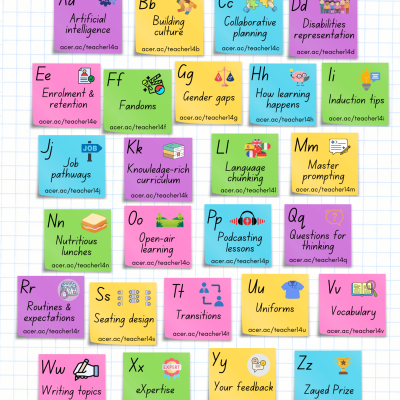
Infographic: My 14th Teacher alphabet
My 14th Teacher alphabet LOW RES
11 Jun 2026

Australia news live: Richard Marles left adrift as UK counterpart quits hours before scheduled visit to naval yard
Australia’s defence minister had been due to visit a naval base in Portsmouth with British defence secretary John Healey. Follow today’s news live Get our breaking news email , free app or daily news podcast Good morning and welcome to our live news blog. I’m Martin Farrer with the top overnight stories and then it will be Nick Visser with the main action. We kick off with news from the UK, where our deputy PM and defence minister, Richard Marles , was visiting for a ministerial summit but had the wind taken from his sails when his British counterpart abruptly quit over defence funding. Continue reading...
11 Jun 2026
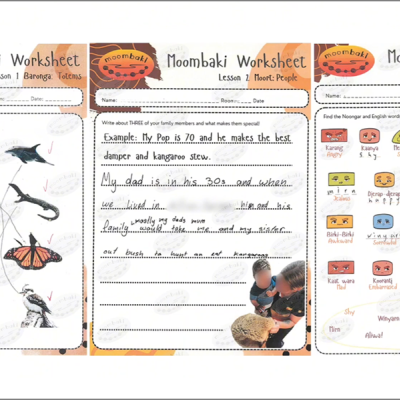
Research news: Indigenous-led cultural learning
The Moombaki Cultural Learnings Project developed a suite of resources for teachers including worksheets and handouts, an interactive app, and a virtual reality experience.
10 Jun 2026

Australia news live: Drugs regulator to crack down on illegal peptides; Labor to spend $100m on arthritis research
Peptides join melatonin, cannabis and weight loss medications as priority concerns. Follow today’s news live Get our breaking news email , free app or daily news podcast Good morning and welcome to our live news blog. I’m Martin Farrer with the top overnight stories and then it will be Nick Visser with the main action. A non-profit organisation that runs a helpline for young people says there is little sign of a dip in cyberbullying or image-based abuse in the six months since teenagers under 16 have been banned from social media. More coming up. Continue reading...
10 Jun 2026
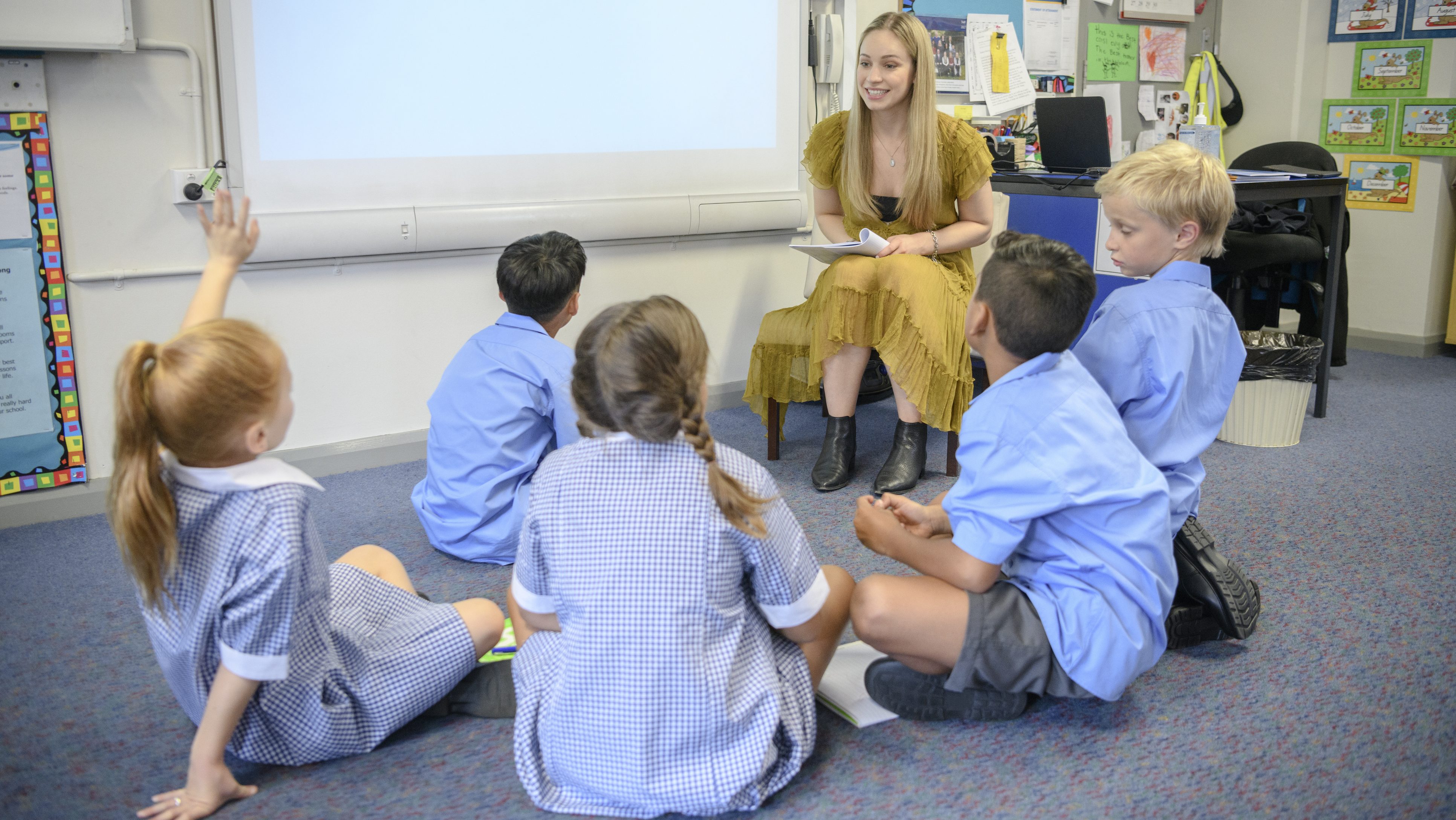
A revolution is happening in ed-tech
Digital technology has become one of the most powerful forces shaping modern classrooms. From personalised learning tools to new ways of connecting with families, the latest innovations in ed-tech are giving teachers and students opportunities that simply didn’t exist a decade ago. We know generative AI is on the rise and, according to figures from the latest Australian Curriculum, Assessment and Reporting Authority (ACARA) NAP ICT Literacy report, the number of students using it is significant. Around one in four Year 10 students say they use AI frequently to help with schoolwork, with more than 60 percent using it to produce written content at least once a month. Thirty per cent of Year 6 students report using it for the same purpose. Many schools are finding that the right digital tools can deepen engagement, expand creative opportunities, and make learning feel more responsive to students’ needs. For educators, the potential of tech-enhanced learning environments is undeniable. However, as digital adoption accelerates, so too does the responsibility to use these tools safely, productively and ethically. The real impact of GenAI in schools In recent research from Learning First, three-quarters of NSW teachers and school leaders said they have used AI for work, with 75 per cent of the teachers utilising it to develop curriculum resources. Teachers also reported that they don’t know how to prevent students from using it to cheat or plagiarise in their work. Whether to use it, how to use it, and who can use it are just some of the issues educators and leaders are grappling with in the AI era. The University of Newcastle’s Professor Kylie Shaw believes schools are standing at the edge of a transformation as significant as the arrival of the printing press or Google. In her view, generative AI (GenAI) is not simply another tool to slot into existing practice; it is a force that will reshape the very structure and purpose of schooling. “Schools have a window of approximately three to five years to fundamentally rethink their approach to pedagogy, curriculum, assessment, and school design before the pace of genAI development outstrips their capacity to adapt,” Professor Shaw told Education Review. “That window is narrowing with each passing term.” She argued that the most immediate change AI will bring is a shift in the role teachers play in the classroom. Rather than acting primarily as content deliverers, she said teachers will increasingly become guides who help students think more deeply, make connections, and build understanding. “When every student has access to what amounts to a personalised reference librarian and tutor available around the clock, the rationale for teacher‑as‑content‑deliverer changes,” she said. “Learning becomes relational and iterative rather than transactional and episodic.” More meaningful learning In her view, genAI’s ability to provide instant explanations, examples, and feedback means students will spend less time waiting for help and more time engaging in meaningful learning. Teachers, in turn, will be freed up to focus on the human elements of teaching; questioning, coaching and supporting students as they work through complex ideas. Professor Shaw also anticipated a fundamental rethink of how students' progress through school. Teachers will be freed up to focus on the human elements of teaching; questioning, coaching and supporting students as they work through complex ideas. Picture: iStock/Johnny Greig. She argued that age‑based year levels – a structure inherited from industrial‑era schooling – are increasingly out of step with what AI makes possible. “Age‑based cohort progression is designed for administrative efficiency, not learning efficacy,” she said. “GenAI makes personalised progression genuinely possible at scale.” In her view, this shift will be most visible in the senior years of schooling. As AI becomes more capable of retrieving information and synthesising routine content, she believes the value of schooling will be around the skills genAI cannot replicate. “The critical thinking, collaboration, and creative problem‑solving that have been aspirationally included in curriculum frameworks for decades, but routinely crowded out by standardised testing, should now occupy the centre, not the margins,” Professor Shaw said. “This is necessary if schooling is to remain relevant to the workforce students will enter.” What is also clear is that the opportunities of AI will not be realised without deliberate action from policy makers, teachers, and school leaders. AI brings the problems of the culture with it Professor Shaw also warned that AI is not inherently equitable and may deepen existing divides if access to devices, connectivity and teacher capability remains uneven. “If access to tools, devices, and quality connectivity remains unevenly distributed, then GenAI risks reproducing and accelerating the same inequalities characterised by current schooling systems,” she said. She also highlights the cultural and linguistic biases embedded in many AI models, particularly those trained predominantly on Western, English‑language data. Without explicit teaching, she said students may accept AI outputs uncritically, even when they are inaccurate or culturally inappropriate. “School leaders should seek to name this limitation explicitly, teach students to interrogate genAI outputs critically, and advocate to developers and systems leaders for more culturally responsive models,” she said. Reducing teacher workload Despite the risks, Professor Shaw is optimistic about the potential for AI to improve teachers’ working lives. She said the most significant positive transformation will be in reducing administrative load and freeing teachers up to focus on the more human elements of their work. “The opportunity genAI presents is not a threat to their roles,” she said. “It releases them from the aspects of their work that are most time‑consuming and least pedagogically meaningful.” And, she was unequivocal about the irreplaceable role of teachers. “The human dimensions of teaching such as building relationships, demonstrating empathy, engaging with a classroom, understanding the cultural and emotional context of each child, inspiring curiosity – are the capacities that genAI cannot replicate,” she said. The speed of change For Professor Shaw, the challenge is not whether genAI will change schooling, but whether schools can change fast enough – and thoughtfully enough – to ensure the technology strengthens, rather than undermines, the core purpose of education. “The most visible risk is irrelevance: schools that continue delivering transactional, content-focused instruction in a world where genAI can perform that function more efficiently and accessibly may increasingly struggle to justify their social licence,” she warned. Professor Shaw said that there are three actions school leaders can take now. Form an AI working group : Form a dedicated team that meets at least once a term – a working group with genuine mandates and resources to research, develop, and implement genAI policy and practice. Our data showed that the schools making the most meaningful progress have done this or similar. Create a usage policy : Work with stakeholders within their school context, and wider educational system, to make explicit decisions about acceptable use: what genAI tools are permitted, in what contexts, for what purposes, and with what safeguards. Ambiguity here has potential to create inequity, anxiety among staff, and inconsistency of experience for students Invest in professional learning : Make sure that any training available is not only for early adopters, but for the full staff cohort. The scope of this change is too vast and rapid to leave to those staff willing to engage with genAI. When genAI use and capabilities are concentrated among a small group of tech-enthusiastic staff, the benefits of those tools tend to accrue unevenly. AI policy and legislation As with any fast-changing developments within education, departments and schools are often playing catch up, particularly with policy. When it comes to genAI, this is particularly starkly illustrated. To make sure you’re up to date on policy, here is the latest from around the country. Federal government At the end of last year, the federal government released its National AI Plan outlining its position on AI and identifying policy priorities. national-ai-plan Download Within the report, AI is clearly positioned as a positive tech innovation that Australia should get behind. The government is itself funding the development of local models, through its AI Accelerator funding program, and has its own version created by the Department of Finance, known as GovAI. The message from Canberra is clear: AI is a national infrastructure priority, and schools are central to preparing young Australians for the world it's creating. Part of its plan is to ensure school leavers are ‘AI ready’ for the workforce and, in tandem with the Australian Framework for Generative Artificial Intelligence in Schools , have learned how to use and navigate the technology ethically and effectively. The framework outlines specific principles about how AI should be used in schools. First and foremost, AI must enhance student learning and support teachers, it says. GenAI should also be the subject of lessons, not just used to create them. Australian Framework for Generative AI in Schools Download In other words, students should be taught how to use AI critically, making sure to learn its limitations and identify any inherent biases. Gen AI use in schools, it said, also needs to support well-being in the community, and ensure privacy is protected and data is secure. The Department of Education has also expanded the remit of its Chief Information Officer to include the role of Chief AI Officer. It has also committed to setting up a new Australian Artificial Intelligence Safety Institute, which is due to become operational this year. What’s happening in your state Alongside the national framework, each state and territory has developed its own guidance. Here's a snapshot: New South Wales has gone furthest with formal governance, establishing a Chief AI Office with two dedicated Co-Chief AI Officers. The Office is responsible for ensuring compliance with relevant legislation and policies, and for supporting schools to do this effectively. This includes providing access to training for teachers and other stakeholders in academic integrity, data privacy, and ethics. The office also tests education-specific AI solutions including the department’s own tool, NSWEduChat. The department’s philosophy is "human-plus-AI" – technology as a support, not a replacement. Victoria has a generative AI policy covering consent, privacy, and curriculum alignment for any AI tool used in schools. It’s based on the principles outlined in the Framework. Queensland is in the process of creating guidance and resources to operationalise the Framework. Meanwhile, on the Queensland Curriculum & Assessment Authority website you can find AI guidance documents. It has also mandated that from this year all Queensland Certificate of Education students are required to complete an academic integrity course that directly addresses generative AI before they graduate. South Australia has custom built its own chatbot, EdChat, in partnership with Microsoft, while the South Australian Certificate of Education authority (SACE) has a section relating to AI with FAQs in relation to assessment tasks on its website. It has also embraced the tech for teachers with an AI-enabled app that assess a student’s LEAP (Learning English: Achievement and Proficiency). Previously, the assessment would take teachers 30 minutes; the app can do the same work in less than a minute. Western Australia has adopted the Framework and also relies on the WA Government Artificial Intelligence Policy and Assurance Framework. Tasmania has developed an AI policy through its Department for Education, Children and Young People. The policy is currently under review. Northern Territory teachers can look to the NT Department of Education policy , which outlines do and don’ts and has links to related legislation and other relevant documents. The same platforms that help schools celebrate learning and build community can also expose students to risks. Picture: iStock/StockPlanets. Privacy and children’s rights in the digital age Schools are collecting more data and posting more than ever – new national guidance says it’s time to rethink what we share with students in mind. The same platforms that help schools celebrate learning and build community can also expose students to risks that aren’t always visible, from data scraping and algorithmic profiling to the long-term consequences of normalising constant online sharing. Just last month, educational platform Canvas experienced a data breach that saw theft of about 3.65 terabytes of data from 8809 educational institutions, including at least 122 across Australia. The incident is believed to be the largest education-sector data breach on record and has renewed concerns about the reliance on overseas technology providers storing sensitive information belonging to millions of students. In schools across Australia, social media has become as routine as newsletters once were. A quick photo from the Year 2 assembly, a video of the robotics team, a carousel of Book Week costumes – these posts help families feel connected and celebrate school life. But as platforms like Facebook and Instagram become embedded in school communication, researchers say the risks to children’s privacy and digital rights are growing faster than most policies can keep up. New national guidance from the University of Wollongong’s (UOW) School of Education is urging schools to pause and rethink what they share, why they share it and how children are involved in those decisions. Developed by Dr Karley Beckman and Associate Professor Tiffani Apps through the ARC Centre of Excellence for the Digital Child, the Research ‑ Informed Principles to Guide Social Media Use in Education outlines five evidence‑based guiding principles to help schools use social media more safely, intentionally and ethically. Principles-Social-Media-2026 (1) Download Parents want connection The principles were developed out of a national research project involving school leaders, teachers, parents, early childhood educators, advocacy groups, and government departments. Across all the schools and their communities – whether metropolitan, regional or rural – the team found a consistent misalignment: schools often assume parents want regular updates on public social media, while many families and children feel differently. “One of the biggest misconceptions around school social media practice comes from schools, school leaders, and teachers themselves, who always begin with the assumption that parents want to see this kind of communication,” Professor Apps told Education Review . “We found that while they wanted to feel connected, many parents feel like public social media isn't the right place for those connections to happen.” Associate Professor Tiffani Apps and Dr Karley Beckman have developed the Research Informed Principles to Guide Social Media Use in Education. Picture: Supplied. The research also found that children often feel uneasy about their images being shared online, especially without being asked. Children’s rights: what schools often overlook A central pillar of the new guidance is a commitment to children’s rights, grounded in the United Nations Convention on the Rights of the Child . While this may sound abstract, the implications for schools are much more concrete. Children have rights to privacy, participation and protection in digital environments. Professor Apps explained that privacy isn’t about keeping information secret, it’s about having the power to decide what is shared. “We often think about privacy as being able to keep information to ourselves, but it's actually about having the power to keep information to ourselves,” she said. “The practice of sharing children's data on social media on their behalf takes away that power.” This has long-term consequences. Children aged eight to 12 in the research expressed strong views about wanting to be asked for permission, yet many struggled to understand how consent works in digital spaces because they rarely see it modelled. This is part of the thinking behind the first principle developed. The risks are growing Teachers are already aware of the obvious risks: online predators, unwanted contact, or images being misused. But, the researchers said less visible risks, including data scraping of public school pages, algorithmic profiling, or the use of children’s images in AI‑generated content, are now just as serious. “One of the other concerns is that there's a lot of identifying information being shared,” Professor Apps said. “Combinations of data points provide more personal information that is being widely shared, and we teach children not to do this themselves, but schools are practicing the opposite.” The rise of generative AI has amplified these concerns. Once an image is public, it can be copied, altered or repurposed in ways schools cannot control. A central pillar of the principles is a commitment to children’s rights, grounded in the United Nations Convention on the Rights of the Child. What consent looks like at school One of the most practical shifts schools can make is also one of the simplest: asking children directly. “Asking children at the moment of image capture ‘I’m going to take a photo today for the school Facebook page, are you comfortable with that?’ really shifts the dialogue.” Professor Apps said. This approach not only models respectful digital behaviour but acknowledges children’s fluctuating comfort levels, reinforcing that consent is specific, informed and voluntary, and, critically, helps to build data literacy in children over time. “Children are our future, and this is the world that they're moving into, so we really want to have critically digitally literate children,” she said. “At the moment, some of the practices that we engage in have some unintended consequences.” Small actions, big cultural shifts The researchers emphasised that schools don’t need to overhaul everything at once. The most successful schools in the project began with small, deliberate changes, and were surprised by how positively families responded. “Understanding what your community actually wants is incredibly valuable,” Professor Apps said, adding that connections with families can still flourish, just in safer, more intentional ways. She encouraged schools to: review the new principles with staff discuss alternative communication channels minimise personal information in posts rethink what truly needs to be public involve children meaningfully in decisions Professional learning, coming soon To support schools, the UOW research team will release a free professional learning series in the coming months. Teachers can complete it individually, or school leaders can run it as a three-part staff program. “It's fully flexible, so you can dip in and look at little actions, or you can commit as a school to engaging in the whole professional learning,” Professor Apps said.
10 Jun 2026
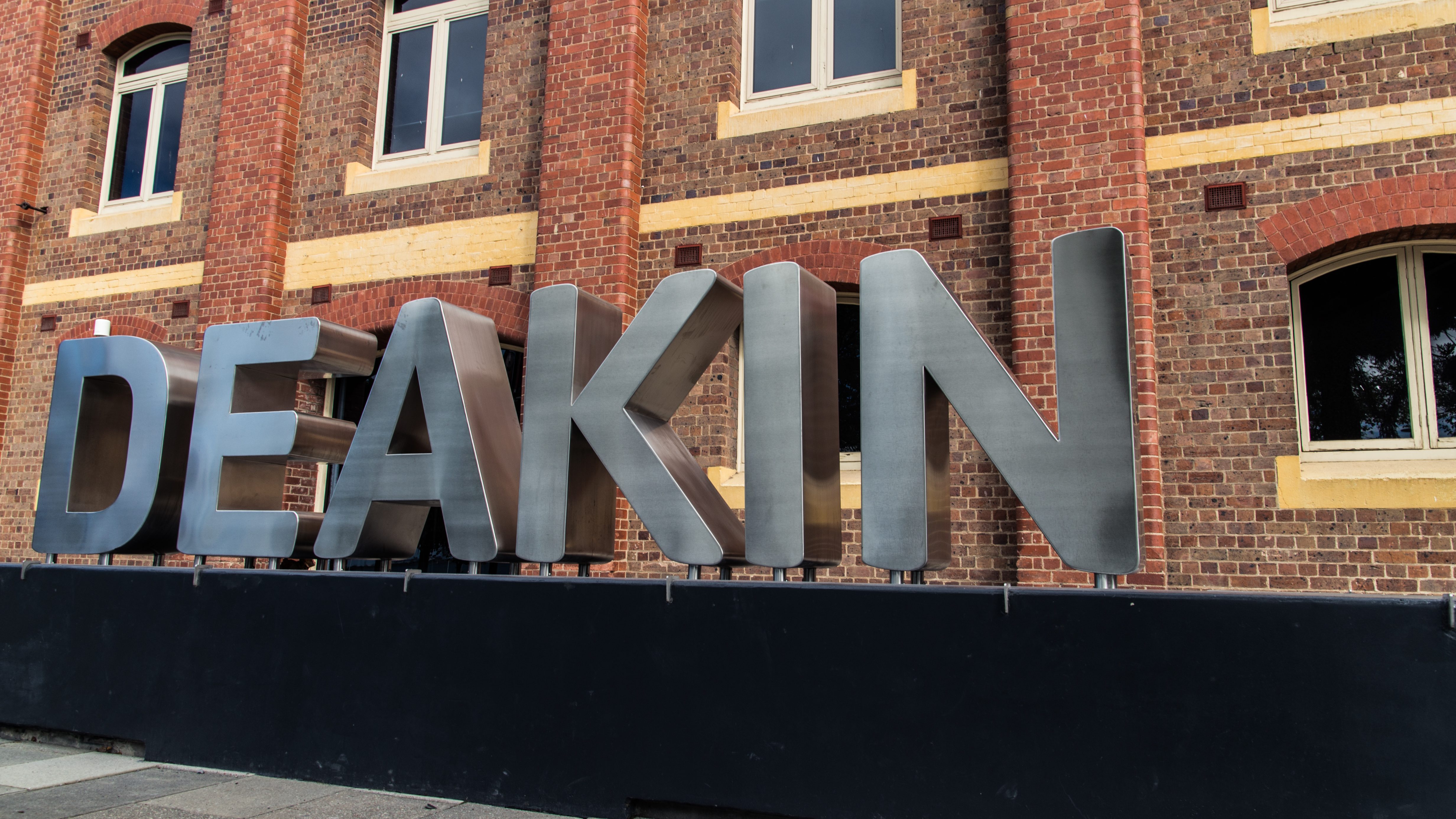
Deakin VC resigns after job losses announced
Professor Iain Martin has resigned as vice-chancellor of Deakin University, effective immediately, just days after 150 job losses were announced in a restructure. An all-staff email sent on Tuesday afternoon by chancellor Claire Higgins thanked Professor Martin for his seven years of leadership. “He commenced in July 2019 and guided the university through the pandemic, the most difficult period in our recent history,” she said. “As a result of Iain’s leadership, Deakin is in a much stronger position today. “I acknowledge that a change like this can be unsettling. Please remember that Deakin is in a steady position, and that is a credit to the great work you all do here every day.” Deputy vice-chancellor of research and innovation Matthew Clarke has stepped up as caretaker vice-chancellor whilst an acting vice-chancellor is appointed. The university last Thursday announced a restructure that will cut 130 to 150 positions to reduce ‘duplication’ found in its academic portfolio. Deakin University’s Geelong Waterfront campus. Picture: iStock/NilsBV. The restructure will affect 1800 positions, including unfilled positions, and about 600 staff will have to re-apply for their current jobs. Most losses will be academic positions, and some will be from the infrastructure and digital portfolios. More on this story: ICAC investigates alleged corruption at UOW | Top universities fall in latest rankings | Deakin University underpaid staff $3m Deputy vice-chancellor of academia Jessica Vanderlelie said staff can also apply for a voluntary redundancy. “There are fewer roles in the future state structure than there are in the current state structure,” Professor Vanderlelie said at a staff meeting. “There are clear opportunities for us to improve alignment, reduce duplication, and create more consistent ways of working.” A spokesperson said staff feedback will be considered until the Enterprise Agreement expires on June 19, 2026. “Like other universities across Australia, Deakin is responding to significant changes, including evolving student needs, rising expectations for support, and how education is delivered and supported,” they said. “These proposals aim to position Deakin to continue delivering high-quality, relevant, inclusive and trusted education, now and into the future, supported by sustainable services and systems.” The university reported a deficit of $17.7 million in 2024 and a surplus of $56.3 million in 2025, but only thanks to a return of $52.5 million in financial investment returns made the year prior. Without the return on investments, the university only would've made a $3.8 million surplus, up from a $37.2 million deficit before the return on investments in 2024. Its annual report said the small surplus was the result of a growth in international student load and a continued focus on prudent cost management. Staff costs increased by 4.9 per cent in 2025, due to salary increases in enterprise agreements, increased staff numbers and wage underpayment remediation for casual staff .
10 Jun 2026

Insufficient evidence for Renew ANU, audit finds
The $250 million Renew ANU restructure was approved without clear evidence it was needed, achievable, urgently required, or likely to have the intended impact, an audit has found. The Australian National Audit Office (ANAO) investigated the restructure plan at the Australian National University (ANU) after speculation the institution was not in the dire financial straits it claimed to be. A report released by ANAO on Thursday confirmed that ANU council members, who approved Renew ANU in August, 2024, did not have a “sufficient understanding of the problem, the options available, or implementation risks.” The Renew ANU program started in October, 2024, and planned to save $100 million in salary costs through forced and voluntary redundancies, and $150 million by reducing non-salary expenses. Although the university’s finances were not at crisis level, it was not in a positive financial position, and operating changes were required to stabilise the institution, the report found. “While some savings have been made from the implementation of Renew ANU, as of February, 2026, the program has cost $35.9 million against reported annual salary savings of $74.8 million, and major risks remain – particularly around staff impacts and reliance on future growth in international student numbers, which has historically taken longer than planned,” the report said. The ANAO recommended the university “formally capture and apply lessons learned from Renew ANU,” including developing robust business cases for future change proposals that properly identify the problem, offer multiple evidence-based options and outline the expected impact on the university’s purpose and people. It also said the ANU should improve the quality of its financial advice and establish a consistent methodology for reporting and explaining its financial position. The events that led to Renew ANU In 2018, former vice-chancellor Brian Schmidt said he wanted to keep the ANU a smaller, ‘human-scale’ university, by Group of Eight standards, with a focus on postgraduate study, small class sizes and a ‘personable’ education. Former vice-chancellor Brian Schmidt wanted to keep ANU a personable university. Picture: Martin Ollman. Part of that plan was to cap domestic enrolments following a few years of significant growth in student numbers, and to decrease pathways programs for international students to reduce overseas student enrolments. Although the ANU ended 2019 with a $317 million surplus, revenue declined by 13.6 per cent in 2020 as a result of the pandemic leading to a $17.7 million loss that year. The campus also sustained damage from the Black Summer bushfires and a separate hailstorm that year. More on this story: UA chief Luke Sheehy on ATEC & TEQSA | More resignations from ANU council | Genevieve Bell suspended over alleged misconduct Planned low international student numbers were what ultimately caused ANU’s revenue to fall below its costs in 2020. In 2023, the university started focusing on reducing spending when former vice-chancellor Genevieve Bell and former chancellor Julie Bishop developed Renew ANU. Where to from here? ANAO’s findings come at a time when ANU has no permanent leadership. Chancellor Julie Bishop resigned in May , seven months before her term was due to end. Ms Bishop left her position after an embattled tenure leading the university’s council, which included allegations of bullying and harassment, that she denies. Ms Bishop cited regulatory overreach by the Tertiary Education Quality and Standards Agency (TEQSA) as the reason for her resignation. TEQSA had accepted a voluntary undertaking from ANU allowing it control over choosing the next ANU chancellor, a decision made by council members. Independent ACT senator David Pocock agreed with TEQSA’s decision and said Ms Bishop’s resignation was in the university’s best interest. “When things go so terribly wrong at the helm of such an important institution, especially one governed by Commonwealth law, there must be accountability,” he said. “The voluntary undertaking to conduct an independent process to appoint the next chancellor is very welcome and will hopefully help rebuild trust, confidence and better governance at our national university.” An investigation into the council culture, and the allegations against Ms Bishop made by academic Liz Allen, has been completed but the report is yet to be made public. Former vice-chancellor Genevieve Bell also resigned in October after significant pushback around the Renew ANU plan, and was replaced by interim vice-chancellor Rebekah Brown.
10 Jun 2026
HEDx: Practical help for students with disabilities
Students with disabilities are a growing equity cohort in Australian tertiary education, yet they continue to experience lower access, satisfaction and completion than their higher education peers. In this episode of the HEDx Student Experience Podcast, student leader Jennifer Lowe and Student Voice Australasia’s Belinda Brear sit down with Professor Sally Kift to explore one of the sector’s quiet success stories: the Australian Disability Clearinghouse on Education and Training (ADCET). Together, they unpack why national, quality assured, co-designed resources are essential as the demand for belonging and inclusion grows; why universal design is fast becoming a regulatory expectation, not a “nice to have”; and why cross-institutional collaboration is critical if we’re serious about equity, accessibility and student success. This is a hopeful, practical conversation about doing accessibility, affirmation, accommodation and inclusion better for students, staff and the sector.
10 Jun 2026
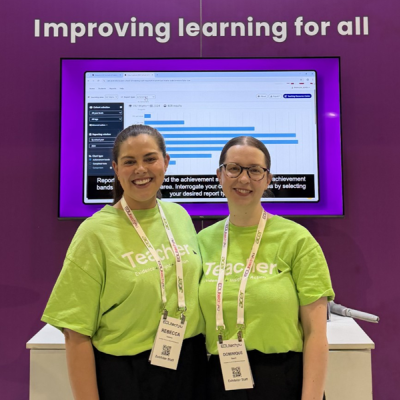
Podcast special: EDUtech 2026 – our reflections and conference highlights
Teacher magazine’s Rebecca Vukovic and Dominique Beech share insights from EDUtech 2026 and offer their key takeaways.
9 Jun 2026

Australia news live: Australia joins sanctions against ‘extremist settlers’ in West Bank; Barbecues Galore no more
Penny Wong issues statement overnight announcing joint action with western allies to combat ‘horrific levels of settler violence against Palestinian civilians’ Get our breaking news email , free app or daily news podcast Good morning and welcome to our live news blog. I’m Martin Farrer with the top overnight stories and then it’ll be Nick Visser with the main action. Australia has joined the UK and other western allies in introducing sanctions against “extremist settlers” accountable for the “horrific levels of settler violence against Palestinian civilians”. More coming up. Continue reading...
9 Jun 2026
Assessments not preparing students for AI: Expert
A sector expert has called on curriculum and assessment bodies to update how students are tested to ensure they are properly learning about artificial intelligence and other emerging technologies. One of the most eminent voices on AI in education, the University of Sydney’s Professor Danny Liu, said assessments in schools and universities still test outdated assumptions about what students need to know and are able to do. In a session at the EduTech conference in Sydney on Thursday, Professor Liu said the past three years of AI disruption should be used as an opportunity to update assessments as a whole, not just in relation to testing AI competency. He said testing has long been dominated by ‘stuff’ – the content – and later by ‘skills’ such as communication and collaboration. Students should instead be tested on the process of learning, or ‘self’, he said, which includes “knowing about who you are as a person, learning how to self-regulate, how to persevere, have grit, and also, most importantly, learning how to keep on learning.” “We say we want balanced people who are really good at knowing themselves, but then in assessments, we sit students through exams, where they have to cram knowledge, then spew that out to us in a multiple choice format,” he said. “We are measuring stuff, maybe a little bit of skills, but we are not doing what we say we want to be doing. Professor Liu said long exams only test retained knowledge. Picture: iStock/kontrast-fotodesign. “What are we doing through things like the HSC and the VCE? We're sitting students through three-hour exams, which are potentially not aligned with what we actually want to do.” Part of the problem is the amount of time it takes for curriculum bodies to update content and assessments, Professor Liu said. The Australian Curriculum, Assessment and Reporting Authority (ACARA) updates the K-12 curriculum and its assessments every 10 years, and university assessments are reviewed every seven years. More on this story: AI use up, digital literacy down | No urgent action on generative AI in schools | My daughter proves AI won’t replace teachers The professor was part of the group that wrote the Castlereagh Statement , a green paper on how to create a coordinated national plan on AI. It recommended the way students are assessed be updated more frequently. It also recommended assessments be redesigned to measure and reward the process of learning, instead of just output, and that AI detection tools, which it said measures cheating not learning, be phased out. The statement also proposed how AI could be better taught from early childhood to post-secondary education, among other changes to education. After consultation with teachers, academics and industry, the group will produce a white paper to present to government. “We see a desire to build and nurture students who are caring, kind, compassionate, adaptable individuals, but our curriculum is preparing them to be rote memorizers, to be people who are good at communicating, but maybe not so courageous,” he said. ACARA was contacted for comment but did not respond in time. Comments in this article do not reflect the position of the individual's employer.
9 Jun 2026

Parent anxiety can follow children into classroom
Schools are increasingly being asked to respond to student anxiety, school refusal, friendship issues, emotional dysregulation, behaviour concerns and low resilience. Teachers and school leaders are carrying a growing wellbeing load, often finding themselves at the centre of concerns that extend far beyond the classroom. While there is no question that many young people are struggling, there is another question worth asking: what if part of what educators are managing is not only student distress, but the anxiety of the adults around the child? This is not about blaming parents, teachers or schools. Most adults are deeply invested in children's wellbeing and want to help. However, from a family systems perspective, anxiety has a way of spreading through relationships. When anxiety rises in a family, a school community or a friendship group, our natural tendency is to focus intensely on the child and search for ways to reduce discomfort as quickly as possible. Paradoxically, this can sometimes make it harder for children to develop the very capacities they need. The worry cycle In my book The Parenting Paradox , I describe a worry cycle that many families unknowingly enter. The cycle starts when a child becomes distressed, worried, frustrated or reluctant and, understandably, the adults around them become concerned. The parents then seek reassurance, teachers increase support, accommodations are made, expectations are adjusted, and adults work harder to reduce the child's discomfort. Initially, everyone feels some relief. However, when a child repeatedly experiences adults stepping in to manage situations that they could gradually learn to handle themselves, they may become less confident in their own capacity to cope. The next challenge feels bigger, anxiety rises again, and the cycle repeats. What began as loving support can unintentionally become a pattern of dependency. This cycle can easily extend from home into school. Teachers may find themselves under pressure to provide increasing reassurance, intervene in every friendship difficulty, negotiate around every anxiety-provoking task, or solve problems that are developmentally appropriate for students to begin managing themselves. The result is often exhaustion for adults and reduced confidence for children. The good news is that anxiety is not the only thing that spreads through relationships. Calm is contagious, too. I describe this as the ‘contagion of calm’ – the idea that emotional steadiness spreads through relationships just as anxiety does. Children borrow their emotional cues from the important adults around them. When parents and educators can stay thoughtful and grounded under pressure, they create conditions that help children develop confidence in their own ability to cope. Children are constantly observing how the important adults in their lives respond to uncertainty, disappointment, conflict and challenge. They learn as much from what adults do as from what adults say. When adults communicate, ‘I believe you can handle this,’ children begin to borrow that confidence. When adults remain steady in the face of a child’s distress, children learn that uncomfortable emotions are manageable rather than dangerous. This does not mean being dismissive or unsympathetic. Rather, it means offering support without taking over. One of the most powerful questions adults can ask themselves is not, ‘How do I make this problem go away?’ but ‘How do I stay calm and thoughtful while my child learns to navigate this challenge?’ Discomfort should not be avoided Many of today’s wellbeing challenges occur within a culture that places enormous emphasis on protecting children from discomfort. Yet frustration, disappointment, social conflict, uncertainty and effort are not signs that something has gone wrong. They are part of normal development. Children develop resilience through encountering manageable challenges and discovering they can cope. When adults step in too quickly to explain, soothe, diagnose, accommodate or fix every struggle, children may have fewer opportunities to practise problem-solving, responsibility, frustration tolerance and perseverance. Schools increasingly report that students are arriving with less confidence in managing setbacks independently. At the same time, teachers are experiencing growing pressure to remove obstacles rather than support students through them. The challenge for educators is to remain supportive without becoming the default fixer. One of the most overlooked influences on student wellbeing is parent confidence. In my research with parents navigating child mental health services, many described becoming increasingly reliant on experts for reassurance and direction. While professional support can be invaluable, parents often reported losing confidence in their own judgement and capacity to lead their families through challenges. Through the Parent Hope Project, we work alongside schools to strengthen parent confidence and reduce anxiety-driven responses to children’s struggles. Rather than focusing solely on changing children’s behaviour, the approach helps adults become more thoughtful leaders in family life. Schools often report that when parents become calmer and clearer, conversations become more collaborative and students benefit. When parents become more confident and less driven by anxiety, children benefit too. Dr Jenny Brown is a family therapist, author and founder of the Parent Hope Project . Her new book, The Parenting Paradox, challenges the anxious, child-focused culture shaping today’s families.
9 Jun 2026

20,000 migrant teachers not utilised
Australia needs more teachers. It ranks among the worst-performing countries in the OECD for teacher shortages. This is particularly so for public schools . As of December 2025 , there was a reported shortfall of 2,600 teachers in Victoria and New South Wales alone. A 2024 Australian Education Union survey of 953 primary and secondary schools also found almost 83 per cent were experiencing teacher shortages. Many were relying on merged classes, relief staff and teachers taking on extra duties simply to keep operating. State and federal governments have acknowledged the shortage, and have a national plan to improve the situation. Yet while schools continue to struggle to fill vacancies, Australia has access to an untapped teaching workforce. But it is not using it. Thousands of qualified migrant teachers already living here are not fully employed in the profession. What’s going on? A broader skills problem A migrant teacher is one who did their teaching qualifications in another country before coming to Australia to live. Migrant teachers currently make up about six per cent of the overall teaching workforce in Australia. But there are an estimated 20,590 qualified migrant teachers who are not working in schools at all or who are underemployed (not working as much as they want). This is part of a broader national problem. Policymakers have long warned Australia is failing to make full use of migrant skills. Earlier this month, former Treasury secretary Ken Henry argued many migrants are working in jobs well below their qualifications, weakening productivity and leaving workforce shortages unresolved. It is estimated 44 per cent of Australia’s skilled migrants are employed below their skill level. An uncertain process For teachers trained overseas, entering the profession in Australia is often a long and uncertain process. The entire process, from initial document preparation to final approval, can take several months . Sometimes, if a migrant needs to do more study to meet Australian standards, it can take up to two years . Most begin by having their qualifications assessed by the national teaching institute to see if they fit with Australia’s teaching standards . They may also need to meet English language proficiency requirements, even when they have taught for years in English-speaking settings. They must then register through a state or territory teacher regulatory authority. Because education is governed separately across jurisdictions, rules and processes can vary . Most states and territories require a minimum of four years of full-time tertiary training and a minimum of 45 days of supervised teaching. But specific requirements for Working with Children Checks, police checks and documentation vary significantly by jurisdiction and employer. The pathway can be expensive. It may involve translating documents, verifying transcripts and sitting English tests multiple times to meet the score required if one’s teacher qualifications are not from Australia, New Zealand, the United Kingdom, United States, Canada or Ireland. Teachers trained overseas who hold a three-year teaching degree often need to undertake further study or bridging program to address regulatory gaps and satisfy registration requirements . What happens next? Even for migrant teachers who successfully gain registration, barriers often remain. My research with migrant teachers in Australia shows many arrive with years of experience, strong subject expertise and a deep commitment to teaching. Yet they are often treated as newcomers with deficits rather than professionals with valuable expertise. Some describe years of waiting, repeated applications and being told they lack “local experience”. Others report being overlooked because of their accent, unfamiliar names or assumptions about classroom fit. Years of overseas teaching are frequently discounted, forcing experienced educators to start again at lower levels or in casual roles. Some eventually leave teaching altogether. This is a significant loss. Not only can these teachers fill vacant positions, they can bring many benefits. They have linguistic resources, intercultural knowledge and global experience that can strengthen schools and better reflect increasingly diverse student communities. What needs to change To boost migrant teachers in Australia, we can make several changes. First, we can make the recognition of qualifications faster, clearer and more nationally consistent. Second, targeted transition programs by state education departments or registration bodies could help teachers understand Australia’s curriculum requirements, classroom expectations and local systems without unnecessary formal retraining through universities. Third, overseas teaching experience should count more meaningfully in salary placement, hiring and promotion. Fourth, schools should review recruitment practices for bias and better recognise international experience, multilingual capability and cultural knowledge. Finally, once they are employed, migrant teachers should have proper mentoring and clear career pathways so they can stay and thrive in the profession. Sun Yee Yip , Lecturer in Teacher Education, Monash University This article is republished from The Conversation under a Creative Commons license. Read the original article .
9 Jun 2026

Australia news live: poll piles pressure on Jacinta Allan; women ‘biggest losers from NDIS cuts’
Survey puts Labor behind the Coalition and One Nation in state election race; advocacy groups say care burden will shift to women Get our breaking news email , free app or daily news podcast Good morning and welcome to our live news blog. I’m Martin Farrer with the top overnight stories and then it will be Nick Visser with the main action. Jacinta Allan will be feeling the heat today after a poll showed her Labor party trailing the Coalition and One Nation before November’s state election. More coming up. Continue reading...
8 Jun 2026

A job that changed me: I was teaching in a juvenile detention centre when a repeat offender’s poetry moved me to tears
On my first day, I was terrified. But I quickly came to realise these young people weren’t irredeemably bad “Those who can’t, teach,” is the most unjust professional putdown. Unfortunately, it was true in my case. I’d lived a childhood dream for 25 years, as a sports reporter and producer in Australia, London and New York. When I moved back to Melbourne from the United States with my family in 2017, I started a media production company with an old friend. Had it been successful, I never would have entered a classroom again. But our company went belly up after 18 months. I was 51. With two young kids and a hefty mortgage, my wife suggested it might be time to revisit the idea of teaching. Sign up for a weekly email featuring our best reads Ralph Jackman’s memoir Detention: A rookie teacher, the toughest prison school in Australia is available now through Allen & Unwin (AU$34.99) Continue reading...
8 Jun 2026

Writing is an exercise in the art of persuasion. If we use AI we lose the art | Alan Finkel
Every reader deserves to be informed about whether what they are reading is human or AI A few weeks ago, Dr Kylie Moore-Gilbert, an academic in political science at Macquarie University, wrote an opinion piece in the Sydney Morning Herald in which she reported on excessive use of AI chatbots by students to write their essays. In it, she raised her concern that universities are qualifying lawyers, nurses, financial advisers, engineers and teachers who do not have the essential skills required to perform their roles. If that is the case, the societal consequences are obvious. Continue reading...
8 Jun 2026
EDUtech 2026: AI, assessment, and keeping humans in the loop
Rebecca Vukovic and Dominique Beech with the team from ACER at EDUtech 2026.
4 Jun 2026

Australia news live: Julian Hill claims Labor has ‘won the debate’ on housing tax changes; homelessness soars in NSW
Follow today’s news live Get our breaking news email , free app or daily news podcast Homelessness is soaring in regional areas as advocates plead for more funding to stop simply shifting the problem and start solving it, Australian Associated Press reports. The number of people sleeping rough in New South Wales has increased 75% in six years, according to a Homelessness NSW report that relies on the state’s street count data. I believe the government’s won the debate on negative gearing. I believe we’ve won the debate on capital gains tax on property. And we’re winning the debate, we got a way to go, on removing the distortion that would otherwise be there. … I think we’re winning the debate … Start ups and so on, we are still engaging on. Continue reading...
4 Jun 2026

Queensland union seeks 24% pay rise
The Queensland Teacher’s Union (QTU) has asked for a 24 per cent pay rise over three years, which it said was an evidence-backed number. The union said a University of Sydney Business School analysis, which the union commissioned, showed a fair wage increase for public school teachers would amount to seven per cent a year. It has also requested an interim three per cent pay rise as the wage dispute continues. Union members overwhelmingly rejected a pay offer of eight per cent over three years from the Crisafulli government last year. The downvote caused the pay negotiations to move to the Queensland Industrial Relations Commission, a lengthy process where the commission acts as a mediator between the two parties. Queensland teachers during a strike in November, 2025. Picture: Polina Levina. Education Minister John-Paul Langbroek said the union was “fully aware” that rejecting the pay offer and moving the case to the commission would significantly delay a pay rise. More on this story: ‘Impossible to understand’ Qld teacher strike | Unionists cut from Qld curriculum authority | Teacher strike reveals deeper school problems QTU president Cresta Richardson has said there are “serious issues facing state education” that have been “ignored” by the Crisafulli government. “In simple terms, teachers desperately need nation-leading salaries – our members deserve not a penny less,” she said. “In classrooms and staff rooms, we have a massive teacher shortage crisis, we have members burning out, making up the shortfall with unpaid overtime, we have rising violence and aggression – and now we have an offer that acknowledges none of that!” Pay negotiations for Queensland public school teachers started in June last year and prompted the first state-wide strike in 16 years.
4 Jun 2026

Queensland union seeks 24% pay rise
The Queensland Teacher’s Union (QTU) has asked for a 24 per cent pay rise over three years, which it said was an evidence-backed number. The union said a University of Sydney Business School analysis, which the union commissioned, showed a fair wage increase for public school teachers would amount to seven per cent a year. It has also requested an interim three per cent pay rise as the wage dispute continues. Union members overwhelmingly rejected a pay offer of eight per cent over three years from the Crisafulli government last year. The downvote caused the pay negotiations to move to the Queensland Industrial Relations Commission, a lengthy process where the commission acts as a mediator between the two parties. Queensland teachers during a strike in November, 2025. Picture: Polina Levina. Education Minister John-Paul Langbroek said the union was “fully aware” that rejecting the pay offer and moving the case to the commission would significantly delay a pay rise. More on this story: ‘Impossible to understand’ Qld teacher strike | Unionists cut from Qld curriculum authority | Teacher strike reveals deeper school problems QTU president Cresta Richardson has said there are “serious issues facing state education” that have been “ignored” by the Crisafulli government. “In simple terms, teachers desperately need nation-leading salaries – our members deserve not a penny less,” she said. “In classrooms and staff rooms, we have a massive teacher shortage crisis, we have members burning out, making up the shortfall with unpaid overtime, we have rising violence and aggression – and now we have an offer that acknowledges none of that!” Pay negotiations for Queensland public school teachers started in June last year and prompted the first state-wide strike in 16 years.
4 Jun 2026

‘Embarrassing, gross’: Period education gets revamp
Young girls and boys now have an interactive game to teach them about periods and women’s menstrual health, which still faces stigma in the classroom and in homes. Cringe Quest , developed by not-for-profit Interrelate, is a free 30 to 60 minute learning program in the style of an interactive game for students in Years 3 to 6. Many students are still too embarrassed and anxious to ask questions about menstruating, according to Interrelate relationship and sexuality education specialist Kristy Turnbull. “When we looked at how young people are learning about menstruation today, we saw a clear opportunity to do better, to create something engaging, inclusive and confidence-building,” she said. “We know these conversations can feel uncomfortable, for students, parents and even teachers, but they are incredibly important.” Importantly, the program is also offered to boys, who have historically been left out of menstrual education. Kirsty Taylor said “menstruation remains one of the most important topics wrapped in awkwardness and silence.” Picture: Adam Taylor. “We’ve heard everything from ‘it’s embarrassing and gross’ to genuine anxiety about pain and what to expect,” Ms Turnbull said. “In a world where young people are exposed to constant information about relationships, bodies and identity through social media, streaming platforms and online communities, menstruation remains one of the most important topics wrapped in awkwardness and silence.” More on this story: Young people form attitudes about sex earlier | Student survey on consent, relationships ed | How to teach girls about healthy relationships Launched at Sydney Montessori School, students are taken through choose-your-own-adventure-style scenarios and asked what they would do in situations where they get their period or need to change a sanitary pad. It builds on the requirement for students to learn how to manage changes caused by puberty in Health and Physical Education classes in Years 3 to 6. April Showers, a mother with two primary school-aged girls, said the game covered facts she may not have thought to tell her girls. “How wonderful it is for my girls to know about their bodies early on, so nothing is scary, I wish someone had talked to me about this when I was young, about the ranges of ‘normal’, about what to expect, and about what to accept,” she said.
4 Jun 2026
‘Embarrassing, gross’: Period education gets revamp
Young girls and boys now have an interactive game to teach them about periods and women’s menstrual health, which still faces stigma in the classroom and in homes. Cringe Quest , developed by not-for-profit Interrelate, is a free 30 to 60 minute learning program in the style of an interactive game for students in Years 3 to 6. Many students are still too embarrassed and anxious to ask questions about menstruating, according to Interrelate relationship and sexuality education specialist Kristy Turnbull. “When we looked at how young people are learning about menstruation today, we saw a clear opportunity to do better, to create something engaging, inclusive and confidence-building,” she said. “We know these conversations can feel uncomfortable, for students, parents and even teachers, but they are incredibly important.” Importantly, the program is also offered to boys, who have historically been left out of menstrual education. Kirsty Taylor said “menstruation remains one of the most important topics wrapped in awkwardness and silence.” Picture: Adam Taylor. “We’ve heard everything from ‘it’s embarrassing and gross’ to genuine anxiety about pain and what to expect,” Ms Turnbull said. “In a world where young people are exposed to constant information about relationships, bodies and identity through social media, streaming platforms and online communities, menstruation remains one of the most important topics wrapped in awkwardness and silence.” More on this story: Young people form attitudes about sex earlier | Student survey on consent, relationships ed | How to teach girls about healthy relationships Launched at Sydney Montessori School, students are taken through choose-your-own-adventure-style scenarios and asked what they would do in situations where they get their period or need to change a sanitary pad. It builds on the requirement for students to learn how to manage changes caused by puberty in Health and Physical Education classes in Years 3 to 6. April Showers, a mother with two primary school-aged girls, said the game covered facts she may not have thought to tell her girls. “How wonderful it is for my girls to know about their bodies early on, so nothing is scary, I wish someone had talked to me about this when I was young, about the ranges of ‘normal’, about what to expect, and about what to accept,” she said.
4 Jun 2026

What should we do with Craig Silvey’s books?
Australian author Craig Silvey, known for his bestselling books Jasper Jones , Honeybee and Runt , has pleaded guilty to possessing and distributing child exploitation material. Two further charges were dropped, including allegations he produced child exploitation material. Silvey is yet to be sentenced – but what we do with his books will be decided outside the court of law. Families, libraries, schools and bookshops may be struggling to know how to proceed. Is it possible to separate the art from the artist? The recent cancellation of First Nations children’s book Bila by University of Queensland Press – scrapped because of statements made by its illustrator, not anything in the book itself – is a reminder that destroying books is always problematic. But sitting with the discomfort of keeping Silvey’s books in circulation is genuinely hard when children have been harmed. What do we tell a young person who asks why their favourite book has disappeared from the shelf – or why it hasn’t? A personal betrayal A generation of Australians has grown up with Jasper Jones , a fixture on school reading lists – along with its popular stage adaptation and film . For the many who continue to feel deeply attached to the texts they study in high school, Silvey’s conviction may feel like a personal betrayal. On TikTok, one young woman is throwing her copies of Honeybee and Jasper Jones in the bin, with the caption “one of my favourite authors … no longer”. My own gender-fluid kids are acutely aware of J.K. Rowling’s critical views on trans people . They won’t watch the new Harry Potter adaptations, but have not thrown out their books. Young people have different ways of sitting with such tensions – and that’s okay. Parents may no longer feel comfortable keeping Silvey’s books, or may be reluctant to remove a child’s favourite book, especially amid a global downturn in children reading for pleasure. Deciding what to do together with the books could be a way to help a young person process their feelings. Gentle, age-appropriate honesty will be important in these difficult conversations. For younger children, that might mean something simple and direct: “Craig Silvey looked at pictures and videos of children being hurt, and shared them with others. That is against the law, and it harmed real children.” No young person should be made to feel ashamed for having loved these books. A problem with Jasper Jones Jasper Jones (2009) sold nearly a million copies worldwide. It was voted one of ABC Radio National’s 100 Best Books of the 21st century . So was Silvey’s controversial novel about a troubled trans teenager, Honeybee (2020), winner of the 2021 Australian Indie Book Award. His award-winning illustrated novel Runt (2022) attracted a younger audience, spawning a sequel and a feature film. In Jasper Jones , which defined Silvey’s career, 13-year-old Charlie is drawn into the aftermath of a young woman’s death by Indigenous character Jasper, who knows he will be blamed for it. Charlie helps him hide Laura’s body. In the novel’s denouement, we discover she was the victim of sexual abuse perpetrated by her own father; she died by suicide. Jasper Jones was published in Australia as adult literary fiction. But in the United States, it was published as young adult fiction, making the American Library Association’s 2012 Best Fiction for Young Adults list. It was then repackaged as young adult in Australia. While I don’t advocate censorship, I’ve long found the novel’s presence on school text lists troubling: Laura’s sexual abuse and death by suicide exist primarily to catalyse the growth of a young male protagonist. I have always felt the original decision to publish Jasper Jones as adult fiction – which would have driven editorial decisions, including its (bleak) ending – was correct. Are we ‘cancelling’ Silvey? Following Silvey’s arrest in January 2026, his Australian publishers Allen & Unwin and Fremantle Press halted promotion of his work. Major booksellers pulled his titles. Australian state education departments removed his books from curricula. The Belvoir Theatre Company announced it would indefinitely pause the stage adaptation of Runt it had scheduled for this August. Has Silvey been “cancelled”? As acclaimed novelist Rebecca Makkai wrote about author Alice Munro , after it was revealed Munro turned a blind eye to her second husband’s abuse of her daughter, it’s not that simple. “Canceled” implies that something, collectively, has been done to the author, rather than that individual people are making choices to relinquish, perhaps with great pain and mourning, the work of a writer they once loved. Or to relinquish some of it. Or to look at it quite differently. You may still be able to find Silvey’s books in your local library. Libraries have collection policies to help guide decisions in situations like this. Most Australian public libraries operate under policies aligned with the Australian Library and Information Association’s free access to information principles , which explicitly resist the removal of material on moral or reputational grounds. Unless a title is legally prohibited, a library has limited grounds to remove a book simply because its author has been convicted of an offence. To do otherwise risks setting a precedent that could lead to censorship. That said, many librarians will likely be quietly reconsidering how prominently Silvey’s titles are displayed. So much at stake Months before his arrest, Silvey toured Australian schools to promote the sequel to Runt . There is no direct link between his crime and his books or public appearances – unlike the case of Sydney children’s author Oliver Phommavanh, sentenced to jail in February for sending sexually explicit messages to three underage students. (Two had contacted him after he visited their schools.) However, Silvey’s access to children through his public standing must be unsettling for the many organisations who have hosted him. And cases like these risk unbalancing the fragile trust between schools and children’s authors. As a children’s author myself, I once relied on school visits as a source of income and a way to connect with my readers. Most children’s authors are good, kind people, passionate about books. School visits and assigned texts by living authors can help inspire a lifelong love of reading. Today, I’m thinking of the collaborators who were involved in producing Silvey’s books and their adaptations – and dedicated years to bringing his stories to life. I’m thinking of the parents, grandparents, booksellers, librarians and teachers who have put these books in young people’s hands. And of the children and young adults who love his books. But most importantly, behind Silvey’s guilty plea are children who were exploited and abused. Concerns about his art, its legacy, or the shockwaves in Australian children’s literature are worth thinking about – but shouldn’t obscure that fact. If this article has raised issues for you, or if you’re concerned about someone you know, call Lifeline on 13 11 14. Penni Russon , Senior Lecturer, School of Communication, Monash University This article is republished from The Conversation under a Creative Commons license. Read the original article .
4 Jun 2026
What should we do with Craig Silvey’s books?
Australian author Craig Silvey, known for his bestselling books Jasper Jones , Honeybee and Runt , has pleaded guilty to possessing and distributing child exploitation material. Two further charges were dropped, including allegations he produced child exploitation material. Silvey is yet to be sentenced – but what we do with his books will be decided outside the court of law. Families, libraries, schools and bookshops may be struggling to know how to proceed. Is it possible to separate the art from the artist? The recent cancellation of First Nations children’s book Bila by University of Queensland Press – scrapped because of statements made by its illustrator, not anything in the book itself – is a reminder that destroying books is always problematic. But sitting with the discomfort of keeping Silvey’s books in circulation is genuinely hard when children have been harmed. What do we tell a young person who asks why their favourite book has disappeared from the shelf – or why it hasn’t? A personal betrayal A generation of Australians has grown up with Jasper Jones , a fixture on school reading lists – along with its popular stage adaptation and film . For the many who continue to feel deeply attached to the texts they study in high school, Silvey’s conviction may feel like a personal betrayal. On TikTok, one young woman is throwing her copies of Honeybee and Jasper Jones in the bin, with the caption “one of my favourite authors … no longer”. My own gender-fluid kids are acutely aware of J.K. Rowling’s critical views on trans people . They won’t watch the new Harry Potter adaptations, but have not thrown out their books. Young people have different ways of sitting with such tensions – and that’s okay. Parents may no longer feel comfortable keeping Silvey’s books, or may be reluctant to remove a child’s favourite book, especially amid a global downturn in children reading for pleasure. Deciding what to do together with the books could be a way to help a young person process their feelings. Gentle, age-appropriate honesty will be important in these difficult conversations. For younger children, that might mean something simple and direct: “Craig Silvey looked at pictures and videos of children being hurt, and shared them with others. That is against the law, and it harmed real children.” No young person should be made to feel ashamed for having loved these books. A problem with Jasper Jones Jasper Jones (2009) sold nearly a million copies worldwide. It was voted one of ABC Radio National’s 100 Best Books of the 21st century . So was Silvey’s controversial novel about a troubled trans teenager, Honeybee (2020), winner of the 2021 Australian Indie Book Award. His award-winning illustrated novel Runt (2022) attracted a younger audience, spawning a sequel and a feature film. In Jasper Jones , which defined Silvey’s career, 13-year-old Charlie is drawn into the aftermath of a young woman’s death by Indigenous character Jasper, who knows he will be blamed for it. Charlie helps him hide Laura’s body. In the novel’s denouement, we discover she was the victim of sexual abuse perpetrated by her own father; she died by suicide. Jasper Jones was published in Australia as adult literary fiction. But in the United States, it was published as young adult fiction, making the American Library Association’s 2012 Best Fiction for Young Adults list. It was then repackaged as young adult in Australia. While I don’t advocate censorship, I’ve long found the novel’s presence on school text lists troubling: Laura’s sexual abuse and death by suicide exist primarily to catalyse the growth of a young male protagonist. I have always felt the original decision to publish Jasper Jones as adult fiction – which would have driven editorial decisions, including its (bleak) ending – was correct. Are we ‘cancelling’ Silvey? Following Silvey’s arrest in January 2026, his Australian publishers Allen & Unwin and Fremantle Press halted promotion of his work. Major booksellers pulled his titles. Australian state education departments removed his books from curricula. The Belvoir Theatre Company announced it would indefinitely pause the stage adaptation of Runt it had scheduled for this August. Has Silvey been “cancelled”? As acclaimed novelist Rebecca Makkai wrote about author Alice Munro , after it was revealed Munro turned a blind eye to her second husband’s abuse of her daughter, it’s not that simple. “Canceled” implies that something, collectively, has been done to the author, rather than that individual people are making choices to relinquish, perhaps with great pain and mourning, the work of a writer they once loved. Or to relinquish some of it. Or to look at it quite differently. You may still be able to find Silvey’s books in your local library. Libraries have collection policies to help guide decisions in situations like this. Most Australian public libraries operate under policies aligned with the Australian Library and Information Association’s free access to information principles , which explicitly resist the removal of material on moral or reputational grounds. Unless a title is legally prohibited, a library has limited grounds to remove a book simply because its author has been convicted of an offence. To do otherwise risks setting a precedent that could lead to censorship. That said, many librarians will likely be quietly reconsidering how prominently Silvey’s titles are displayed. So much at stake Months before his arrest, Silvey toured Australian schools to promote the sequel to Runt . There is no direct link between his crime and his books or public appearances – unlike the case of Sydney children’s author Oliver Phommavanh, sentenced to jail in February for sending sexually explicit messages to three underage students. (Two had contacted him after he visited their schools.) However, Silvey’s access to children through his public standing must be unsettling for the many organisations who have hosted him. And cases like these risk unbalancing the fragile trust between schools and children’s authors. As a children’s author myself, I once relied on school visits as a source of income and a way to connect with my readers. Most children’s authors are good, kind people, passionate about books. School visits and assigned texts by living authors can help inspire a lifelong love of reading. Today, I’m thinking of the collaborators who were involved in producing Silvey’s books and their adaptations – and dedicated years to bringing his stories to life. I’m thinking of the parents, grandparents, booksellers, librarians and teachers who have put these books in young people’s hands. And of the children and young adults who love his books. But most importantly, behind Silvey’s guilty plea are children who were exploited and abused. Concerns about his art, its legacy, or the shockwaves in Australian children’s literature are worth thinking about – but shouldn’t obscure that fact. If this article has raised issues for you, or if you’re concerned about someone you know, call Lifeline on 13 11 14. Penni Russon , Senior Lecturer, School of Communication, Monash University This article is republished from The Conversation under a Creative Commons license. Read the original article .
4 Jun 2026
The Research Files Episode 108: Dr Dan Cloney on measuring learning in the early years
Dr Dan Cloney with Teacher magazine’s Rebecca Vukovic.
3 Jun 2026

Australia politics live: bank expects home price reduction from budget to be more than twice government forecast
Commonwealth Bank economists expect 5% drag on home prices from tax changes, compared with Treasury forecast of 2%. Follow today’s news live Get our breaking news email , free app or daily news podcast Good morning and welcome to our live politics blog. I’m Martin Farrer with the top overnight stories and then it will be Krishani Dhanji with the main action. Australia’s youngest convicted murderer has been sent back to jail after a judge found him to have had complete disregard for his release conditions. The man, known only as SLD, stabbed to death his three-year-old neighbour Courtney Morley-Clarke on the Central Coast in 2001. More coming up. Continue reading...
3 Jun 2026
ICAC investigates alleged corruption at UOW
The Independent Commission Against Corruption (ICAC) will investigate the executive team at the University of Wollongong, including chancellor Michael Still, over allegations of corruption. The commission will decide whether Mr Still or other university staff improperly hired interim vice-chancellor John Dewar whilst simultaneously contracting consultancy KordaMentha to organise a restructure at the institution. Mr Dewar is a partner at KordaMentha, but has said he was on unpaid leave whilst leading UOW. Mr Still and the university have also denied claims there was a conflict of interest. ICAC will also investigate whether UOW’s chief governance officer and secretary, Alyssa White, or any other staff, subverted recruitment processes, and whether Mr Still, Ms White, or other staff improperly awarded work to consultancy Aspirall Consulting International. A statement from UOW acknowledged the gravity of the allegations. “The university has been co-operating fully with the NSW ICAC throughout its investigation and while the university was prohibited from disclosing the investigation prior to today, we want to acknowledge the gravity of these allegations,” it said. More on this story: Wollongong-born former MP joins UOW council | Universities respond to $1.8bn consultant spend | New UOW leadership reduces job cuts “The university understands the public interest in this matter, but will not be making any comment about the investigation while the hearings are underway.” The probe, to begin on June 22, comes a month after the NSW parliamentary inquiry into university governance interim report recommended ICAC investigate the university . Witnesses at multiple hearings flagged possible corruption and conflict of interests in hiring practices, especially involving Mr Dewar, Kordamentha and the restructure that cut 190 jobs and multiple courses. Chancellor Still told the inquiry that Mr Dewar, an experienced former vice-chancellor who led La Trobe University for 12 years, did not engage with KordaMentha whilst leading UOW. He said Professor Dewar was separated from KordaMentha operations, a formal conflict‑management plan was in place, and he had no role in awarding or overseeing the tender.
3 Jun 2026
ICAC investigates alleged corruption at UOW
The Independent Commission Against Corruption (ICAC) will investigate the executive team at the University of Wollongong, including chancellor Michael Still, over allegations of corruption. The commission will decide whether Mr Still or other university staff improperly hired interim vice-chancellor John Dewar whilst simultaneously contracting consultancy KordaMentha to organise a restructure at the institution. Mr Dewar is a partner at KordaMentha, but has said he was on unpaid leave whilst leading UOW. Mr Still and the university have also denied claims there was a conflict of interest. ICAC will also investigate whether UOW’s chief governance officer and secretary, Alyssa White, or any other staff, subverted recruitment processes, and whether Mr Still, Ms White, or other staff improperly awarded work to consultancy Aspirall Consulting International. A statement from UOW acknowledged the gravity of the allegations. “The university has been co-operating fully with the NSW ICAC throughout its investigation and while the university was prohibited from disclosing the investigation prior to today, we want to acknowledge the gravity of these allegations,” it said. More on this story: Wollongong-born former MP joins UOW council | Universities respond to $1.8bn consultant spend | New UOW leadership reduces job cuts “The university understands the public interest in this matter, but will not be making any comment about the investigation while the hearings are underway.” The probe, to begin on June 22, comes a month after the NSW parliamentary inquiry into university governance interim report recommended ICAC investigate the university . Witnesses at multiple hearings flagged possible corruption and conflict of interests in hiring practices, especially involving Mr Dewar, Kordamentha and the restructure that cut 190 jobs and multiple courses. Chancellor Still told the inquiry that Mr Dewar, an experienced former vice-chancellor who led La Trobe University for 12 years, did not engage with KordaMentha whilst leading UOW. He said Professor Dewar was separated from KordaMentha operations, a formal conflict‑management plan was in place, and he had no role in awarding or overseeing the tender.
3 Jun 2026
Top universities fall in latest rankings
Some of Australia’s top universities have fallen in the 2026 Centre for World University Rankings as the federal government was warned against ‘devaluing’ science and research. Research is the largest part of the rankling system, as it’s weighted at 40 per cent, with education (25 per cent), employability (25 per cent) and faculty (10 per cent) following. The University of New South Wales was ranked best in Australia and Oceania for the second year in a row and was ranked 52nd globally. The University of Melbourne followed at 64th. The Australian National University fell three spots to 93 from 90, and the University of Sydney fell from 94th spot to 100th. The University of Queensland retained its spot at 103, while Monash University jumped three spots to 113 in the global rankings. The University of Technology Sydney also jumped to 308 from 314. The University of Western Australia fell to 160 from 151 and the University of Adelaide slipped two spots to 115th. Most improved was Deakin University, which moved up nine places, and the university that fell the most significantly was the University of Tasmania at 13 places. Overall, 14 Australian universities climbed the ladder, 21 fell and four were unchanged from last year. Centre for World University Rankings president Dr Nadim Mahassen warned the federal government of underfunding research, causing the “devaluation of science and education as public goods.” “Australian universities are struggling to deliver high-quality education, attract and retain talent, and produce quality research at scale,” Dr Mahassen said. “This is not just an academic problem but a national one because the erosion of Australia’s higher education system undermines scientific development, innovation, and the country’s long-term future.” The US-based Harvard University ranked first in the world for the 15th year in a row, and Stanford and MIT ranked in the top 10. The UK’s Cambridge and Oxford universities also made the top 10.
3 Jun 2026
Top universities fall in latest rankings
Some of Australia’s top universities have fallen in the 2026 Centre for World University Rankings as the federal government was warned against ‘devaluing’ science and research. Research is the largest part of the rankling system, as it’s weighted at 40 per cent, with education (25 per cent), employability (25 per cent) and faculty (10 per cent) following. The University of New South Wales was ranked best in Australia and Oceania for the second year in a row and was ranked 52nd globally. The University of Melbourne followed at 64th. The Australian National University fell three spots to 93 from 90, and the University of Sydney fell from 94th spot to 100th. The University of Queensland retained its spot at 103, while Monash University jumped three spots to 113 in the global rankings. The University of Technology Sydney also jumped to 308 from 314. The University of Western Australia fell to 160 from 151 and the University of Adelaide slipped two spots to 115th. Most improved was Deakin University, which moved up nine places, and the university that fell the most significantly was the University of Tasmania at 13 places. Overall, 14 Australian universities climbed the ladder, 21 fell and four were unchanged from last year. Centre for World University Rankings president Dr Nadim Mahassen warned the federal government of underfunding research, causing the “devaluation of science and education as public goods.” “Australian universities are struggling to deliver high-quality education, attract and retain talent, and produce quality research at scale,” Dr Mahassen said. “This is not just an academic problem but a national one because the erosion of Australia’s higher education system undermines scientific development, innovation, and the country’s long-term future.” The US-based Harvard University ranked first in the world for the 15th year in a row, and Stanford and MIT ranked in the top 10. The UK’s Cambridge and Oxford universities also made the top 10.
3 Jun 2026

What are enabling courses and do they work?
In years gone by, school leavers had one main chance to get into university – by finishing their Year 12 exams with certain marks. Media coverage of Year 12 results perpetuates the idea everything hinges on your final exams. Every year it runs the same stories of star students with perfect ATARs (Australian Tertiary Entrance Rank). In reality, the ATAR is just one way to begin undergraduate study . There are multiple paths that can take you to uni if that’s where you want to go. One of these paths is an enabling program. How do these work? What are enabling courses? Enabling courses are designed to lead to a university course , usually an undergraduate degree. They were traditionally called “bridging” programs because they bridge the gap between high school and university for students who don’t meet university entrance requirements. They are also called tertiary preparation programs (or TPPs) because they prepare students for undergraduate tertiary study. You may also hear them called “ uni ready ” courses. Enabling courses are fee-free for Australian citizens, as part of a federal government push to encourage wider participation in university study. Some students enter straight out of school or during the senior years of school. Some enter many years after leaving school and may not have completed Year 12. Different universities in different states will have different admission requirements, for example, English language requirements. Students should check the specific website of the university for the most detailed and current information. How do they work? There are about 48 enabling programs offered by universities across Australia. The courses can cover a variety of different subjects like academic writing, study skills, mathematics, science, digital literacy and discipline-specific options. They all teach the skills you need to do well in university study, even if you have not completed high school. The courses are taught by university lecturers who are especially focused on student support and inclusive teaching. What’s involved? These courses can be delivered in high schools, on university campuses, face-to-face or online. Usually students complete four courses that relate to the undergraduate discipline they want to enter. Successful completion of these usually allows the student to enrol directly into the undergraduate program. This can include areas such as law, communications, science, arts, education, business, engineering and healthcare, but may vary across different universities. The programs, with four courses, can potentially be completed in a single semester, or even in a compressed study session over the summer holiday period. So, in theory, you could do an enabling course and enrol in an undergraduate degree mid-year or the next year. To get started you can search the website of the university of your choice for “enabling”, “TPP” or “FFUR” courses and apply directly online. Also speak directly to support staff at the uni to ask what prerequisites you need to apply for the degree you are interested in. Who can do an enabling course? It is estimated approximately 25,000 students Australia-wide will undertake a fee-free enabling course in 2026. Around 60 per cent of enabling students are from equity groups who are less likely to go to uni. This includes students from regional and remote areas, students from a non-English speaking background, people with a disability or students from low socioeconomic backgrounds. Enabling programs can also benefit students who experienced significant illness or disruption in their final years at school. Or perhaps they are the first person in their family to go to university. What does it mean for later study? Doing an enabling program does not mean you are less able to cope with uni than peers who enrolled with an ATAR. Data suggests students who enter degree programs via enabling courses do just as well in their studies as students who come straight from high school. In our own experience, we see some students enjoy enabling programs more than school study – they prefer the more flexible, adult environment. Some young people don’t know what they want to do when they leave school. So an enabling course also gives them a chance to try out higher education without incurring a debt. Susan Hopkins , Senior Lecturer in Education (Curriculum and Pedagogy), University of the Sunshine Coast and Gregory Nash , Senior Lecturer, Education, University of the Sunshine Coast This article is republished from The Conversation under a Creative Commons license. Read the original article .
3 Jun 2026
What are enabling courses and do they work?
In years gone by, school leavers had one main chance to get into university – by finishing their Year 12 exams with certain marks. Media coverage of Year 12 results perpetuates the idea everything hinges on your final exams. Every year it runs the same stories of star students with perfect ATARs (Australian Tertiary Entrance Rank). In reality, the ATAR is just one way to begin undergraduate study . There are multiple paths that can take you to uni if that’s where you want to go. One of these paths is an enabling program. How do these work? What are enabling courses? Enabling courses are designed to lead to a university course , usually an undergraduate degree. They were traditionally called “bridging” programs because they bridge the gap between high school and university for students who don’t meet university entrance requirements. They are also called tertiary preparation programs (or TPPs) because they prepare students for undergraduate tertiary study. You may also hear them called “ uni ready ” courses. Enabling courses are fee-free for Australian citizens, as part of a federal government push to encourage wider participation in university study. Some students enter straight out of school or during the senior years of school. Some enter many years after leaving school and may not have completed Year 12. Different universities in different states will have different admission requirements, for example, English language requirements. Students should check the specific website of the university for the most detailed and current information. How do they work? There are about 48 enabling programs offered by universities across Australia. The courses can cover a variety of different subjects like academic writing, study skills, mathematics, science, digital literacy and discipline-specific options. They all teach the skills you need to do well in university study, even if you have not completed high school. The courses are taught by university lecturers who are especially focused on student support and inclusive teaching. What’s involved? These courses can be delivered in high schools, on university campuses, face-to-face or online. Usually students complete four courses that relate to the undergraduate discipline they want to enter. Successful completion of these usually allows the student to enrol directly into the undergraduate program. This can include areas such as law, communications, science, arts, education, business, engineering and healthcare, but may vary across different universities. The programs, with four courses, can potentially be completed in a single semester, or even in a compressed study session over the summer holiday period. So, in theory, you could do an enabling course and enrol in an undergraduate degree mid-year or the next year. To get started you can search the website of the university of your choice for “enabling”, “TPP” or “FFUR” courses and apply directly online. Also speak directly to support staff at the uni to ask what prerequisites you need to apply for the degree you are interested in. Who can do an enabling course? It is estimated approximately 25,000 students Australia-wide will undertake a fee-free enabling course in 2026. Around 60 per cent of enabling students are from equity groups who are less likely to go to uni. This includes students from regional and remote areas, students from a non-English speaking background, people with a disability or students from low socioeconomic backgrounds. Enabling programs can also benefit students who experienced significant illness or disruption in their final years at school. Or perhaps they are the first person in their family to go to university. What does it mean for later study? Doing an enabling program does not mean you are less able to cope with uni than peers who enrolled with an ATAR. Data suggests students who enter degree programs via enabling courses do just as well in their studies as students who come straight from high school. In our own experience, we see some students enjoy enabling programs more than school study – they prefer the more flexible, adult environment. Some young people don’t know what they want to do when they leave school. So an enabling course also gives them a chance to try out higher education without incurring a debt. Susan Hopkins , Senior Lecturer in Education (Curriculum and Pedagogy), University of the Sunshine Coast and Gregory Nash , Senior Lecturer, Education, University of the Sunshine Coast This article is republished from The Conversation under a Creative Commons license. Read the original article .
3 Jun 2026

Expert insights – AI as a tool for assessment feedback
How much do students learn if an AI tool provides instant corrections or simply rewrites their work, instead of triggering thinking about how it could be improved? ©rawpixel.com/Shutterstock
2 Jun 2026

Politics live: Australia always preferred secondhand Aukus submarines, defence secretary says
Senate estimates told it was a ‘joint idea’ to rework the nuclear submarine deal. Follow today’s news live Get our breaking news email , free app or daily news podcast Australia’s preference was always to receive second-hand nuclear powered submarines under the Aukus deal, defence officials have revealed, prompting the Coalition to question if the original arrangement was “imposed” on the Albanese government. The defence secretary, Meghan Quinn , was grilled at Senate estimates on Tuesday night about the announcement t hat Australia would purchase three used Virginia-class submarines from the US rather than a combination of new and old vessels. Australia’s position is that we would have always of had a preference for three in-service (submarines). They imposed a new submarine on us and said you must take a new submarine even if you want three in-service? This is a joint exercise over many decades, working collaboratively with an alliance partner to deliver a capability which is significant and is very important for Australia’s national defense. So there are many reasons why three in-service (submarines) would be simpler, lower cost through the training of staff, the sustainment arrangements, the maintenance requirements, and all of those considerations. Continue reading...
2 Jun 2026
Parents asked to delay smartphone use in kids
The South Australian government has prompted parents to commit to delaying buying their kids a mobile phone in a bid to improve learning and mental health in students. The government hopes to gain support from parents through a presentation delivered by Wait Mate , a not-for-profit that advocates for no smartphone use in children before Year 7. Every school in the state, private and public, will be able to host a free Wait Mate session to explain the effects of mobile phone use to the community. The government cited research in international journal Pediatrics that found children who own a smartphone by age 12 are at greater risk of depression, obesity and lack of sleep. Wait Mate urges parents to join its movement by signing an online pledge to not let their children use a smartphone until they turn 12. Wait Mate SA director Emily Harrison said school responses to the first round of expressions of interest have been strong; 70 schools have already signed up to host a session. More on this story: Sydney school bans phones past gate | Victoria bans phones in non-govt schools | ‘Top blokes‘ to mentor at-risk Qld boys, teens “Wait Mate is about making it easier for families to delay smartphones by backing each other, and when your school reaches out, we’d simply encourage parents to rock up and be part of it,” she said. Primary schools have access to the program from June 1, 2026, and high schools from June 1, 2027. A public campaign will accompany the program to “highlight the risks of smartphones, promote the benefits of getting kids off screens and support parents to maintain phone-free pacts as their children start high school.” South Australia was the first state to ban mobile phones in schools and limit social media use for young people. All jurisdictions in Australia have banned mobile phones in schools as research into the effect of screen time on children continues to advance. Victoria has also banned smart watches and has limited screen time for very young children. Education Minister Lucy Hood said her plan is to “get kids active and off screens, away from addictive tech that impacts their learning.” “We are supporting parents to stand together to give their kids a smartphone-free childhood,” she said. “It’s heartening to see so many schools across the state wanting to get involved in the Wait Mate program and help connect like-minded families within their school communities.”
2 Jun 2026
Parents asked to delay smartphone use in kids
The South Australian government has prompted parents to commit to delaying buying their kids a mobile phone in a bid to improve learning and mental health in students. The government hopes to gain support from parents through a presentation delivered by Wait Mate , a not-for-profit that advocates for no smartphone use in children before Year 7. Every school in the state, private and public, will be able to host a free Wait Mate session to explain the effects of mobile phone use to the community. The government cited research in international journal Pediatrics that found children who own a smartphone by age 12 are at greater risk of depression, obesity and lack of sleep. Wait Mate urges parents to join its movement by signing an online pledge to not let their children use a smartphone until they turn 12. Wait Mate SA director Emily Harrison said school responses to the first round of expressions of interest have been strong; 70 schools have already signed up to host a session. More on this story: Sydney school bans phones past gate | Victoria bans phones in non-govt schools | ‘Top blokes‘ to mentor at-risk Qld boys, teens “Wait Mate is about making it easier for families to delay smartphones by backing each other, and when your school reaches out, we’d simply encourage parents to rock up and be part of it,” she said. Primary schools have access to the program from June 1, 2026, and high schools from June 1, 2027. A public campaign will accompany the program to “highlight the risks of smartphones, promote the benefits of getting kids off screens and support parents to maintain phone-free pacts as their children start high school.” South Australia was the first state to ban mobile phones in schools and limit social media use for young people. All jurisdictions in Australia have banned mobile phones in schools as research into the effect of screen time on children continues to advance. Victoria has also banned smart watches and has limited screen time for very young children. Education Minister Lucy Hood said her plan is to “get kids active and off screens, away from addictive tech that impacts their learning.” “We are supporting parents to stand together to give their kids a smartphone-free childhood,” she said. “It’s heartening to see so many schools across the state wanting to get involved in the Wait Mate program and help connect like-minded families within their school communities.”
2 Jun 2026

Three ways to help students finish school
The latest data on Australian schooling shows about 81.5 per cent of Year 10 students go on to Year 12. This is a modest rise of 1.6 percentage points on the previous year, but figures have been largely stable since the start of the Covid-19 pandemic . There have been decades of research on how to help students finish school. Each student is of course different and will have different needs. But there are many things schools can do from Year 7 to support students to stay until Year 12. Here are three of the most important ones. Why it’s important to finish school Completing Year 12 is associated with a range of positive longer-term outcomes . These include better employment prospects, higher lifetime earnings, and stronger health and wellbeing. It also keeps the widest range of post-school options open, from vocational training and apprenticeships to further study and direct entry into work. Why do students leave? The reasons students leave before Year 12 are varied and often complex. For example, some students might be managing health challenges, navigating difficult life circumstances, or pursuing opportunities like an apprenticeship that fit their goals well. For others, however, leaving early is shaped by experiences at school itself. Somewhere along the way, they became disengaged , fell behind, or lost their connection to school . These are the experiences schools are best placed to influence. Research shows there are three key areas schools can better develop now to help increase the retention numbers in the years ahead. 1. How teachers teach It may sound obvious but one main way schools can keep students is through teaching approaches that help students learn effectively. Research shows effective teaching in Year 7 is connected to school completion. Picture: iStock/davidf. This is because students need to feel they can succeed at school — and see themselves making progress — in order to stay engaged and connected to it. When learning is consistently out of reach, students disengage. In contrast, when they can see themselves getting better at things, school feels worth their effort. Our research shows effective teaching in Year 7 is connected all the way through to whether a student completes school six years later. This type of teaching is also linked with students putting in greater effort at school and higher achievement. What kind of teaching practices are we talking about? More on this story: NSW department’s 8 themes for student success | Why social-emotional confidence improves wellbeing, and how to get it One well-evidenced approach is explicit instruction where teachers clearly model new concepts and skills, guide students through examples, and gradually shift responsibility to students as they gain mastery. As part of this, two strategies stand out . First, reducing difficulty during initial learning. When a concept is new, break it into manageable steps and match the challenge to what students already know. Second, give students well-organised opportunities to practise, paired with specific guidance on how to improve. 2. How the classroom works Orderly, predictable and positive classrooms free up students to focus on learning rather than navigating disruption. This is why classroom management is important. This is how teachers structure the classroom environment and the interactions within it so learning can happen. Research also tells us it’s important for teachers to build warm, respectful relationships with students. Picture: iStock/FatCamera. In a recent study , we found students whose teachers provided strong classroom management were up to six times more likely to have high motivation, engagement, and resilience at school than students whose teachers did not. Two strategies are particularly effective for classroom management. First, establishing and consistently maintaining clear rules and routines is important, so students know what to expect. Second, recognising and building on what students do well rather than only focusing on what goes wrong. 3. Student-teacher relationships Research also tells us it’s important for teachers to build warm, respectful relationships with students. It is not only important for retention in its own right — it also underpins the other two areas above. Strong teaching and good classroom management both depend on positive teacher-student relationships. When students feel known and supported by their teachers, they are more willing to engage and stay connected to school . Our research shows each relationship a student has with a teacher matters. The more positive relationships students have with their teachers — relative to negative ones — the greater their academic engagement. Academic engagement in turn, is a key driver of school retention. Research tells us every teacher can make a difference, and the relationships teachers build with their students could be what helps that student stay on and complete school. This is because the relationships add up — and for some students, the bond they build with one teacher in particular can be what tips the balance toward staying engaged with school. So it is important to create conditions where every student has the chance to build genuine, positive connections with teachers. This means teachers getting to know students as individuals, showing interest in their lives beyond the classroom, and teaching in ways that feel personal and engaging. Rebecca J. Collie , Professor of Learning Sciences, Monash University and Andrew J. Martin , Scientia Professor and Professor of Educational Psychology, UNSW Sydney This article is republished from The Conversation under a Creative Commons license. Read the original article .
2 Jun 2026

Three ways to help students finish school
The latest data on Australian schooling shows about 81.5 per cent of Year 10 students go on to Year 12. This is a modest rise of 1.6 percentage points on the previous year, but figures have been largely stable since the start of the Covid-19 pandemic . There have been decades of research on how to help students finish school. Each student is of course different and will have different needs. But there are many things schools can do from Year 7 to support students to stay until Year 12. Here are three of the most important ones. Why it’s important to finish school Completing Year 12 is associated with a range of positive longer-term outcomes . These include better employment prospects, higher lifetime earnings, and stronger health and wellbeing. It also keeps the widest range of post-school options open, from vocational training and apprenticeships to further study and direct entry into work. Why do students leave? The reasons students leave before Year 12 are varied and often complex. For example, some students might be managing health challenges, navigating difficult life circumstances, or pursuing opportunities like an apprenticeship that fit their goals well. For others, however, leaving early is shaped by experiences at school itself. Somewhere along the way, they became disengaged , fell behind, or lost their connection to school . These are the experiences schools are best placed to influence. Research shows there are three key areas schools can better develop now to help increase the retention numbers in the years ahead. 1. How teachers teach It may sound obvious but one main way schools can keep students is through teaching approaches that help students learn effectively. Research shows effective teaching in Year 7 is connected to school completion. Picture: iStock/davidf. This is because students need to feel they can succeed at school — and see themselves making progress — in order to stay engaged and connected to it. When learning is consistently out of reach, students disengage. In contrast, when they can see themselves getting better at things, school feels worth their effort. Our research shows effective teaching in Year 7 is connected all the way through to whether a student completes school six years later. This type of teaching is also linked with students putting in greater effort at school and higher achievement. What kind of teaching practices are we talking about? More on this story: NSW department’s 8 themes for student success | Why social-emotional confidence improves wellbeing, and how to get it One well-evidenced approach is explicit instruction where teachers clearly model new concepts and skills, guide students through examples, and gradually shift responsibility to students as they gain mastery. As part of this, two strategies stand out . First, reducing difficulty during initial learning. When a concept is new, break it into manageable steps and match the challenge to what students already know. Second, give students well-organised opportunities to practise, paired with specific guidance on how to improve. 2. How the classroom works Orderly, predictable and positive classrooms free up students to focus on learning rather than navigating disruption. This is why classroom management is important. This is how teachers structure the classroom environment and the interactions within it so learning can happen. Research also tells us it’s important for teachers to build warm, respectful relationships with students. Picture: iStock/FatCamera. In a recent study , we found students whose teachers provided strong classroom management were up to six times more likely to have high motivation, engagement, and resilience at school than students whose teachers did not. Two strategies are particularly effective for classroom management. First, establishing and consistently maintaining clear rules and routines is important, so students know what to expect. Second, recognising and building on what students do well rather than only focusing on what goes wrong. 3. Student-teacher relationships Research also tells us it’s important for teachers to build warm, respectful relationships with students. It is not only important for retention in its own right — it also underpins the other two areas above. Strong teaching and good classroom management both depend on positive teacher-student relationships. When students feel known and supported by their teachers, they are more willing to engage and stay connected to school . Our research shows each relationship a student has with a teacher matters. The more positive relationships students have with their teachers — relative to negative ones — the greater their academic engagement. Academic engagement in turn, is a key driver of school retention. Research tells us every teacher can make a difference, and the relationships teachers build with their students could be what helps that student stay on and complete school. This is because the relationships add up — and for some students, the bond they build with one teacher in particular can be what tips the balance toward staying engaged with school. So it is important to create conditions where every student has the chance to build genuine, positive connections with teachers. This means teachers getting to know students as individuals, showing interest in their lives beyond the classroom, and teaching in ways that feel personal and engaging. Rebecca J. Collie , Professor of Learning Sciences, Monash University and Andrew J. Martin , Scientia Professor and Professor of Educational Psychology, UNSW Sydney This article is republished from The Conversation under a Creative Commons license. Read the original article .
2 Jun 2026

WhatsApp could join under-16s social ban
WhatsApp and other major apps have been warned they could be banned for under‑16s if they add new social features, the eSafety Commissioner has told a Senate estimates hearing. WhatsApp, which is owned by Facebook parent company Meta, was excluded from the December 10 ban, which booted teenagers from popular apps such as Instagram (also owned by Meta) and Snapchat. However, Greens senator David Shoebridge told a Wednesday hearing that every time he opened WhatsApp “I’ve got some new options … where there’s now channels, there’s communities, there’s my status feed.” In response, Ms Inman-Grant said apps that were not covered, including WhatsApp, may not be excluded forever. “We’ve told WhatsApp, we’ve told Roblox … you might have been assessed at this time as a messaging app or an online gaming, but the more social you become, the more likely you are to [meet the definition]”, she said. Ms Inman-Grant said if eSafety became aware of excluded platforms introducing more social features, then it would likely work through a process of reassessing them. WhatsApp could join Facebook and Instagram in the social media ban. Picture: iStock/stockcam. eSafety has been probing compliance of 10 major social media platforms since the ban came into effect on December 10, 2025. Ms Inman-Grant said complex investigations into “compliance of the platforms was ongoing”. “In our March regulatory update, we indicated we were concerned about industry compliance. Since then, we have continued our investigations and have seen some improvements,” she said. More on this story: The social media ban explained for teachers | School apps found to harvest student data | Children at risk from sexual AI chatbots “However, we have not yet reached a final determination on whether platforms are taking reasonable steps, which is the highest standard we must prove under the legislation. Ms Inman Grant acknowledged there was “a strong interest in why fines have not yet been issued”. “Unfortunately, we don’t have a fine-issuing button,” she said. “Rather, systemic noncompliance needs to be proven in court with solid evidence and complex legal proceedings.” Ms Inman Grant said there had been “early indications of progress” among social media sites. “By March, we reported there had been a 37 per cent reduction in the number of under-16s holding accounts, with parents consistently reporting much more constructive conversations with their children about online risks and social media use,” she said. Roblox is also on notice to be banned for under-16s. Picture: iStock/Robert Way. “Today, I can inform the committee that since our March compliance update and direct engagement with individual platforms, we have seen improvements and reversal of some of the poor implementation practices we identified. “For instance, some platforms have recently taken steps to restrict or age-verify accounts that had increased their stated age to 16 in the lead up to, or shortly after, December 10, to identify further underage users who still had accounts on their platform.” Ms Inman Grant said there had also been a reduction in administrative hurdles that “stifle” reports by parents, while other services had raised their age rating on app stores. “Today, I can also update the committee that we have retained an external legal team to support our investigation and any subsequent enforcement action,” she said. However, when asked by Liberal senator Sarah Henderson which platform had made changes, eSafety regulatory operations general manager Heidi Snell said information received from platforms was under “statutory compulsory notices”. “We have not yet finalised our assessment of the effectiveness of any of these measures that they’ve taken and whether that is compliance,” she said. “So, because these investigations are ongoing, we would maintain that divulging the specific details about any individual platform would risk prejudicing the investigations and potential enforcement action.” Earlier, Ms Inman Grant said eSafety had concluded a three-year enforcement action against X Corp, formerly Twitter, for failing to comply with a transparency notice around child sexual abuse material. “Ultimately, X Corp admitted liability and will pay a $650,000 penalty plus costs,” she said. “This is one of the few successful actions brought against export by any regulator globally. “Such outcomes are hard won, and they demonstrate that careful, methodical enforcement with a substantial evidence base yields results.”
2 Jun 2026

WhatsApp could join under-16s social ban
WhatsApp and other major apps have been warned they could be banned for under‑16s if they add new social features, the eSafety Commissioner has told a Senate estimates hearing. WhatsApp, which is owned by Facebook parent company Meta, was excluded from the December 10 ban, which booted teenagers from popular apps such as Instagram (also owned by Meta) and Snapchat. However, Greens senator David Shoebridge told a Wednesday hearing that every time he opened WhatsApp “I’ve got some new options … where there’s now channels, there’s communities, there’s my status feed.” In response, Ms Inman-Grant said apps that were not covered, including WhatsApp, may not be excluded forever. “We’ve told WhatsApp, we’ve told Roblox … you might have been assessed at this time as a messaging app or an online gaming, but the more social you become, the more likely you are to [meet the definition]”, she said. Ms Inman-Grant said if eSafety became aware of excluded platforms introducing more social features, then it would likely work through a process of reassessing them. WhatsApp could join Facebook and Instagram in the social media ban. Picture: iStock/stockcam. eSafety has been probing compliance of 10 major social media platforms since the ban came into effect on December 10, 2025. Ms Inman-Grant said complex investigations into “compliance of the platforms was ongoing”. “In our March regulatory update, we indicated we were concerned about industry compliance. Since then, we have continued our investigations and have seen some improvements,” she said. More on this story: The social media ban explained for teachers | School apps found to harvest student data | Children at risk from sexual AI chatbots “However, we have not yet reached a final determination on whether platforms are taking reasonable steps, which is the highest standard we must prove under the legislation. Ms Inman Grant acknowledged there was “a strong interest in why fines have not yet been issued”. “Unfortunately, we don’t have a fine-issuing button,” she said. “Rather, systemic noncompliance needs to be proven in court with solid evidence and complex legal proceedings.” Ms Inman Grant said there had been “early indications of progress” among social media sites. “By March, we reported there had been a 37 per cent reduction in the number of under-16s holding accounts, with parents consistently reporting much more constructive conversations with their children about online risks and social media use,” she said. Roblox is also on notice to be banned for under-16s. Picture: iStock/Robert Way. “Today, I can inform the committee that since our March compliance update and direct engagement with individual platforms, we have seen improvements and reversal of some of the poor implementation practices we identified. “For instance, some platforms have recently taken steps to restrict or age-verify accounts that had increased their stated age to 16 in the lead up to, or shortly after, December 10, to identify further underage users who still had accounts on their platform.” Ms Inman Grant said there had also been a reduction in administrative hurdles that “stifle” reports by parents, while other services had raised their age rating on app stores. “Today, I can also update the committee that we have retained an external legal team to support our investigation and any subsequent enforcement action,” she said. However, when asked by Liberal senator Sarah Henderson which platform had made changes, eSafety regulatory operations general manager Heidi Snell said information received from platforms was under “statutory compulsory notices”. “We have not yet finalised our assessment of the effectiveness of any of these measures that they’ve taken and whether that is compliance,” she said. “So, because these investigations are ongoing, we would maintain that divulging the specific details about any individual platform would risk prejudicing the investigations and potential enforcement action.” Earlier, Ms Inman Grant said eSafety had concluded a three-year enforcement action against X Corp, formerly Twitter, for failing to comply with a transparency notice around child sexual abuse material. “Ultimately, X Corp admitted liability and will pay a $650,000 penalty plus costs,” she said. “This is one of the few successful actions brought against export by any regulator globally. “Such outcomes are hard won, and they demonstrate that careful, methodical enforcement with a substantial evidence base yields results.”
2 Jun 2026