
Canada
5,220 stories

Dominique Ducharme n’exclut pas de revenir avec les Golden Knights
Le contrat de l'entraîneur adjoint viendra à échéance le 30 juin.
18 Jun 2026

Allégations de comportements racistes au SPVM | La formation est-elle déficiente ?
Les policiers visés par des allégations de racisme sont pour la plupart de jeunes agents récemment sortis de l’école. La formation est-elle déficiente ? Des experts croient que le problème est ailleurs.
17 Jun 2026
Lebanese man who lost refugee status for returning to his homeland five times gets shot at staying in Canada
An 81-year-old Lebanese man with dementia who obtained refugee status in Canada "on the basis of threats from terrorist organizations" in his homeland, then lost it for returning to Lebanon five times to visit his sick and dying siblings and to attend their funerals, has won another shot at staying in this country. Read More
17 Jun 2026

Enquêtes sur la police : le BEI doit-il rendre ses rapports publics?
Le Québec est la seule province où l’organisme de surveillance policière ne publie pas ses rapports finaux.
17 Jun 2026
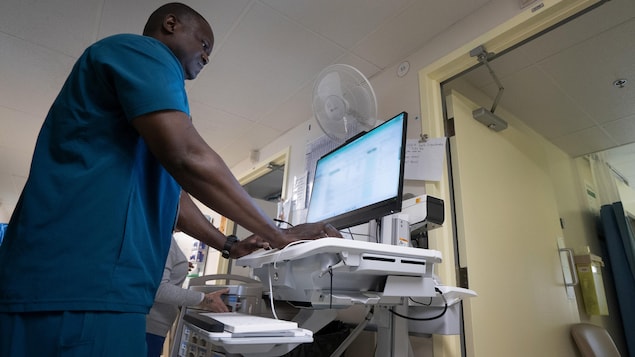
Dossier santé numérique : un déploiement panquébécois toujours envisagé
Santé Québec dit avoir amélioré l’aide offerte aux médecins, plus touchés par ce virage informatique.
17 Jun 2026

Opération de la Sûreté du Québec | Deux administrateurs d’un site de vente d’identités frauduleuses arrêtés
La Sûreté du Québec a arrêté mercredi un homme de 24 ans et une femme de 29 ans soupçonnés d’avoir administré un site web où les criminels pouvaient acheter les renseignements personnels de citoyens canadiens afin de les utiliser dans des fraudes.
17 Jun 2026

Ottawa appelé à ne pas élargir l’aide médicale à mourir aux cas de troubles mentaux
Cette recommandation ne fait toutefois pas l'unanimité au sein du comité mixte sur l'aide médicale à mourir.
17 Jun 2026
Trump says he ‘could understand’ Canada’s cap on Chinese electric vehicle imports
U.S. President Donald Trump is happy with Canada’s arrangement to allow a capped number of Chinese electric vehicles to be imported at a low-tariff rate, Prime Minister Mark Carney said. Read More
17 Jun 2026

Sommet sur l’itinérance | Éric Duhaime se rallie à Pauline Marois
Le chef du Parti conservateur du Québec (PCQ), Éric Duhaime, se rallie à l’ancienne première ministre Pauline Marois dans sa croisade pour la tenue d’un sommet sur l’itinérance d’ici à juin 2027.
17 Jun 2026

Politique environnementale | Des associations écologistes poursuivent Ottawa en justice
Un groupe de défenseurs de l’environnement poursuit le gouvernement fédéral en justice, affirmant que les récents changements de politique ont compromis la réalisation des objectifs de réduction des émissions fixés par la loi au Canada.
17 Jun 2026
Afternoon front page: Canada urged to abandon plans for psychiatric euthanasia; slowing the runaway MAID train; and more
It’s Wednesday, June 17. Here are the top stories we’re following today. Read More
17 Jun 2026
John Ivison: Finally a plea to slow the ‘runaway’ MAID train
The joint House and Senate committee studying the expansion of medical assistance in dying (MAID) has recommended a permanent exclusion of those patients whose sole condition is mental illness. Read More
17 Jun 2026

Saint-Hyacinthe | Une cycliste âgée de 13 ans happée mortellement par un camion
Une jeune fille a connu un sort tragique à Saint-Hyacinthe, écrasée par un poids lourd en traversant la rue à vélo.
17 Jun 2026

Un meilleur suivi pour les prématurés développé à Montréal
Les prématurés pourront bientôt bénéficier d’un meilleur suivi pour prévenir les soucis de santé grâce à une nouvelle technologie montréalaise.
17 Jun 2026

Ce qu’il faut savoir ce mercredi | Garderies, Trump sur l’Iran et Port de Montréal
La journée passe vite. Voici les trois nouvelles qui ont marqué l’actualité jusqu’ici.
17 Jun 2026

Propagation haineuse | Bloquistes et libéraux se réjouissent que C-9 devienne réalité après neuf mois
Les troupes bloquistes et libérales se réjouissent que le projet de loi C-9 sur la propagation haineuse soit sur le point de devenir réalité, puisque chaque camp y voit la concrétisation d’une promesse de longue date qui lui est propre.
17 Jun 2026
B.C. man who murdered wife and son gets ‘below normal’ sentence due to Indigenous heritage
A judge has cited a B.C. man's Indigenous heritage when sentencing him for the violent murders of his wife and teenage son. Orlan Marcel Dennis has been sentenced to life in prison and will be eligible for parole in 10 years, according to a recent decision from the B.C. Supreme Court. Read More
17 Jun 2026

Iran : Trump vante un accord préliminaire qui dépasse ses objectifs
Le président américain a menacé de reprendre les bombardements si l’Iran viole l'accord préliminaire.
17 Jun 2026

Un agent de la GRC arrêté pour de présumées menaces contre Donald Trump en ligne
Evenson Dumerlus aurait publié une vidéo sur Snapchat dans laquelle il aurait menacé le président américain.
17 Jun 2026

Lors du G7 en Alberta | Un agent de la GRC accusé d’avoir proféré des menaces contre Trump
Un policier de la Gendarmerie royale du Canada (GRC) fera face à la justice pour avoir proféré des menaces à l’endroit du président américain Donald Trump sur les réseaux sociaux.
17 Jun 2026
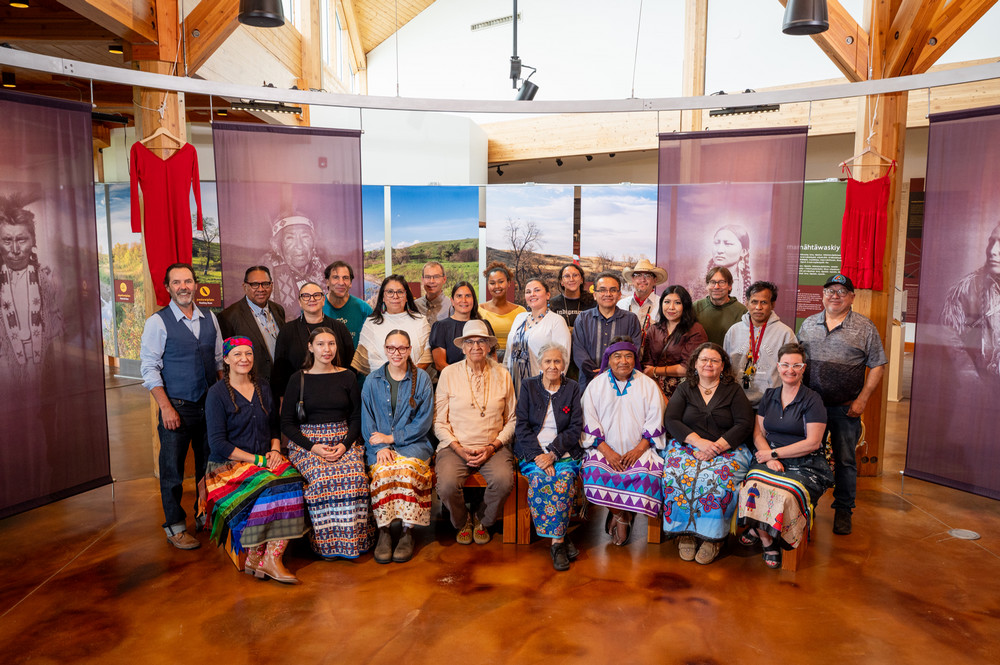
kihci-okāwīmāw askiy Knowledge Centre receives $2.6 million from Weston Family Prairie Grasslands Initiative
A new Indigenous Grasslands Stewardship and Knowledge Exchange Network has been launched at the University of Saskatchewan (USask).
17 Jun 2026
McMaster team recognized for building a better way to work with data
At a university the size of McMaster, institutional data doesn’t live in one place. It’s scattered across many systems, and pulling it together for a report or planning exercise has historically meant a lot of manual work. A cross-campus team of employees is building a better approach. Their work recently earned them an Innovation Award at CANHEIT , Canada’s largest conference for higher education IT leaders, researchers and technology innovators. “This is really a recognition of the people behind the work,” says Andrea Oliver, director of enterprise applications and data services, who accepted the award on behalf of the team. “It reflects what’s possible when we bring together expertise from across McMaster and focus on solving real challenges.” The new data service is built on Microsoft Fabric, Microsoft’s unified data and analytics platform. It helps bring information from across the university together so teams can use tools like Power BI with more consistent, reliable data. That matters because many teams at an institution like McMaster need to work with data independently while still relying on shared standards for governance, privacy and security. Rather than each team sourcing and reconciling data independently, the service provides a common, trustworthy foundation. The result is less time spent on data wrangling and more confidence in the numbers when it matters most. It also gives McMaster a stronger foundation for future analytics needs. “This isn’t just a tool,” says Oliver. “It’s a new way of working with data across the university. We’re making it easier for people to access the information they need, when they need it, and to have more confidence in it.” Already making a difference The impact of the service has already been tangible. In Human Resources, it helped simplify a reporting process that had previously required significant manual effort. “There was a noticeable difference in efficiency,” says Katie Millar, manager of people analytics. “Once the data model was in place, it only took a couple of hours to build what we needed. It made it much easier to respond to questions as they came up.” This kind of outcome reflects the team’s broader approach. The service was designed with campus partners from the start, so it addresses real needs rather than theoretical ones. University Technology Services now manages the service as an institutional offering and is slowly beginning to expand it to new areas of campus. For the team behind the work, the award is meaningful recognition. But the larger story is the long-term value this work can bring to McMaster by making data easier to use in ways that support better planning, reporting and decision-making across the university. The post McMaster team recognized for building a better way to work with data appeared first on McMaster News .
17 Jun 2026
Canada should ‘indefinitely’ abandon plans for psychiatric euthanasia, parliamentarians urge
Canada's Criminal Code should be amended to "indefinitely exclude" people with mental illness alone from being eligible for euthanasia, a parliamentary committee has concluded. Read More
17 Jun 2026

Nouveaux frais cachés : après Bell et Telus, le CRTC rappelle Rogers à l’ordre
Le CRTC réprimande Rogers, Bell et Telus pour avoir facturé des frais qui semblent enfreindre les règles.
17 Jun 2026
Angelica McQuarrie is ‘the steady force’ that keeps PACE going
People of McMaster celebrates the incredible people who help make McMaster a great place to work, learn, teach and conduct research. Click here for the rest of the series . Angelica McQuarrie didn’t want to go back to Mac. She was supposed to be having fun at a summer sports camp but wound up getting hopelessly lost with a counsellor in the basement of the Ivor Wynne Centre. “A little bit traumatizing for an 8-year-old,” says McQuarrie. She went home in a huff and announced she was done with McMaster. It was a one-night boycott — her mom gave her a hug and dropped her off at camp the next morning. McQuarrie would return to McMaster to earn a Honours Bachelor of Science in Kinesiology with a minor in Psychology, and, then a Master of Science in Rehabilitation Science. Immediately after graduation, she launched her career working at the Physical Activity Centre of Excellence (PACE), located in the same building where she got lost as a kid. Luckily it’s on the main floor, not the basement. “I was destined to never leave.” PACE aspires to be the preeminent Canadian site for excellence and leadership in research, education, evidence-based practice, community engagement and knowledge translation regarding the use of physical activity to improve health and well-being. Put another way, PACE brings teaching and learning, research and community engagement together under one roof. There’s no other place like it on campus. More about PACE: $50M gift propels McMaster’s leadership in healthspan, helping people live longer in good health McQuarrie’s played a key role in making that happen by working as student program assistant and volunteer coordinator, a registered kinesiologist and program coordinator. She is now the centre’s program manager. Kinesiology professor Jennifer Heisz — PACE’s director and Canada Research Chair in Brain Health and Aging — gives McQuarrie one other title. “Angelica is the heart of PACE and the steady force behind all that we do. She brings wisdom, care and an extraordinary sense of purpose to her work and to everyone around her. “What makes Angelica so remarkable is the way she combines excellence with humility and leadership with genuine kindness. She is an exceptional mentor to the many students who come through PACE each year. She knows our members by name, and she creates the kind of community where people feel they belong. “PACE simply would not be what it is today without Angelica.” How do you describe PACE to people who don’t yet know about the centre? We transform lives by helping people set and then achieve their health and fitness goals. We have more than 500 community members enrolled in six evidence-informed exercise programs. We have programs for seniors, cancer survivors and for people living with multiple sclerosis, spinal cord injuries and heart disease. We’ve also added an exercise program designed specifically for children experiencing disabilities. Along with our individualized exercise programs, we offer physiotherapy and kinesiology services. Our programs are unique and we have specialized equipment in our two gyms that that you won’t find at traditional fitness centres. We’re filling a real need — community members tell us they don’t know where they’d go if PACE didn’t exist. We have an incredible team of staff, students and faculty who understand the challenges faced by our community members. Over the course of a year, the student volunteers in PACE contribute more than 30,000 hours of service. PACE is a living lab where they get to apply what they’re learning in their courses. They’re also constantly learning from our community members — they have a lot of wisdom to share and different perspectives to offer. Community members also take part in research studies and clinical trials led by professors, postdoctoral fellows and graduate students in the Department of Kinesiology and from across McMaster. PACE actually grew out of research studies — participants wanted to keep working out together and faculty found a way to make that happen. It’s a pretty remarkable place with a sense of community you won’t find anywhere else. Let’s start at the beginning. How did you get involved with PACE? My uncle and aunt were community members. My uncle was with MacTurtles — it’s now the MacCardiac Rehabilitation Program. My aunt joined PACE to keep my uncle on track. She’d lost her vision due to complications from Type 1 diabetes. During my first year of undergrad, I’d drop in between classes to help out my aunt with her workouts. I knew right away that PACE was special. I watched how students and staff interacted with my uncle, aunt and all the community members. Here was an opportunity to put into practice what I was learning in lectures and labs and make a real difference in people’s lives. What I didn’t realize at the time was just how much I would learn from community members. They’re a constant source of inspiration. I became a student volunteer in 2008 and continued to work at PACE through McMaster’s Work Study program. After graduation, I had the opportunity to move into full-time roles. You’re currently the program manager for PACE. I imagine there’s a lot to manage with hundreds of community members, hundreds of students and a team staff. PACE is made up of a whole lot of moving parts. Whether on the frontlines or working behind-the-scenes, everyone at PACE plays a vital role and goes the extra distance to make PACE run. My job is to oversee day-to-day operations and make sure all the parts keep moving smoothly. It’s a lot of work but I get to spend my days working with inspiring community members, all-star students, dedicated staff, faculty and researchers and truly exceptional mentors. I’m still here after all these years because of the people. You talk about students learning from community members. What have you learned? The informal, intergenerational learning that happens every single day at PACE has had a profound impact. I realized that you’ll learn a lot when you make the time to get to know and really listen to our community members. They have so much lived experience. Despite the challenges they face, they’re among the most positive, optimistic and resilient people I know. Like our students and staff, they genuinely want to be here and we all look out for each other. Community members have shown me that improvement is individual and progress is different for everyone. Don’t compare yourself to what others are achieving — just aim to be a slightly better version of yourself today than you were yesterday. And enjoy each other’s company. Not to put you on the spot but what’s been your favourite moment with a community member? There are lots of interactions and people that come to mind but here’s one of the standouts: Our oldest community member was John Nagy. John lived to be 105 years old. He passed away in 2023. He was part of our morning exercise crew. John was unbelievably dedicated to staying active and had a heck of a sense of humour. One winter day we were considering a snow closure — John was the only participant to come in all day. And he had walked from his home to Mac. We celebrated John’s birthday every year at PACE. We came up with a 101 Dalmatians theme for his 101st birthday celebration. I dressed up as Cruella de Vil. Describe your best day at PACE. My best day happens every year with our PACE Charity Gala at Liuna Station. It’s far more than a fundraiser to support our programs. The gala brings together our community members, students, staff, faculty, friends and family for an unforgettable night of celebration. We also get to dress up in something other than gym clothes. The highlight of the gala is always the community members and students who deliver heartfelt and inspiring speeches. They remind us that we’re making a difference, sometimes in ways that we don’t see or fully appreciate. Describe your most challenging day. Those days happens just before the start of the fall, winter and spring-summer terms, when we’re recruiting students. We have 150 volunteer spots and no more than 5 student staff positions available each term, yet far more students apply — these are highly sought after positions. You want to give an opportunity to every student who applies because you know it’s going to be transformative. It definitely was for me and I owe my career to getting involved in PACE as a student. So telling a student they weren’t selected is a really hard conversation. The good news is there are always spots opening up as students graduate or need to step away for school, work or family commitments. So do you still get lost in the Ivor Wynne Centre? It’s a pretty confusing building, but I’ve figured it out after being here for nearly 20 years. I didn’t imagine being here when I was 8 years old but there’s nowhere else I’d rather be and no other group of people I’d rather spend my days with. The post Angelica McQuarrie is ‘the steady force’ that keeps PACE going appeared first on McMaster News .
17 Jun 2026
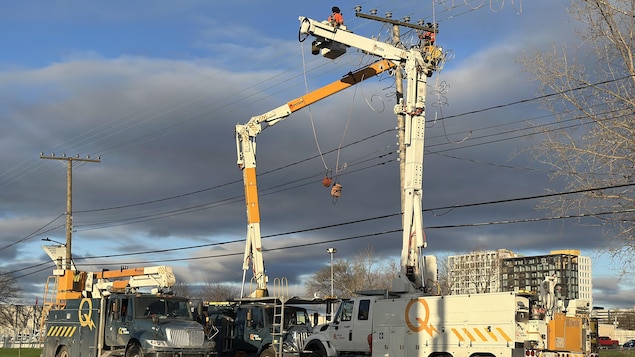
Alerte d’orage violent : des pannes dans le Grand Montréal
Sur l'île de Montréal, la majorité des cas sont concentrés dans l'ouest, notamment à Baie-d'Urfé.
17 Jun 2026

Mise en demeure contre St-Pierre Plamondon : le PLQ n’a pas encore décidé de la suite
Le délai de 72 heures étant expiré, M. Milliard veut maintenant consulter les instances du parti.
17 Jun 2026
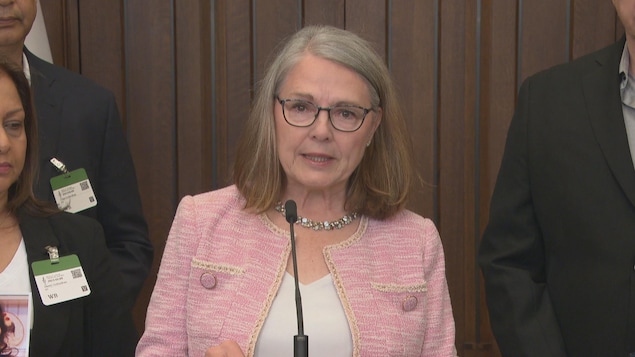
La députée conservatrice saskatchewanaise Cathay Wagantall démissionnera en août
Cathay Wagantall a été élue pour la première fois en Saskatchewan aux élections de 2015.
17 Jun 2026

Mise en demeure contre St-Pierre Plamondon | Le PLQ n’a pas encore décidé de la suite
Le chef du Parti libéral du Québec (PLQ), Charles Milliard, n’a pas encore décidé s’il mettra sa menace à exécution d’entamer un recours en diffamation contre le chef du Parti québécois (PQ).
17 Jun 2026

La météo perturbe le service du REM
La pluie et les orages qui déferlent sur la région de Montréal entraînent des pannes de courant, dont une à l’Aéroport Montréal-Trudeau, et une interruption du service sur un tronçon du Réseau express métropolitain.
17 Jun 2026
McMaster scientists celebrated for leadership in virology
Two McMaster University researchers have been recognized by the Canadian Society for Virology (CSV) for their exceptional contributions to research and mentorship. Matthew Miller, a professor of Biochemistry and Biomedical Sciences, has received the Grandvaux-McCormick Award for Service to Canadian Virology, and Karen Mossman, a professor of Medicine, has been honoured with the CSV’s Mentor Award for Senior Investigators. The awards, both among the CSV’s highest honours, celebrate significant and sustained contributions to the field of virology and excellence in mentoring the next generation of virologists. “Having two of these national awards come to McMaster in one year speaks volumes about the strength of virology at our institution,” says Miller, who is scientific director of the Michael G. DeGroote Institute for Infectious Disease Research (IIDR). “These honours reflect a strong, collaborative research environment and are a testament to the trainees, staff, and scientists whose collective efforts have established McMaster as a leader in the field.” Miller, who is also executive director of NexusHealth at McMaster, has been honoured for his internationally recognized research program and for his leadership roles in the field of virology. The Miller Lab focuses on understanding how the body’s immune system responds to viral infections and how those responses can be harnessed to better prevent and combat future pandemics. With colleagues at McMaster, he co-developed a next-generation, needle-free vaccine for COVID-19 and is currently exploring similar approaches to preventing other respiratory infections, such as those caused by influenza virus. In addition to his research and leadership roles at the university, Miller has served as an expert advisor on various federal and provincial committees related to pandemic preparedness and response, and he regularly provides immunization guidance to government, industry, and media. He is a leading authority on pandemic influenza and has contributed extensively to efforts designed to bolster Canada’s domestic capabilities for addressing health security threats, most recently via the Canadian Pandemic Preparedness Hub (CP2H) , of which he is co-director. For Mossman, who served as McMaster’s vice-president of research from 2020 to 2024, being named a top mentor in Canadian virology is a reflection of her longstanding commitment to supporting and developing the next generation of researchers. “Mentorship is one of the most important responsibilities that scientists have,” says Mossman, who is a member of the IIDR. “It has been incredibly rewarding to support trainees and early-career investigators as they develop their own ideas, build toward their own successful careers, and make their own important contributions to the field.” Over the past 25 years, Mossman has supervised more than 100 undergraduate and graduate students and has mentored dozens of postdoctoral fellows and research associates. As former chair of McMaster’s Department of Biochemistry and Biomedical Sciences, she has similarly supported numerous early-career scientists as they established new research programs at the university, including Miller himself, whom she helped recruit to McMaster in 2014. The Mossman Lab has long been focused on understanding how viruses interact with host cells, with the goal of developing novel therapies for infectious disease and cancer. At the outset of the COVID-19 pandemic, she and then-postdoctoral fellow Arinjay Banerjee — now a principal investigator at the Vaccine and Infectious Disease Organization at the University of Saskatchewan — played a pivotal role in the first isolation of SARS-CoV-2 from Canadian patients. Their work enabled critical research efforts across the country, supporting studies of viral transmission, immunity, diagnostics, and vaccine development. Miller and Mossman received their awards at the CSV’s annual symposium this month at the University of Guelph. The post McMaster scientists celebrated for leadership in virology appeared first on McMaster News .
17 Jun 2026

Des groupes contestent la constitutionnalité de l’Entente sur les tiers pays sûrs
Amnistie internationale et le Conseil canadien pour les réfugiés ont déposé un nouveau recours devant la Cour fédérale pour contester la constitutionnalité d’un traité conclu avec les États-Unis, qui édicte que les réfugiés doivent demander l’asile dans le premier pays où ils arrivent.
17 Jun 2026

Soupçonné d’avoir volé dans un IGA | Mort asphyxié après une « clé de bras » d’un agent de sécurité
L’homme de 42 ans qui est mort mardi soir à la sortie d’une épicerie IGA à la Place Jacques-Cartier, à Longueuil, aurait été asphyxié par une prise au cou, style « clé de bras », après une altercation avec un agent de sécurité du magasin, qui le soupçonnait de vol.
17 Jun 2026

Élections provinciales | Antoine Dionne Charest sera candidat libéral dans Verdun
Le fils de l’ex-premier ministre Jean Charest, Antoine Dionne Charest, sera finalement investi comme candidat libéral dans la circonscription de Verdun mercredi en soirée.
17 Jun 2026

Des vitres brisées à la mosquée de Trois-Rivières
Une personne masquée a cassé la nuit dernière des vitres de la mosquée de Trois-Rivières, dénonce le Centre culturel islamique de la Mauricie. Selon son président, cet acte haineux s’inscrit dans un climat de haine envers les musulmans sur les réseaux sociaux.
17 Jun 2026

CBC/Radio-Canada doit faire analyser son impartialité, recommande un comité du Sénat
Des experts externes devraient se pencher périodiquement sur la question, selon les sénateurs.
17 Jun 2026

Un comité se prononce contre l’aide médicale à mourir aux patients atteints de troubles mentaux
Le gouvernement libéral ne précise pas s’il donnera suite au rapport d’un comité parlementaire qui devrait recommander de ne pas rendre les personnes atteintes de troubles mentaux admissibles à l’aide médicale à mourir (AMM).
17 Jun 2026

Hockey Night in Canada va disparaître? Des téléspectateurs aussi
Être vu par le plus grand nombre ou vendre son âme aux chaînes spécialisées? Telle est la question.
17 Jun 2026

Un Canadien détenu par l’ICE libéré 7 mois plus tard, après avoir vécu un « enfer »
L'homme était détenu depuis octobre 2025, à la suite d'un contrôle de routine effectué par l'ICE.
17 Jun 2026
Les familles établies au Québec seront priorisées pour les places subventionnées en CPE
Les enfants des demandeurs d'asile obtiendront les places « résiduelles », indique le ministère de la Famille.
17 Jun 2026
Cigarette factory on Six Nation’s reserve run by non-Indigenous criminals and staffed by foreign nationals, police say
Ontario police have shut down a large contraband cigarette manufacturing plant on a First Nation’s reserve that was allegedly run by non-Indigenous criminal networks accused of exploiting indigenous lands to cover their activities. Read More
17 Jun 2026
Does Mark Carney want to parent your kids for you?
Prime Minister Mark Carney’s Liberals introduced a new version of their online harms bill last week that will attempt to regulate the social media use of people under 16 years of age. It will also force Canadians to send sensitive personal information to sketchy websites in order to view adult content or even to connect with one another on Facebook, which raises serious privacy and censorship concerns. Yet as the Post's Jesse Kline notes in this NP Comment video, similar legislation in Australia has not stopped kids from accessing these sites. And while social media can be harmful for young people, experts generally don't recommend banning it entirely, which raises the question: is this just another example of the nanny state thinking it knows what's best for you and your family? Watch the full video directly below. Read More
17 Jun 2026

Port de Montréal | Le Syndicat des débardeurs conteste les indemnités versées à une veuve
Le Syndicat des débardeurs du Port de Montréal tente de faire invalider une décision de la CNESST qui accorde plus de 350 000 $ en indemnités de décès à la veuve et au fils du débardeur Michel Jutras, qui s’est suicidé en 2024 après avoir été victime d’« intimidation » et de « harcèlement » par son syndicat.
17 Jun 2026
Man who set a large cross on fire in a park says it was an anti-Trump protest
A burning cross that was being investigated as a possible hate crime by Chicago police has turned out to be an anti-Trump protest by a 21-year-old who said he had no idea the symbol he chose was one used in racist attacks. Read More
17 Jun 2026

Dossier santé numérique | Presque un retour à la normale, selon Santé Québec
Les deux établissements de santé qui ont implanté le Dossier santé numérique (DSN) il y a un peu plus d’un mois ont repris leurs activités normales, sauf en cliniques externes, selon Santé Québec. L’outil informatique a notamment été ajusté pour décharger les médecins de tâches cléricales qui les ralentissaient dans leur travail.
17 Jun 2026

Implosion du Titan en 2023 | Sous-marin mal conçu et surveillance inadéquate, conclut un rapport
Le submersible Titan, dans lequel cinq passagers sont morts près de l’épave du Titanic en juin 2023, n’était immatriculé dans aucun pays, n’avait pas fait l’objet de tests rigoureux et échappait de fait à toute surveillance, conclut le bureau de la sécurité des transports (BST) du Canada, dans son rapport final très attendu publié mercredi.
17 Jun 2026

Implosion du Titan : le rapport du BST met en évidence des failles dans la surveillance
L'implosion du sous-marin Titan a coûté la vie à cinq personnes, au large de l'île de Terre-Neuve, en 2023.
17 Jun 2026

Garderies | Québec veut réserver en priorité les places subventionnées aux familles d’ici
Québec entend modifier les règles d’accès aux places subventionnées dans les garderies et les centres de la petite enfance (CPE) afin d’accorder la priorité aux familles « qui vivent et travaillent au Québec de façon permanente ».
17 Jun 2026

Le Zoo de Granby héberge le kangourou roux Joey
Capturé mardi dans le secteur de Boucherville, le kangourou roux Joey est maintenant hébergé au Zoo de Granby.
17 Jun 2026
‘I’m the boss’ to Meloni’s serious talk: Five awkward moments from Trump’s appearance at the G7 summit
The G7 summit will wrap up today after the leaders of some of the world's most powerful countries conclude their meeting in Évian-les-Bains, France, after discussing major international issues, including the wars in Iran and Ukraine, trade and other economic issues. Read More
17 Jun 2026
‘Economics is in everything’ — How Fernanda Dominguez came to find her passion
When Fernanda Dominguez began exploring universities, she admits McMaster wasn’t at the top of the list. The economics student hadn’t yet set foot on campus, even though it was close to home. That changed during Welcome Week. “That first week, I had no clue what I was stepping into, but something about it felt right,” Dominguez said. Now she’s preparing to cross the stage at convocation before embarking on a Master’s in Economics. In her first year in Social Sciences, Dominguez explored several programs. She considered political science, and briefly switched into business, where she took her first micro- and macroeconomics courses. With no background in economics, she found them challenging. “I had no econ experience, they were the most difficult classes I took, but I was intrigued.” Economics offered the business foundation she was originally interested in, but it also opened a window into the world around her. She saw how economic thinking could illuminate social issues and everyday life. Over time, Dominguez discovered how economics could shape the lives of children and communities. She became interested in research that examines how events like school shootings affect neighbourhoods, and how communities rebuild. “Children are the future, and if we can invest our time and productivity, we’re going to have a better society at the end of the day,” Dominguez said. But she also had some reservations: “The root of econ is math … and I hated math,” she said. “It was genuinely the hardest thing for me.” But she quickly learned that studying economics isn’t about being a math expert. It’s about building the skills as you go, with support. The program teaches students the tools they need, from the ground up. To strengthen her understanding of mathematics, Dominguez studied with friends outside the program, teaching them the concepts as she learned them herself. Once everyone understood, they moved on together. Passing those early courses was the moment she realized: “I do understand economics.” Today, Dominguez graduates from the Economics Specialist Option. In September, she will begin her MA in Financial Economics at the University of Guelph, a path she once never imagined for herself. “I didn’t even know I wanted to go for my master’s,” she said. “I kept it a secret because I was worried about not getting in. I didn’t tell my parents or my friends.” She remembers the nerves clearly, but also the support she received from professors like Angela Zhang, and how that support opened the door to graduate studies. Dominguez hopes to continue researching children’s outcomes through an economic lens, and she feels ready for whatever comes next. “When I found econ, it was genuinely the hardest thing I’ve ever done,” she said. “But no matter how many times I did badly on a test, I persevered. I kept going. I knew this was exactly where I wanted to be.” The post ‘Economics is in everything’ — How Fernanda Dominguez came to find her passion appeared first on McMaster News .
17 Jun 2026

Why so many whales are in Vancouver waters—and how to (legally) spot them
If you’ve noticed more whales visiting local waters, you’re not imagining it: Vancouver’s gargantuan guests are here thanks to the season, great grub and conservation successes, researchers say. A new study has confirmed transient killer whales are now seen in the Salish Sea for more than two-thirds of the year on average. And they are not alone. Humpback whales have rediscovered an ancestral feeding ground while grey whales are stopping by on their migration north. Dr. Andrew Trites ( AT ), professor in UBC’s Institute for the Oceans and Fisheries (IOF), Taryn Scarff ( TS ), who conducted the study as part of her Zoology Master’s degree and Julia Adelsheim ( JA ), IOF alumna and whale biologist, discuss why we’re seeing this increase and how to keep our vast visiting whales safe. What whales are people likely to see? TS: We’re seeing more and more reports of transient killer whales travelling along the Vancouver shoreline. Based on sightings from 2016-2023, our study found orcas regularly visit the Strait of Georgia, North Island Waters and harbours in Vancouver and Victoria to hunt. AT: We’ve also seen humpback whales. Historically, humpbacks were common in B.C. waters, but three years of commercial whaling from 1907 to 1910 eliminated all of them from this region. There were no whales left to pass on knowledge of feeding grounds to the next generation, so it has taken roughly a century for humpbacks to rediscover parts of their former range. And lastly, we’re seeing grey whales visit, which is unusual — they’re usually seen along the outer coast of Vancouver Island. Why are we seeing more whales than we used to? JA: A lot of it is seasonal: this is when whales return to B.C. waters to feed after fasting in their winter breeding grounds and during migration. Baleen whales such as humpback and grey whales arrive in the Salish Sea focused on rebuilding their energy stores, feeding on the Pacific Northwest’s cold-water prey, which are rich in fats. TS: For transient killer whales, the recovery of seal and sea lion populations has created what amounts to a year-round buffet. Seals and sea lions were heavily culled until the 1970s, but protections allowed their numbers to recover—and the killer whales followed. Today, transients are seen in the inside waters around Vancouver Island on roughly 250 days of the year, and about 70 per cent of the West Coast population regularly uses these waters. AT: Humpback whales are another conservation success story. Their populations rebounded after most commercial humpback whaling ended in the North Pacific in the mid-1960s. Large numbers now return to B.C. waters each summer to feed on krill, herring and other prey. In winter, they migrate to breeding grounds in Hawaii and Mexico. Recovery has been driven mainly by protections from whaling, but conservation measures such as improved fisheries management and efforts to reduce entanglements, underwater noise and ship strikes have also supported their return. Grey whales tell a different story. They feed near Alaska during the summer and fall on amphipods—tiny seafloor crustaceans that depend on nutrients from algae growing on and beneath Arctic sea ice. All gray whales must eat enough to fuel their 20,000 kilometre round-trip migration to Mexico, but pregnant females need even more energy—to support their pregnancy, nurse calves born in warm tropical waters and bring them back to the Arctic. In a recent study , we found pregnant females need 1,600 to 1,900 kg of prey per day to support fetal growth and store sufficient energy to produce milk while traveling after calving. Upon returning to their Arctic feeding grounds, lactating females require 1,300 to 1,600 kg of prey per day for another three to four months. However, climate change is reducing sea ice, which in turn decreases the algae that sustain the amphipods grey whales depend on. As a result, some grey whales are stopping off in places like Vancouver in a desperate attempt to refuel their emaciated bodies. Several grey whales have washed up dead along the coast, likely from starvation, and unfortunately, we’re likely to see more deaths in the years ahead. What can people do to keep whales safe? JA: The biggest thing is simple: give whales space and stay alert. If you’re on the water—whether it’s a boat, kayak or paddleboard—assume a whale could surface nearby. Slowing down and paying attention can make a huge difference in preventing collisions. It’s also really important to follow the viewing-distance rules. Around southern B.C., vessels now need to stay at least 200 metres away from most killer whales and 1,000 metres from endangered southern resident killer whales, and at least 100 metres from other whales, 200 if they’re resting or with a calf. If you’re unsure, it’s always best to be conservative and keep your distance. A good rule of thumb is: if you see a blow, go slow. Whales can change direction and surface unexpectedly, so giving them extra space helps keep everyone safe. This work was supported by the Natural Sciences and Engineering Research Council of Canada. Featured Researcher Julia Adelsheim Alum, Institute for the Oceans and Fisheries, Marine Mammal Research Unit Featured Researcher Taryn Scarff Alum, Institute for the Oceans and Fisheries, Marine Mammal Research Unit Featured Researcher Dr. Andrew Trites Professor, Dept. of Zoology, Institute for the Oceans and Fisheries, Marine Mammal Research Unit
17 Jun 2026

Canadian Nuclear Laboratories collaboration with Western explores radiation exposure on astronauts
Canadian astronaut Jeremy Hansen’s historic journey around the Moon lasted just days, but its implications continue and will stretch far further despite breaking a spaceflight record. As part of Artemis II, Hansen and three crewmates became the first humans in more than 50 years to travel beyond low Earth orbit, reaching a distance of roughly 400,000 kilometres from Earth before splashing down safely in the Pacific Ocean. The mission was a test flight for future lunar exploration. It was also a reminder of something less visible, but increasingly urgent: the farther humans travel from Earth, the more exposure to space radiation becomes a defining biological risk. That question – how radiation affects the human body over time and distance – will be central not only to sustained missions to the Moon, but to any eventual attempt to reach Mars. At Western University and Canadian Nuclear Laboratories (CNL) , researchers are working on potential answers through a technology small enough to fit in the palm of a hand. Controlled but complex Tamie Poepping and second-year astrophysics student Aya Majzoub at a custom micro particle image velocimetry (MicroPIV) system, comprised of a laser and high-speed camera coupled to an inverted fluorescent microscope, for investigating organ and organoid-on-chips. (Christopher Kindratsky/Western Communications) Physics and astronomy professor Tamie Poepping is advancing organ-on-chip and organoid-on-chip systems that replicate the complexity of human tissue inside transparent chambers no larger than a postage stamp. (Organoids are miniaturized, simplified versions of an organ produced in a lab.) Inside these chambers, nutrient-rich fluid moves through intricate networks of channels designed to mimic blood flow, keeping clusters of living human cells alive while allowing researchers to observe how they react under stress. “They look very small and controlled, but they’re designed to recreate incredibly complex biological systems,” said Poepping, director of Western’s Biofluidics Research Lab . Her lab specializes in building platforms capable of controlling fluid at near-cellular scales. That precision allows researchers to isolate variables, monitor tissue behaviour in real time and study how organs respond to extreme environments. “It’s about emergency response, how systems react and how we respond to that reaction,” said Poepping. “It was actually a bit coincidental, but I was watching Chernobyl on Netflix at the same time this project started and kept thinking, this is exactly the kind of complexity we’re trying to capture.” Poepping’s organ- and organoid-on-chip devices have become foundational to a broader collaboration focused on radiation exposure. An organoid-on-chip is a tiny microchip lined with living human cells that mimics the physical, chemical and mechanical functions of real organs. (Christopher Kindratsky/Western Communications) Exploring the extremes Working alongside Poepping, physics and astronomy professor Eugene Wong studies how humans, organs, tissues and cells respond to radiotherapy. Exposing these organs and organoids-on-chip to radiation allows the study of detailed biological effects and individual variations. The long-term goal for Wong is to not only better understand both acute and delayed tissue damage in cancer patients, but those individuals in environments that are difficult to study like astronauts in deep space and engineers and scientists working with nuclear reactors. This is no new area of study for Wong. His connection to this research stretches back decades. As a post-doctoral fellow, he worked under Jerry Battista , Western’s professor emeritus in medical biophysics , whose pioneering work helped shape modern understanding of radiation exposure in extreme environments like space travel. Battista helped frame radiation exposure not as a uniform dose applied to tissue, but as a dynamic process with effects that vary across time, space and biological structure. Ten years ago, he wrote a textbook chapter titled Radiation Exposure on a Voyage to Mars: All Aboard? , that continues to influence both medical radiation research and space science today. Now Wong is extending that work into entirely new environments. “We know astronauts are being exposed to radiation, but we don’t fully understand what that means at the tissue level over time,” said Wong. “Before we send humans farther into space, maybe we send miniature versions of human organs and organoids first and learn from them.” Together, Poepping and Wong are helping develop new systems where organoids could eventually be housed inside tiny chips and sent into space to monitor radiation exposure in real time before humans travel farther from Earth. Researchers (L to R) Eugene Wong, Christopher Pin and Tamie Poepping (Christopher Kindratsky/Western Communications) Slice of life But understanding radiation damage also requires understanding how biology itself varies.That’s where Christopher Pin enters the collaboration. A professor in the departments of physiology and pharmacology, oncology and paediatrics at Western’s Schulich School of Medicine & Dentistry , Pin studies why patients with similar cancers can respond very differently to the same treatments. Physiology and pharmacology graduate student Gavin Goebel, member of the research team at Baker Centre for Pancreatic Cancer, works on an organoid-on-chip. (Christopher Kindratsky/Western Communications) In his lab at London Health Sciences Centre Research Institute (LHSCRI), Pin and his team grow organoids to study those differences directly. The researchers have found even within the same cancer type, responses to radiation and chemotherapy can vary dramatically. “They don’t all behave the same way,” said Pin, lead translational scientist at LHSCRI’s Baker Centre for Pancreatic Cancer . “That variability is the problem.” Traditional models, from flat cell cultures to animal testing, often fail to replicate what happens inside the human body with enough precision. Organoid systems offer something more realistic, simplified biological models that remain complex enough to behave like living tissue. When paired with Poepping’s engineering systems and Wong’s radiation expertise, they create a platform capable of answering questions researchers previously couldn’t study in real time. At CNL, researchers Antonella Bertucci and Marcelo Vazquez are adapting these systems for radiobiology experiments related to emergency response and triage scenarios and space radiation exposure. The development of organ- or organoid-on-chip technology allows Bertucci and Marcelo to study biological effects of different types of radiation using Earth-based laboratories, like the Biological Research Facility in Chalk River, or in space. Rather than measuring only whether cells survive radiation exposure, CNL researchers can now observe intermediate biological responses like metabolites, cytokines and stress markers that reveal how damage unfolds and how tissue attempts to recover. “We can start to see not just whether cells survive, but what they’re doing while they respond,” said Wong. “And the implications extend far beyond space travel. In cancer treatment, the work could help explain why identical radiation doses produce vastly different patient outcomes. In nuclear safety, it could improve how exposure is measured and how emergency responses are developed.” This collaboration, partially supported by NSERC and Western’s Institute for Earth and Space Exploration , will importantly engage trainees in research placements funded by collaborative grants at CNL in Chalk River, Ontario, this summer. Learn more about how Western is turning curiosity into solutions . The post Canadian Nuclear Laboratories collaboration with Western explores radiation exposure on astronauts appeared first on Western News .
17 Jun 2026
Building community: Social Work student Ashley Hauer is a champion of mental health and well-being
Social Work student Ashley Hauer has worked with many community organizations that support physical and mental health and well-being, including the Centre for Addiction and Mental Health, Crohn’s and Colitis Canada and Kids Help Phone. While at McMaster, she has also led mental health initiatives, including the summit for Jack.Org McMaster, a grassroots mental health network for young people, and served as a peer educator at the Student Wellness Centre. Hauer recently received the Albert Lager Prize for Student Initiative in recognition of her leadership, service and community involvement. Here’s what she had to say ahead of her June 17 convocation: How has McMaster shaped the person you are today? Since starting at McMaster four years ago, I have changed a lot. From getting lost on my way to the Arts Quad for a campus tour to giving tours to incoming Social Sciences students and families, I can honestly say I am not the same person who first arrived on campus. McMaster helped me build the confidence to pursue new opportunities, challenge myself and focus on personal and professional growth. A huge part of that came from the communities I found here. Through clubs, placement, research and extracurriculars, I met people who encouraged me to grow, lead and learn alongside them. Over time, I have developed values that I know will stay with me throughout my life and future career, including empathy, community care, curiosity and advocacy. I think my younger self would be proud, and honestly very grateful, that I chose McMaster, because of the person I have become and the people who have helped shape me along the way. Tell us about a favourite memory during your time at McMaster One of my favourite memories was being part of the McMaster Recreational Dance Team. Continuing something I love at university, learning how to tap dance, which I had wanted to try for years, and meeting such an amazing group of people made the experience really meaningful. It taught me the importance of making space for what energizes me, even during busy academic periods, and that balance is something I will carry forward. Another highlight was speaking at Social Work Research Day, which I co-organized with MSW students and staff. Presenting preliminary research on the use of music as a tool for intergenerational communication was a rewarding experience that helped me build skills and connections I will carry forward. What was your proudest achievement at McMaster? My proudest achievement at McMaster has been the opportunities I have had to help build community, especially around mental health and student well-being. As vice-president of Summit for Jack.org McMaster , I led a team in planning a two-day mental health summit that brought together students from different faculties, backgrounds and lived experiences. We created space for vulnerable and important conversations about mental health, alongside speakers, activities and interactive programming. I felt the same way in my role as president of Cam’s Kids McMaster, where I supported student mental health initiatives through programming, outreach and community-building events. Building a community of people who genuinely care about encouraging one another and creating meaningful change in the mental health space was incredibly impactful. Seeing students connect with one another in those spaces, and knowing I helped facilitate that, has meant a lot to me. How do you think it is going to feel crossing the convocation stage? It still does not feel real that I am graduating after four of the most formative years of my life. People always told me it goes by quickly, and they were right. Looking back on my time at McMaster, it feels surreal to have reached a point in my journey I have been working toward for years. Crossing the convocation stage, I think I will feel a mix of pride and disbelief. Being surrounded by peers who have reached the same milestone, along with staff and family who guided us along the way, will make it feel very full circle. When I receive my diploma, it will make all the time, effort, and growth feel real. It represents not just the end of my undergraduate degree, but the beginning of a new chapter. Who will you be thinking about when you cross the stage? There are many professors who have shaped my interests, learning and growth (you know who you are)! I am especially grateful to the Student Success Centre for their support with developing my writing skills (shoutout Chantalle and Ben), the Student Wellness Centre Health Promotion team for providing me with so many opportunities as a peer educator, and the Faculty of Social Sciences for their ongoing mentorship and kindness (shoutout Meghan and Cindy!) I will also be thinking about the many people I have had the chance to learn from through extracurriculars, research and placements, which have each influenced my journey in different ways. Most of all, I will be thinking of my family: my mom, dad, brother, grandmother, and of course, my puppy Crosby, who have encouraged me every step of the way. What do you plan to do/see yourself doing in the future? My plan is to continue pursuing my education through graduate studies. I enjoy learning from professors, peers, placements and community-based experiences that challenge and shape my perspective, and I want to continue building on that. I also want to continue giving back to the communities that have shaped me, especially in ways that center wellness and transitions through different stages of care and life. What’s a great piece of advice you’ve been given that you think other students could benefit from? Many of my professors have shared this piece of advice over the years, but only now, as I reflect on my upcoming graduation, do I recognize its truth and importance: If you look to your left and right in your classes, the people around you, including peers and professors, are your future colleagues. They may become future co-workers, supervisors, or professional connections. I have taken this advice to heart by making an effort to connect with people beyond the classroom, making time for those extra conversations, learning about their interests, and supporting them in return. I have also valued engaging in extracurriculars through my program, including the Social Work Student Collective, the McMaster Social Sciences Society and the Faculty of Social Sciences, which has allowed me to learn from and collaborate with people across different areas of the faculty. The post Building community: Social Work student Ashley Hauer is a champion of mental health and well-being appeared first on McMaster News .
17 Jun 2026

Protocole d’accord entre Washington et Téhéran : le contenu commence à circuler
L'Iran s'engage à rouvrir le détroit d'Ormuz, selon le texte obtenu par CNN.
17 Jun 2026
When colleagues become bullies
Although it’s an open secret within the profession, bullying among university faculty has not been widely studied. In informal discussions among colleagues, many academics will say that they have witnessed bullying, experienced it themselves, or know someone who has. This observation prompted a multi-institutional team from across Quebec in 2025 to conduct the unfunded study L’intimidation académique entre professeurs dans le milieu universitaire au Québec (Academic bullying among professors in the Quebec university setting). “There is a certain omerta fed, among other things, by the fear of reprisal,” noted Catherine Malboeuf-Hurtubise, a professor at Université Laval’s school of psychology, who belongs to the research team that presented its results on May 14 at the annual Acfas (Association canadienne-franҫaise pour l’avancement des sciences) congress. The research team defined bullying as abusive or disrespectful behaviour by one faculty member toward another. This could include threats, humiliation, silencing tactics, ostracism, and deliberate efforts to hinder professional or academic success. “This preliminary definition is incomplete and imperfect, but it gives us a common framework for understanding the phenomenon,” explained Sébastien Béland, a professor in the faculty of education at Université de Montréal, who also belongs to the research team. Professors from all fields and backgrounds affected The research team was surprised by how many faculty members (a group that included lecturers) were willing to speak out on the issue: more than 1,000 across Quebec answered the callout. Preliminary results were likewise striking. No fewer than half of respondents said they had either experienced or witnessed bullying by colleagues. It’s important, however, to note that these results were not necessarily representative of the faculty population as a whole: in a case of self-selection, people may have been more likely to respond to the survey if they had seen or experienced bullying, than if they had not. The results were analyzed based on research area and sociodemographic profile (gender, age, ethnic origin, sexual orientation, etc.). Although women, members of some minority groups, and people working in the fields of health, society and culture reported more instances of bullying, the differences were not significant. “Bullying between university professors seems to be found just about everywhere,” said Dr. Béland. Dr. Malboeuf-Hurtubise noted that bullying often occurs in situations where competition is high — especially around promotions, tenure, grant applications, or in situations where collective decisions are made. Consequences often devastating Bullying can have wide-ranging consequences for professors. Participants reported mental health problems such as anxiety, hypervigilance, depression and burnout, as well as physical conditions like insomnia, headaches or complications during pregnancy. Dr. Malboeuf-Hurtubise said bullying also has an effect on institutions. “Certainly, people who aren’t doing well at work because they’re being bullied start to disengage, take absences, or spend less time at the office. Many even told us they had resigned,” she explained. Reduced engagement and productivity can also affect universities’ scientific reach. Existing mechanisms to address bullying Universities clearly have much to gain from tackling bullying among faculty. Yet study participants described existing reporting mechanisms as ineffective and said they had lost trust in institutions. “People don’t feel supported,” summarized Dr. Malboeuf-Hurtubise. Many also said they did not know where to turn for help, or were unaware whether formal mechanisms existed. Dr. Malboeuf-Hurtubise added that many respondents felt that sanctions did little to curb bullying behaviour, and that filing complaints was discouraged. Some respondents, however, noted that it could be helpful to talk to a supportive department or program head. Is collegiality a risk factor? Why do universities struggle to protect their faculty from bullying? Finn Makela, a professor in the faculty of law at Université de Sherbrooke, shared some reflections on academic collegiality at the same Acfas conference. Quebec labour law rests on a clear distinction between employer and employee. Under the civil code, employees work “under the direction or control” of an employer, who must “take any measures consistent with the nature of the work to protect the health, safety and dignity of the employee.” “In a traditional employment relationship, what are the employer’s prerogatives?” Dr. Makela asked. “Hiring, work assignments, assessments, promotions, and dismissals, among other things.” What, on the other hand, are employees’ obligations? One of them is obedience. But universities work differently. Many of the employer’s responsibilities devolve, in whole or in part, to collegial management bodies such as committees and assemblies, made up of salaried faculty members. Historically, Canadian universities have been granted a great deal of managerial autonomy in order to protect their independence, which gave rise to the tenure system. “Awarding tenure requires people who are qualified to assess the quality of scientific work — hence the system of collegial governance built around peer review,” explained Dr. Makela. As a result, professors’ employment relationship is defined by a high degree of individual and collective autonomy, which runs counter to the notions of subordination and obedience underlying traditional employment relationships. “Faculty members have to be able to debate with their peers and, especially now that academic freedom is enshrined in law, they also have the right to criticize their institution,” he said. This form of self-management is a component of collective academic freedom, which is often seen as more democratic than traditional management structures. “But this broad distribution of managerial power can make academia especially ripe for psychological and collective harassment,” said Dr. Makela. “And all of this does not free employers from their obligations.” Possible solutions What possible solutions exist? The answer isn’t clear. Training might help, Dr. Makela suggested, along with improving the structure of collegiate management bodies, including the use of procedural guides. For example, the Morin code is a set of procedural rules widely used in Quebec to ensure deliberative assemblies are conducted in a fair and orderly manner. “It helps manage the risks associated with debates, up to a point, without controlling the debates themselves,” explained Dr. Makela. Dr. Malboeuf-Hurtubise noted that the study initially aimed to find solutions. However, the literature on the subject indicates that the measures that have been proposed so far “don’t work.” Study participants nevertheless identified a few possible solutions, including confidential, accessible, and transparent reporting processes that do not expose them to reprisals. Encouragingly, all respondents said they wanted to see a shift in their organizational culture and a zero-tolerance policy. Still, Dr. Malboeuf-Hurtubise remains concerned about the sense of powerlessness expressed by study participants. “It’s important to document it, and maybe live with it for a while, to be able to maybe, eventually, find solutions.” The post When colleagues become bullies appeared first on University Affairs .
17 Jun 2026
Multi-stage roof work begins at E.T. Clarke Centre
McMaster community members can expect construction activity near the campus GO Bus terminal as roof upgrades begin at the E.T. Clarke Centre. Work begins this week and will continue through early July. The project will focus on the removal and replacement of existing rooftop louvers, which will be updated with new sound-baffling systems. During this period, typical construction noise should be expected in the surrounding area as crews carry out removal and installation activities. The project will also involve workers operating at heights, including welding work required to dismantle and remove the existing louvers. Passersby may notice increased visual activity on the rooftop, including equipment and personnel. Safety protocols will be in place throughout the duration of the project. A second phase to install new louvers is expected to begin this fall. Updated information on the project is available on the Facility Services website. The post Multi-stage roof work begins at E.T. Clarke Centre appeared first on McMaster News .
17 Jun 2026
Beauce | Les recherches ont repris pour trouver un homme qui est tombé à l’eau
Les recherches ont repris mercredi matin sur la rivière Chaudière à la hauteur de Saint-Lambert-de-Lauzon, en Beauce, pour tenter de retrouver un homme qui est tombé à l’eau mardi soir.
17 Jun 2026
From co-op to CEO: Sanjay Beri on building companies that last
Share Netskope founder and CEO gives an inside look at his entrepreneurial journey For software entrepreneurs like Sanjay Beri (BASc ’99), data is a core driver of company value. “If you have proprietary data, in many cases that’s commensurate with your market cap,” Beri said during an exclusive event for the University of Waterloo community in Santa Clara. The event featured a fireside chat between Beri and Jagdeep Singh Bachher (BASc ’93, MASc ’94, PhD ’00), Chancellor of Waterloo. Together, they discussed Beri’s career path and perspective as Co-founder and CEO of Netskope, a global cybersecurity company. Beri has spent decades at the intersection of technology, leadership and risk. From early roles at Microsoft to senior leadership positions at large enterprise firms and multiple startups, he developed a clear-eyed view of how organizations succeed in an increasingly volatile digital world. That perspective was shaped early at Waterloo, where Beri studied computer engineering during the program’s first year. He credits the University’s co-op system with helping him discover not just what he wanted to do, but what he didn’t. “Waterloo was really my definitive period,” he said. “You get to experience different companies, different geographies, different leadership styles — almost a decade of experience in a short time.” Those experiences helped Beri realize that while he loved technology, his passion lay in building organizations around it. “I realized I didn’t just want to build great technology, I wanted to build the team, the culture, the whole thing,” he says. “Technology is the foundation, but the company you build around it is what actually creates lasting impact.” A strategy that acknowledges the inevitable That blend of technical fluency and business leadership became the foundation for Netskope. Launched as cloud computing was gaining momentum, the company was built on the assumption that breaches are inevitable and security strategies must be designed accordingly. “You have to live with the notion that you have vulnerabilities,” Beri said. “You have to design your security strategy with that in mind.” Rather than focusing solely on preventing attacks, Netskope emphasizes protecting what matters most: sensitive data, users and systems operating in real time across cloud platforms and AI-powered applications. As artificial intelligence accelerates both innovation and cybercrime, Beri believes the imbalance between attackers and defenders is only widening. “Criminals can adopt technology way faster than organizations,” he said. “They don’t have regulation, bureaucracy or politics. They just move.” That reality has profound implications for leaders, particularly as AI becomes embedded in everyday work. According to Beri, insider risk (whether malicious or accidental) now accounts for the majority of security incidents. This trend is amplified by uncertainty about how AI will reshape jobs and industries. Focus on culture and people For Beri, technology alone isn’t enough to meet those challenges. Culture matters just as much. “Culture is kind of what we believe. It’s how we want to work, how we want people to feel when they’re at the company,” he said. “It also has real business value.” At Netskope, that belief translates into transparency, open dialogue and minimizing hierarchy. Beri regularly hosts open forums where any employee can ask questions about strategy, leadership decisions or even office snacks. The goal, he says, is to create an environment where information flows freely and problems surface early. That people-first approach also extends beyond the company. Beri views giving back as a responsibility that comes with success, particularly for entrepreneurs shaped by institutions like Waterloo. For students and alumni navigating careers in an era defined by rapid technological change, Beri’s advice is pragmatic: explore widely, learn quickly and stay grounded in what truly differentiates your work. “Use this time to collect experiences, not just credentials. The things that make you different from everyone else in the room — that’s what compounds over time.” Engineering Community Share
17 Jun 2026
Howard Jampolsky: Canadians must pump the breaks on MAID
When medical assistance in dying (MAID) became law in 2016, advocates of the policy celebrated. People now had the right to ask their doctor to end their lives to avoid suffering and spare their loved ones the agony of watching them die a slow and possibly undignified death. This was argued as the most basic of human rights: the right to control one's own destiny. Read More
17 Jun 2026