Global / Pan-international
14,060 stories

US used Musk’s Grok AI to deploy 2,000 munitions during war on Iran
US used Musk’s Grok AI to deploy 2,000 munitions during war on Iran US forces employed Elon Musk’s Grok AI to strike over 2,000 targets in 96 hours during the joint US-Israel war on Iran, according to a written declaration from the US Department of Defense’s digital and artificial intelligence chief, Cameron Stanley. The details of the department’s use of AI were revealed in the submission to the United States District Court, Northern District of Mississippi, where Musk’s xAI is facing a lawsuit from the National Association for the Advancement of Colored People’s (NAACP), which contends the company is illegally running natural gas turbines. Grok was developed by xAI. Stanley’s declaration supported the Trump administration’s intervention in the civil case, which is helping Musk’s company fight it. Stanley said that the government uses the Grok Gov Model, which relies on “derivatives” of xAI’s commercial offerings, and it is deployed within the Maven Smart Systems (MSS) to “support vital national security missions, including targeting, intelligence, readiness, and recruitment”. In the declaration, Stanley said that “MSS workflows” enabled US forces to deploy 2,000 munitions in just 96 hours during Operation Epic Fury. Read more: US used Musk’s Grok AI to deploy 2,000 munitions during Iran war
18 Jun 2026

Colombia debuta frente a Uzbekistán en el Mundial 2026. ¡Sigue el partido en vivo!
La selección liderada por James Rodríguez hace su primera aparición en la Copa del Mundo frente al cuadro uzbeko, un partido celebrado en el estadio de Ciudad de México.
18 Jun 2026
Macron posts video of Trump signing US-Iran MoU
Macron posts video of Trump signing US-Iran MoU French President Emmanuel Macron posted on X a video of US President Donald Trump signing the Memorandum of Understanding with Iran at Versailles. "This agreement paves the way for lasting peace and allows the reopening of the Strait of Hormuz," he said, adding that the agreement will lead to a "decrease in energy prices". Le Président Trump a signé ce soir à Versailles l’accord entre l’Iran et les États-Unis. Cet accord ouvre la voie à une paix durable et permet la réouverture du détroit d’Ormuz. C’est un pas important dans la bonne direction pour nos compatriotes… pic.twitter.com/b1XgZrBv0m — Emmanuel Macron (@EmmanuelMacron) June 18, 2026
18 Jun 2026
Pakistan's Prime Minister says US-Iran MoU will enter into force immediately
Pakistan's Prime Minister says US-Iran MoU will enter into force immediately Pakistani Prime Minister Shehbaz Sharif says the US-Iran Memorandum of Understanding will "enter into force with immediate effect". As a first step, he indicated that Tehran will reopen the Strait of Hormuz, while Washington immediately lifts its naval blockade on the waterway. "Pakistan with the support of co-mediator State of Qatar will host the official ceremony as scheduled on 19 June 2026 in Switzerland, to commemorate this landmark event and commence with the technical level talks," he added. "May this Memorandum of Understanding serve as an enduring foundation for greater understanding, mutual respect and shared prosperity for the complete region." I am honoured to announce that the historic ‘Islamabad Memorandum of Understanding’ has been electronically signed today between the United States of America and the Islamic Republic of Iran. The Memorandum has been signed by honourable Presidents of both the countries and also… — Shehbaz Sharif (@CMShehbaz) June 17, 2026
18 Jun 2026
India’s university rise broadens beyond IITs, but internationalisation lags
More than half of India’s ranked universities improved their position in the QS World University Rankings 2027 , with 18 institutions achieving their highest-ever positions as gains increasingly spread beyond the country’s elite Indian Institutes of Technology (IITs). The rankings feature 52 Indian universities, up from just 14 a decade ago, making India the world’s fifth most represented higher education system behind the US, UK, mainland China and Germany. Over the past decade, India’s presence in the rankings has grown by 271% – the fastest proportional increase of any G20 nation. Some 26 Indian universities improved their position this year, nine remained stable, 15 declined and two entered the rankings for the first time. At the top of the table, IIT Delhi climbed to 118th globally, matching the highest position ever achieved by an Indian institution, a record previously set by IIT Bombay in 2025. IIT Bombay ranked 134th, followed by IIT Madras at 170th, IIT Kharagpur at 205th, and IIT Kanpur and IISc Bangalore, which were jointly ranked 221st. University of Delhi remained India’s highest-ranked non-STEM institution at 322nd globally. However, the most significant trend this year was the widening distribution of rankings success beyond the IIT sector. Among the strongest performers were Vellore Institute of Technology, which rose 94 places to 597th globally, Birla Institute of Technology and Science Pilani, which climbed 93 places to 575th, and Shoolini University, which entered India’s top 10 after rising 51 places to 452nd. Chandigarh University climbed 49 places to 526th, while Jamia Millia Islamia advanced more than 75 places to 686th. According to QS, 13 of the 18 institutions reaching all-time high positions this year were non-IIT universities. The number of ranked non-IIT institutions has increased from seven in 2017 to 43 today, while ranked institutions now span 19 states and union territories compared with just nine a decade ago. Education minister Dharmendra Pradhan said the results reflected the impact of reforms introduced under National Education Policy 2020. “India’s strong performance in the latest global university rankings reflects the transformative impact of NEP 2020, with 52 universities across 19 states and union territories now represented and more than half improving their positions,” said Pradhan. “As institutions such as Indian Institute of Technology Delhi achieve record-high rankings, India is emerging as a leading global knowledge hub, driven by research, innovation and the talent of its youth.” The rankings also highlighted areas where Indian universities are increasingly competitive internationally. India now has 11 universities among the world’s top 100 for citations per faculty, a measure of research impact, while six institutions rank among the global top 100 for employer reputation. Bharathiar University, one of two Indian debutants this year, entered directly into the global top 100 for citations per faculty, ranking 75th worldwide on the indicator. Graduate employability emerged as another area of strength. The University of Mumbai climbed 70 places to 25th globally for employment outcomes, one of the most significant single-year improvements recorded in this edition of the rankings, while the University of Delhi ranked 35th globally on the indicator. More than a third of Indian universities improved their employer reputation score, giving India the second-highest net improvement in Asia on the indicator, behind only Taiwan. India’s performance also stood out against a challenging year for several established higher education systems. While 52% of Indian universities improved their ranking, only 35% of UK institutions and 16% of German universities recorded gains. In the United States, just 13% of ranked institutions improved while 66% declined. Mainland China remained the strongest-performing major system, with 72% of ranked institutions improving and 13 universities entering the rankings. Globally, the Massachusetts Institute of Technology retained the top position for a 15th consecutive year, while Stanford University and Imperial College London shared second place. Oxford and Harvard completed the top five. Elsewhere, Australia saw 58% of institutions improve, with UNSW Sydney becoming the country’s highest-ranked university for the first time, while Canada endured a difficult year with 66% of universities declining despite McGill University retaining its position as the country’s top institution. We are seeing improvement across a much broader cross-section of the sector, suggesting that long-term investments and reforms are beginning to translate into measurable outcomes Ashwin Fernandes, QS India Despite the positive results, the rankings also underscored persistent challenges facing Indian higher education. QS identified internationalisation as one of the sector’s weakest areas, with 90% of institutions recording no improvement in international student numbers and only one Indian university ranking among the world’s top 500 for international faculty representation. Academic reputation also remained a challenge. Just 8% of Indian universities improved on the indicator, compared with 28% that declined, suggesting that gains in research output and graduate outcomes are not yet translating into equivalent levels of international recognition. The rankings noted that India continues to host relatively small numbers of international students compared with major destinations such as Australia, Canada and the UK, despite government efforts to expand inbound mobility through initiatives such as Study in India. The challenge was also highlighted in a NITI Aayog report published earlier this year, which estimated India could host 1.1 million international students by 2047 if barriers including limited scholarships, infrastructure constraints and concerns around global perceptions of Indian higher education are addressed. Commenting on the results, Ashwin Fernandes, chair of QS India and vice president for strategic and international engagement at QS, said the breadth of progress was particularly significant. “What makes this edition of the rankings compelling is its breadth. Progress is no longer concentrated among a handful of elite institutions. We are seeing improvement across a much broader cross-section of the sector, suggesting that long-term investments and reforms are beginning to translate into measurable outcomes,” he said. “For years, the story of Indian higher education was one of potential. Increasingly, it is becoming a story of delivery.” The post India’s university rise broadens beyond IITs, but internationalisation lags appeared first on The PIE News .
18 Jun 2026
Trump signs US-Iran memorandum of understanding
Trump signs US-Iran memorandum of understanding US President Donald Trump has signed the memorandum of understanding to end the war on Iran, a White House official speaking to Reuters indicated. The official noted that the agreemnet was signed digitally on Sunday by Vice President JD Vance and Iran’s chief negotiator Mohammad Bagher Ghalibaf.
17 Jun 2026
Trump says partnership with Netanyahu 'amazing', but 'little dispute' over Lebanon
Trump says partnership with Netanyahu 'amazing', but 'little dispute' over Lebanon US President Donald Trump has described his relationship with Israeli Prime Minister Benjamin Netanyahu as an "amazing partnership" despite growing differences over the conflict in the Middle East. "We've had an amazing partnership. He's been an amazing prime minister. But we have a little dispute over Lebanon." “We've had an amazing partnership. He's been an amazing prime minister. But we have a little dispute over Lebanon.” US President Donald Trump has described his relationship with Israeli Prime Minister Benjamin Netanyahu as an “amazing partnership” despite growing differences… pic.twitter.com/VypESKLfAG — Middle East Eye (@MiddleEastEye) June 17, 2026
17 Jun 2026
Iran MOU was signed on Wednesday by Trump and Iran president, U.S. official says
June 17 (Reuters) - U.S. President Donald Trump and Iranian President Masoud Pezeshkian on Wednesday signed a memorandum of understanding aimed at ending the war with Iran, a U.S. official told Reuters. The memo had been signed digitally on Sunday by Vice President JD Vanceand Iran's chief negotiator Mohammad Baqer Qalibaf and witnessed by Trump, the official said. (Reporting by Steve Holland, Writing by Christian Martinez)
17 Jun 2026
Iran–US talks on Friday in Switzerland are not confirmed for now, Baghaei says
Iran–US talks on Friday in Switzerland are not confirmed for now, Baghaei says Iran's Foreign Ministry spokesman Esmaeil Baghaei said early on Thursday that talks between Iran and the United States on Friday in Switzerland are not confirmed for now. "The Friday meeting was confirmed until a few hours ago, but when it was decided that the presidents of the two sides (Iran and the US) would sign the agreement, it was decided to pause consideration of the Friday meeting for now," Baghaei said.
17 Jun 2026

UN warns Israeli settlers could join blacklist for violations against children
UN warns Israeli settlers could join blacklist for violations against children UN Secretary-General Antonio Guterres warned on Wednesday that Israeli settler groups could be added to a global blacklist for violations against children as he voiced alarm at a "staggering" rise in violations against Palestinian children in the occupied West Bank. The world body's annual report on Children and Armed Conflict recorded 38,558 "grave violations" globally in 2025, affecting 24,174 children, the latter figure a record since CAAC's mandate began in 1996. The data showed 14,224 children killed or maimed, with a 34 percent rise over 2024 in the number killed to 6,266. It said the United Nations had verified the killing of 2,668 Palestinian children in Gaza and 57 in the West Bank. A child injured by Israeli settlers lies in a hospital bed, next to his father Youssef Muzahim, near Ramallah, in the Israeli-occupied West Bank 2 June 2026. (Mohamad Torokman / Reuters)
17 Jun 2026

Toy Story 5 es la película más traumática del año... para los padres: la crítica de la BBC
La entrega más reciente de la exitosísima franquicia de Pixar aborda los peligros de las redes sociales y los dispositivos digitales, y retrata la soledad y la desesperación tanto en niños como en adultos.
17 Jun 2026
UN warns Israeli settlers could join blacklist for violations against children
By David Brunnstrom June 17 (Reuters) - U.N. Secretary-General Antonio Guterres warned on Wednesday that Israeli settler groups could be added to a global blacklist for violations against children as he voiced alarm at a "staggering" rise in violations against Palestinian children. The world body's annual report on Children and Armed Conflict recorded 38,558 "grave violations" globally in 2025, affecting 24,174 children, the latter figure a record since CAAC's mandate began in 1996.
17 Jun 2026
Trump signs memo aimed at ending Iran war, White House official says
June 17 (Reuters) - U.S. President Donald Trump on Wednesday signed the memorandum of understanding aimed at ending the war with Iran, a White House official told Reuters. (Reporting by Steve Holland; Writing by Ryan Patrick Jones; editing by Costas Pitas)
17 Jun 2026
Iran's Baghaei says text of MoU has officially been signed by Iran and US
Iran's Baghaei says text of MoU has officially been signed by Iran and US The text of the agreement between the US and Iran has been officially signed by the presidents of both sides, Iran's state media reported early on Thursday local time, citing foreign ministry spokesperson Esmaeil Baghaei.
17 Jun 2026
Verification is key in US-Iran nuclear talks, Saudi foreign minister says
By Francois Murphy VIENNA, June 17 (Reuters) - The most important issue in imminent nuclear talks between Iran and the United States is how Iran's nuclear programme will be policed, Saudi Arabia's Foreign Minister Prince Faisal bin Farhan said on Wednesday. Washington and Tehran say they have reached an agreement to end their war and open wider talks on issues including Iran's nuclear programme. A senior U.S. official read out the text of a memorandum of understanding with Tehran but said the parties could still walk away until a binding deal is reached.
17 Jun 2026
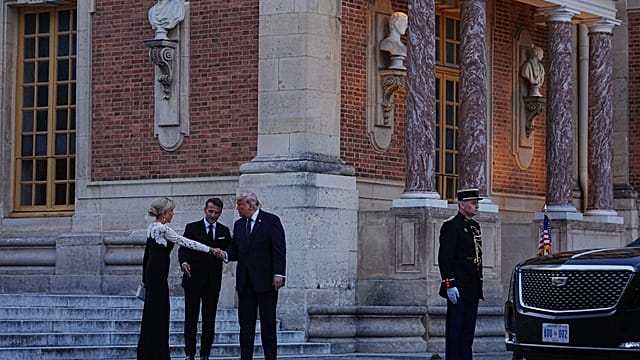
Trump welcomed to Versailles for dinner with Macron
Donald Trump was welcomed to the Palace of Versailles on Wednesday evening for a private reception and dinner hosted by French President Emmanuel Macron following the conclusion of the G7 summit in Evian.
17 Jun 2026
Iran to dilute its enriched uranium under accord with US to end Mideast war
The United States and Iran on Wednesday released the text of their agreement to end the Middle East war, with Tehran committing to dilute its enriched uranium while being allowed to resume oil sales. Washington commits to waive some sanctions and to facilitate the release of a $300 billion reconstruction fund for Iran supported by regional nations when a final agreement is reached on the Islamic republic's nuclear program, according to the text.
17 Jun 2026
Trump, Iran's president sign deal to end Mideast war
US President Donald Trump and Iran's president signed a deal Wednesday meant to end the Middle East war, with Tehran agreeing to dilute its enriched uranium in return for large-scale economic relief. Trump put his signature to the memorandum of understanding during dinner with French President Emmanuel Macron at the Palace of Versailles following a G7 summit, a US official told AFP. Iranian Foreign Ministry spokesman Esmaeil Baqaei, quoted by the state news agency IRNA, said the document "was finalized with the signatures of the presidents."
17 Jun 2026
Israeli settlers torch two West Bank mosques, Palestinian officials say
Israeli settlers torch two West Bank mosques, Palestinian officials say Israeli settlers set fire to mosques in two villages in the occupied West Bank on Wednesday, their mayors said, with AFP journalists at one site seeing scorched walls and graffiti. The incidents come during a period of increased attacks against Palestinian communities by settlers in the Israeli-occupied West Bank since the start of the Gaza war in 2023. Osama Abdullah, head of the village council in Jiljiliya, north of Ramallah, told AFP that "settlers set fire to the ablution room, caused damage to the village's main mosque, and scrawled hostile slogans on the outer walls". The ceiling, walls and floors were blackened by smoke and flames. Graffiti had also been daubed on the walls in Hebrew. Some read "vengeance" and "Hi, from the Hilltop Youth".
17 Jun 2026

US used Musk’s Grok AI to deploy 2,000 munitions during Iran war
US used Musk’s Grok AI to deploy 2,000 munitions during Iran war Submitted by MEE staff on Wed, 06/17/2026 - 21:33 A Trump administration official reveals in written testimony the US used the trillionaire's AI during the Iran war to strike 2,000 targets Photograph shows screens displaying the logo of Grok, a generative artificial intelligence chatbot developed by xAI, an American company specialising in artificial intelligence, and its founder, South African businessman Elon Musk, on 13 January 2025 in Toulouse, France (Lionel Bonaventure/AFP) Off US forces employed Elon Musk’s Grok AI to strike over 2,000 targets in 96 hours during the joint US - Israel war on Iran , according to a written declaration from the US Department of Defense’s digital and artificial intelligence chief, Cameron Stanley. The details of the department’s use of AI were revealed in the submission to the United States District Court, Northern District of Mississippi, where Musk’s xAI is facing a lawsuit from the National Association for the Advancement of Colored People’s (NAACP), which contends the company is illegally running natural gas turbines. Grok was developed by xAI. Stanley’s declaration supported the Trump administration’s intervention in the civil case, which is helping Musk’s company fight it. Stanley said that the government uses the Grok Gov Model, which relies on “derivatives” of xAI’s commercial offerings, and it is deployed within the Maven Smart Systems (MSS) to “support vital national security missions, including targeting, intelligence, readiness, and recruitment”. In the declaration, Stanley said that “MSS workflows” enabled US forces to deploy 2,000 munitions in just 96 hours during Operation Epic Fury. The testimony does not provide specific dates of when the technology was deployed and whether it coincides with 28 February, the first day of the war, when the US struck a school killing 156 civilians, including 120 school children. Stanley has been the Pentagon’s CDAO since 7 January 2026, and writes that it is his responsibility to lead the “acceleration of DoW’s (Department of War) adoption of data, analytics and artificial intelligence (AI) to generate decision advantage for the Warfighter”. He previously served as lead for Amazon’s web services as well as held other posts within the defence department. Stanley characterised the use of GrokAI as “a testament to the greatly increased operational efficiency made possible by the Grok Gov Model”. Nearly 3,500 people have been killed by US-Israeli attacks on Iran since 28 February, according to Iran’s Foundation of Martyrs and Veterans. Stanley’s sworn testimony marks the first time the Trump administration has directly admitted to using Musk’s AI during the Iran war. 'Keep pace with adversaries' On 26 April 2026, the NAACP sued xAI and its subsidiary, MZX Tech, for unlawfully operating 27 methane gas turbines in Southaven, Mississippi, to power its Colossus 2 data centre in South Memphis, Tennessee. Methane gas turbines are known to produce toxic pollutants, including nitrogen oxides, critical to ozone pollution. They can induce asthma attacks, chest pain, and, over a long duration of exposure, decrease lung function and cause premature death. The NAACP’s lawsuit demands the court rule that xAI violated the Clean Air Act and order it to stop operating unpermitted turbines at its Southaven facility. Rights groups call for a halt of AI tech use in the military Read More » It also seeks to order xAI to install the best available control technology at the power plant and to assess financial penalties against xAI for each day it violated federal law. In a press release on the lawsuit, they stressed that Black communities in the Gulf South are forced to bear the toxic brunt of "innovation". xAI utilises the Colossus 2 supercomputer to train and upgrade Grok models, including the Grok Gov Model, which the Pentagon uses to support targeting, intelligence, readiness, and recruitment. In his court submission, Stanley asserted that if Colossus 2 is shut down because it cannot depend on power from the Stanton Road site in Southaven, the Pentagon’s ability to meet its national security mission and “keep pace with adversaries” would be impaired. In the event of an armed conflict or other exigent circumstances, Stanley said, “there is a significant likelihood of an immediate and substantial escalation in AI interference demands for Grok Gov Models”. Colossus 2 is considered well-positioned to provide critical surge capacity needed to sustain security operations in crisis. Stanley frames the US fielding its data facilities as equally foundational to its defence posture as munitions production. “In the modern theater of operations, data center interference capacity must be recognized not merely as commercial infrastructure, but as a long-term strategic tool vital to maintaining our technological advantage against adversaries.” The US Department of Justice has urged the judge in Mississippi to dismiss the NAACP’s suit, citing national security. “The Department of Justice will not sit idly by while private organizations use environmental laws to undermine our national security,” said Principal Deputy Assistant Attorney General Adam Gustafson of the Environment and Natural Resources Division. War on Iran News Post Date Override 0 Update Date Mon, 05/04/2020 - 21:19 Update Date Override 0
17 Jun 2026

Trump thanks China's Xi, Russia's Putin for being 'neutral' in Iran war
Trump thanks China's Xi, Russia's Putin for being 'neutral' in Iran war US President Donald Trump on Wednesday described Chinese President Xi Jinping and Russian President Vladimir Putin as "neutral" during the war with Iran, saying they had not thwarted his efforts to curb Tehran's nuclear ambitions. "I just want to thank them because they made it a lot better," Trump said following the adoption of a ceasefire agreement. Speaking at a press conference at the Group of Seven conference in Evian-les-Bains, France, Trump told reporters he was grateful to the leaders for staying out of the conflict. "I want to thank China, President Xi. I was with him, and he stayed neutral, totally neutral, and I appreciate it," Trump said. "And I want to thank Vladimir Putin, he was very neutral. They could have made it much more difficult for us." US President Donald Trump and China’s President Xi Jinping visit Zhongnanhai Garden in Beijing on 15 May 2026 (Evan Vucci / AFP)
17 Jun 2026
Iran and US to end fighting and maritime blockades in the Gulf area per MoU, Iran's official news agency says
DUBAI, June 17 (Reuters) - Iran and the United States will end fighting on all fronts, per MoU details published by Iran's official IRNA news agency on Wednesday, adding both countries to end naval blockades in the region. Iran's official news agency released details of the deal planned to be signed on Friday, shortly after a U.S. official released a copy of the text.
17 Jun 2026
Tehran says considering plan for Iran, US presidents to sign deal
Tehran says considering plan for Iran, US presidents to sign deal Tehran's foreign ministry on Wednesday said it was considering a plan for the presidents of the US and Iran to sign the deal ending the war, ahead of an expected ceremony in Switzerland. "So far, our plans for the Geneva meeting have not changed," ministry spokesman Esmaeil Baqaei said. "Regarding the signing of the memorandum of understanding, one idea is that it be done by the presidents of the two countries, which is currently under review." If the presidents were to sign the document, he added, "in principle it would be done remotely." Tehran has previously said the United States and Iran would be represented at the meeting in Switzerland by Vice President JD Vance and parliament speaker and top negotiator Mohammad Bagher Ghalibaf, respectively.
17 Jun 2026
Ex-OPEC president Diezani Alison-Madueke cleared of bribery in UK trial
The first woman president of OPEC and Nigeria's former oil minister, Diezani Alison-Madueke, was cleared of bribery charges in a UK trial Wednesday, her defence lawyers said in a statement
17 Jun 2026
Iran and US to end fighting and maritime blockades in the Gulf area, report says
Iran and US to end fighting and maritime blockades in the Gulf area, report says Iran and the United States will end fighting on all fronts, per MoU details published by Iran's official IRNA news agency on Wednesday, adding both countries to end naval blockades in the region. Iran's official news agency released details of the deal planned to be signed on Friday, shortly after a US official released a copy of the text. Details published by IRNA included US commitments to grant Iran access to its frozen funds and end the blockade on its ships and ports while Iran commits to facilitate the return of marine traffic in the Gulf and Gulf of Oman to prewar levels and not to produce or acquire nuclear weapons.
17 Jun 2026

MEE correspondent Mohammed Amin, refused UK visa, wins One World Media Award
MEE correspondent Mohammed Amin, refused UK visa, wins One World Media Award Submitted by MEE staff on Wed, 06/17/2026 - 21:00 Reporter named as Journalist of the Year for his reports on the war in Sudan, including the bloody siege of el-Fasher Middle East Eye correspondent Mohammed Amin delivers his speech after winning the Journalist of the Year category at the One World Media Awards (MEE) Off Mohammed Amin has won One World Media’s prestigious Journalist of the Year award for his reporting as a freelance correspondent for Middle East Eye from Sudan . Amin was unable to attend the London awards ceremony in person on Wednesday night after the Home Office refused to grant him a visa to travel to the UK . Accepting the award by video, the Sudanese journalist said: “One of the discriminatory things the Home Office told me was that I might not leave the country, meaning that I might seek asylum here. “I would like to say here that the Sudanese are not a heavy burden in this world. We are equal partners in humanity.” Amin pointed to the determination of the Sudanese, including how the village of al-Tekeina, from where he reported , defended itself against the Rapid Support Forces (RSF) paramilitary, which has been widely accused of genocide. “It tells us what people can do when they have the will, and what independent media can do,” he said. Amin described Sudan as “a very wounded and traumatised country”, and said that the war was not between the opposing RSF and Sudanese Armed Forces, “but between fascism and the Sudanese people”. He ended by calling for media in the Global South to unite and create news platforms and new ways of telling stories, including funding, “to make it truly independent”. UK bans award winning journalist from entering country The Home Office told Amin that he did not have a genuine reason for coming to the UK and that he would not leave the country afterwards, despite him being sponsored throughout his visit by Middle East Eye and also having an invitation from the award organisers. There is no right of appeal against refusals. ‘I learnt to fire an RPG with YouTube’: How one Sudanese village fought the RSF - and won Read More » Amin lived in the English port city of Plymouth for two years when he was a child. In November 2022, he attended the Rory Peck Awards on London’s South Bank, where he won the Martin Adler Prize for his reporting on Wagner Group massacres in Sudan and the Sudanese coup. On that occasion, Britain's then-Conservative government issued him a visa without hesitation. Applicants from Sudan wishing to enter the UK have faced increased barriers and scrutiny since the outbreak of war in April 2023. In March 2026, the UK’s Labour government introduced a visa brake, preventing any Sudanese student applications from outside the country, as well as for nationals of Afghanistan, Cameroon and Myanmar. Chinwe Kalu-Uma , One World Media's interim director told MEE: “It is deeply disappointing that Mohammed, our Journalist of the Year Award winner, who has at great risk continued to report from inside Sudan so that the world might pay attention, has been denied a visa to travel to London to receive that recognition. “His absence from our stage is itself a story about the barriers Sudanese people face, not only in their own country, but in being seen and heard beyond it.” Other nominees for Journalist of the Year included Ghada Abdulfattah for her reports for the New York Times from Gaza; and Tony Cheng for his coverage of the aftermath of the March 2025 earthquake in Myanmar for Al-Jazeera. Reporting the war in Sudan During the past year, Amin has reported across Sudan on the aftermath of the bloody siege of el-Fasher , how the war has been fuelled by the drug captagon and the targeting of the Kanabi community by all sides in the conflict. His report of how the village of al-Tekeina resisted sustained attacks by the RSF went viral on Sudanese media and was translated by several Arabic sites. The next day, a delegation led by the prime minister of Sudan visited al-Tekeina , the village’s first official visit in more than six decades, and promised to help the reconstruction. Exclusive: Sudan's RSF took blood from civilians trying to flee el-Fasher Read More » In their comments, One World Media's judges said: "Mohammed Amin’s work provides rare, essential insight into a conflict the international community has largely ignored. He centres voices from within his own community to reveal the human reality of the conflict, exposing not only what is happening on the ground but why it matters far beyond Sudan’s borders. "His reporting combines clarity, sensitivity, and political relevance, demonstrating the wider implications of the conflict while remaining rooted in lived experience." David Hearst , co-founder and editor-in-chief of MEE, said: “Mohammed Amin has reported from Sudan with courage, precision and an unwavering commitment to the people whose lives have been shattered by this conflict. “His reporting has documented not only the brutality of the war, but also the resilience of Sudanese civilians. At great personal risk, Mohammed has ensured that Sudan's story reached a global audience. "His work embodies the very best traditions of journalism: bearing witness, holding power to account, and giving voice to those who would otherwise go unheard.” A Home Office spokesperson, asked why Amin had been refused a visa, told MEE: “We carefully consider each case on its individual merits and in line with published policies. “It is longstanding government policy that we do not comment on individual cases.” Sudan war News Post Date Override 0 Update Date Mon, 05/04/2020 - 21:19 Update Date Override 0
17 Jun 2026

Trump justifies Iran deal as a way to prevent 'economic catastrophe'
Trump justifies Iran deal as a way to prevent 'economic catastrophe' President Donald Trump on Wednesday threatened to “bomb the hell” out of Iran if it does not abide by a memorandum of understanding (MOU) with the US , adding he was concerned the war could spark an “economic catastrophe” dooming his presidency. "The one president I did not want to be was the late, great, Herbert Hoover,” Trump said, noting that the stock market rose when he said he was considering ending the war and went down “very big” when he mulled continuing the conflict. "The stock market is more brilliant than anybody there is, including the people on this stage, other than me, of course,” Trump said, flanked by senior US officials including Secretary of State Marco Rubio, Secretary of Commerce Howard Lutnick and Treasury Secretary Scott Bessent. Hoover was the Republican president who entered office in 1929, just before the onset of the Great Depression. Historians and economists say his landmark tariff bill exacerbated the years-long economic downturn. Read more: Trump justifies Iran deal as a way to prevent 'economic catastrophe' US President Donald Trump gestures as he boards Air Force One at Geneva Airport after attending the G7 Summit in France, on 17 June 2026 (Martial Trezzini/Pool/AFP)
17 Jun 2026
Trump: unfair for Iran to lack ballistic missiles if other countries have them
PARIS, June 17 (Reuters) - U.S. President Donald Trump said on Wednesday that it would be unfair for Iran not to have ballistic missiles if other countries have them. "I'm saying that if other countries have them, it's a little bit unfair for them not to have some," Trump told reporters in Paris. "If Saudi Arabia and Qatar, and they all have some, I would say in relative proportion, I think it's okay."
17 Jun 2026

Trump justifies Iran deal as a way to prevent 'economic catastrophe'
Trump justifies Iran deal as a way to prevent 'economic catastrophe' Submitted by Sean Mathews on Wed, 06/17/2026 - 19:26 US president suggests Iran will need to keep its ballistic missiles to match its neighbour's arsenals and says US will have to return frozen funds sooner or later US President Donald Trump gestures as he boards Air Force One at Geneva Airport after attending the G7 Summit in France, on 17 June 2026 (Martial Trezzini/Pool/AFP) Off President Donald Trump on Wednesday threatened to “bomb the hell” out of Iran if it does not abide by a memorandum of understanding (MOU) with the US , adding he was concerned the war could spark an “economic catastrophe” dooming his presidency. "The one president I did not want to be was the late, great, Herbert Hoover,” Trump said, noting that the stock market rose when he said he was considering ending the war and went down “very big” when he mulled continuing the conflict. "The stock market is more brilliant than anybody there is, including the people on this stage, other than me, of course,” Trump said, flanked by senior US officials including Secretary of State Marco Rubio, Secretary of Commerce Howard Lutnick and Treasury Secretary Scott Bessent. Hoover was the Republican president who entered office in 1929, just before the onset of the Great Depression. Historians and economists say his landmark tariff bill exacerbated the years-long economic downturn. “I didn’t want to see an economic catastrophe,” Trump said at a rambling press conference on the sidelines of the G-7 Summit in Evian, France. Trump’s remarks would appear to confirm that Iran’s blockade of the Strait of Hormuz was inflicting enough economic damage that his administration was jolted into a 60-day ceasefire extension it announced on Sunday. The White House says it will lead to a permanent end to the war through subsequent negotiations. According to a briefing by officials in Washington, the Strait of Hormuz will remain toll-free for 60 days under the MOU, but its future will be negotiated , leaving the door open to potential fees in the future. "The Islamic Republic of Iran will conduct dialogue with the Sultanate of Oman to define the future administration and maritime services in the Strait of Hormuz, in discussion with other Persian Gulf littoral states in line with the applicable international law," according to the briefing. But Trump also remained dismissive about the MOU's strength. “It's a memorandum of understanding. And if I don't like it, we'll go back to shooting at them, dropping bombs on their head," Trump said. "If I don't like it, if they don't behave, we'll go right back to dropping bombs right smack in the middle of their head, OK?" 'Whoever sells them a nuke will get nuked' But Trump defended the deal which has come under intense criticism from pro- Israel voices in the US, particularly in the Republican Party. He acknowledged aspects of the deal that are only likely to exacerbate criticism among Iran hawks. The MOU, which has been reported by several US media outlets, does not address Iran’s nuclear programme in detail, saying that its fate will be decided by negotiators during the ceasefire extension. Trump also rubbished claims that it was incumbent on the US to obtain Iran's enriched uranium, saying that it was buried deep and only the US and China have the equipment to get it. He added that they have cameras monitoring the sites that they suspect hold the stockpiles. 'From outlier to trailblazer': How Oman offers a glimpse into the post-war Gulf Read More » Trump, who criticised the 2015 nuclear deal with Iran and unilaterally withdrew from it after entering the White House, said his agreement was different because of the threat of military force. He also said that his terms ensured Iran would not be able to purchase a nuclear weapon. “Whoever sells them a nuclear weapon would get nuked themselves,” Trump said. However, the Joint Comprehensive Plan of Action also did not permit Iran to acquire a nuclear weapon. But like the JCPOA, Trump appears to be laying the groundwork for Iran to retain a nuclear programme and potentially enriched uranium. Trump said the US has been “hard” on Iran’s enriched uranium, but that a final deal may leave Tehran space to continue its nuclear programme. "It's a little hard when other people have it, other adjoining states have it, and you're not letting them have it for purposes of electricity and things like that. You have to use a little common sense,” he said. Israel and its allies in Washington have long insisted that Iran must have no enriched uranium and end its nuclear programme. Ballistic missiles, Arab Gulf investment and frozen funds Trump also dismissed concerns about Iran’s ballistic missile arsenal, which he had characterised as a threat to the US to justify the war in its opening days. Israel and its allies in Washington want any deal to end Iran’s ballistic missile programme. “I mean, they [Iran] have to have some, because other people have some. You got to have some,” Trump said. “I like some of these guys, but I…don’t think they’re smart,” Trump said, recalling a conversation with an advisor. “‘Sir. You shouldn’t let them have any missile.’ I said, ‘well, what am I going to do? Am I going to let Saudi Arabia have missiles, but they can’t have them?’ ‘Yes, sir.’” “Doesn’t work that way,” Trump said, adding that he believes the US has destroyed 80 percent of Iran's missile capacity. 'They're not all Hezbollah': Trump criticises Israel killing civilians in Lebanon Read More » Trump reaffirmed that Washington would not prevent Arab Gulf states from investing in Iran if a final deal is reached, although the US would not take part directly. “We’re not putting up money in Iran, but if people want to invest, they can invest,” Trump said. “They need investment…maybe two trillion dollars,” Trump said, referring to the damages caused by US and Israeli strikes. “So, somebody’s going to have to help them out. There’s no guarantee about helping them out. It could be their neighbours will help them out a little bit. I don’t know,” he said. Trump’s remarks are likely to fuel speculation that Gulf states like the UAE, Saudi Arabia, Kuwait, and Qatar are going to cut economic deals with Iran as it cements its control over the Strait of Hormuz. Trump also made it clear that he views Iran’s billions of dollars in frozen assets separately from any investment pledge - a distinction that is likely to anger Iran hawks and Israel but be welcomed by Tehran. "The unfreezing - we have taken a lot of their money. It's not our money. At a certain point in time, I guess we're gonna have to give it back,” Trump said in regard to Iran’s frozen assets. UAE dropping bombs on Iran Trump vacillated between a belligerent tone against Iran - which he said had a “primitive culture” - and praising its leadership, whom he said "love their country”. He also boasted about bombing Iran’s civilian infrastructure and said he was under pressure to continue air strikes. "That was the George Washington bridge of Iran, but we bombed that bridge,” Trump said, referencing a bridge that connects New York and New Jersey over the Hudson River. The US bombed Iran’s Karaj B1 bridge on 1 April. Trump also acknowledged that China and Russia could have tipped the balance of the war into Iran's favour. Middle East Eye previously reported that China armed Iran. Several news outlets reported that Russia and China provided Iran with intelligence support and arms as well. "I just want to thank them because they made it a lot better," Trump said, referring to Russian President Vladimir Putin and Chinese President Xi Jinping. "I want to thank China, President Xi. I was with him, and he stayed neutral, totally neutral, and I appreciate it," Trump said. "And I want to thank Vladimir Putin; he was very neutral. They could have made it much more difficult for us." Trump also confirmed that the UAE took a muscular approach during the fighting by participating in offensive strikes. Trump said he was surprised by the level of UAE attacks on Iran. "He was dropping bombs last week, I said, 'who the hell's dropping all those bombs?' It was the UAE. He's a good fighter," Trump said, referring to UAE President Mohamed bin Zayed. War on Iran News Post Date Override 0 Update Date Mon, 05/04/2020 - 21:19 Update Date Override 0
17 Jun 2026

EU lawmakers approve deportation hubs for migrants
European lawmakers gave final approval Wednesday to tougher migration rules that will grant authorities much broader detention powers and allow for the creation of deportation centres outside the bloc
17 Jun 2026
Explainer-What challenges could stand in the way of a final US-Iran deal?
By Matt Spetalnick WASHINGTON, June 17 (Reuters) - When U.S. and Iranian negotiators sit down in Switzerland on Friday after nearly four months of war, the stakes couldn’t be higher as they face an array of hurdles that could derail efforts to reach a comprehensive peace agreement. While a breakthrough cannot be ruled out, most analysts are skeptical the two sides can forge a final settlement within the 60-day window laid out in a “memorandum of understanding” that President Donald Trump and Iranian leaders approved this week.
17 Jun 2026
How Iran stands to win major financial relief in Trump-backed deal
Iran will receive some upfront sanctions relief despite the Trump administration's pledge of “no dust, no dollars.”
17 Jun 2026
US military to stay in Gulf region 'for a while', Trump says
US military to stay in Gulf region 'for a while', Trump says US President Donald Trump said on Wednesday the United States will leave its military in the Gulf "for a while" after Washington struck a deal with Tehran to end the nearly four-month war in the region. While speaking to reporters in Paris, Trump added that if other countries have ballistic missiles, it is "a little bit unfair" for Iran to have none.
17 Jun 2026
US-Iran memorandum sets Hormuz reopening, $300 billion reconstruction and sanctions relief
The United States government on Wednesday released the official text of the agreement reached with Iran to end the war, a 14-point document called the "Islamabad Memorandum of Understanding" that provides for the reopening of the Strait of Hormuz, a reconstruction plan of at least $300 billion and the lifting of sanctions. The text, read by a senior official of Donald Trump's administration, will be signed on Friday in Switzerland and will open a 60-day period to negotiate the definitive agreement.
17 Jun 2026

La polémica en Colombia por la detención en EE.UU. del activista Beto Coral, seguidor del presidente Petro
El arresto del activista, conocido por alinearse con la izquierda colombiana, ha causado alarma a pocos días de la segunda vuelta de las presidenciales en su país.
17 Jun 2026
La polémica en Colombia por la detención en EE.UU. del activista Beto Coral, seguidor del presidente Petro
El arresto del activista, conocido por alinearse con la izquierda colombiana, ha causado alarma a pocos días de la segunda vuelta de las presidenciales en su país.
17 Jun 2026

Bolivia's blockade crisis leaves at least 16 dead as the government calls unions to talks
The crisis caused by more than seven weeks of road blockades in Bolivia, driven by sectors demanding the resignation of President Rodrigo Paz, has left at least 16 people dead, as the government called the Bolivian Workers' Center (COB) on Wednesday to a dialogue to seek a way out. By midday, the country's largest union confederation had not confirmed its attendance.
17 Jun 2026
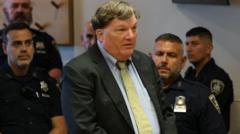
"Llévenselo de aquí": condenan a cadena perpetua al asesino en serie que mató a 8 mujeres y atemorizó Nueva York
El juez sentenció a Rex Heuermann, conocido como el asesino de la playa Gilgo, a tres cadenas perpetuas más entre 25 años y cadena perpetua por otros cuatro cargos y todas las condenas se cumplirán de forma consecutiva.
17 Jun 2026
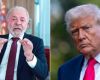
Trump calls Brazil 'politically difficult'; Lula says he should learn about 'civilized elections'
Brazilian President Luiz Inácio Lula da Silva on Wednesday asked his US counterpart, Donald Trump, not to interfere in Brazil's elections, a matter he stressed is exclusive to Brazil, just as his country does not seek to meddle in the electoral processes of the United States. The demand was a response to remarks Trump had made about Brazil hours earlier.
17 Jun 2026
Senate bill adds restrictions on US effort to train Lebanon army: What to know
Lawmakers want to know the number of Lebanese special forces recruits, their equipment and religious background as part of a planned $36 million DOD train-and-equip project aimed at dismantling Hezbollah.
17 Jun 2026

South Africa secures $1bn from BRICS bank for urban infrastructure
The funds will support investment in the provision of essential urban services, including water supply and sanitation, electricity and solid waste management in eight South African municipalities
17 Jun 2026
Trump suggests sanctions on Iran could be removed once 'they behave'
EVIAN-LES-BAINS, France, June 17 (Reuters) - U.S. President Donald Trump on Wednesday suggested that sanctions on Iran would be removed once "they behave." "As far as sanctions are concerned, at some point, you know, we have sanctions which will never let them rebuild. They would have no money, they would be in poverty, the 91 million people would starve, so something will happen as soon as they behave. When they behave, we're going to let that go. We're going to have to. I put sanctions on a lot of people, and then I let them go," Trump told reporters.
17 Jun 2026
Trump thanks China's Xi, Russia's Putin for being 'neutral' in Iran war
By Steve Holland and Trevor Hunnicutt EVIAN-LES-BAINS, France, June 17 (Reuters) - U.S. President Donald Trump on Wednesday described Chinese President Xi Jinping and Russian President Vladimir Putin as "neutral" during the war with Iran, saying they had notthwarted his efforts to curbTehran's nuclear ambitions. "I just want to thank them because they made it a lot better," Trump said following the adoption of a ceasefire agreement in the conflict.
17 Jun 2026
Hezbollah chief says Lebanon at 'pivotal' moment after US-Iran deal
Hezbollah chief Naim Qassem on Wednesday urged Lebanese authorities to take advantage of a "pivotal" moment following a US-Iran deal to end the Middle East war, ahead of Israeli-Lebanese negotiations next week. American and Iranian officials, as well as mediator Pakistan, have said the deal includes Lebanon, where Israel and Hezbollah have been at war since March 2. Lebanese President Joseph Aoun instead insisted his country's negotiations with Israel in Washington were independent of the regional deal.
17 Jun 2026
Oil’s slide wavers as Trump warns US-Iran deal ‘not final’
Brent crude prices briefly jumped back above $80 per barrel on Wednesday as traders digested conflicting signals about efforts to end the war and reopen Hormuz.
17 Jun 2026

Analysis: Turkey emerges unscathed from the Iran war
Analysis: Turkey emerges unscathed from the Iran war When US President Donald Trump ordered strikes on Iran in late February, Turkish officials found themselves sidelined. Their repeated attempts to prevent the war proved unsuccessful, and the mood in Ankara was that Trump preferred the counsel of Israeli Prime Minister Benjamin Netanyahu over that of Turkish leaders. Three months later, however, Trump once again counted Turkey, alongside Pakistan and Qatar , among the countries that had significantly helped secure a memorandum of understanding with Iran. He also adopted an increasingly combative tone towards Israel. On Sunday, Tehran and Washington reached an agreement that would extend a fragile ceasefire between the two sides for 60 days and reopen the Strait of Hormuz, which Iran blocked when the US and Israel launched the war. Turkish officials, speaking to Middle East Eye this week, cautioned that the memorandum of understanding was only a first step toward resolving the US-Iran dispute and would do little more than ease pressure on the Strait of Hormuz. Read more: Analysis: Turkey emerges unscathed from the Iran war "Turks are now experts on turning regional crisis into opportunities for themselves," a European diplomat said (AFP)
17 Jun 2026
Angola: ISPTEC Students Win Cmc Scientific Competition's 5th Edition
[ANGOP] Ramiros -- Students from the Higher Polytechnic Institute of Technology and Sciences (ISPTEC) won, on Monday (15) in Luanda, the 5th Edition of the national scientific competition called "CMC and Universities (CMC &U - 2025)".
17 Jun 2026
Uganda: Equity Bank Steps in to Help Schools Survive
[Independent (Kampala)] Kampala, Uganda -- As schools across Uganda reopened last month for a new term, excitement returned to classrooms, playgrounds and staffrooms. Yet behind the scenes, school administrators and parents are confronting a familiar challenge: financing education at the start of the academic term.
17 Jun 2026
Trump suggests sanctions on Iran could be removed once 'they behave'
Trump suggests sanctions on Iran could be removed once 'they behave' US President Donald Trump on Wednesday suggested that sanctions on Iran would be removed once "they behave." "As far as sanctions are concerned, at some point, you know, we have sanctions which will never let them rebuild. They would have no money, they would be in poverty, the 91 million people would starve, so something will happen as soon as they behave. When they behave, we're going to let that go. We're going to have to. I put sanctions on a lot of people, and then I let them go," Trump told reporters. He also suggested that frozen funds could be returned. "We have taken their money, it's not our money, it's their money, and we froze it. At a certain point in time I guess we're going to have to give it back," Trump said. "If we didn't give it back, nobody would ever invest in the dollar again."
17 Jun 2026
US official says parties can still walk away from Iran deal, sequencing will be key
WASHINGTON, June 17 (Reuters) - Both Iran and the U.S. can walk away from the memorandum of understanding they are set to sign on Friday, and upcoming talks are likely to focus on the precise sequencing of the steps previewed in the preliminary accord, a senior U.S. official told reporters on Wednesday. Speaking on condition of anonymity, the official read out the 14-point memorandum that is due to be formally signed in Switzerland. They said the upcoming meeting there will be "critical" for ensuring that the memorandum of understanding can evolve into a comprehensive agreement.
17 Jun 2026
UK says three-quarters of cyberattacks on critical systems are linked to hostile states
LONDON, June 17 (Reuters) - Three-quarters of cyberattacks targeting Britain's critical infrastructure can be linked to hostile state actors, the head of the National Cyber Security Centre, Richard Horne, said in a speech on Wednesday. • Horne said that in the year to May 2026 the NCSC had dealt with 200 incidents involving critical infrastructure and supporting systems. • He warned that hostile states, such as Russia, China and Iran, were increasingly targeting the systems that underpin essential services.
17 Jun 2026
Trump says 'nobody' attacked Iran girls' school 'on purpose'
EVIAN-LES-BAINS, France, June 17 (Reuters) - U.S. President Donald Trump said on Wednesday that "nobody" purposefully attacked a girls' school in Iran in February, citing an investigation into the incident. Reuters first reported that an initial internal U.S. military investigation showed U.S. forces were likely responsible for the fatal strike in Minab in southern Iran. The Pentagon has since elevated the probe but it has not acknowledged any preliminary findings.
17 Jun 2026
Estos son los puntos clave del acuerdo alcanzado entre EE.UU. e Irán para poner fin a la guerra y reabrir el estrecho de Ormuz
El memorando de entendimiento de 14 párrafos debe ser firmado por ambos países el viernes en Suiza.
17 Jun 2026
Turkey captures alleged ISIS-K media chief near Afghanistan-Pakistan border
The capture comes as Turkish authorities intensify raids against Islamic State networks following recent attacks and alleged plots.
17 Jun 2026
Ghana: GES Interdicts Bole Shs Teacher Over Alleged Sexual Misconduct With Student
[Ghanaian Times] The Ghana Education Service (GES) has interdicted a teacher of Bole Senior High School in the Savannah Region over an alleged sexual relationship with a student.
17 Jun 2026
Ghana: CSA Urges Universities to Strengthen Cybersecurity Following University of Nottingham Cyber-Attack
[Ghanaian Times] The Cyber Security Authority (CSA) has cautioned universities and other operators of Critical Information Infrastructure (CII) in Ghana to comply with cybersecurity regulations following a recent cyber-attack on the University of Nottingham in the United Kingdom.
17 Jun 2026
Hezbollah chief hails Iran's 'great victory' after deal with US
Hezbollah chief hails Iran's 'great victory' after deal with US Hezbollah chief Naim Qassem on Wednesday hailed an understanding reached between Tehran and Washington as a "great victory", calling it a "pivotal point" for Lebanon. Although the US-Iran deal has not been officially released, American and Iranian officials, as well as mediator Pakistan, have said it includes Lebanon. "We congratulate the Iranian people, the resistance and the countries and peoples of the region and the world who yearn for independence and freedom on this great victory," Qassem said in a televised address. He expressed thanks to Iran for "linking the Lebanese arena" to the deal and "forcing Israel to stop its aggression" on the country.
17 Jun 2026
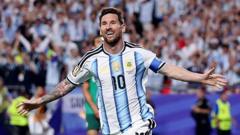
Los récords que Leo Messi logró en su debut en el Mundial 2026 (y otros con los que ha dejado su huella en la historia de la Copa del Mundo)
Repasamos las astronómicas marcas que el futbolista argentino ha logrado en sus seis participaciones mundialistas.
17 Jun 2026
Trump says Netanyahu could use 'softer touch' in Lebanon
EVIAN-LES-BAINS, France, June 17 (Reuters) - U.S. President Donald Trump said on Wednesday that Israeli Prime Minister Benjamin Netanyahu could use a "softer touch" in Lebanon in comments made at the close of a G7 summit in France. Netanyahu and Trump have repeatedly clashed over Israel's refusal to constrain its pursuit of Iran-backed Hezbollah in Lebanon, where a cessation of hostilities is a key Iranian demand. "Netanyahu happens to be a good man, gets a little excited sometimes," Trump told reporters on Wednesday.
17 Jun 2026
Trump says Iran accord to be signed 'shortly', 'maybe' Thursday or Friday
US President Donald Trump on Wednesday said he expected the accord with Iran ending the Middle East war to be signed "shortly" but added uncertainty over the exact date. "The deal we reached with Iran on Sunday will be signed shortly, tomorrow (Thursday), maybe the next day (Friday)," Trump said at the G7 summit, after previous announcements that it would be signed Friday in Switzerland. "We are going to most likely sign a deal," he added.
17 Jun 2026