skipToContent
All countries
Country

Ireland

1,067 stories

TheJournal.ie

Motorcyclist seriously injured in crash with van in Ballymena

The collision occurred between the van and motorbike at around 12.20pm on the Lisnevenagh Road in Ballymena, Co Antrim.

10 May 2026

TheJournal.ie

Some National Ambulance Service workers to begin industrial action tomorrow

Members of the trade unions Unite and Siptu working at the NAS have agreed to industrial action and strike action over failue to implement recommendations on pay.

10 May 2026

TheJournal.ie

Legislation to scrap Dublin Airport passenger cap to go to Cabinet this month

A spokesperson for Darragh O’Brien said enacting the legislation “will be completed this year”.

10 May 2026

Irish Times News

Public asked to avoid area after large fire in Waterford city

The fire at the old Jute factory at Tycor in Waterford city. Photograph: Waterford City and County Council

10 May 2026

Irish Times News

Irish Liverpool fan injured in Rome attack presents thank-you GAA jersey to Mo Salah

Seán Cox presents Mohamed Salah with the custom Dunboyne GAA jersey ahead of Liverpool's fixture on Saturday. Photograph: St Peter's Dunboyne

10 May 2026

TheJournal.ie

Israeli strikes on Lebanon kill at least 17 people amid ceasefire

The Health Ministry said an Israeli airstrike on the southern village of Saksakiyeh killed at least seven, including a child, and wounded 15.

10 May 2026

TheJournal.ie

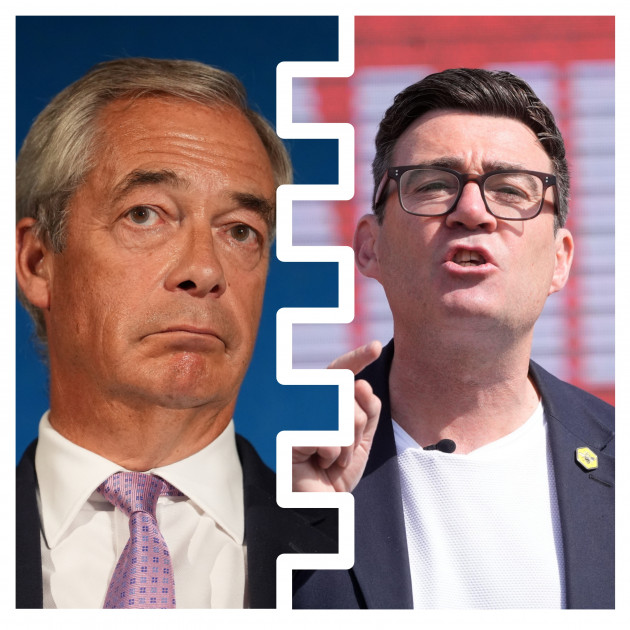
Challenge Starmer's leadership by Monday or I'll do it myself, Labour MP tells colleagues

Catherine West claimed to have the backing of 10 MPs for her initiative, well short of the 81 needed to mount a challenge.

10 May 2026

TheJournal.ie

Sitdown Sunday: A cheapskate's guide to Dublin on a budget

Settle down in a comfy chair with some of the week’s best longreads.

10 May 2026

TheJournal.ie

The 9 at 9: Sunday

Hantavirus-struck ship arrives in Tenerife, MP threatens to launch leadership bid against Starmer and fire in Waterford.

10 May 2026

TheJournal.ie

Fire services battle major blaze at industrial estate in Waterford city

The fire broke out at around 6.30pm yesterday.

10 May 2026

TheJournal.ie

An OnlyFans stunt and the Epstein files came to snooker's Mecca via online attention-seekers

Our FactCheck editor details the internet trends seen by a thirtysomething-year-old man.

10 May 2026

TheJournal.ie

Life with a stoma: My worst nightmare became a reality, but this has given me my life back

Lydia O’Connell has experienced the worst of what Crohn’s and other illnesses have thrown at her, but she’s now learning to thrive again, thanks to medical help.

10 May 2026

TheJournal.ie

Hantavirus-hit cruise ship arrives in Tenerife with passengers set to be repatriated

Two Irish people will be taken to an HSE facility when they arrive home and quarantine “for a period of time”, the Department of Health said.

10 May 2026

TheJournal.ie

Why the share price at Ireland’s biggest gambling company has crashed by over 60%

The stock price for Flutter, the firm behind Paddy Power, is currently tanking, and is down to a third of the price that it was at less than a year ago.

10 May 2026

Irish Times News

Mother in refuge with children gets order protecting them from their father

A woman said she was never able to ask questions of her children's father 'without being shouted and screamed at' and is in fear for herself and the children, she told the emergency domestic violence court at Dolphin House in Dublin. Photograph: Stephen Collins/Collins

10 May 2026

Irish Times News

As fuel prices soar, some Dublin homeowners cannot get their EVs hooked up to the grid

An electric vehicle charging arm in the front garden of a Dublin suburban home. Photograph: Bryan O’Brien

10 May 2026

Irish Times News

Back to Britain for Dublin City Council with .co.uk website for ‘digital governance’

'Overheard’s research suggests that Dublin became independent from the UK along with 25 other counties in 1922 after a period of guerrilla warfare. It’s a matter of some sensitivity and strong feeling.' Photograph: Alan Betson/The Irish Times

10 May 2026

Irish Times News

Man who restored Ross Castle from ruin leaves estate worth €1.75m

George McLaughlin and his wife Elizabeth acquired Ross Castle in 1985 when there was no roof or floors and spent the following decades involved in extensive restoration works.

10 May 2026

TheJournal.ie

'We need clear rules': Couple charged over €1k in monthly service fees for Galway flat

A case that saw tenants charged close to €14,000 in one year for added-on service charges has been highlighted by renter groups.

9 May 2026

TheJournal.ie

How well do you remember these May songs?

Yesterday was Motörhead Day.

9 May 2026

TheJournal.ie

Jeremy Doku inspires Manchester City again in win over Brentford

The title challengers toiled for an hour before Doku’s brilliant curler sparked a 3-0 victory.

9 May 2026

TheJournal.ie

'Another slap in the face of workers': Four winners and two losers from the political week

Government candidate frontrunner, UK politicians riding high and low and another bike shed.

9 May 2026

TheJournal.ie

Oliver Bond resident fears new plan for complex risks repeating mistakes of the past

The decision to scrap the long-awaited plans came as a shock this week.

9 May 2026

TheJournal.ie

Here's What Happened Today: Saturday

The most important Irish and international stories you need to know today.

9 May 2026

TheJournal.ie

LIVE: Connacht v Munster, URC

Follow all the live updates as Stuart Lancaster’s side host Munster in Galway.

9 May 2026

University Times Ireland

The Kilkenny Lad Russia Wants to Arrest: Caolan Robertson Is Still in Kyiv

Caolan Robertson is from Kilkenny. He has over 1.3 million subscribers across YouTube, Instagram, and other platforms, an Honorary Digital Ambassador award presented to him by Ukraine’s First Lady Olena Zelenska, a documentary on Apple TV, and an international arrest warrant issued against him by the Russian government. He got married in Kyiv last November – to a man, in a city under missile fire – and he has no plans to leave. You have probably not heard of him. Feels like almost nobody in Ireland has. That gap between what Robertson has done and how little it has been covered here is, in itself, a story worth telling. This piece is an attempt to tell it. Full interview with Caolan and Ukrainian journalist Marichka Padalko: “ Why this Irish Journalist Never Left Ukraine ” But the story begins earlier – at the Polish border in the first days of February 2022, where his editor at Byline TV had sent him when he was refused permission to enter Ukraine. Robertson stood and watched hundreds of thousands of women and children pouring across the border with their suitcases, from Mariupol, Kharkiv, Odesa – every city in Ukraine – with no idea what would come next. Robertson admits, without embarrassment, that he did not know where Ukraine was on a map well into his adult life. Growing up in Ireland, Ukraine was not part of the curriculum: history class meant Irish history, and the little that was taught about the Second World War meant Britain, France, and Germany. Ukraine did not appear. When the Russian aggression began in 2014, he heard about it, but through the fog of Russian propaganda, which framed it as a “family dispute between peoples”, who were “essentially the same”. He believed it because he had nothing to contradict it with. This is not a confession unique to him. It is, he suggests, a structural failure with consequences: a generation of people across Ireland witnessed in February 2022, with almost no context for what they were watching. The speed with which Russian narratives filled that vacuum was predictable: countries that do not teach their children the history of their neighbours leave them defenceless against those who will invent that history for them. Robertson grew up in rural Ireland, hearing his grandmother’s stories. She once showed him a photo of herself in her communion dress, standing on a Dublin street. Behind her, the buildings had been damaged by German bombs; the Luftwaffe had mistaken Dublin for Liverpool. Robertson grew up knowing that catastrophe is not always somewhere else, that Europe forgets this at its peril. North Strand on the morning after the German bombing of Dublin on the night of 31 May 1941. Photo from Independent Newspapers Ireland/NLI collection, via Pam Lecky. Standing at that border in 2022, he recognised what he was seeing. “I didn’t think it was possible for fascism to come back to this continent,” he said. “And instead of speaking German, it was speaking Russian”. He started interviewing refugees. While other journalists asked “What do you think of Putin?”, Robertson asked something different: “Describe your life a week ago”. One young woman said she had been living in Podil, a hipster part of Kyiv – she used to have wine on Friday nights, and worked in the media. “And now I don’t know who I am. I feel like a refugee.” The interview got millions of views. People across the world watched and thought, “That could be me.” The woman was later offered a job at Deutsche Welle. Robertson never made it back to his normal life in London. Ukrainian refugees, women and children, fleeing Ukraine in 2022. Photo by Aurel Obreja for AP Photo Eleven months later, he came to Kyiv for three days. He expected destruction and despair. Instead, he found women selling flowers in front of sandbags and people holding hands in the street. He asked them on camera why they were still celebrating love at a time like this. “Because love is victory,” they said. “This is our power. This is what we’re fighting for. We’re not just fighting for land – we’re fighting for our brothers and sisters, for the right to love, for the right to determine our own destiny.” He found a city that was, in some sense, a struggle for him to describe, more alive than anywhere he had lived before: the trains ran on time, the healthcare worked, and at five in the morning, the flower shops were open. He stayed. What followed is a remarkable body of work that has, largely without institutional support, shaped how hundreds of thousands of English-speaking people understand this war. He went to Kherson alone – no press jacket and no armour, with just five dollars for a bus ticket – after hearing that Russian forces had begun hunting civilians with drones and posting the videos online. In Kherson, a drone followed him down a street, and he ran into a café. When Robertson published the documentary – opening with the line “There is a city in Europe where civilians are being hit with drones intentionally, and the perpetrators are posting the videos” – it got two million views in a day. The Washington Post, the Wall Street Journal, and the BBC all dispatched teams to Kherson two weeks later to cover the same story. The documentary Hunted in Kherson, reported by Caolan Robertson for Journeyman Pictures: “ Russian drones have adopted a new terrifying strategy | Hunted In Kherson “ Then he headed east – to the outskirts of Bakhmut, to Chasiv Yar, to Kostiantynivka – to film what he had heard about: white phosphorus falling on civilian areas. Robertson and his team documented it every night, sending samples and cartridges back to London for analysis, to prove that what Russia was doing was not collateral damage. It was deliberate. He heard about the mines and booby traps left behind in Izyum and across the occupied territories, and volunteers were warned not to touch animals on the sides of roads, cats or dogs, because Russian forces had been sewing explosives inside them to kill rescue workers who simply wanted to save an animal. “This is a level of evil that is hard to comprehend,” Robertson said. “It is not a military strategy. It is not about land or even propaganda. It is something much darker – to destroy everything alive, to destroy freedom itself.” That realisation never left him. He went undercover into Sudzha in Kursk, during the Ukrainian incursion in 2024, in a van, when North Korean troops had just arrived to support the Russians. There he filmed children cycling in the streets and houses intact. When Russia later claimed Ukrainians had tortured civilians, Robertson’s footage was the direct counter-evidence. Russia placed him on a wanted list, so now he cannot enter approximately forty countries. Last year, Robertson sat down with Volodymyr Zelenskyy, President of Ukraine. He texted a contact on a Sunday morning, got a reply within hours, and hired a cinematographer that afternoon. He edited the footage himself that night at his kitchen table and posted it without showing it to anyone in the President’s office first. “In the Trump White House,” he observed, “Reuters have been kicked out for asking the wrong questions. Here, I asked anything I wanted and walked out with the footage”. Caolan Robertson’s interview with Ukrainian President Volodymyr Zelenskyy, published on his YouTube channel in March 2026: “ My interview with the President of Ukraine “ Robertson’s argument about why the world should pay attention to Ukraine is not primarily about geopolitics, but about what the war reveals. Ukraine, he says, loves freedom even more than Ireland does. And countries that have been safe for a long time forget what freedom costs, what it means to hold onto your identity when someone is systematically trying to erase it. Ukrainians haven’t forgotten. People in liberated Kherson described to him their experience of running through their front doors for the first time after the Russians fled – breathing their own air, flying their own flags – and he found it more affecting than almost anything he had witnessed. This is also why his colonial argument matters, and why it lands differently with Irish audiences than with anyone else. The most persistent piece of Russian propaganda is simple: some Ukrainians speak Russian, therefore they are Russian, therefore this war is a “family dispute”. Robertson dismantles it the way only an Irish person can. If you went to any town in Ireland, he says, and asked whether people wanted Britain to take the country back, you’d be chased out – and they speak English. That’s what colonialism does: it imposes a language, but it does not impose a desire. He notes, without particular anger, that a portion of Irish public opinion remains susceptible to this argument – that a strand of the Irish far-right and far-left, shaped by anti-defence sentiment and a reflexive suspicion of Western foreign policy, has found itself, uncomfortably, proximate to pro-Russian positions. Robertson’s journalism is partly addressed to that audience, not as a lecture, but as a mirror. There is another explanation for why Robertson felt something when he crossed into Ukraine, the one he only understood later. Both of his parents were adopted, an unusual thing, and rarer still, they found each other. Psychologists, he says, have written about this: adopted people sometimes carry a particular kind of wound, a sense of abandonment, and they tend to find one another across the world. He did not think much about origins until he came to Ukraine. Then he started researching. He discovered that his great-grandparents are buried north of Odesa. They were part of the Black Sea Germans, a community that had settled in Ukraine centuries ago, expelled by the Soviets in one of the waves of forced displacement that the twentieth century scattered across the continent. He found a letter, written by his great-great-grandmother to a daughter who had gone missing in the turbulence of those years. The way she wrote about the place was, he said, exactly how he felt. “Maybe that’s why I never felt like I missed home,” he said. “Because it was always here”. Robertson is also frank about the stereotypes he arrived with. He assumed Ukraine would be grey, closed, homophobic, perhaps racist – the Eastern Europe of Western imagination. “It turned out to be the complete opposite,” he says. Whether it was soldiers on the front line, working-class people, or the middle class, Ukrainians judge you by who you are – your sense of humour, whether you’re a good person. “It’s not about race, not about gender. Ukrainians form an opinion based on what they see. And that is genuinely refreshing.” The small-mindedness he feared, he says, exists – but it is a Russian and Belarusian way of thinking, not a Ukrainian one. He points to Odesa as the city that surprised him most: a Jewish community, Crimean Tatars, Muslim traditions, multiple languages and cuisines, a diverse and vivid place, the opposite of everything he had imagined. Robertson funds all of this through Patreon. Around 700 supporters, roughly seven thousand euros a month, and every receipt is published. He was offered jobs by nearly every major English-language broadcaster after the Kherson documentary and turned them all down. He was offered investment, sponsorship deals, and a salary. Yes, he said “no” each time. This is worth thinking about, particularly if you are a student studying journalism, media, communications, or simply thinking about what kind of world you are inheriting. Robertson’s model is precarious, exposed, sometimes frightening and not romantic at all. It is also free in a way that almost no institutional journalism is completely free. He does not wonder what his sponsor thinks, because he has no sponsor. When he sits opposite the President of Ukraine and asks about Orbán, no one in the room can stop him. The question his career poses – and it is a question for your generation more than anyone else’s – is not whether independent journalism can survive. It is whether you are willing to pay for it. There is one more thing Robertson talks about openly, and it is this: he does not drink anymore. War correspondence has a culture. In the bars of Beirut and Kyiv, in the embassies and the press pools, journalists have long used alcohol to decompress, like after a missile strike, after a day at the front, after someone they knew did not make it back. Robertson is frank that he was part of that culture. After particularly hard trips, like the ones to Chasiv Yar, to Sudzha, to nights in Kherson under bombardment, he would come back to Kyiv and drink heavily. It is, Robertson says, what he saw around him, and for a while it felt like the only way to cope. But after Christmas 2024, Robertson completely stopped. His reasons are several. He wants to be ready, in case a missile strike happens at 3 am, you cannot afford to be somewhere in a haze. Robertson is handling, as he puts it, “one of the most serious stories in the world,” and he wants to be fully present for it. He has also watched colleagues – journalists, volunteers – quietly unravel over time: PTSD arriving slowly, masked for years behind the glass. Robertson talks about it because he knows young journalists are watching. “Do it sober,” he wants to say from some stage someday. “Do it the best you can, because you’re handling something that’s someone else’s life”. Robertson has a dream he talks about. He met a man near Lviv, who ran a hot air balloon business – a bright orange balloon that used to drift over the Carpathians in peacetime. The man is now a soldier in the Military Forces of Ukraine. He told Robertson: when the war is over, the first thing I will do is go home, light the burner, and sail up into peaceful skies. Robertson wants to be there when that happens. He wants to film it – the balloon drifting in silence over a free country, and then the credits rolling, and then the screen going dark. That film does not exist. Yet. Caolan is staying until it does. Is cuimhin linn.

9 May 2026

TheJournal.ie

Summer festival supports: At PsyCare, we aim to be the calm in the chaos

As the festival season begins, Deirdre Mullins has a closer look at the harm reduction and mental health support quietly operating behind the scenes at these events.

9 May 2026

University Times Ireland

Beyond the Suitcase: How Ukrainian Resilience is Rewriting the Irish Economic Playbook

When a shipment of ceramics from Scotland took four months to reach Dublin – lost in the post-Brexit labyrinth of logistics – a local Irish business turned to Ukraine. The pieces were crafted overnight, in the intervals between air-raid sirens and electricity blackouts. They arrived in a week. This is not just a supply chain anecdote. It was the opening gambit of a panel discussion held on 17 April 2026 at Trinity Business School, hosted by the Trinity College Dublin Ukrainian Society, and it captures a “Ukrainian pace” that is quietly recalibrating the Irish economy. More than 84,000 Ukrainians who fled the Russian invasion of Ukraine now call Ireland home, and the conversation is shifting rapidly, from humanitarian obligation to economic contribution. Challenging the “Dependency” Narrative Ireland’s response to the 2022 invasion was, by any measure, extraordinary. The generosity of Irish families, communities, institutions, government – in opening homes, schools, universities, workplaces – created the conditions for everything that followed. What began as an act of humanity is quietly becoming something more: a partnership. The broader policy context is shifting fast. A Sunday Independent/Ireland Thinks poll showed 79% of the Irish public support the Government’s plan to wind down accommodation for Ukrainian refugees, with just 13% opposed – while 55% of respondents also said they believe Ukrainians have made a positive contribution to Irish society. Minister of State Colm Brophy has framed the decision in the language of taxpayer value. “It’s taxpayers’ money that’s funding this. I want to see value for money,” he said. What that framing consistently obscures is where the money actually went: not to Ukrainians, but to Irish hoteliers and landlords, as well as guesthouse operators who were struggling after the pandemic and many of whom now openly welcome the return to tourism. The Irish Hotels Federation chief executive acknowledged the decision would have a “huge impact” on Ukrainians while confirming hotels were “not long-term living spaces”. Those still in state housing are disproportionately the most vulnerable: elderly people, those with disabilities, and lone mothers who have already rebuilt their lives once. Dublin Regional Homeless Executive has already flagged concerns that the transition could lead to a surge in homelessness presentations. Professor Edgar Morgenroth of Dublin City University was characteristically direct in addressing the welfare framing. “When you’re in a war situation and you’re being bombed, you try and get out,” he said. The data supports him. Despite Ireland’s chronic childcare shortage – a particular barrier for the predominantly female refugee population – 29,060 Ukrainians were earning wages as of January 2026, representing roughly two-thirds of those of working age. “The money isn’t somehow lost out of the country,” Morgenroth noted. “It’s just going around”. The same Central Statistics Office (CSO) figures also show 17,378 children enrolled in Irish schools. The conversation about cost and contribution, it turns out, cannot easily be separated. The Myth of the Fortnight Anna Krys, co-founder of the Ukrainian-Irish Chamber of Commerce , remembers arriving in Ireland in March 2022. Like many in the room that evening, she had lived out of a half-packed suitcase for months. “Nobody expected it to last this long,” she said. “That’s why people hesitated to start anything. Why build here if you’re leaving in two weeks?” But two weeks became two months. Then a year. Then four. And as the “fortnight mindset” slowly dissolved, so did the paralysis. The suitcases were finally unpacked – not with resignation, but with a quiet, steely decision to plant roots in unfamiliar soil. It is the kind of resolve that is easy to admire from a distance and very hard to understand unless you’ve had to do it yourself. By year four, the results are visible across the city. Ukrainian entrepreneurship in Ireland is not a post-2022 phenomenon – The Art of Coffee, founded by Ukrainians in 2009, has long since become a staple for caffeine-hooked Dublin students. However, the wave that followed the full-scale Russian invasion brought a new scale and urgency: Happy Family Bakery was built by brothers Roman and Bohdan Milchakovsky from a small local shop into a recognised brand with distribution across Ireland. The scale of Ukrainian tech talent is not confined to Ireland’s shores. Millions of people worldwide use Ukrainian-built products daily – from Grammarly correcting their emails and GitLab managing their code, to Preply teaching them languages, MacPaw cleaning their devices, and People.ai optimising their sales pipelines – often without knowing the software was born in Kyiv and other Ukrainian cities. The Matcha Queues and the Gallery Walls The most compelling Ukrainian businesses in Dublin are not imitations of what already exists: they are filling gaps the Irish market did not know it had. Anastasiia Kharytonova did not simply open another café. She opened Omma on Clarendon Street – a premium Japanese matcha experience, born from years of correspondence with tea farmers in Japan and months of learning what authentic preparation actually requires. The idea sounds niche. The reality was queues stretching down the street on opening day and coverage in every major Irish media outlet within a week. “Before Omma, Dublin’s relationship with matcha was, at best, a lukewarm acquaintance,” Kharytonova said. Now, baristas across the city are being certified in traditional preparation methods. On Paddy’s Day, Omma served matcha topped with hand-crafted sheep – a nod to Ireland’s green fields that went viral internationally, drawing visitors from abroad asking specifically for “the sheep matcha.” What is striking is not the business acumen alone, but the joy in it. Here is a woman who fled Europe’s largest armed conflict since the Second World War, landed in a city that didn’t know what good matcha was, and decided – quietly, methodically, lovingly – to teach it. A few blocks away on South Anne Street, Olena Kasian’s SparkNet Art Hub & Gallery is blurring the line between commerce and culture. The model is deceptively simple: sell art, teach art, build community around art. Dublin had galleries. It did not have this. Opening in September 2025, SparkNet now represents around 25 artists – Ukrainian and Irish – in one of the city’s most visited corridors. “It seems so obvious in retrospect,” Kasian said, with a slight smile. “But it was not there”. More Than Hospitality The “Ukrainian effect” is moving steadily up the value chain. Kateryna Poberezhets, founder of Katakey Consulting , works with doctors, pharmacists, and engineers who are overqualified for their current roles – held back by the slow pace of diploma recognition, language confidence, and the psychological weight of refugee status. “Many people work below their qualification,” she said. “It’s not easy to change careers when at the same time you have psychological pressure from every direction.” But she is equally frank about the progress. Ukrainian firms have long been providing B2B services for the technology giants of the Dublin Silicon Docks – Google, Meta, Stripe – and the cooperation is only increasing. Yuliia Solovyeva of CSV Group, which supports Ukrainian companies entering European markets, frames it precisely: “They don’t replace local professionals. They fill the gaps. In many cases, companies are effectively importing demand into the Irish economy – generating business activity that would not otherwise exist locally”. It is a relationship that works in both directions. Irish businesses gain access to skills, speed, and networks they could not easily source locally. Ukrainian professionals gain the stability, the institutional trust, and the market access that Ireland uniquely offers. The Ukrainian-Irish Chamber of Commerce, launched in March 2025, is the formal expression of something that had been building informally for years. Those gaps, it turns out, are everywhere: in IT and cybersecurity, shaped by years of operating under active digital threat; in food and FMCG, with Ukrainian brands like Roshen, Three Bears, and Chumak already on Irish shelves; in engineering and consulting, in art, in recruitment, in the quiet corners of rural Ireland where Ukrainian families have revived schools, GAA clubs, and villages that were losing population. The Constant Growth Impulse When the discussion panel representatives were asked what Ireland might learn from Ukrainians, the answers came quickly and without hesitation: persistence, flexibility, speed of execution, the ability to manage complex projects under pressure, a love of high-quality service. But the most distinctly Ukrainian quality the speakers named was subtler: a restlessness toward self-improvement that does not switch off, even in exile. “We are constantly taking new courses, constantly trying to improve,” Olena Kasian said. “Even if someone tells you you’re doing everything perfectly, there is always more to learn. Another course, another seminar, another way to do it better”. She recalled a friend in Kyiv who runs a payments company and became frustrated when AI systems such as ChatGPT, Claude, and Gemini kept telling him his workflow was already optimal. He refused to accept it. “I know there is a way to improve it,” he insisted. The AI disagreed. He kept looking anyway. That unwillingness to accept “good enough” as an endpoint may be one of the most transferable qualities Ukrainians bring to Irish professional life, where culture values stability and incremental progress. So, Ireland did not merely offer shelter. It offered the possibility of beginning again. And Ukrainians, with their characteristic determination, have taken that possibility seriously. What is emerging – slowly and unevenly, but unmistakably – is something closer to partnership, even if both sides are still learning how to describe it. Full video recording of the panel discussion is available on YouTube: Who took our taxes? This article draws on a public panel discussion held on 17 April 2026 at Trinity Business School, hosted by Elina Herasymchuk, co-founder of TCD Ukrainian Society, featuring Yuliia Solovyeva (CSV Group), Anna Krys (Ukrainian-Irish Chamber of Commerce), Anastasiia Kharytonova (Omma), Kateryna Poberezhets (Katakey Consulting), Olena Kasian (SparkNet Art Hub & Gallery), and Professor Edgar Morgenroth (Dublin City University).

9 May 2026

University Times Ireland

The Devil in The Devil Wears Prada 2 is Replaced by Consultants – and It’s Much More Sinister

In a society where nostalgia is the currency of the times, the release of The Devil Wears Prada 2 comes as no surprise. The first film set the tone for the 2000s, with equal parts optimism and workaholism. Andy Sachs, a recent university graduate with big dreams to make it in New York, made a generation of women aspire to fashion journalism. Showing up at the Runway office without knowing who the editor-in-chief is and with an indifference towards fashion, she has to go above and beyond to satisfy the demanding Miranda Priestly. The Devil Wears Prada combined the glitz and glamour of the fashion world, including a quintessential makeover scene, with the not-so-glamorous long nights and hard work. A product of its time, the film made viewers feel that working your way to the top of the biggest fashion magazine in the world was somehow attainable. Times have changed, however. The sequel leans heavily on nostalgia and the early 2000s style revival – opening with the characteristic getting-ready scene of the first film. We see Andy more confident in herself and her fashion sense, having worked as a journalist for the past two decades. The mood shifts when everyone at her publication is unexpectedly laid off – via text. A clip of Andy giving a speech defending journalism gains traction on social media and lands her another job at Runway. With Miranda Priestly still at the helm, Runway has had its own share of social media attention after a story about sweatshops garnered controversy. “What magazine?” asks Nigel, another recurring character, at one point in the film. Runway is now entirely digital, and its budget has been repeatedly cut as the fashion magazine has gone out of fashion, at least in its 2006 form. Andy’s piece successfully reframes the narrative around the sweatshop story, showing that journalism trades in clicks and Runway has to carefully nurture its reputation online. The characters in the sequel are similar to their 2006 selves, being played by the same actresses who don’t seem to have aged a day. Emily, previously Miranda’s high-strung and mean-spirited first assistant, now works for Dior because, according to her, retail is the only part of fashion still making money. She makes this clear in a meeting about Runway’s upcoming issue, successfully negotiating five pages of advertising. “No us, no you” seals the deal, and Andy’s pleas for editorial independence go unheard. The commentary on the power of advertisers feels particularly pertinent for a film that serves as an advertisement for Vogue – one needs only to look at the cover of the May 2026 issue featuring Meryl Streep and Anna Wintour sitting side by side. The relationship between Runway and Vogue is paradoxical, with the latter clinging to the success of a film about the slow decline of the former. Miranda appears to be a relic of a time gone by amidst corporate changes. New HR initiatives prevent her from throwing her coat at the nearest assistant. Her younger employees have to remind her to use inclusive language in meetings. The death of the owner of Runway’s parent company causes a further generational clash between his son and Miranda. Sporting a gilet and talking in a mix of LinkedIn and TikTok, the new owner brings in a team of consultants who all look, talk and act the same. Miranda appears to have lost her bargaining power in the face of the new threat, and Andy tries in vain to make her stand up to changes that see the magazine essentially depleted into nothingness. As Miranda tells her, “it doesn’t concern you”, it also doesn’t concern anyone working at the magazine. The new enemy is the faceless shape of a suit on the singular mission of cost-cutting. We see how the process of ageing has jaded Miranda, who begins to appear more human (at least by comparison). The first Devil Wears Prada dealt with workplace problems reflective of the time: climbing the ladder in corporate New York while maintaining a personal life. At some point in the last two decades, hard work stopped being enough. The recurring line, “a million girls would kill for this job”, could be replaced by “a million girls would kill for a job”. Despite her managing style, Miranda represented the possibility of making it, and people like Andy could choose whether to follow the same path or reject it. The choice in The Devil Wears Prada 2 is between a bad billionaire, Emily’s clueless and caricature-like boyfriend Benji Barnes, and a good one, his ex-wife Sasha Barnes, who has rebranded into a philanthropist. Either option seems like a temporary solution to a problem that goes far beyond the scope of the film. The options for women seem to have narrowed, too. While she tries to make Emily believe she doesn’t need a man to achieve her goals, Andy starts dating a contractor who develops luxury apartments. Whether it’s the script or the subject matter, the sequel struggles to retain the light-heartedness and humour of the first. Neither is it as comforting, having seemingly lost all the depth and saturation that characterised The Devil Wears Prada. The glossy appearance of the film turns the fashion industry into a visual spectacle once again, but without the same warmth. The sequel may find it difficult to capture the cultural zeitgeist in the same way as the first, but does it need to? Our love-hate relationship with the well-known characters and the mythical world of fashion is enough to draw us back to the cinema seats.

9 May 2026

TheJournal.ie

'Not what we want': Crowds protest against redesign of Stephen's Green Shopping Centre

Originally built in the 1980s, the centre is known for its white ironwork and glass design.

9 May 2026

TheJournal.ie

LIVE: Ireland v Wales, Women's Six Nations

All eyes on Belfast’s Affidea Stadium.

9 May 2026

Irish Times News

Postmortem completed on woman (30s) found dead in Carrick-on-Suir

A family liaison officer has been appointed to assist the family of the deceased. Photograph: iStock

9 May 2026

TheJournal.ie

Manchester United held to battling goalless draw at Sunderland

Bournemouth move a step nearer European football after win over Fulham

9 May 2026

TheJournal.ie

Pro-EU Péter Magyar sworn in as Hungary's new prime minister

Magyar has replaced Viktor Orbán in the job.

9 May 2026

TheJournal.ie

LIVE: Waterford v Cork, Munster senior hurling championship

A crucial Saturday evening tie in store in Walsh Park.

9 May 2026

TheJournal.ie

Postmortem exam of woman believed to have died in childbirth at Tipperary home completed

The woman, aged in her 30s, was discovered in Carrick-on-Suir alongside the infant on Friday.

9 May 2026

TheJournal.ie

'A gay, single mum-to be': MEP Maria Walsh reveals she's expecting a baby through IVF

The 38-year-old, who is gay and currently single, underwent the process to conceive through the use of donated sperm and IVF.

9 May 2026

Irish Times News

‘Stop this horror’: Protesters pledge to fight ‘tooth and nail’ for Stephen’s Green Shopping Centre

Stephen Murphy (left) and Oscar Ryan among those who attended the protest outside the Stephen’s Green Shopping Centre in Dublin on Saturday. Photograph: Bryan O’Brien

9 May 2026

TheJournal.ie

Liverpool still waiting to clinch Champions League football after Chelsea draw

The Blues avoided a club record-equalling seventh straight defeat.

9 May 2026

TheJournal.ie

Amid a boycott and with past winners steering clear, what can we expect from Eurovision 2026?

Five countries that traditionally take part aren’t sending an act while Ireland, Spain and Slovenia are ignoring the contest altogether and won’t be braodcasting the shows.

9 May 2026

Irish Times News

New gorse fire breaks out at Killiney Hill as visitors advised to keep away

A gorse fire on Killiney Hill last week. Photograph: Dublin Fire Brigade

9 May 2026

Irish Times News

‘I almost feel like she’s here with me’: thousands gather for Darkness into Light walks

Sisters Claire Power and Grace Power from Blanchardstown at the conclusion of the Darkness into Light walk at Dublin's Phoenix Park

9 May 2026

TheJournal.ie

Tenerife prepares for arrival of hantavirus cruise ship as WHO chief to oversee evacuation

The MV Hondius is expected to arrive in Tenerife in the early hours of tomorrow morning.

9 May 2026

TheJournal.ie

Starmer defies calls to quit after electoral bloodbath for Labour

Keir Starmer’s position is being questioned by some Labour MPs.

9 May 2026

Irish Times News

Man (20) dies in Wexford motorcycle crash

Gardaí are seeking witnesses following a fatal crash in Co Wexford

9 May 2026

TheJournal.ie

A documentary about Oasis' reunion tour is coming to cinemas later this year

The film will include Liam and Noel Gallagher’s first joint interview in 25 years.

9 May 2026

Irish Times News

‘I feel like I am in my own prison’: Ten years for life-altering assault outside Dublin casino

Passing sentence on Friday, the judge said the attack was carried out in a 'ferocious and violent fashion'. File photograph: Getty Images

9 May 2026

TheJournal.ie

Putin oversees scaled-back Victory Day parade amid temporary ceasefire with Ukraine

The Russian president denounced NATO and sai “victory will be ours” during a combative address to the annual parade.

9 May 2026

TheJournal.ie

Motorcyclist (20s) dies following single-vehicle crash in Co Wexford

The L4016 is currently closed as a technical examination of the scene is being conducted.

9 May 2026

TheJournal.ie

'He'd had a space cake then airport drinks': Reader stories of passengers 'hammered' on flights

Ryanair chief executive Michael O’Leary wants pre-flight morning pints banned in airports. We asked our readers for their thoughts.

9 May 2026

Irish Times News

Row over alleged illegal occupation of former cinema car park to be heard in July

The parties were granted a date in July for the hearing. Photograph: Getty Images

9 May 2026

Irish Times News

Van driver given suspended sentence for careless driving causing death of man (83)

Colm Rooney (54) pleaded guilty to one count of driving a vehicle without due care and attention. Photograph: Collins Courts

9 May 2026

TheJournal.ie

Thousands take part in Darkness into Light walks across the country

This year saw 177 walks take place from 4.15am across 18 countries.

9 May 2026

TheJournal.ie

Surrealing in the Years: Come on guys, we don't have it in the locker to pull off nuclear energy

We can’t even do debit card payments on buses.

9 May 2026

Irish Times News

University of Galway academic fails in challenge to younger applicant who secured lecturing post

Six candidates were shortlisted from a field of 17 applicants for the teaching post at the University of Galway. Photograph: Getty Images

9 May 2026

TheJournal.ie

The 9 at 9: Saturday

Parents struggle with May mid-term break, Trump awaits Iran’s response to latest truce proposal and the UK front pages on Labour’s election losses.

9 May 2026

TheJournal.ie

'Labour's historic battering': How the UK papers are covering the local election results

British prime minister Keir Starmer is under pressure to go after Labour suffered losses in England, Scotland and Wales.

9 May 2026

TheJournal.ie

Clare man (65) who sexually assaulted girl 19 years ago is jailed

Former HSE hospital porter Gerard Sheedy was found guilty of two counts of sexual assault in 2007.

9 May 2026

TheJournal.ie

Pope Leo has called for peace over 400 times, and it’s put him on a collision course with Trump

A recent poll found that 30% of US adults are against Pope Leo ‘urging peace and rejecting war’.

9 May 2026

TheJournal.ie

US fires on two Iranian tankers as Trump awaits Tehran's response to truce proposal

Iranian officials accused the US of violating the ceasefire with the tanker strikes and hampering diplomatic efforts to end the conflict.

9 May 2026