Career and Technical Education Takes Its Next Big Step
Join this free virtual event to hear creative approaches to modernize CTE programs and navigate the shift away from a near-exclusive focus on "college preparedness."
23 Jul 2026
The Road to Opportunity: Making CTE Accessible for All
The most valuable CTE happens off campus. For too many students, transportation is the barrier that keeps opportunity out of reach.
23 Jun 2026
Getting Professional Development to Stick
Join this free virtual event to explore best practices, funding, format, and timing for teacher and principal PD.
18 Jun 2026

Dominique Ducharme n’exclut pas de revenir avec les Golden Knights
Le contrat de l'entraîneur adjoint viendra à échéance le 30 juin.
18 Jun 2026

Allégations de comportements racistes au SPVM | La formation est-elle déficiente ?
Les policiers visés par des allégations de racisme sont pour la plupart de jeunes agents récemment sortis de l’école. La formation est-elle déficiente ? Des experts croient que le problème est ailleurs.
17 Jun 2026
Lebanese man who lost refugee status for returning to his homeland five times gets shot at staying in Canada
An 81-year-old Lebanese man with dementia who obtained refugee status in Canada "on the basis of threats from terrorist organizations" in his homeland, then lost it for returning to Lebanon five times to visit his sick and dying siblings and to attend their funerals, has won another shot at staying in this country. Read More
17 Jun 2026

Enquêtes sur la police : le BEI doit-il rendre ses rapports publics?
Le Québec est la seule province où l’organisme de surveillance policière ne publie pas ses rapports finaux.
17 Jun 2026

Dossier santé numérique : un déploiement panquébécois toujours envisagé
Santé Québec dit avoir amélioré l’aide offerte aux médecins, plus touchés par ce virage informatique.
17 Jun 2026
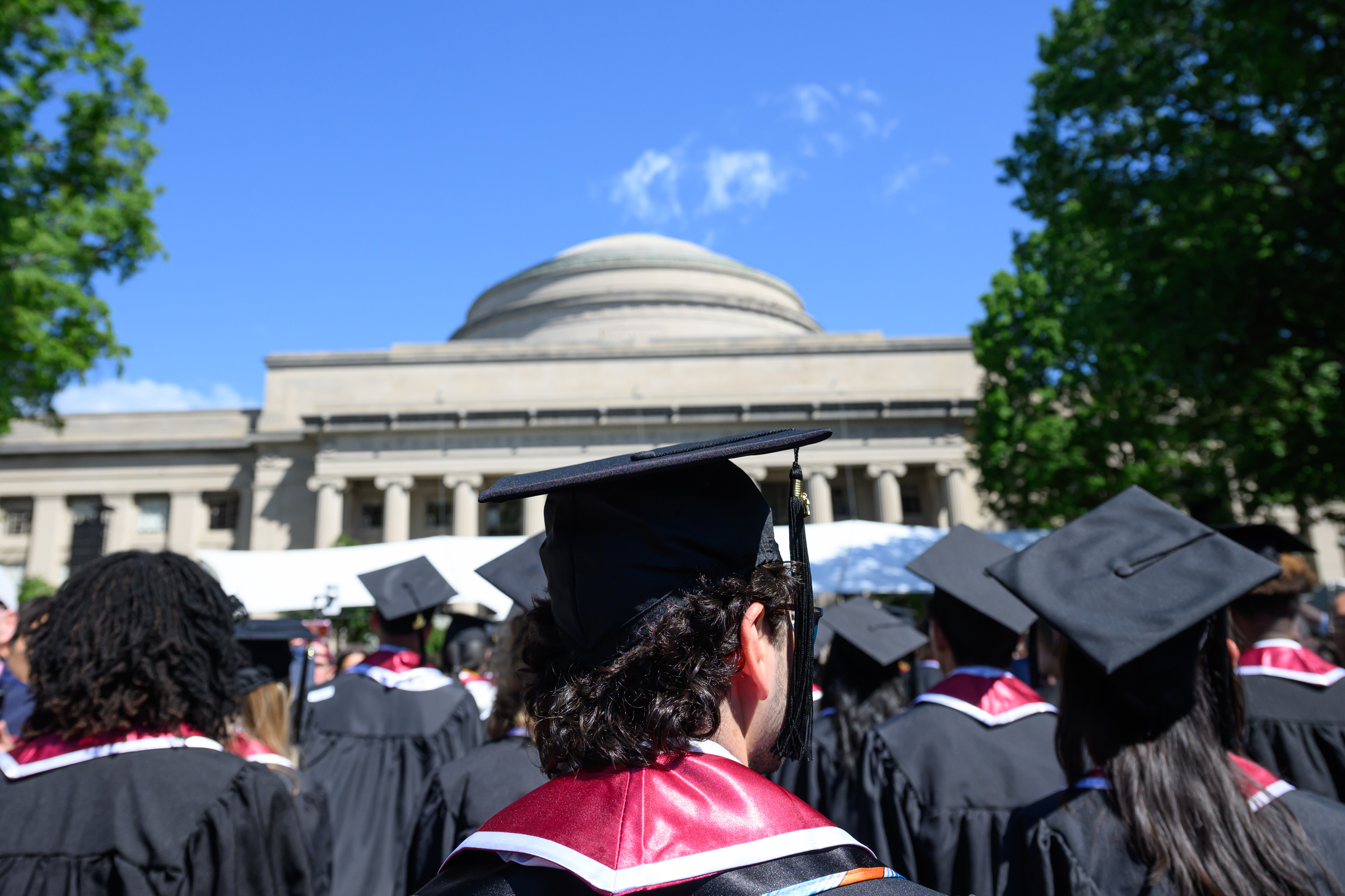
QS ranks MIT the world’s No. 1 university for 2026-27
MIT has again been named the world’s top university by the QS World University Rankings, which were announced today. This is the 15th year in a row MIT has received this distinction. The full 2027 edition of the rankings — published by Quacquarelli Symonds, an organization specializing in education and study abroad — can be found at TopUniversities.com . The QS rankings are based on factors including academic reputation, employer reputation, citations per faculty, student-to-faculty ratio, proportion of international faculty, and proportion of international students. MIT was also ranked the world’s top university in 12 of the subject areas ranked by QS , as announced in March of this year. The Institute received a No. 1 ranking in the following QS subject areas: Chemical Engineering; Civil and Structural Engineering; Computer Science and Information Systems; Data Science and Artificial Intelligence; Electrical and Electronic Engineering; Engineering and Technology; Linguistics; Materials Science; Mechanical, Aeronautical, and Manufacturing Engineering; Mathematics; Physics and Astronomy; and Statistics and Operational Research. MIT also placed second in seven subject areas: Architecture/Built Environment; History of Art; Biological Sciences; Economics and Econometrics; Marketing; Natural Sciences; and Statistics and Operational Research.
17 Jun 2026
Fending off summer melt
The Community College of Rhode Island (CCRI) has a warm-blooded approach to help stave off summer melt. Meet CeCe, an emotional support dog who is cared for by a campus police officer and visits all the college’s four campuses and attends special events – but also has become a recruitment tool. The loveable gold retriever is among the tools used to encourage students to enroll and attend classes this fall, helping to resolve a problem that likely causes a quarter of prospective community college students to simply not show up. The challenge is summer melt – that nettlesome problem of students who’ve shown interest or even enrolled but, for a variety of reasons, have decided not to attend as the first day of classes approaches. As one part of a campaign targeting those students who might “melt,” CeCe helps “to foster a welcoming campus environment, increasing engagement and broadening the college’s reach across platforms,” said Amy Kacerik, associate vice president for student affairs at CCRI. “ Our students are managing work schedules, caregiver responsibilities and other commitments, making it challenging to stay on top of enrollment tasks,” she said. “While CeCe was not initially brought to CCRI to drive recruitment or enrollment, she has quickly become an effective tool for student engagement and enrollment outreach. She serves as another touchpoint that helps students feel connected to CCRI before classes begin.” CCRI and other community colleges are making a connection between students and the campus with an array of supports and nudges, hoping to combat summer melt, which is gaining attention as pressure on higher education enrollment – and some of the reasons for students to have second thoughts – both increase. The summer melt problem Katherine Meyer, a fellow at Brookings who researches key higher education issues like summer melt and efforts by colleges to keep students on track, says recent data show that while the numbers are hard to track, colleges overall lose about 10% to 20% of their prospective students prior to the start of the year, and community colleges may lose 27% and in some cases as high as 40% percent . “Navigating the complexity of college admissions and enrollment can be a challenge for any prospective student, but it’s even harder for those planning to attend community college,” she says, noting that community college students are more likely to have less knowledge about the enrollment process and less time and support to navigate it. “The community college staff may not be able to offer as much outreach or orientation either, and the students don’t have a trusted adviser to turn to for specific help with paperwork or to offer encouragement,” Meyer says. Lisa Matye Edwards, vice president for student affairs for Arapahoe Community College (Colorado), says prospective students may have family or employment commitments that conflict with college office hours, juggle overlapping course schedules or simply don’t have time to manage the process. Other hurdles include overall cost, noncredit developmental programs (which can discourage students) and concerns in some cases about immigration enforcement activities, according to officials. “If classes conflict with work schedule or childcare becomes an issue, a person who perhaps doesn’t have a connection to a college is more likely to not enroll or stay enrolled – and community colleges in the past have not had mechanisms to monitor those issues like our four-year friends,” Matye Edwards says. She adds that open-access community colleges are typically very supportive once students enroll, but sometimes “almost allow too much freedom versus structured and clearly communicated pathways.” She believes that is changing. A variety of challenges Tara Zirkel, director of strategic research at EAB , has studied the issue from multiple perspectives and surveyed community college students about their enrollment experiences. She points out that at a time when college value is being questioned and the demographic cliff is looming, the issue becomes even more concerning. “For community colleges, summer is a critical window to keep new students engaged and ensure they complete their enrollment steps before fall,” she says. “Many students, especially first-generation or those juggling work and family commitments, struggle to navigate deadlines, financial aid requirements and course registration.” Her team’s survey of 1,000 community college students about enrollment concerns showed that: More than half of students seriously considered not attending. About a quarter said they were frustrated by the enrollment process and also by choosing a major. 73% said a personal interaction was extremely important and a similar number expected it to take place within 24 hours. However, only 21% received a response in that time frame, and 27% of respondents said it took more than a week. Seven percent never received a reply at all. Figuring out how to pay for college was significantly discouraging for another 19%. Family obligations were a serious concern for about a quarter of the students. About 18% doubted whether they even belonged in college. Her research concluded that students want a faster, more personalized interaction and that many are “one obstacle away from opting out entirely.” “If community college doesn’t have a solid communication plan, the student and their family may re-think the decision and feel like they are not college-ready,” Matye Edwards says. “They may not know what to do, so they miss out on critical activities like registering for class or filing the FAFSA.” What works Like staff at many community colleges, Kacerik and her team at CCRI try to keep prospective students engaged in a number of ways – beyond the use of CeCe. They have recently enlisted a customer relationship management platform that provides proactive, personalized, 24/7 support. “AI virtual agents respond to student questions at any time, helping students navigate enrollment, financial aid, registration and campus services at times that work for them,” she says. “Messaging is dynamically tailored to each student’s profile, needs and progress, enabling targeted outreach that enhances engagement, persistence and successful outcomes.” Meyer has written about the value of “nudges” and stresses that messages to students should be “timely, relevant and actionable.” Automated systems provide students accurate information faster and reduce the load on the college staff, while potentially gathering data about where prospects find gaps in the information the college is offering, according to Zirkel, who also has written about key ways AI can be used to reduce summer melt. “The student gets the information and can spend time with the college staff having a deeper conversation or covering other concerns,” she says. Matye Edwards says her team contacts prospects at specific points to ask if they need assistance and how best it can be delivered. For instance, if an admitted student has not done an orientation, registered for classes or handled school financing, they might get a reminder and be offered a virtual counseling session. CCRI also is proactive in contacting students with paid messages in a variety of platforms. Also, AI can make creating a two-year plan or class schedule easier by quickly generating several options for students and advisors to consider. “By combining 24/7 access to information, personalized communication, course planning assistance and structured enrollment guidance, AI can help students navigate the transition into college more smoothly,” Zirkel says . Closer ties with high schools College officials can also reduce that burden, Zirkel says, by partnering with school counselors so that high schools have good information for their students and are prompted to encourage them to attend, even despite the counselor’s large caseloads and traditional 10-month schedule. She says some community colleges hold special informational sessions for high school counselors that often feed into their college, ensuring they can both address some concerns and have a stronger connection to the college. In addition, Zirkel notes that community colleges, like CCRI with CeCe, are increasingly trying to create a stronger brand and attachment to their campus with students and high school counselors, which is typically more prevalent in four-year schools. The post Fending off summer melt first appeared on Community College Daily .
17 Jun 2026

Opération de la Sûreté du Québec | Deux administrateurs d’un site de vente d’identités frauduleuses arrêtés
La Sûreté du Québec a arrêté mercredi un homme de 24 ans et une femme de 29 ans soupçonnés d’avoir administré un site web où les criminels pouvaient acheter les renseignements personnels de citoyens canadiens afin de les utiliser dans des fraudes.
17 Jun 2026

Ottawa appelé à ne pas élargir l’aide médicale à mourir aux cas de troubles mentaux
Cette recommandation ne fait toutefois pas l'unanimité au sein du comité mixte sur l'aide médicale à mourir.
17 Jun 2026

A sweet thank you for UW employees
Photo gallery A sweet thank you for UW employees Campus leaders served up dessert — and their thanks — during the annual employee appreciation Ice Cream Social. June 17, 2026 Share this article A rainy forecast didn’t keep University of Wisconsin–Madison employees away from their fill of Babcock Dairy ice cream. Hundreds filtered into Birge Hall to claim their sweet treat, served by interim chancellor Eric Wilcots, provost John Zumbrunnen and other campus leaders. The annual event, which is typically hosted on Bascom Hill but moved inside due to rain, serves as a gesture of thanks for employees’ hard work and dedication during the most recent academic year. Members of the UW Marching Band, along with Bucky Badger, perform for the crowd in Birge Hall. The event moved indoors after a day of almost-summer rain. Photo: Bryce Richter / UW–Madison What’s the scoop? A chalkboard shows the assortment of flavors available to employees. Photo: Bryce Richter / UW–Madison Interim chancellor Eric Wilcots hands out individual cups of ice cream and chats with employees. Photo: Bryce Richter / UW–Madison Members of the UW Marching Band provide a side of music as employees gathered in the Birge Hall lobby. Photo: Bryce Richter / UW–Madison Provost John Zumbrunnen serves up the flavor ‘Babcock Birthday.’ Photo: Bryce Richter / UW–Madison Jason Whitney, assistant chief of UW police, joined the group of campus leaders dishing out dessert. Photo: Bryce Richter / UW–Madison Jordan Goff (left), customer service rep, and Logan Strander (right), parking enforcement officer, both with Transportation Services, sing Varsity with Bucky Badger. Photo: Bryce Richter / UW–Madison
17 Jun 2026
Northpoint Bible College ends degree programs after losing accreditation
The Massachusetts institution is going forward with a new name and three-year programs that its president said will transfer for credit to partner institutions.
17 Jun 2026
Northpoint Bible College ends degree programs after losing accreditation
The Massachusetts institution is going forward with a new name and three-year programs that its president said will transfer for credit to partner institutions.
17 Jun 2026
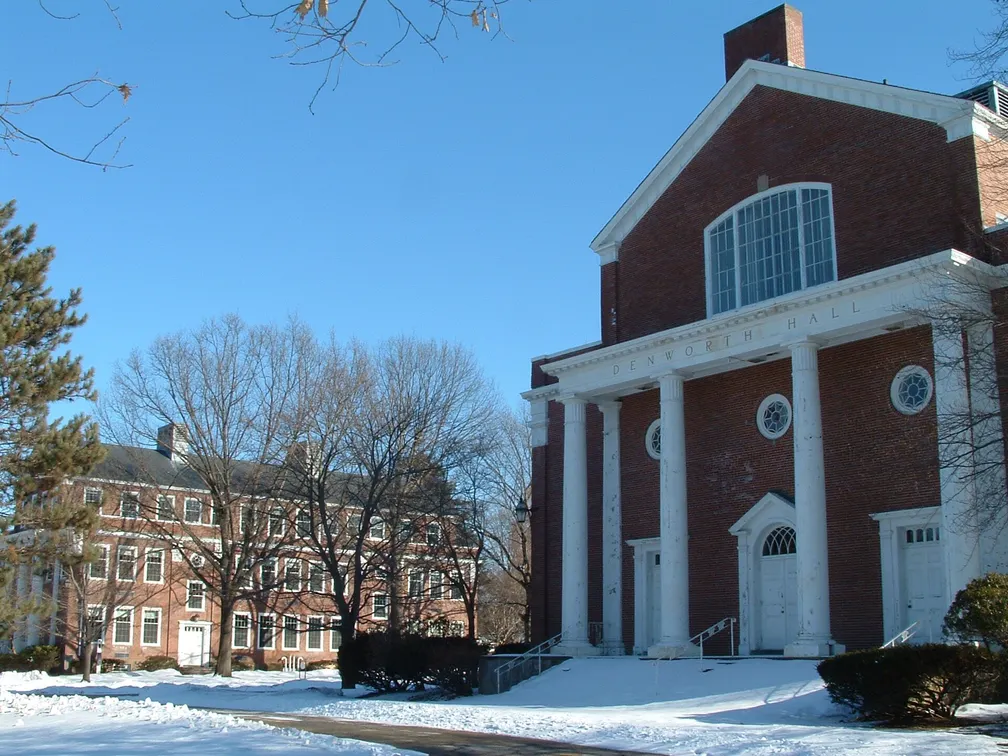
Northpoint Bible College ends degree programs after losing accreditation
Dive snapshot: Northpoint Bible College is moving away from degree programs after losing its accreditation earlier this year. Beginning in September, the Massachusetts Pentecostal institution will operate under the name Northpoint School of the Bible and offer three-year nondegree programs focused on ministerial preparation, President Tiff Shuttlesworth said late last week in a video message. According to Shuttlesworth, students will have a “seamless path forward” into several accredited, degree-granting religious colleges that will accept all of Northpoint’s credits if students choose to continue their education. Background: In April, Northpoint lost its appeal with the Association for Biblical Higher Education to maintain the college’s accreditation. ABHE cited numerous compliance violations related to institutional instability, insufficient financial resources and operational issues. The college’s accreditation ended in May, though ABHE extended it for a handful of students completing coursework until August. Higher ed context: Northpoint is one of several Christian and religious colleges to close in recent years as enrollment and financial pressures mount. Those include Anna Maria College, Lourdes University and Providence Christian College — all of which announced this year that they would shutter . By the numbers 122 Northpoint’s headcount in fall 2024, down nearly 65% from 347 students five years prior, according to federal data. $7,700 That will be Northpoint’s new yearly tuition once it transitions to its new model, according to Shuttlesworth. That figure is down from roughly $28,000 and is meant to help make the program affordable and accessible. $2.6 million Northpoint’s fiscal 2025 revenue, which declined by 17.1% from the previous year, ABHE noted. Meanwhile, the college’s cash holdings dropped by 68.5%, and it reported a net operating loss of $2.5 million. Quote: “We do have significant investment in making this happen. We need to slay a Goliath of somewhere between $2 million to $3 million to get us to a place of being sustainable.” - Tiff Shuttlesworth, president of Northpoint. What we’re watching: It remains to be seen whether students will buy into the institution's new model and whether it can lower costs sufficiently to support the lower tuition. And maintaining articulation agreements with degree-granting institutions over the long-term could be critical to maintaining student interest
17 Jun 2026
Trump says he ‘could understand’ Canada’s cap on Chinese electric vehicle imports
U.S. President Donald Trump is happy with Canada’s arrangement to allow a capped number of Chinese electric vehicles to be imported at a low-tariff rate, Prime Minister Mark Carney said. Read More
17 Jun 2026
"The President is Legally Barred from Waiving Iranian Sanctions as Pledged in the Iran [Memorandum of Understanding]"
So argues Prof. Jack Goldsmith (Harvard) in his Executive Functions post. An excerpt: The United States in the MOU pledges "immediately" to "issue waivers for export of Iranian crude oil, petroleum products and derivatives, and all associated services, including banking transactions, insurances, transportation, etc." (Emphasis added here and throughout.) These waivers presumably include waivers of U.S. statutory sanctions against Iran. I don't think the president has the authority under domestic law to issue these waivers. The Iran Nuclear Agreement Review Act (INARA) of 2015 applies here and temporarily bars a president from waiving sanctions against Iran. The executive branch has counterarguments, to be sure. And it's doubtful that any institution will make the president comply with INARA in any event…. Read the post for much more. The post "The President is Legally Barred from Waiving Iranian Sanctions as Pledged in the Iran [Memorandum of Understanding]" appeared first on Reason.com .
17 Jun 2026

Sommet sur l’itinérance | Éric Duhaime se rallie à Pauline Marois
Le chef du Parti conservateur du Québec (PCQ), Éric Duhaime, se rallie à l’ancienne première ministre Pauline Marois dans sa croisade pour la tenue d’un sommet sur l’itinérance d’ici à juin 2027.
17 Jun 2026

Politique environnementale | Des associations écologistes poursuivent Ottawa en justice
Un groupe de défenseurs de l’environnement poursuit le gouvernement fédéral en justice, affirmant que les récents changements de politique ont compromis la réalisation des objectifs de réduction des émissions fixés par la loi au Canada.
17 Jun 2026

Disclosing One's HIV+ Status Isn't Criminal Harassment of Ex
From In re Gregorwicz v. Villa-Kennedy , decided today by Arizona Court of Appeals Judge Veronika Fabian, joined by Presiding Judge Michael J. Brown and Vice Chief Judge David D. Weinzweig: [An] order of protection was based on the superior court's finding that Father's social media post, which disclosed his own HIV status and identified Mother as a former partner, was criminal harassment. Because Father's social media post was protected free speech, this Court vacates the order of protection…. Mother and Father were at one time in a relationship, which resulted in the birth of their child in 2024. In May 2025, Mother posted a message on social media from an account with the name "Shelby Starbuck" to a group of more than 600 members. The post included an image of an HIV negative patch and this text: Ordering a bunch of these lmao. Im sure you'd be surprised which of your friends cant wear it, but hey lets be transparent. Be safe out there! If anyone wants one lmk Days later, Father posted his own message, using his real name, to the same group, which read: It has come to my attention that there is someone in this group that has taken the liberty to share some deeply personal information with members that shouldn't have been. With that said…. I had a relationship with Shelby Starbuck. And prior to that relationship even becoming a relationship I disclosed with her that I live with HIV. She was informed and aware and made the decision to be in a relationship with me. We obviously had sexual relationship that led to the birth of our daughter. Neither Shelby nor our daughter contracted HIV. Nor has any sexual partners I have had. For Shelby to take it up on herself to use this deeply sensitive and personal information in some way to hurt me should be self evident of her character. Beyond that. I am now forced to put myself out there to combat any further rumors or misinformation being told. I post this here for two reasons. 1 being Mike runs free page and I know this post will not be taken down. 2 this is where most the rumors are being shared. I will be only address[ing] the topic of HIV as any further rumors about me or my relationship with Shelby and our daughter should be none of your concern. And frankly I believe my status should have remained none of your concern as well. But to advocate. HIV is no longer a death sentence. Millions of people live healthy normal lives with HIV. The current medication available makes it untransmittable. It has become a chronic illness now where it was a terminal illness before. I lead a healthy normal life. I made bad life choices and one of those will forever remind me of actions have consequences. But there are people out there who contract HIV of no fault of their own and the stigma is a real and scary thing. I write this now sitting in the bathroom at work fighting back tears so I can see clearly. I am terrified at the friends and respect I will lose but at the same time I can not idly stand by to be made look bad when it something out of my control and further I do everything to make sure I am healthy and the people I care about are safe. After Mother read the post, she texted Father and asked him to remove it. Father refused, explaining his post "was made in response to [Mother's] post," which "started rumors and talk," and to "help educate and … try and lessen the stigma." … The trial court issued a protective order, including a prohibition on gun possession by Father, finding that "[Father's] act in posting to an electronic forum to more than 600 people shows repeated acts of harassment which were meant to annoy, harass or intimidate [Mother]." The court of appeals reversed, reasoning: To issue an order of protection, a court must find reasonable cause to believe the defendant may commit an act of domestic violence or has committed an act of violence in the past year. Domestic violence means a criminal "offense prescribed in … § 13-2916 [or] 13-2921" in the context of various domestic relationships. In issuing the initial and continued orders of protection, the superior court found that Father's social media post constituted the offense of "harassment" under both A.R.S. §§ 13-2916 and 2921…. If speech or expressive conduct is constitutionally protected, then Arizona harassment statutes do not apply, and an order of protection based on that speech or conduct is improper. See A.R.S. § 13-2916(C) ("This section does not apply to … Constitutionally protected speech or activity ….")…. Because Father's social media post was pure speech, the government may not punish his words unless they are within "narrowly limited classes of speech." Such speech includes statements intended to incite imminent lawless action, obscenity, defamation, speech integral to criminal conduct, fighting words, and true threats. Mother argues speech that harasses a protected party is one of the classes of speech not protected by the First Amendment. There is, however, no categorical "harassment exception" to the First Amendment. "Legislatures are free to punish nonspeech conduct, as well as narrow categories of constitutionally unprotected speech, such as true threats. But they cannot label speech that mentally distresses people 'stalking' [or 'harassment'] and then punish all such speech." … In issuing the initial order of protection, the superior court found that the First Amendment was not implicated because Father's post defamed Mother and defamation is not protected speech. To establish defamation, "a publication must be false and must bring the defamed person into disrepute, contempt, or ridicule, or must impeach plaintiff's honesty, integrity, virtue, or reputation." … Father's post was neither false nor was it a statement of opinion implying a false assertion of fact. Instead, Father stated the truth—that he had HIV and that Mother and the parties' daughter did not. Sue A. Jones (Sloma Law Group) represents Father. The post Disclosing One's HIV+ Status Isn't Criminal Harassment of Ex appeared first on Reason.com .
17 Jun 2026
Digital Hall Passes Automate Hallway Oversight
Paper hall passes have been around forever. But they aren’t always the best tool for the job. “A conventional hall pass basically just says that this student has permission to leave the classroom. That’s where the information stops,” says Tyler Shaddix, co-founder and chief innovation officer at GoGuardian. Modernized tools can do a lot more. With digital hall passes, schools can support student safety, track trends around how spaces are used and automate permissions for who can be in the hall, when and where. Click the banner below to learn how CDW and GoGuardian support safer, more…
17 Jun 2026
Afternoon front page: Canada urged to abandon plans for psychiatric euthanasia; slowing the runaway MAID train; and more
It’s Wednesday, June 17. Here are the top stories we’re following today. Read More
17 Jun 2026
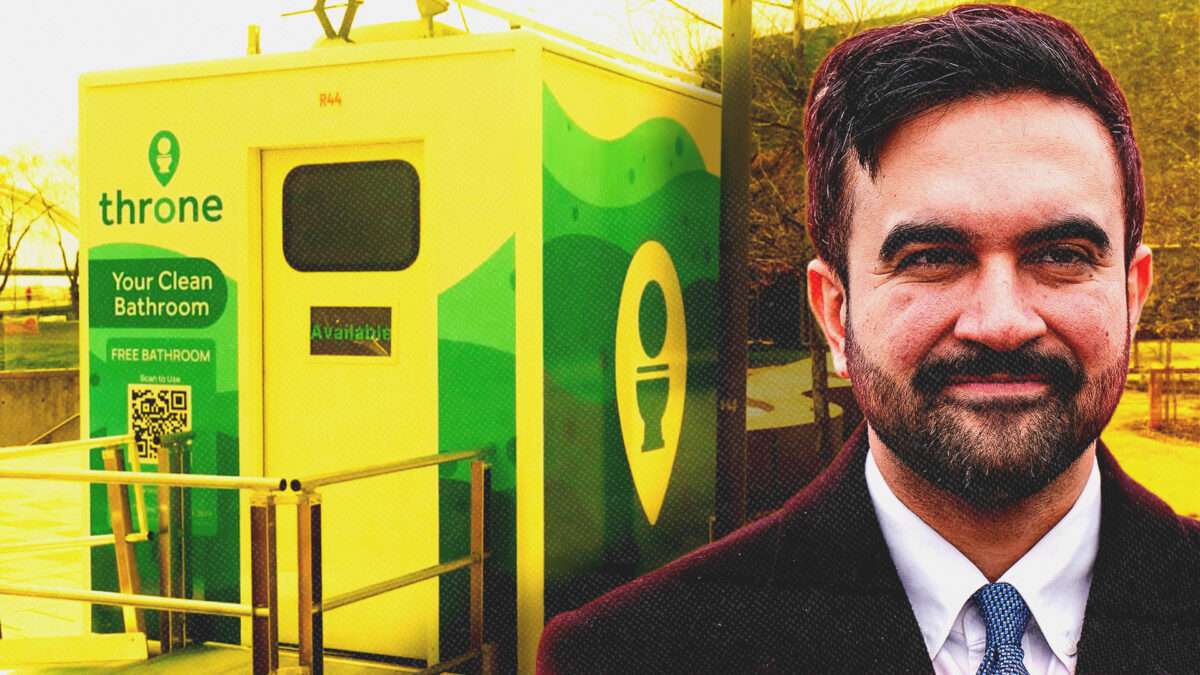
New York City Has a History of Public Bathroom Failures. Will This New Plan Flush Away More Tax Dollars?
New York City mayors have attempted to solve the city's public bathroom problem for decades . Now, Mayor Zohran Mamdani is taking his turn. On Wednesday, the New York City Economic Development Corporation (NYCEDC) announced that Throne Labs Inc. won the city's $4 million contract to install and maintain 17 new bathrooms across the city. Should the project stay on budget, that price tag is relatively low compared to New York City's past bathroom boondoggles. In 2019, The City Reporter noted that the average cost for a city Parks and Recreation Department bathroom had "nearly tripled to $3.6 million since 2011." One $4.7 million restroom facility in Ferry Point Park took 12 years to complete, according to the outlet. And parkgoers told the Reporter that the bathroom was "typically inaccessible in the winter." Former Parks Department commissioner Adrian Benepe told the Reporter at the time that comfort stations, a now apparently politically incorrect term for the city park bathrooms, were the "bane of [his] existence." "There's a built-in inefficiency at every level and too many reviews," he said. John Stossel visited a New York City park bathroom in 2017 that cost the city $2 million to build, a price Mitchell Silver, then the New York City Parks commissioner, said was "a good deal" because New York City is "the most expensive market in the world." The final product, however, was far from luxe. "There were no gold-plated fixtures. It's just a little building with four toilets and four sinks," Stossel wrote at the time. Stossel has juxtaposed the costly NYC Parks restroom with the crown jewel of Midtown Manhattan restrooms: the privately owned and managed Bryant Park bathroom. The bathroom, which often has a long line, is guarded by private security, cleaned regularly, and has flowers and artwork inside. The Throne units are not as glamorous as the Bryant Park restrooms, but they may prove to be cleaner and better maintained than other public restrooms. The units will be solar-powered, "odor-managed, and use 21 sensors and ratings from users to monitor real-time data on the restroom's status, cleanliness, and usage," according to NYCEDC. According to an Axios reporter who used Throne's toilets in downtown Detroit, the "facilities were spotless and easy to use." The most encouraging part of the Throne rollout is the design. Unlike past public bathroom rollouts, Throne units do not "need to be hooked up to sewers or other utilities," according to Gothamist . This way, the installation process will not be bogged down by as much red tape as previous projects. Mamdani is clearly no cost-cutting mayor , but he has said he wants New Yorkers to get more for their taxpayer dollars. Given the countless past failures of city bathroom rollouts, the bar for a successful public bathroom project is extremely low (in the toilet?), so hopefully this plan can provide New Yorkers some relief without flushing away too many public funds. Installation is expected to begin later this summer, and if all goes well, New Yorkers should be able to test the toilets by the fall. The post New York City Has a History of Public Bathroom Failures. Will This New Plan Flush Away More Tax Dollars? appeared first on Reason.com .
17 Jun 2026
Furman on Social Security: Attention must be paid
John Nacion/Sipa via AP Images Work & Economy Furman on Social Security: Attention must be paid ‘Interest in the problem has diminished over time, not grown.’ Meanwhile, day of reckoning is ahead of schedule. Christina Pazanese Harvard Staff Writer June 17, 2026 9 min read Consumer confidence in the U.S. economy recently hit an all-time low . New data on Social Security, inflation, and the national debt is unlikely to lift anyone’s spirits. Earlier this month, trustees of the Social Security Administration said that there will not be enough money to pay recipients their full benefits by 2032, earlier than expected, without more funding and/or cost cuts. The Consumer Price Index showed inflation hit a three-year high in May at 4.2 percent. And the U.S. now has a record-high $31 trillion in publicly held debt , equal to the country’s gross domestic product. In this edited conversation, Jason Furman , Aetna Professor of the Practice of Economic Policy jointly at Harvard Kennedy School and in the Department of Economics, discusses Social Security’s impending cash crunch, consumer pessimism, and why new data about the national debt is “definitely a problem.” Furman, who was an outspoken critic of “Bidenomics,” served in the Clinton administrations and was President Barack Obama’s chief economist. You recently wrote in The New York Times that Social Security’s solvency crisis is closer than anyone ever imagined. Why is this happening sooner than previously forecast? Social Security was last significantly retuned in 1983 and the goal was to make it last at least another 75 years. Within about a decade, it became clear that that expectation was too optimistic. Fertility rates, especially, were falling faster than expected, longevity rising a little bit more than expected, and other economic numbers, like interest rates, were lower than expected. Fertility is the biggest one — it fell further than what the actuaries were counting on. Since the 1990s, we have expected that the day of reckoning for Social Security would be coming probably in the 2030s. With the latest trustees’ report, they pulled it forward a little bit. Some of that was because of choices Congress made: A law that was passed in 2024 expanded benefits for some state employees, and a law that was passed in 2025, the One, Big, Beautiful Bill , effectively expanded benefits de facto for high-income households. So, some of it was the law, and some of it was just the annual technical revision process that goes into these estimates. How much is needed and what are some fixes that could shore up this gap before 2032? We need several trillion dollars. If you raised everyone’s payroll taxes by 2 percent, that would be enough. That’s a lot, but U.S. payroll taxes are much lower than most other rich countries. The 12.2 percent we pay is a lot less than most everyone else pays. I don’t mind raising the cap on taxable earnings , but the thing I worry about is with Social Security, it’s primarily been the people who benefit are the ones who pay. There’s a limit to how many different types of increases we can have on high-income people. So, it can be the answer to some of our fiscal questions; it can’t be the answer to every single fiscal question. “We need several trillion dollars. If you raised everyone’s payroll taxes by 2 percent, that would be enough.” Jason Furman. Harvard file photo Is this looming shortfall primarily a math problem, a political problem, or both? It’s an elementary math problem and a Ph.D.-level political problem. You could assign students the problem of how to solve this, and if it was in an economics class, it would be extremely easy to figure out what combination of benefit cuts and tax increases adds up to the magic number. But if it’s in a political class, I’m not even sure there’s an answer to the question. Given how strongly voters feel about the program, why has neither party done much to head off the funding challenges since this problem has been known about for decades? What’s interesting to me is that the interest in the problem has diminished over time, not grown. President Clinton really did put time, effort, and political capital into it, and some people think but for the Monica Lewinsky scandal this would have been addressed. George W. Bush put some effort into it. I didn’t like his plan, so I’m glad it didn’t happen, but I think it was actually a good-faith effort. Obama put a little bit of effort into it in the beginning of his term in 2010 and 2011 but probably lost interest in the issue after that, didn’t really see any pathway to dealing with it. I think in some ways, as the problem gets closer, the solutions get less attractive, and as a result, the bigger the problem, the less we talk about it. Last month, the Consumer Price Index showed inflation was up 4.2 percent over May 2025, but 2.9 percent with food and energy stripped away. Is this a good sign? What do those numbers tell you? It’s important to distinguish the price level from the inflation rate. The price level went up a lot in March. It went up a bunch again in April. It didn’t go up as much in May, but it went up. So, from the perspective of consumers, it was quite a bad report. If you’re the Federal Reserve trying to figure out whether there’s some new ongoing inflation where each and every year prices are going to keep rising by 3, 4 percent, I thought the report was somewhat reassuring on that score. The amount of inflation within May came down a lot. We’ve already seen gasoline prices starting to fall again. They’re higher than they were, but the direction is now down, not up. With the latest Iran deal, assuming it sticks, oil prices have fallen quite a lot, and that will work its way into gasoline prices over the next month or two. Is it bad news for consumers? The answer is yes. Is it a new era of ongoing sustained inflation that the Fed needs to raise interest rates to fight? Cautiously, I lean toward no — while being very nervous because it’s been many years of elevated inflation, so you don’t want to be too sure about anything. How is low confidence affecting consumer spending? So far, we’re seeing nothing in people’s actual behavior. This is the way they answer questions, but not the way they spend their money. You can do a statistical model based on all the different economic variables, how much would you predict people spend, and then add a variable in for how confident consumers are. Normally, that variable, how confident consumers are, is a small positive. Everything else being equal, if you’re more optimistic, you spend a bit more, and if you’re more pessimistic, you spend a bit less. If you do that same exact statistical analysis, but use data for the last five years, you get the wrong sign on confidence. The more negative people are, the more they spend, and the more positive they are, the less they spend. Now, I don’t believe the negative sign is true, but it suggests that in the data in the last five years that the positive sign is definitely not true. It has, to date, been detached from economic activity. But you raise a question we don’t know the answer to, which is, might it become self-fulfilling? The one place where there’s some evidence it could become self-fulfilling is not on the amount of money consumers spend, but on people increasing their expectations for inflation on a partisan basis and then that becoming self-fulfilling. If you’re a business, you raise prices more because you think there’s going to be more inflation; you’re a worker, you demand a bigger wage increase. There’s been some research which suggests that partisan irrationality on inflation — this was Republican irrationality under Biden — actually had a self-fulfilling increase in inflation. It looks like it’s still happening, although now it is partisan, irrational Democratic beliefs about inflation. There’s not enough data, it’s a year and a half of data, but they might be raising expectations of inflation and becoming self-fulfilling. Investors do not appear to reflect a similar lack of confidence in where the economy is headed. Why have the markets remained so buoyant? The market is extremely skewed right now, and its gains are very, very dependent on a small number of AI-related tech companies. They are betting that these companies are going to make huge profits in the future; most of them are losing money now and hemorrhaging money. So, the markets are not in any tension with all of these things, they’re just recording a totally different piece of the economy. Right now, both financially and also in terms of GDP growth, our economy is increasingly reliant on just one subpart of the overall economy. That’s a little bit of a cause for concern in terms of just how resilient things will be. In its annual report to Congress, the Government Accountability Office pegged the nation’s debt at $31.3 trillion, equal to the size of our economy, and predicted that will grow more than twice as fast as the U.S. economy over the next 10 years. How big of a problem is this? It is definitely a problem. The deficit, which is the amount you add to the debt in any given year, is larger relative to our economy than any other rich country, and it’s larger relative to our economy than any time in our history with the exceptions of World War II, the 2008-09 financial crisis, and COVID. So, we’re in an unprecedented place for a non-emergency situation, both for our own history and relative to the rest of the world. You can debate how bad and how risky it is, but you’d have a hard time arguing that this is the way we should try to do things. Part of why it’s up for such debate is that there is almost no historical experience to call on. Right now, there’s not really anything to confidently extrapolate or infer from, and to me, that says that we’d rather not find out the answer to this. And so, we should deal with it.
17 Jun 2026

The Education Dept now has 14 interagency agreements. Here are the changes.
The Education Department says the partnerships with six other federal agencies reduces federal bureaucracy. Critics claim it adds confusion and weakens K-12 coordination efforts.
17 Jun 2026
John Ivison: Finally a plea to slow the ‘runaway’ MAID train
The joint House and Senate committee studying the expansion of medical assistance in dying (MAID) has recommended a permanent exclusion of those patients whose sole condition is mental illness. Read More
17 Jun 2026

Saint-Hyacinthe | Une cycliste âgée de 13 ans happée mortellement par un camion
Une jeune fille a connu un sort tragique à Saint-Hyacinthe, écrasée par un poids lourd en traversant la rue à vélo.
17 Jun 2026
Federal Grant Cuts for English Learners Face Lawsuit
Last year, the federal agency ended 28 grants for training teachers working with English learners.
17 Jun 2026
Is It Time for Another National Reading Panel?
The panel's 2000 report on reading has influenced policy for years. Now, Congress is calling for an update.
17 Jun 2026

Un meilleur suivi pour les prématurés développé à Montréal
Les prématurés pourront bientôt bénéficier d’un meilleur suivi pour prévenir les soucis de santé grâce à une nouvelle technologie montréalaise.
17 Jun 2026

Samuels turns to local communities for advice on making NYC schools safe, rigorous, and integrated
Sign up for Chalkbeat New York’s free daily newsletter to get essential news about NYC’s public schools delivered to your inbox. Since taking office in January, schools Chancellor Kamar Samuels has repeated a refrain that he wants the nation’s largest school system to be safe, academically rigorous, and integrated. But he has revealed little about his tangible policy goals in each of those areas. Now, he’s signaling that some of those ideas may come from local communities rather than top-down from the Education Department or City Hall. On Wednesday, education officials announced that five of the city’s 45 superintendents will convene working groups with parents, teachers, principals, and community organizations that will “address structural and instructional inequities in their district,” according to a press release. They are expected to meet monthly. The groups represent “local solutions for systemic problems,” Samuels said Wednesday morning during a discussion with author Heather McGhee who has written about how racism has broader effects beyond people of color. Officials said all districts will have similar groups within three years. Samuels suggested that the groups, which will be led by local superintendents, could begin to tackle some of the system’s biggest policy challenges. His conversation with McGhee touched on declining enrollment and the growing number of underenrolled schools ; a state mandate to lower class sizes ; and segregation of students by race, ability, socioeconomic status, and language. Officials did not share who was selected by superintendents to serve on each working group, or commit to release each group’s recommendations publicly. Previous administrations have also set up working groups to tackle thorny policy problems. Under pressure from parents and advocates to address deep racial segregation in the city’s schools, former Mayor Bill de Blasio created a working group to recommend solutions. Some advocates were frustrated that the city did not embrace some of the group’s most sweeping suggestions. Still, some local districts have taken action to integrate local schools absent a broader citywide mandate, though others have sputtered . (Mayor Zohran Mamdani said that he would adopt some of the recommendations from de Blasio’s diversity advisory group that were not implemented, but he has yet to do so.) On the campaign trail, Mamdani committed to getting rid of mayoral control — which gives the mayor largely unfettered power to set the school system’s policy direction — in favor of a more democratic system. He reversed his position just before taking office and recently won a two-year extension for it from state lawmakers . But he has consistently vowed to give families and educators more of a say in policymaking and Samuels signaled the working groups were an effort to make good on that promise. “When people ask me … ‘You have mayoral control, and are you going to really listen to parents, and are you going to listen to communities?’” Samuels said, “this is one of our main initial first steps.” The first five districts that will participate are: Manhattan District 3 (Upper West Side, Morningside Heights, and parts of Harlem); Bronx District 7 (Mott Haven and Port Morris); Brooklyn District 13 (Brooklyn Heights, Fort Greene, Clinton Hill); Brooklyn’s District 16 (much of Bedford-Stuyvesant); and Queens District 25 (College Point, Whitestone, Hillcrest). Samuels previously led District 3 and 13. The Wednesday morning event was livestreamed but the Education Department did not invite reporters to attend. Education Department spokesperson Nicole Brownstein said members of the working groups were invited and there wasn’t additional room due to the fire code. The five working groups are expected to share their recommendations with the Education Department by the end of next school year, Brownstein said. She indicated those reports could take multiple forms and officials plan to wait to release broader policy ideas until they review the recommendations. No funding has been earmarked for the working groups, officials said. “We have to figure out what is the thing that we are going to do on behalf of our most marginalized young people, oftentimes, but on behalf of every single child in your district,” Samuels said. Alex Zimmerman is a senior reporter for Chalkbeat New York, covering NYC public schools. Contact Alex at azimmerman@chalkbeat.org .
17 Jun 2026
Samuels turns to local communities for advice on making NYC schools safe, rigorous, and integrated
Sign up for Chalkbeat New York’s free daily newsletter to get essential news about NYC’s public schools delivered to your inbox. Since taking office in January, schools Chancellor Kamar Samuels has repeated a refrain that he wants the nation’s largest school system to be safe, academically rigorous, and integrated. But he has revealed little about his tangible policy goals in each of those areas. Now, he’s signaling that some of those ideas may come from local communities rather than top-down from the Education Department or City Hall. On Wednesday, education officials announced that five of the city’s 45 superintendents will convene working groups with parents, teachers, principals, and community organizations that will “address structural and instructional inequities in their district,” according to a press release. They are expected to meet monthly. The groups represent “local solutions for systemic problems,” Samuels said Wednesday morning during a discussion with author Heather McGhee who has written about how racism has broader effects beyond people of color. Officials said all districts will have similar groups within three years. Samuels suggested that the groups, which will be led by local superintendents, could begin to tackle some of the system’s biggest policy challenges. His conversation with McGhee touched on declining enrollment and the growing number of underenrolled schools ; a state mandate to lower class sizes ; and segregation of students by race, ability, socioeconomic status, and language. Officials did not share who was selected by superintendents to serve on each working group, or commit to release each group’s recommendations publicly. Previous administrations have also set up working groups to tackle thorny policy problems. Under pressure from parents and advocates to address deep racial segregation in the city’s schools, former Mayor Bill de Blasio created a working group to recommend solutions. Some advocates were frustrated that the city did not embrace some of the group’s most sweeping suggestions. Still, some local districts have taken action to integrate local schools absent a broader citywide mandate, though others have sputtered . (Mayor Zohran Mamdani said that he would adopt some of the recommendations from de Blasio’s diversity advisory group that were not implemented, but he has yet to do so.) On the campaign trail, Mamdani committed to getting rid of mayoral control — which gives the mayor largely unfettered power to set the school system’s policy direction — in favor of a more democratic system. He reversed his position just before taking office and recently won a two-year extension for it from state lawmakers . But he has consistently vowed to give families and educators more of a say in policymaking and Samuels signaled the working groups were an effort to make good on that promise. “When people ask me … ‘You have mayoral control, and are you going to really listen to parents, and are you going to listen to communities?’” Samuels said, “this is one of our main initial first steps.” The first five districts that will participate are: Manhattan District 3 (Upper West Side, Morningside Heights, and parts of Harlem); Bronx District 7 (Mott Haven and Port Morris); Brooklyn District 13 (Brooklyn Heights, Fort Greene, Clinton Hill); Brooklyn’s District 16 (much of Bedford-Stuyvesant); and Queens District 25 (College Point, Whitestone, Hillcrest). Samuels previously led District 3 and 13. The Wednesday morning event was livestreamed but the Education Department did not invite reporters to attend. Education Department spokesperson Nicole Brownstein said members of the working groups were invited and there wasn’t additional room due to the fire code. The five working groups are expected to share their recommendations with the Education Department by the end of next school year, Brownstein said. She indicated those reports could take multiple forms and officials plan to wait to release broader policy ideas until they review the recommendations. No funding has been earmarked for the working groups, officials said. “We have to figure out what is the thing that we are going to do on behalf of our most marginalized young people, oftentimes, but on behalf of every single child in your district,” Samuels said. Alex Zimmerman is a senior reporter for Chalkbeat New York, covering NYC public schools. Contact Alex at azimmerman@chalkbeat.org .
17 Jun 2026
Samuels turns to local communities for advice on making NYC schools safe, rigorous, and integrated
Sign up for Chalkbeat New York’s free daily newsletter to get essential news about NYC’s public schools delivered to your inbox. Since taking office in January, schools Chancellor Kamar Samuels has repeated a refrain that he wants the nation’s largest school system to be safe, academically rigorous, and integrated. But he has revealed little about his tangible policy goals in each of those areas. Now, he’s signaling that some of those ideas may come from local communities rather than top-down from the Education Department or City Hall. On Wednesday, education officials announced that five of the city’s 45 superintendents will convene working groups with parents, teachers, principals, and community organizations that will “address structural and instructional inequities in their district,” according to a press release. They are expected to meet monthly. The groups represent “local solutions for systemic problems,” Samuels said Wednesday morning during a discussion with author Heather McGhee who has written about how racism has broader effects beyond people of color. Officials said all districts will have similar groups within three years. Samuels suggested that the groups, which will be led by local superintendents, could begin to tackle some of the system’s biggest policy challenges. His conversation with McGhee touched on declining enrollment and the growing number of underenrolled schools ; a state mandate to lower class sizes ; and segregation of students by race, ability, socioeconomic status, and language. Officials did not share who was selected by superintendents to serve on each working group, or commit to release each group’s recommendations publicly. Previous administrations have also set up working groups to tackle thorny policy problems. Under pressure from parents and advocates to address deep racial segregation in the city’s schools, former Mayor Bill de Blasio created a working group to recommend solutions. Some advocates were frustrated that the city did not embrace some of the group’s most sweeping suggestions. Still, some local districts have taken action to integrate local schools absent a broader citywide mandate, though others have sputtered . (Mayor Zohran Mamdani said that he would adopt some of the recommendations from de Blasio’s diversity advisory group that were not implemented, but he has yet to do so.) On the campaign trail, Mamdani committed to getting rid of mayoral control — which gives the mayor largely unfettered power to set the school system’s policy direction — in favor of a more democratic system. He reversed his position just before taking office and recently won a two-year extension for it from state lawmakers . But he has consistently vowed to give families and educators more of a say in policymaking and Samuels signaled the working groups were an effort to make good on that promise. “When people ask me … ‘You have mayoral control, and are you going to really listen to parents, and are you going to listen to communities?’” Samuels said, “this is one of our main initial first steps.” The first five districts that will participate are: Manhattan District 3 (Upper West Side, Morningside Heights, and parts of Harlem); Bronx District 7 (Mott Haven and Port Morris); Brooklyn District 13 (Brooklyn Heights, Fort Greene, Clinton Hill); Brooklyn’s District 16 (much of Bedford-Stuyvesant); and Queens District 25 (College Point, Whitestone, Hillcrest). Samuels previously led District 3 and 13. The Wednesday morning event was livestreamed but the Education Department did not invite reporters to attend. Education Department spokesperson Nicole Brownstein said members of the working groups were invited and there wasn’t additional room due to the fire code. The five working groups are expected to share their recommendations with the Education Department by the end of next school year, Brownstein said. She indicated those reports could take multiple forms and officials plan to wait to release broader policy ideas until they review the recommendations. No funding has been earmarked for the working groups, officials said. “We have to figure out what is the thing that we are going to do on behalf of our most marginalized young people, oftentimes, but on behalf of every single child in your district,” Samuels said. Alex Zimmerman is a senior reporter for Chalkbeat New York, covering NYC public schools. Contact Alex at azimmerman@chalkbeat.org .
17 Jun 2026
Samuels turns to local communities for advice on making NYC schools safe, rigorous, and integrated
Sign up for Chalkbeat New York’s free daily newsletter to get essential news about NYC’s public schools delivered to your inbox. Since taking office in January, schools Chancellor Kamar Samuels has repeated a refrain that he wants the nation’s largest school system to be safe, academically rigorous, and integrated. But he has revealed little about his tangible policy goals in each of those areas. Now, he’s signaling that some of those ideas may come from local communities rather than top-down from the Education Department or City Hall. On Wednesday, education officials announced that five of the city’s 45 superintendents will convene working groups with parents, teachers, principals, and community organizations that will “address structural and instructional inequities in their district,” according to a press release. They are expected to meet monthly. The groups represent “local solutions for systemic problems,” Samuels said Wednesday morning during a discussion with author Heather McGhee who has written about how racism has broader effects beyond people of color. Officials said all districts will have similar groups within three years. Samuels suggested that the groups, which will be led by local superintendents, could begin to tackle some of the system’s biggest policy challenges. His conversation with McGhee touched on declining enrollment and the growing number of underenrolled schools ; a state mandate to lower class sizes ; and segregation of students by race, ability, socioeconomic status, and language. Officials did not share who was selected by superintendents to serve on each working group, or commit to release each group’s recommendations publicly. Previous administrations have also set up working groups to tackle thorny policy problems. Under pressure from parents and advocates to address deep racial segregation in the city’s schools, former Mayor Bill de Blasio created a working group to recommend solutions. Some advocates were frustrated that the city did not embrace some of the group’s most sweeping suggestions. Still, some local districts have taken action to integrate local schools absent a broader citywide mandate, though others have sputtered . (Mayor Zohran Mamdani said that he would adopt some of the recommendations from de Blasio’s diversity advisory group that were not implemented, but he has yet to do so.) On the campaign trail, Mamdani committed to getting rid of mayoral control — which gives the mayor largely unfettered power to set the school system’s policy direction — in favor of a more democratic system. He reversed his position just before taking office and recently won a two-year extension for it from state lawmakers . But he has consistently vowed to give families and educators more of a say in policymaking and Samuels signaled the working groups were an effort to make good on that promise. “When people ask me … ‘You have mayoral control, and are you going to really listen to parents, and are you going to listen to communities?’” Samuels said, “this is one of our main initial first steps.” The first five districts that will participate are: Manhattan District 3 (Upper West Side, Morningside Heights, and parts of Harlem); Bronx District 7 (Mott Haven and Port Morris); Brooklyn District 13 (Brooklyn Heights, Fort Greene, Clinton Hill); Brooklyn’s District 16 (much of Bedford-Stuyvesant); and Queens District 25 (College Point, Whitestone, Hillcrest). Samuels previously led District 3 and 13. The Wednesday morning event was livestreamed but the Education Department did not invite reporters to attend. Education Department spokesperson Nicole Brownstein said members of the working groups were invited and there wasn’t additional room due to the fire code. The five working groups are expected to share their recommendations with the Education Department by the end of next school year, Brownstein said. She indicated those reports could take multiple forms and officials plan to wait to release broader policy ideas until they review the recommendations. No funding has been earmarked for the working groups, officials said. “We have to figure out what is the thing that we are going to do on behalf of our most marginalized young people, oftentimes, but on behalf of every single child in your district,” Samuels said. Alex Zimmerman is a senior reporter for Chalkbeat New York, covering NYC public schools. Contact Alex at azimmerman@chalkbeat.org .
17 Jun 2026
Samuels turns to local communities for advice on making NYC schools safe, rigorous, and integrated
Sign up for Chalkbeat New York’s free daily newsletter to get essential news about NYC’s public schools delivered to your inbox. Since taking office in January, schools Chancellor Kamar Samuels has repeated a refrain that he wants the nation’s largest school system to be safe, academically rigorous, and integrated. But he has revealed little about his tangible policy goals in each of those areas. Now, he’s signaling that some of those ideas may come from local communities rather than top-down from the Education Department or City Hall. On Wednesday, education officials announced that five of the city’s 45 superintendents will convene working groups with parents, teachers, principals, and community organizations that will “address structural and instructional inequities in their district,” according to a press release. They are expected to meet monthly. The groups represent “local solutions for systemic problems,” Samuels said Wednesday morning during a discussion with author Heather McGhee who has written about how racism has broader effects beyond people of color. Officials said all districts will have similar groups within three years. Samuels suggested that the groups, which will be led by local superintendents, could begin to tackle some of the system’s biggest policy challenges. His conversation with McGhee touched on declining enrollment and the growing number of underenrolled schools ; a state mandate to lower class sizes ; and segregation of students by race, ability, socioeconomic status, and language. Officials did not share who was selected by superintendents to serve on each working group, or commit to release each group’s recommendations publicly. Previous administrations have also set up working groups to tackle thorny policy problems. Under pressure from parents and advocates to address deep racial segregation in the city’s schools, former Mayor Bill de Blasio created a working group to recommend solutions. Some advocates were frustrated that the city did not embrace some of the group’s most sweeping suggestions. Still, some local districts have taken action to integrate local schools absent a broader citywide mandate, though others have sputtered . (Mayor Zohran Mamdani said that he would adopt some of the recommendations from de Blasio’s diversity advisory group that were not implemented, but he has yet to do so.) On the campaign trail, Mamdani committed to getting rid of mayoral control — which gives the mayor largely unfettered power to set the school system’s policy direction — in favor of a more democratic system. He reversed his position just before taking office and recently won a two-year extension for it from state lawmakers . But he has consistently vowed to give families and educators more of a say in policymaking and Samuels signaled the working groups were an effort to make good on that promise. “When people ask me … ‘You have mayoral control, and are you going to really listen to parents, and are you going to listen to communities?’” Samuels said, “this is one of our main initial first steps.” The first five districts that will participate are: Manhattan District 3 (Upper West Side, Morningside Heights, and parts of Harlem); Bronx District 7 (Mott Haven and Port Morris); Brooklyn District 13 (Brooklyn Heights, Fort Greene, Clinton Hill); Brooklyn’s District 16 (much of Bedford-Stuyvesant); and Queens District 25 (College Point, Whitestone, Hillcrest). Samuels previously led District 3 and 13. The Wednesday morning event was livestreamed but the Education Department did not invite reporters to attend. Education Department spokesperson Nicole Brownstein said members of the working groups were invited and there wasn’t additional room due to the fire code. The five working groups are expected to share their recommendations with the Education Department by the end of next school year, Brownstein said. She indicated those reports could take multiple forms and officials plan to wait to release broader policy ideas until they review the recommendations. No funding has been earmarked for the working groups, officials said. “We have to figure out what is the thing that we are going to do on behalf of our most marginalized young people, oftentimes, but on behalf of every single child in your district,” Samuels said. Alex Zimmerman is a senior reporter for Chalkbeat New York, covering NYC public schools. Contact Alex at azimmerman@chalkbeat.org .
17 Jun 2026
Samuels turns to local communities for advice on making NYC schools safe, rigorous, and integrated
Sign up for Chalkbeat New York’s free daily newsletter to get essential news about NYC’s public schools delivered to your inbox. Since taking office in January, schools Chancellor Kamar Samuels has repeated a refrain that he wants the nation’s largest school system to be safe, academically rigorous, and integrated. But he has revealed little about his tangible policy goals in each of those areas. Now, he’s signaling that some of those ideas may come from local communities rather than top-down from the Education Department or City Hall. On Wednesday, education officials announced that five of the city’s 45 superintendents will convene working groups with parents, teachers, principals, and community organizations that will “address structural and instructional inequities in their district,” according to a press release. They are expected to meet monthly. The groups represent “local solutions for systemic problems,” Samuels said Wednesday morning during a discussion with author Heather McGhee who has written about how racism has broader effects beyond people of color. Officials said all districts will have similar groups within three years. Samuels suggested that the groups, which will be led by local superintendents, could begin to tackle some of the system’s biggest policy challenges. His conversation with McGhee touched on declining enrollment and the growing number of underenrolled schools ; a state mandate to lower class sizes ; and segregation of students by race, ability, socioeconomic status, and language. Officials did not share who was selected by superintendents to serve on each working group, or commit to release each group’s recommendations publicly. Previous administrations have also set up working groups to tackle thorny policy problems. Under pressure from parents and advocates to address deep racial segregation in the city’s schools, former Mayor Bill de Blasio created a working group to recommend solutions. Some advocates were frustrated that the city did not embrace some of the group’s most sweeping suggestions. Still, some local districts have taken action to integrate local schools absent a broader citywide mandate, though others have sputtered . (Mayor Zohran Mamdani said that he would adopt some of the recommendations from de Blasio’s diversity advisory group that were not implemented, but he has yet to do so.) On the campaign trail, Mamdani committed to getting rid of mayoral control — which gives the mayor largely unfettered power to set the school system’s policy direction — in favor of a more democratic system. He reversed his position just before taking office and recently won a two-year extension for it from state lawmakers . But he has consistently vowed to give families and educators more of a say in policymaking and Samuels signaled the working groups were an effort to make good on that promise. “When people ask me … ‘You have mayoral control, and are you going to really listen to parents, and are you going to listen to communities?’” Samuels said, “this is one of our main initial first steps.” The first five districts that will participate are: Manhattan District 3 (Upper West Side, Morningside Heights, and parts of Harlem); Bronx District 7 (Mott Haven and Port Morris); Brooklyn District 13 (Brooklyn Heights, Fort Greene, Clinton Hill); Brooklyn’s District 16 (much of Bedford-Stuyvesant); and Queens District 25 (College Point, Whitestone, Hillcrest). Samuels previously led District 3 and 13. The Wednesday morning event was livestreamed but the Education Department did not invite reporters to attend. Education Department spokesperson Nicole Brownstein said members of the working groups were invited and there wasn’t additional room due to the fire code. The five working groups are expected to share their recommendations with the Education Department by the end of next school year, Brownstein said. She indicated those reports could take multiple forms and officials plan to wait to release broader policy ideas until they review the recommendations. No funding has been earmarked for the working groups, officials said. “We have to figure out what is the thing that we are going to do on behalf of our most marginalized young people, oftentimes, but on behalf of every single child in your district,” Samuels said. Alex Zimmerman is a senior reporter for Chalkbeat New York, covering NYC public schools. Contact Alex at azimmerman@chalkbeat.org .
17 Jun 2026
Samuels turns to local communities for advice on making NYC schools safe, rigorous, and integrated
Sign up for Chalkbeat New York’s free daily newsletter to get essential news about NYC’s public schools delivered to your inbox. Since taking office in January, schools Chancellor Kamar Samuels has repeated a refrain that he wants the nation’s largest school system to be safe, academically rigorous, and integrated. But he has revealed little about his tangible policy goals in each of those areas. Now, he’s signaling that some of those ideas may come from local communities rather than top-down from the Education Department or City Hall. On Wednesday, education officials announced that five of the city’s 45 superintendents will convene working groups with parents, teachers, principals, and community organizations that will “address structural and instructional inequities in their district,” according to a press release. They are expected to meet monthly. The groups represent “local solutions for systemic problems,” Samuels said Wednesday morning during a discussion with author Heather McGhee who has written about how racism has broader effects beyond people of color. Officials said all districts will have similar groups within three years. Samuels suggested that the groups, which will be led by local superintendents, could begin to tackle some of the system’s biggest policy challenges. His conversation with McGhee touched on declining enrollment and the growing number of underenrolled schools ; a state mandate to lower class sizes ; and segregation of students by race, ability, socioeconomic status, and language. Officials did not share who was selected by superintendents to serve on each working group, or commit to release each group’s recommendations publicly. Previous administrations have also set up working groups to tackle thorny policy problems. Under pressure from parents and advocates to address deep racial segregation in the city’s schools, former Mayor Bill de Blasio created a working group to recommend solutions. Some advocates were frustrated that the city did not embrace some of the group’s most sweeping suggestions. Still, some local districts have taken action to integrate local schools absent a broader citywide mandate, though others have sputtered . (Mayor Zohran Mamdani said that he would adopt some of the recommendations from de Blasio’s diversity advisory group that were not implemented, but he has yet to do so.) On the campaign trail, Mamdani committed to getting rid of mayoral control — which gives the mayor largely unfettered power to set the school system’s policy direction — in favor of a more democratic system. He reversed his position just before taking office and recently won a two-year extension for it from state lawmakers . But he has consistently vowed to give families and educators more of a say in policymaking and Samuels signaled the working groups were an effort to make good on that promise. “When people ask me … ‘You have mayoral control, and are you going to really listen to parents, and are you going to listen to communities?’” Samuels said, “this is one of our main initial first steps.” The first five districts that will participate are: Manhattan District 3 (Upper West Side, Morningside Heights, and parts of Harlem); Bronx District 7 (Mott Haven and Port Morris); Brooklyn District 13 (Brooklyn Heights, Fort Greene, Clinton Hill); Brooklyn’s District 16 (much of Bedford-Stuyvesant); and Queens District 25 (College Point, Whitestone, Hillcrest). Samuels previously led District 3 and 13. The Wednesday morning event was livestreamed but the Education Department did not invite reporters to attend. Education Department spokesperson Nicole Brownstein said members of the working groups were invited and there wasn’t additional room due to the fire code. The five working groups are expected to share their recommendations with the Education Department by the end of next school year, Brownstein said. She indicated those reports could take multiple forms and officials plan to wait to release broader policy ideas until they review the recommendations. No funding has been earmarked for the working groups, officials said. “We have to figure out what is the thing that we are going to do on behalf of our most marginalized young people, oftentimes, but on behalf of every single child in your district,” Samuels said. Alex Zimmerman is a senior reporter for Chalkbeat New York, covering NYC public schools. Contact Alex at azimmerman@chalkbeat.org .
17 Jun 2026
Samuels turns to local communities for advice on making NYC schools safe, rigorous, and integrated
Sign up for Chalkbeat New York’s free daily newsletter to get essential news about NYC’s public schools delivered to your inbox. Since taking office in January, schools Chancellor Kamar Samuels has repeated a refrain that he wants the nation’s largest school system to be safe, academically rigorous, and integrated. But he has revealed little about his tangible policy goals in each of those areas. Now, he’s signaling that some of those ideas may come from local communities rather than top-down from the Education Department or City Hall. On Wednesday, education officials announced that five of the city’s 45 superintendents will convene working groups with parents, teachers, principals, and community organizations that will “address structural and instructional inequities in their district,” according to a press release. They are expected to meet monthly. The groups represent “local solutions for systemic problems,” Samuels said Wednesday morning during a discussion with author Heather McGhee who has written about how racism has broader effects beyond people of color. Officials said all districts will have similar groups within three years. Samuels suggested that the groups, which will be led by local superintendents, could begin to tackle some of the system’s biggest policy challenges. His conversation with McGhee touched on declining enrollment and the growing number of underenrolled schools ; a state mandate to lower class sizes ; and segregation of students by race, ability, socioeconomic status, and language. Officials did not share who was selected by superintendents to serve on each working group, or commit to release each group’s recommendations publicly. Previous administrations have also set up working groups to tackle thorny policy problems. Under pressure from parents and advocates to address deep racial segregation in the city’s schools, former Mayor Bill de Blasio created a working group to recommend solutions. Some advocates were frustrated that the city did not embrace some of the group’s most sweeping suggestions. Still, some local districts have taken action to integrate local schools absent a broader citywide mandate, though others have sputtered . (Mayor Zohran Mamdani said that he would adopt some of the recommendations from de Blasio’s diversity advisory group that were not implemented, but he has yet to do so.) On the campaign trail, Mamdani committed to getting rid of mayoral control — which gives the mayor largely unfettered power to set the school system’s policy direction — in favor of a more democratic system. He reversed his position just before taking office and recently won a two-year extension for it from state lawmakers . But he has consistently vowed to give families and educators more of a say in policymaking and Samuels signaled the working groups were an effort to make good on that promise. “When people ask me … ‘You have mayoral control, and are you going to really listen to parents, and are you going to listen to communities?’” Samuels said, “this is one of our main initial first steps.” The first five districts that will participate are: Manhattan District 3 (Upper West Side, Morningside Heights, and parts of Harlem); Bronx District 7 (Mott Haven and Port Morris); Brooklyn District 13 (Brooklyn Heights, Fort Greene, Clinton Hill); Brooklyn’s District 16 (much of Bedford-Stuyvesant); and Queens District 25 (College Point, Whitestone, Hillcrest). Samuels previously led District 3 and 13. The Wednesday morning event was livestreamed but the Education Department did not invite reporters to attend. Education Department spokesperson Nicole Brownstein said members of the working groups were invited and there wasn’t additional room due to the fire code. The five working groups are expected to share their recommendations with the Education Department by the end of next school year, Brownstein said. She indicated those reports could take multiple forms and officials plan to wait to release broader policy ideas until they review the recommendations. No funding has been earmarked for the working groups, officials said. “We have to figure out what is the thing that we are going to do on behalf of our most marginalized young people, oftentimes, but on behalf of every single child in your district,” Samuels said. Alex Zimmerman is a senior reporter for Chalkbeat New York, covering NYC public schools. Contact Alex at azimmerman@chalkbeat.org .
17 Jun 2026
Samuels turns to local communities for advice on making NYC schools safe, rigorous, and integrated
Sign up for Chalkbeat New York’s free daily newsletter to get essential news about NYC’s public schools delivered to your inbox. Since taking office in January, schools Chancellor Kamar Samuels has repeated a refrain that he wants the nation’s largest school system to be safe, academically rigorous, and integrated. But he has revealed little about his tangible policy goals in each of those areas. Now, he’s signaling that some of those ideas may come from local communities rather than top-down from the Education Department or City Hall. On Wednesday, education officials announced that five of the city’s 45 superintendents will convene working groups with parents, teachers, principals, and community organizations that will “address structural and instructional inequities in their district,” according to a press release. They are expected to meet monthly. The groups represent “local solutions for systemic problems,” Samuels said Wednesday morning during a discussion with author Heather McGhee who has written about how racism has broader effects beyond people of color. Officials said all districts will have similar groups within three years. Samuels suggested that the groups, which will be led by local superintendents, could begin to tackle some of the system’s biggest policy challenges. His conversation with McGhee touched on declining enrollment and the growing number of underenrolled schools ; a state mandate to lower class sizes ; and segregation of students by race, ability, socioeconomic status, and language. Officials did not share who was selected by superintendents to serve on each working group, or commit to release each group’s recommendations publicly. Previous administrations have also set up working groups to tackle thorny policy problems. Under pressure from parents and advocates to address deep racial segregation in the city’s schools, former Mayor Bill de Blasio created a working group to recommend solutions. Some advocates were frustrated that the city did not embrace some of the group’s most sweeping suggestions. Still, some local districts have taken action to integrate local schools absent a broader citywide mandate, though others have sputtered . (Mayor Zohran Mamdani said that he would adopt some of the recommendations from de Blasio’s diversity advisory group that were not implemented, but he has yet to do so.) On the campaign trail, Mamdani committed to getting rid of mayoral control — which gives the mayor largely unfettered power to set the school system’s policy direction — in favor of a more democratic system. He reversed his position just before taking office and recently won a two-year extension for it from state lawmakers . But he has consistently vowed to give families and educators more of a say in policymaking and Samuels signaled the working groups were an effort to make good on that promise. “When people ask me … ‘You have mayoral control, and are you going to really listen to parents, and are you going to listen to communities?’” Samuels said, “this is one of our main initial first steps.” The first five districts that will participate are: Manhattan District 3 (Upper West Side, Morningside Heights, and parts of Harlem); Bronx District 7 (Mott Haven and Port Morris); Brooklyn District 13 (Brooklyn Heights, Fort Greene, Clinton Hill); Brooklyn’s District 16 (much of Bedford-Stuyvesant); and Queens District 25 (College Point, Whitestone, Hillcrest). Samuels previously led District 3 and 13. The Wednesday morning event was livestreamed but the Education Department did not invite reporters to attend. Education Department spokesperson Nicole Brownstein said members of the working groups were invited and there wasn’t additional room due to the fire code. The five working groups are expected to share their recommendations with the Education Department by the end of next school year, Brownstein said. She indicated those reports could take multiple forms and officials plan to wait to release broader policy ideas until they review the recommendations. No funding has been earmarked for the working groups, officials said. “We have to figure out what is the thing that we are going to do on behalf of our most marginalized young people, oftentimes, but on behalf of every single child in your district,” Samuels said. Alex Zimmerman is a senior reporter for Chalkbeat New York, covering NYC public schools. Contact Alex at azimmerman@chalkbeat.org .
17 Jun 2026

Over 100,000 Kids Have Died Due to Greenpeace Blocking Genetically Enhanced Rice, New Calculation Shows
Greenpeace and its activists allies have blocked for more than two decades the adoption of Golden Rice, which is genetically enhanced to produce the vitamin A precursor beta-carotene. The result, according to new calculations by DC Abundance founder and research director at the Golden Gate Institute for AI Abi Olvera , is that "delay has killed about 106,000 children and left another 210,000 to 425,000 blind." Her conservative calculations of the deaths and disabilities caused by Greenpeace's scientifically ridiculous opposition to Golden Rice are focused on 11 countries in which the consumption of rice makes up a significant proportion of their people's diets. As Olvera reports, the World Health Organization (WHO) has estimated that "250 000–500 000 children who are vitamin A-deficient become blind every year, and half of them die within 12 months of losing their sight." Vitamin A deficiency contributes to increased morbidity and mortality from common childhood infections. As the WHO notes, "Even mild, subclinical deficiency can be a problem, because it may increase children's risk for respiratory and diarrhoeal infections, decrease growth rates, slow bone development and decrease the likelihood of survival from serious illness." And it is the world's leading preventable cause of childhood blindness. I have been debunking Greenpeace's unscientific opposition to Golden Rice since 2000 when the activist group claimed : "Greenpeace opposes golden rice because it has all the risks of any [genetically modified] crop." In my 2013 article, "Scientists Call Out Greenpeace for Killing and Blinding Kids," I hailed the blistering editorial in Science that asserted , "If ever there was a clear-cut cause for outrage, it is the concerted campaign by Greenpeace and other nongovernmental organizations, as well as by individuals, against Golden Rice." In 2016, I reported the open letter by 100 Nobel Prize laureates calling on "Greenpeace to cease and desist in its campaign against Golden Rice specifically, and crops and foods improved through biotechnology in general." The laureates suggested that Greenpeace was committing a "crime against humanity." And as recently as 2024, I warned that Greenpeace's crusade against Golden Rice will continue to blind and kill children when reporting that the anti-technology activist group had persuaded a Philippine court to block local farmers from planting the grain. For over 25 years, Greenpeace and its anti-technology allies have blocked this lifesaving crop. Although it is way past time, Greenpeace's blockade may be coming to an end. As it has become more normal for poorer countries to engineer their own genetically enhanced crops, Olvera optimistically concludes, "the harder it gets to keep blocking the one that should have come first." The post Over 100,000 Kids Have Died Due to Greenpeace Blocking Genetically Enhanced Rice, New Calculation Shows appeared first on Reason.com .
17 Jun 2026

Ce qu’il faut savoir ce mercredi | Garderies, Trump sur l’Iran et Port de Montréal
La journée passe vite. Voici les trois nouvelles qui ont marqué l’actualité jusqu’ici.
17 Jun 2026

FBI probe of Ohio voting rights group expands to include an affiliated national advocacy network
Votebeat is a nonprofit news organization reporting on voting access and election administration across the U.S. Sign up for our free weekly newsletter to get the latest. Federal officials have served a subpoena on one of the nation’s leading nonprofit voter outreach groups, which has financially supported the Ohio election advocacy group at the center of a deepening investigation by the Trump administration, according to a source familiar with the probe. The FBI served the subpoena on America Votes, a Washington-based organization founded by prominent Democratic leaders that works to turn out voters nationwide, the sources said. America Votes, which has given the Ohio Organizing Collaborative at least $500,000 in recent years, according to its tax filings, declined to comment Wednesday. The subpoena signals a broader FBI investigation into the Ohio Organizing Collaborative, a statewide nonprofit group founded in 2007 that works on voting rights efforts. The Ohio Organizing Collaborative’s sister organization, Ohio Organizing Campaign, said it registered nearly 160,000 Ohio voters in 2024, describing the effort as the largest independent voter registration program in the country. Prentiss Haney, an Ohio Organizing Collaborative board member and former director of the group, said the FBI appeared to be seeking information from America Votes and other voting rights groups that worked with his organization. “This is very far reaching,” he said. “They seem to be fishing for any- and everything related to civil rights and voting rights infrastructure.” The FBI and Justice Department did not respond to emails seeking comment. Last week, FBI special agents searched the Ohio Organizing Collaborative’s offices and questioned staff members and volunteers about potential voter registration fraud, according to Haney and others familiar with the investigation. Haney said he did not know the full extent of the FBI investigation. The FBI probe comes amid rising concerns ahead of the November midterm election about Trump administration efforts to question the legitimacy of voting in America. Trump has repeatedly claimed, without evidence, that voter fraud cost him the 2020 presidential election. Most recently, he accused Democrats, again without evidence, of rigging results in the California primary earlier this month. FBI agents have seized ballots from the 2020 presidential election in Fulton County, Georgia, and secured election records in Maricopa County, Arizona. Ohio Secretary of State Frank LaRose, a Republican, has been at the forefront of efforts among elections officials to scrutinize potential voter fraud. Last year, LaRose referred more than 1,200 cases to the Justice Department for criminal investigation, largely related to alleged unlawful voter registration of voting activity. LaRose said he found more than 1,000 noncitizens who had registered to vote, including 167 noncitizens who appeared to have voted in federal elections between 2018 and 2024. But the figures represent allegations, not yet proven cases. Previous batches of LaRose voter-fraud referrals have produced few prosecutions: AP reported that of 621 criminal referrals sent to Ohio’s attorney general, prosecutors secured indictments against only nine people for voting as noncitizens over a decade. Voter fraud is exceedingly rare across the country and studies , audits , and court cases have found no evidence that it occurs at anything close to the scale needed to alter modern statewide or federal election outcomes except in very unusual cases . Dion Nissenbaum is Votebeat’s senior national reporter and is based in Houston. Contact Dion at dnissenbaum@votebeat.org .
17 Jun 2026

Propagation haineuse | Bloquistes et libéraux se réjouissent que C-9 devienne réalité après neuf mois
Les troupes bloquistes et libérales se réjouissent que le projet de loi C-9 sur la propagation haineuse soit sur le point de devenir réalité, puisque chaque camp y voit la concrétisation d’une promesse de longue date qui lui est propre.
17 Jun 2026
Susan Solomon named 2026 Tang Prize laureate
Susan Solomon , the Lee and Geraldine Professor of Environmental Studies at MIT, has been named the 2026 Tang Prize Laureate in Sustainable Development for “groundbreaking advances and leadership in atmospheric and climate sciences that shaped global policy for Sustainable Development,” according to the Tang Prize Foundation. The Tang Prize is a biennial international award granted by judges convened by Academia Sinica, Taiwan’s top academic research institution, and recognizes four fields of research: sustainable development, biopharmaceutical science, sinology, and rule of law. “The Tang Prize is one of the most prestigious awards in environmental science, and it’s flooring to anyone to learn that they received it,” says Solomon, who holds joint appointments in the MIT departments of Chemistry and Earth, Atmospheric and Planetary Sciences (EAPS). “It’s a tremendous, tremendous honor, and I’ll try to live up to it.” Solomon began her career at the National Oceanic and Atmospheric Administration. In 1985, scientists discovered an unexpected “hole” in the ozone layer of the atmosphere above Antarctica. Ozone, a gas made of three oxygen atoms, helps filter out ultraviolet radiation from the sun that would otherwise damage living organisms, with impacts such as increasing rates of skin cancer and cataracts. The following year Solomon, then 30, published a paper proposing a novel chemical mechanism that might explain the mysterious hole. In the same year, she led a team of 16 scientists to take direct measurements of the degradation of the ozone layer, as the only woman in the expedition. Their findings were the first measurements to show that chlorofluorocarbons (CFCs), compounds used in common items such as aerosols and cooling systems, were indeed destroying ozone in the stratosphere. “Maybe it’s just being young and naive, or maybe it’s being open to new ideas, but at that stage in my life I was open to the idea that chemistry might be completely different from what we had thought. I came up with some ideas of how to explain it that turned out to be right, remarkably,” she says. The following year, a United Nations conference signed the Montreal Protocol, with all nations agreeing to phase out the use of CFCs and resulting in one of the most successful triumphs of international climate policy to date. “The ozone story is a fantastic one, because it teaches us that we can actually develop international agreements and get all different kinds of countries, developed and developing, to agree to them and to solve problems together,” she says. From 2002 to 2008, she co-led the production of the Intergovernmental Panel on Climate Change Fourth Assessment Report, synthesizing climate science knowledge and assessing effects and mitigation approaches to human-caused climate change. It was later recognized with a Nobel Peace Prize. Solomon then went on to study the impacts of human-made carbon dioxide (CO 2 ) emissions on the Earth’s climate. Her groundbreaking research showed that human emissions of CO 2 were causing impacts on the climate that would be irreversible for 1,000 years, even after emissions stopped. In 2012 she joined the faculty of EAPS, where she has continued her work on studying the ozone layer. Recently, she has found the first quantitative proof that the ozone layer is on track to recover by around 2035. “Most of the awards I’ve gotten previously have been very focused on the science that I did, but this one embraces the fact that my work has benefit for the planet’s sustainability,” she says. “People recognize that my work did something valuable. That is an incredible, humbling, and remarkable feeling.” “Susan is a model of an engaged scientist,” says David McGee, the William R. Kenan, Jr. Professor of Earth and Planetary Sciences at MIT and EAPS department head. “From uncovering the mechanisms by which human activities affect the ozone layer to using that understanding to guide political action to, most recently, showing that our actions have produced measurable ozone recovery, her work and leadership have deeply impacted the field and the health of our society. Her mentoring and teaching have similarly impacted students and researchers across EAPS and MIT. This award is a wonderful celebration of her remarkable achievements.” “Susan is a pioneer of atmospheric chemistry,” says Class of 1942 Professor of Chemistry and Department Head Matthew D. Shoulders. “Her groundbreaking research at the intersection of chemistry and environmental science is critically important, and it is wonderful to see her dedication, creativity, and scientific leadership recognized in this way.” “I have been absolutely blessed by the students and colleagues that I’ve had over the years,” Solomon says, including collaborators Qiang Fu, Rolando Garcia, Douglas Kinnison, Ben Santer, and David Thompson, as well as MIT research scientists Kane Stone and Diane Ivy and former students, including Megan Lickley and Peidong Wang. Founded in 2012 by the late Samuel Yin, the Tang Prize Foundation is a nongovernmental, nonprofit educational foundation. Nomination and selection of laureates is conducted by the Academia Sinica. Each award cycle, the academy convenes four autonomous selection committees, each consisting of an assembly of international experts, until a consensus on the recipients is reached. Recipients are chosen on the basis of the originality of their work along with their contributions to society, irrespective of nationality, ethnicity, gender, and political affiliation. Recipients in each Tang Prize category receive a total of approximately $1.6 million and a grant of approximately $320,000. Solomon is the second MIT faculty member to receive the award after Feng Zhang , who won the award in Biopharmaceutical Science in 2016 for his role in developing the CRISPR-Cas9 gene-editing system.
17 Jun 2026
B.C. man who murdered wife and son gets ‘below normal’ sentence due to Indigenous heritage
A judge has cited a B.C. man's Indigenous heritage when sentencing him for the violent murders of his wife and teenage son. Orlan Marcel Dennis has been sentenced to life in prison and will be eligible for parole in 10 years, according to a recent decision from the B.C. Supreme Court. Read More
17 Jun 2026

Iran : Trump vante un accord préliminaire qui dépasse ses objectifs
Le président américain a menacé de reprendre les bombardements si l’Iran viole l'accord préliminaire.
17 Jun 2026

Louisiana Cops Threatened To Arrest a Man for Handing Out Religious Leaflets. They Got Qualified Immunity.
Six years ago, Richard Hershey was distributing religious leaflets on a public sidewalk in a public park surrounding a public arena in Bossier City, Louisiana, when he was accosted by police officers who insisted that he stop. Hershey, who was promoting the views of the Christian Vegetarian Association outside a Christian rock concert at the Bossier City Arena, pointed out that he was exercising his constitutionally guaranteed freedom of speech and freedom of religion. He also noted that the officers had not interfered with another leafleteer, who was advertising a local radio station. The cops were unmoved. If Hershey did not leave immediately, they said, he would be arrested, and he likewise would be carted off to jail if he ever dared return to the park. It would be hard to imagine a more blatant violation of First Amendment rights. But last October, the U.S. Court of Appeals for the 5th Circuit held that Hershey could not sue the officers responsible for it because they were protected by qualified immunity , a doctrine that bars federal civil rights claims unless they allege violations of "clearly established" law. Now Hershey is asking the Supreme Court to overrule that jaw-dropping conclusion, which illustrates how broad interpretations of qualified immunity prevent victims of outrageous police misconduct from vindicating their rights. "The right to evangelize in public, free of viewpoint-based government suppression, is as clearly established as any right in the firmament," Hershey's lawyers, who include former Solicitor General Paul Clement and litigators at the First Liberty Institute , note in a Supreme Court petition filed last Friday. "It is squarely protected by two separate but overlapping clauses of the First Amendment—the Free Speech and Free Exercise Clauses—and by decisions of this Court underscoring that viewpoint discrimination is verboten and that discrimination against religious speech is viewpoint discrimination (im)pure and simple. No government official should need an on-point circuit precedent to illustrate what the Constitution itself and this Court's cases make clear beyond cavil." Hershey filed his lawsuit under 42 USC 1983 , which authorizes people to sue state or local officials for violating statutory or constitutional rights under color of law. That provision, which dates back to the Civil Rights Act of 1871, says nothing about qualified immunity. The Supreme Court invented that doctrine in the 1982 case Harlow v. Fitzgerald on the theory that officials should be liable under Section 1983 only when they had fair notice that their conduct was illegal or unconstitutional. As interpreted by lower courts, qualified immunity evolved into a requirement that plaintiffs cite precedents involving nearly identical facts, which can be especially challenging when plaintiffs allege abuses so egregious that they are rarely committed, documented, or litigated. But beginning with Hope v. Pelzer in 2002, the Supreme Court made it clear that victims of "obvious" constitutional violations do not have to cite closely similar cases. The Court reiterated that point in the 2020 case Taylor v. Rojas . Although Hope and Taylor involved Eighth Amendment claims of "cruel and unusual" punishment, most federal appeals courts have understood the "obviousness" exception to qualified immunity as a general principle that also applies to alleged violations of other constitutional rights. But the 5th Circuit has declined to recognize that exception outside of the Eighth Amendment context. In particular, it has prevented plaintiffs from seeking damages for obvious First Amendment violations, such as arresting a reporter for asking questions , unless they can locate a 5th Circuit precedent that is directly on point. Fifth Circuit Judge James Ho has repeatedly expressed his dismay at that situation. He nevertheless concurred when a 5th Circuit panel blocked Hershey's lawsuit in October, saying he was bound by the appeals court's precedents. Hershey's claims " should have been amply sufficient to defeat qualified immunity at this preliminary stage of the proceedings" and "allow Hershey to proceed to trial," Ho wrote in his concurring opinion . "After all, the Supreme Court has repeatedly denied qualified immunity where it found the constitutional violation so 'obvious' that it didn't require the plaintiff to identify factually indistinguishable case law." Under Hope and Taylor , "it should be enough to defeat qualified immunity that the alleged constitutional violation is obvious," Ho wrote. "And this 'obviousness' principle should be intuitive to all who treasure our constitutional rights." Ho quoted an observation that Supreme Court Justice Neil Gorsuch made as a 10th Circuit judge in 2015: "Some things are so obviously unlawful that they don't require detailed explanation." Gorsuch added that "sometimes the most obviously unlawful things happen so rarely that a case on point is itself an unusual thing." He thought "it would be remarkable if the most obviously unconstitutional conduct should be the most immune from liability only because it is so flagrantly unlawful that few dare its attempt." Ho said he "most certainly" agreed with Gorsuch. But in the 5th Circuit, he noted, " Hope and Taylor apply only to the Eighth Amendment claims of incarcerated criminals." Ho thought the court made that clear in 2024, when it rejected the First Amendment lawsuit that Laredo, Texas, journalist Priscilla Villarreal filed after she was charged with two felonies because she had asked a police officer to confirm information about a fatal car crash and a public suicide. In Villarreal v. City of Laredo , the majority noted that Hope and Taylor were "Eighth Amendment cases," which it said established only a "narrow" exception that Villarreal could not invoke. Ho joined six other judges in vigorously dissenting from that decision. But although the Supreme Court vacated the ruling against Villarreal later that year, Ho noted, "our court has now reinstated it." On remand in April 2025, the 5th Circuit again blocked Villarreal's lawsuit, saying its previous decision was "superseded" only to the extent that it addressed the requirements for proving a retaliatory arrest. Given Ho's objections to the 5th Circuit's take on the "obviousness" exception, it is a bit puzzling that he concurred when the court rejected Hershey's petition for an en banc rehearing of his case last December. "It should go without saying," Ho wrote , that "the freedom of speech secured by the First Amendment includes religious speech," and "the obviousness of that right should have been enough to defeat qualified immunity in this case, without the need for a factually identical case saying so." Ho nevertheless joined the majority in passing up a chance to reconsider the 5th Circuit's narrow understanding of the principle recognized in Hope and Taylor . Seven judges voted to rehear Hershey's case. In an opinion joined by the six other dissenters, Judge Andrew Oldham chided Ho for opposing a rehearing. "According to Judge Ho, our court's approach to qualified immunity in First Amendment cases is deeply flawed," Oldham wrote. "If our precedent is that bad, however, we should obviously go en banc to overturn it. It's surpassing strange to say, 'our precedent requires persecution of Christians,' and then say, 'we should not go en banc to fix it!'" It is now the Supreme Court's responsibility to "fix it," Hershey's lawyers argue. "The decision below got an exceptionally important issue exceptionally wrong," they write. "Compelled by erroneous precedent, a Fifth Circuit panel granted qualified immunity to police and security officers who violated First Amendment rights that have been clearly established for decades." Defenders of qualified immunity often argue that it is necessary to protect officers from liability for good-faith decisions made in challenging circumstances. But the cops who threatened Hershey "had no split-second, life-or-death decision to make," the petition notes. "All the officers had to do to avoid liability was to do nothing." Instead, the cops "needlessly committed an obvious constitutional violation, threatening to arrest petitioner, compelling him to leave, and banishing him indefinitely from a public park on pain of arrest, all while leaving the commercial leafleteer alone," Hershey's lawyers write. "Constitutional violations do not come any plainer than that, and [Section 1983] unambiguously promises a remedy." Americans "have a clear right to engage in peaceful leafletting, and the prohibition on viewpoint discrimination, especially disfavoring religious viewpoints, is pellucidly clear," the petition says. "Government officials do not need an on-point circuit precedent to tell them as much. Indeed, one would hope that there is no on-point circuit precedent precisely because the constitutional line is so clearly established that no one has previously crossed it. There is no reason to grant officers immunity simply because they have gone where no prior officer ever dared to tread." The post Louisiana Cops Threatened To Arrest a Man for Handing Out Religious Leaflets. They Got Qualified Immunity. appeared first on Reason.com .
17 Jun 2026
Why Title III Is Lacking in Today's Multilingual, Technology-Enhanced Classrooms
When Congress strengthened Title III in the early 2000s, the focus was helping students acquire English and access academic content. That goal remains important, but the classrooms of 2026 look very different from those of 2001.
17 Jun 2026

Un agent de la GRC arrêté pour de présumées menaces contre Donald Trump en ligne
Evenson Dumerlus aurait publié une vidéo sur Snapchat dans laquelle il aurait menacé le président américain.
17 Jun 2026

Watch: The economic pressures that are driving Californians to leave home
Evan White, the co-executive director of the California Policy Lab, details why thousands of residents have left the Golden State in recent years. The post Watch: The economic pressures that are driving Californians to leave home appeared first on Berkeley News .
17 Jun 2026
How Worried Should We Be About a Socialist Mayor in D.C.?
While votes are still being counted, it appears that D.C. Councilmember Janeese Lewis George has won a commanding victory in the city's Democratic mayoral primary. The initial count shows her earning 52 percent of the vote, while former D.C. Councilmember Kenyan McDuffie trails with just 36 percent support. A handful of minor candidates' vote totals are running in the low single digits. Barring either a dramatic pro-McDuffie shift in the votes yet to be counted, and nothing short of a miracle in the general election, the self-described socialist Lewis George will be the district's next mayor. She's not the only leftist to triumph on election day. Down-ballot, progressive candidates for D.C. Council and other open positions also maintain a commanding lead. Grading on the curve of big, blue city governance, D.C., under outgoing three-term Mayor Muriel Bowser, has generally been an island of moderation. No longer. Every indication is that the district's next government will be controlled by hardline progressives and socialists. How panicked should we be? This district resident is of two minds. On the pessimistic side, Lewis George ran on a left-wing platform of childcare for all, social housing, tax increases on businesses, a generally more activist City Hall, and a much more confrontational approach to the Trump administration. Voters rewarded her handsomely for it. A sizable portion of voting district residents are mad as hell about the Trump administration's various interventions in the city, from National Guard patrols to federalization of the city's police department to Department of Government Efficiency (DOGE) cuts that have had a depressive effect on the city's economy. Bowser spent the tail end of her mayoralty avoiding confrontation with Donald Trump in an effort to prevent additional federal meddling. It was a thankless task, and the voters just made clear they want someone who "fights." As Lewis George herself told a reporter on election night, "Residents said to me, 'If Trump doesn't like you, I love you.'" In an interview tonight, I asked Janeese Lewis George if she thinks Trump's threat to take federal control of D.C. if she won helped her campaign. "Yeah, I'll be honest about that…Yeah, I think so." Her full remarks @CityCast_DC : pic.twitter.com/HkbbKApbmE — Emma Uber (@EmmaUber7) June 17, 2026 The city is also in the middle of a bruising budget fight , where councilmembers are trying to figure out which programs they'll cut to close a budget gap. It's in that fiscal context that voters went hard for a mayor who ran on a platform of universal childcare, affordable housing spending, and an endless string of other tax credits and subsidies. All of that is to say that Lewis George faces few incentives from the electorate to moderate her left-wing impulses once she's in office. On the more optimistic side, Lewis George faces several binding constraints that might force moderation on her and save all of us from a truly omnipotent City Hall. Everyone, including Lewis George's campaign, is quick to compare her to another socialist upstart politician: New York Mayor Zohran Mamdani. There's a lot to that comparison, including the fact that Lewis George, like Mamdani, is entering office during a period of fiscal retrenchment . The district government has a persistent $570 million gap between recurring expenditures and recurring revenues, per the D.C. Policy Center's analysis. Because D.C. is required to balance its budget, that fiscal shortfall will need to be addressed by the next mayor and council too. Before Lewis George can go about creating new programs and entitlements, she'll have to figure out how to pay for the city's existing obligations. In New York, Mamdani wanted to close his city's budget gap and pay for his socialist spending priorities by raising taxes on the rich. The New York state government, which needs to sign off on most of the tax increases he wanted, largely prevented him from doing that. Here in D.C., any tax increases Lewis George might want can be vetoed by Congress, which, for the moment, is still in Republican hands. Indeed, because the D.C. local government is a creation of Congress, effectively any policy the district wants to pass can be blocked by the federal legislature. If it wanted, Congress could end home rule entirely and govern D.C. directly. One could hope that Congress could put some outer limits on any truly disastrous left-wing experimentation considered by D.C.'s next mayor and council. Of course, there's also a lot of danger in counting on the federal government as a backstop to bad local policy in D.C. Trump's shows of force with federal law enforcement and national guard deployments helped prime the D.C. electorate to vote for a socialist to begin with. If Lewis George continues to be a "fighter" once in office, something voters have clearly signaled they want, the response from the GOP-controlled federal government will likely be more than a congressional veto of a tax increase or two. "Maybe we'll take back Washington, run it on a federal basis," said Trump when asked by reporters in the Oval Office about Lewis George. "We won't put up with it. We're not going to lose our businesses." One can at least appreciate the irony of the district's current political dynamic. Trump's local interventions prime residents to vote for a socialist mayor, whose radicalism then begets more federal intervention. Some D.C.-based readers might think that maybe a Republican-led federal takeover of D.C. might not be such a bad thing, if the alternative is letting a bunch of socialists run wild at city hall. I'm unconvinced. For all its flaws, home rule does allow voters to impose some measure of accountability on the officials they elect. If Lewis George tanks D.C.'s economy with a bunch of socialist policies, voters will have the option of picking someone better next time. Meanwhile, literally the only voters no member of Congress has to care about are the ones who live in D.C. With Donald Trump in the White House, increased federal control over D.C. probably won't result in lower taxes, timely trash pickups, and the legalization of flavored nicotine products. It's more probable that it would produce a lot of showy MAGA interventions that do not benefit district residents or individual liberty more broadly. There are a lot of roadblocks to Lewis George implementing much of her left-wing agenda. The fear is that the roadblock that actually stops her is a Trumpian takeover of local government. The post How Worried Should We Be About a Socialist Mayor in D.C.? appeared first on Reason.com .
17 Jun 2026

Lors du G7 en Alberta | Un agent de la GRC accusé d’avoir proféré des menaces contre Trump
Un policier de la Gendarmerie royale du Canada (GRC) fera face à la justice pour avoir proféré des menaces à l’endroit du président américain Donald Trump sur les réseaux sociaux.
17 Jun 2026

Expanding and deepening climate reporting through local messengers
Since 2021, the MIT Environmental Solutions Journalism Fellowship has supported local and regional journalists in reporting high-impact news stories that connect climate change with local priorities. Now, the MIT Climate Project has published a report on the reach and impact of these fellowships, highlighting how the Institute’s scientific resources can help spark and deepen conversations about climate solutions in every corner of the country. “Our goal is to offer trusted, grounded knowledge about climate change to everyone who wants to learn, so communities can make informed decisions for themselves about how to respond,” says Aaron Krol, who leads the Climate Change Engagement Program within the Climate Project. “Often, the best way to do that is just to lend support and scientific guidance to the people, like the reporters at local papers and radio stations, who know their audiences’ needs and perspectives best.” Since the fellowship was founded, 20 journalists have completed the program, publishing 104 stories with a collective audience of nearly 3 million readers and listeners. Among the goals of the fellowship is to ensure that ambitious, long-form or serial climate reporting is not restricted to the large national outlets that can afford to maintain a climate desk. Americans consistently say they trust their local newsrooms more than national ones, and feel local news is an important institution in their cities and towns — making these news sources especially powerful media for introducing new ideas and perspectives on climate change and its solutions. MIT journalism fellows have covered the potential for offshore wind energy in Louisiana , flood preparedness in West Virginia , and the energy transition in Utah’s coal country , among many other topics with clear stakes for readers and their communities. “Local journalists want to engage on climate issues,” says Krol. “Every year, we’re amazed by the quality of the applications we receive. There are so many reporters out there who know this is important, who have been holding onto ideas for stories, and just need that extra support to step outside their usual beats or devote the time and resources to these issues.” The 20 outlets that have participated in the fellowship showcase the full variety of local news media in the United States today. Some are long-standing institutions in their cities and states, while others are recent startups trying out new, nonprofit models for local journalism in the 21st century. Some publish in print, some are online-only, and some report on the radio. Some have readerships in the hundreds of thousands, and others serve impactful niche audiences. The most recent cohort of fellows, from 2025, exemplifies this range. At the Chicago Tribune , Karina Atkins reached hundreds of thousands of readers with her series on state and federal policies that have hampered Illinois farmers from diversifying their crops in preparation for a warming climate . Meanwhile, at Lancaster Farming , Carolyn Beans gave dairy farmers in Pennsylvania an in-depth look at the market for climate-smart milk . “We don’t ask how big your audience is,” Krol says. “We ask who you’re going to reach, and how you’re going to connect climate change to their lives and livelihoods.” MIT provides the fellows with editorial, scientific, design, and financial support. Fellows get a crash course in climate science from MIT experts, and work hands-on with interactive climate models to get new perspectives on policy and technology solutions. They also get access to a science editor who can supplement the work of the host newsroom with a specialized background in reporting and writing science-focused stories. “The stories themselves are important, but I’m proudest of the difference our program has made for the careers of the journalists who have come through it,” says Krol. “We’ve had newsrooms dedicate more resources to following up on their climate stories, fellows pivot to energy and environment beats, outlets start using digital tools and data visualizations in new ways. We even had a fellow start her own newsroom to pursue more environmental and solutions reporting for Minnesota. Once these journalists get a chance to dig in on climate, they carry the knowledge and skills with them.” Read the 2026 Impact Report to learn more about the MIT Environmental Solutions Journalism Fellows, and the impacts they made on communities across the country. All 100-plus stories published through the fellowship can be found on the MIT Climate Portal .
17 Jun 2026

England Fans Warned Not To Chant 'Keir Starmer's a Wanker' at World Cup
The British are coming! England fans have descended on Dallas ahead of Wednesday's England World Cup opener against Croatia. Almost 15,000 England supporters are expected to have journeyed to the Lone Star State, with fans enjoying all they can of southern America—cattle drives, rodeos, Texas beer, and baseball—according to The Times . But while England fans are free to sample Texan hospitality, they are still subject to speech restrictions reminiscent of the United Kingdom. As The Times reports , FIFA, the global governing body that runs the World Cup and sets the stadium rules, has warned rowdy fans not to chant politically charged messages during World Cup games. Doing so would violate FIFA's World Cup Stadium Code of Conduct , which prohibits fans from bringing in or displaying banners, flags, fliers, apparel, and other paraphernalia that are of a "political, offensive and/or discriminatory nature." It also bans spectators from cursing or chanting "in a political, offensive and/or discriminatory manner," or using foul or abusive language. Failure to comply could result in removal from the stadium, the cancellation of tickets, or, in some cases, civil or criminal fines and penalties. The warning appears to be prompted by fans shouting "Keir Starmer is a wanker," at England's warm-up game against Costa Rica in Orlando last week. At least one flag with the same message has also been spotted in Dallas, according to Daily Mail . This is not the only colorful flag English fans have sported. The Football Association (F.A.), England's national football governing body, is also reportedly aware of an England flag bearing the message "Keir Starmer is a nonce," a British slang word meaning pedophile. But it's not just banners displaying bad words that are being targeted by FIFA rules. As Daily Mail reports , some fans were unable to secure written permission from FIFA officials to bring in flags that honor and bear the image of fallen British soldiers. The rifles on these flags, fans were told, were in breach of the event's flag regulations. While these fun-sponge rules make games less boisterous, FIFA and the stadium operators are well within their rights to set the rules inside their own venues. Still, FIFA's control only extends so far. The F.A.'s official allocation for England supporters was only 4,022 tickets, meaning most England fans who have travelled to Dallas will be watching from nearby bars, fan zones, or wherever they can find a screen. FIFA can confiscate a flag at the turnstiles, but it cannot stop thousands of Englishmen in Texas from taking advantage of America's speech laws—which are especially lenient compared to the U.K.'s —and saying what they think about the prime minister back home. In the land of the free, England fans will undoubtedly jump at every available opportunity to name-call their deeply unpopular leader, all while reveling in the glory of supporting a brilliant team. The post England Fans Warned Not To Chant 'Keir Starmer's a Wanker' at World Cup appeared first on Reason.com .
17 Jun 2026

Everything you need to know about how to vote in Arizona’s primary election
Votebeat is a nonprofit news organization reporting on voting access and election administration across the U.S. Sign up for Votebeat Arizona’s free newsletter here. Get ready, Arizonans — it’s almost time to vote in the state primary election. It’s a midterm year, which means key congressional seats and top state positions are up for grabs. The primary is an important part of the election cycle, as it determines which candidates will proceed to the general election on Nov. 3. Arizona’s primary is scheduled for July 21, but voting starts on June 24. We compiled answers to some common questions about the election. Here’s everything you need to know to cast your ballot. What offices are on the ballot in Arizona’s primary election? At the federal level, voters will select nominees for seats in the House of Representatives. Neither of the state’s U.S. Senate seats is up for election this year. Voters will also choose nominees for all of the state’s top positions, including governor, secretary of state, and attorney general. Every seat in both chambers of the Arizona Legislature are also up for election this year. Finally, a number of local offices and ballot measures will appear on voters’ primary ballots — but in most cases, those races are nonpartisan, meaning voters won’t be nominating candidates to run under a party’s banner in the general election. Rather, they’ll typically decide the outcome of those seats and propositions outright. In some cases, local candidates may proceed to a runoff election, depending on the results of the vote and the municipality’s rules. Who can vote in the primary election? All registered voters, regardless of party affiliation, are eligible to participate in the state primary. If you are a member of one of Arizona’s five registered political parties, you will receive that party’s ballot. The state also allows voters not registered with a political party to pick which ballot they would like to use to vote — Democratic, Republican, or No Labels. The Libertarian and Green parties hold closed primaries, meaning only party members can participate. How can I check my voter registration status? You can check your registration status through My.Arizona.Vote . To use the site, you’ll need to provide one of the following: Your driver’s license number. Your tribal identification card number. The last four digits of your Social Security number. How can I register to vote or change my political party affiliation? You can register to vote online if you have an Arizona driver’s license or state ID. Otherwise, you’ll need to register with a paper voter registration form. You can return the form to your county recorder by mail or drop it off at their office. If you register with a paper form, you must provide proof of citizenship to be eligible to vote a full ballot. Remember to include a photocopy of one of these documents: Your Arizona driver’s license. Your Arizona non-operating identification card. Your birth certificate. The photo identification page of your U.S. passport or passport card. Your naturalization documents. Your alien registration number. Your U.S. Bureau of Indian Affairs or tribal identification card. If you do not provide proof of citizenship, you may still be registered to vote, but will only be eligible to participate in federal races — not state or local contests. How can I tell if I’m eligible to vote? In Arizona, you are qualified to vote if you are a U.S. citizen, at least 18 years old by the date of the election, and a resident of the state for at least 29 days before the election. You cannot register to vote if you are a convicted felon and your rights have not been restored, or if you have been adjudicated as an incapacitated person. When is the deadline to register to vote in the primary election? The voter registration deadline for the state primary is 11:59 p.m. on June 22. Be sure to check your registration status before the deadline if you wish to participate in the election. When is the voting period? Mail ballots go out starting on June 24. That’s also the first day of in-person voting. Election Day is on July 21, and is the last day to vote. How can I get a ballot in the mail? If you are registered with a political party and have signed up for the state’s Active Early Voting List, you will automatically receive a ballot in the mail. If you’re not on the list but want to vote by mail, or if you are not registered to vote with a political party, you must contact your county election officials to request a one-time mail ballot. The deadline to request a mail ballot is July 10. I’m out of town. Will my ballot be forwarded? No, your ballot will not be automatically sent to your temporary address, even if you’ve set up mail forwarding. State law does not allow the U.S. Postal Service to forward official election materials, such as ballots. If you need a ballot forwarded, you should contact your county recorder . When is the deadline to mail in a ballot for the primary election? Your primary ballot must be received by 7 p.m. on Election Day, July 21, or else it won’t be counted. To account for possible mail delays, you should put your ballot in the mail seven to 10 days before the election — by July 14 at the latest. Postage is prepaid, so your ballot does not require a stamp. Can I drop off my ballot in person instead? Yes. Counties typically offer freestanding drop boxes where voters can return their ballots. Check with your local election officials for locations. Voters can also return their mail ballots at polling sites during the early voting period or on Election Day. Those who do so can opt to show ID when dropping off their ballots to have them counted sooner. If you choose to show ID, you may have to wait in line at the voting location. Some counties may offer a separate line for voters who are dropping off their mail ballot with their ID. Others may require you to stand in the same line as in-person voters. If you choose to drop off your ballot without showing ID, you can skip the line at the polls. Your ballot will go through signature verification, a process that safeguards against fraud, before being counted. I want to vote in person. How can I do that? All Arizona voters can cast their ballot in person, regardless of whether they were mailed a ballot. You can vote early in person or on Election Day. If you received a mail ballot, election workers will void that ballot and give you a replacement ballot to vote. If you were not mailed a ballot, you will receive one when you arrive at the polling place. Some counties assign polling places to voters based on their voting precinct. Others use a vote center model in which voters can go to any polling place in the county to cast their ballot. Check with your county election officials for details. Polls are open on Election Day from 6 a.m. to 7 p.m. Early voting hours vary by location; contact your local election officials for details. Do I need to bring anything with me to the polls? ID is required if you vote in person. Acceptable forms of ID include: Your valid Arizona driver’s license. Your valid state identification card. Your tribal enrollment card. Other government-issued identification. Two items, such as a utility bill and a bank statement, that bear your name and address. Can I track my ballot? Yes. Maricopa County voters can track their ballot at BeBallotReady.Vote . Pima County voters can track their ballot on the county recorder’s website . Voters in other parts of Arizona can track their ballot via BallotTrax . I have more questions. How can I contact my local election officials? The Arizona Secretary of State’s Office provides contact information for election officials by county. All voters can contact the Arizona Secretary of State’s Office at 1-877-THE-VOTE or 602-542-8683. If you run into any problems, we want to hear about them! If you have any other questions or concerns about voting in Arizona, please let us know. We can be reached at az.tips@votebeat.org . Sasha Hupka is a reporter for Votebeat based in Arizona. Contact Sasha at shupka@votebeat.org .
17 Jun 2026
Adam Schiff Wants Federal Tax Credits for Movie and TV Production
While everybody struggled through the COVID-19 pandemic, Hollywood has yet to recover : Box office receipts and ticket sales remain below pre-pandemic levels. Eager to cut costs, studios increasingly shoot films and TV shows overseas. Unsurprisingly, one lawmaker thinks the government should help. "Los Angeles has been the world's entertainment capital for 100 years and still has an unmatched concentration of talent and infrastructure," Gene Maddaus writes at Variety . "But in an age of globalization, with easy international travel and communication, the city is losing its edge." While still synonymous with the entertainment industry, fewer and fewer projects are actually filmed in Hollywood. The problem primarily comes down to cost. "Everything costs more in L.A., starting with labor, due to the high cost of living and elaborate union agreements," Maddaus writes. "Other states and countries have developed crew bases of their own, are more solicitous of producers' needs and offer more generous incentives." It's that latter problem that lawmakers seem so keen on solving. "In order to save this industry in America, we need to be competitive with tax credits," Sen. Adam Schiff (D–Calif.) told Variety . Schiff wants a federal film production tax credit; he said in March he had "largely drafted" a bill but that he needed bipartisan support. Last year, when President Donald Trump pledged to impose a 100 percent tariff on films "produced in Foreign Lands," Schiff countered that, instead, " Congress should pass a bipartisan globally-competitive federal film incentive to bring back production and jobs ." But adding a new tax credit for U.S. film production would not solve the problem. In fact, it would create new problems of its own. More than half of all U.S. states and territories currently offer film and TV incentives. Georgia's program , which began in 2005, lets any studio that spent at least $500,000 filming in Georgia could claim a tax credit worth up to 30 percent of its total in-state production expenses. Since then, states have tried to keep up, in a race to the bottom to see who can offer the most generous incentives at taxpayer expense. That includes California: "[Gov. Gavin] Newsom doubled the state program to $750 million in 2025," Maddaus notes. "Everyone seems to agree it should be more—maybe a lot more—and that it should cover above-the-line salaries for actors, writers and producers." "Even Massachusetts has better tax credits than Hollywood," said reality star Spencer Pratt, who recently lost his race for Los Angeles mayor. In 2021, Massachusetts funded as much as 60 percent of the production budget for Don't Look Up , a satirical film about climate change that premiered on Netflix after a perfunctory limited theatrical release. As mayor, Pratt pledged to fight for "uncapped" production tax credits, which would mean the state can spend an unlimited amount on production incentives. But even that can't keep cameras rolling forever. Georgia's program is uncapped, but that didn't stop Marvel Studios from moving production of its new Spider-Man and Avengers films to the United Kingdom, which has lower labor and production costs. And Marvel is not alone. "Now, millions of square feet of production facilities sit empty," The Wall Street Journal reported in January about the current state of Georgia's film industry. "It turns out that bribing studios with taxpayer dollars isn't a strategy to create a healthy industry—it's a way to be out-bribed." Besides, studies repeatedly show that production incentives aren't worth the cost. "Film Tax Incentives Are a Giant Waste of Money, New Study Finds," according to the headline of a 2016 Variety piece also by Maddaus, the author of the article this week about lawmakers' attempts to spend even more money on them. That study found little or no film industry job growth in states that implemented production incentives. "Consistent with studies of other state film tax incentives programs, the State of Georgia loses money," according to a 2023 audit by Georgia State University. "We calculate a state fiscal [return on investment] of 0.19 for FY 2024, or a loss of 81 percent." Further, few credits actually benefited their intended recipients. Studios have very few state tax liabilities, but Georgia's law allows them to sell any unused credits to other state taxpayers, meaning studios pocket the proceeds of the sale and the state still loses out on revenue. "Approximately 97% of credits generated in tax year 2016 were transferred to another taxpayer (e.g., sold), while less than 1% of credits were used by the production companies against their own income tax liability or their employee income tax withholding," according to a 2022 report from the Georgia Department of Audits and Accounts. A 2017 report found that Virginia's tax credit "has little effect on film location decisions, a negligible benefit to the Virginia economy, and provides a negligible return on the state's investment." Rather than job creators, the credits are subsidies to the wealthy. The 2023 audit found that Georgia's incentives cost the state "$160,009 for every net job" they ostensibly create. In 2015, Massachusetts determined that its credit costs taxpayers $118,000 per job. The simple fact is that Hollywood studios, like any other major company, will go wherever their dollar will stretch the farthest. Free money from the state is nice, but not enough to overcome cheaper costs overall. The best option would be a feat of mutual disarmament, in which states simply get rid of their production incentives altogether. In the absence of that, the least we could do is stop throwing good money after bad. The post Adam Schiff Wants Federal Tax Credits for Movie and TV Production appeared first on Reason.com .
17 Jun 2026
Momentum Builds to Expand Coding Education to Learning About AI 'Under the Hood'
CodeAI CEO talks about artificial intelligence and the future of computer science education.
17 Jun 2026
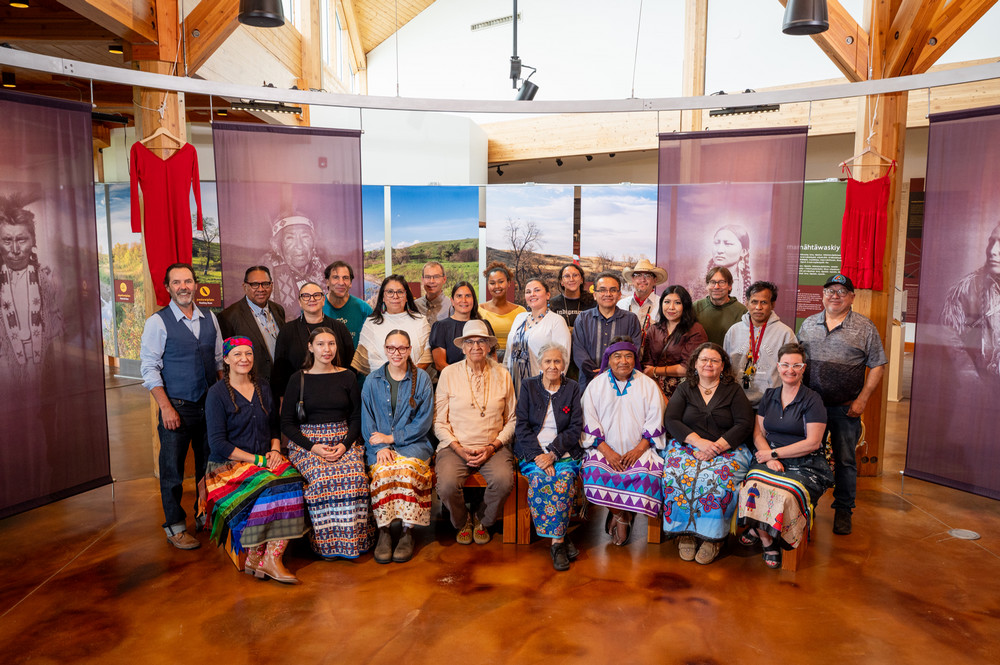
kihci-okāwīmāw askiy Knowledge Centre receives $2.6 million from Weston Family Prairie Grasslands Initiative
A new Indigenous Grasslands Stewardship and Knowledge Exchange Network has been launched at the University of Saskatchewan (USask).
17 Jun 2026
McMaster team recognized for building a better way to work with data
At a university the size of McMaster, institutional data doesn’t live in one place. It’s scattered across many systems, and pulling it together for a report or planning exercise has historically meant a lot of manual work. A cross-campus team of employees is building a better approach. Their work recently earned them an Innovation Award at CANHEIT , Canada’s largest conference for higher education IT leaders, researchers and technology innovators. “This is really a recognition of the people behind the work,” says Andrea Oliver, director of enterprise applications and data services, who accepted the award on behalf of the team. “It reflects what’s possible when we bring together expertise from across McMaster and focus on solving real challenges.” The new data service is built on Microsoft Fabric, Microsoft’s unified data and analytics platform. It helps bring information from across the university together so teams can use tools like Power BI with more consistent, reliable data. That matters because many teams at an institution like McMaster need to work with data independently while still relying on shared standards for governance, privacy and security. Rather than each team sourcing and reconciling data independently, the service provides a common, trustworthy foundation. The result is less time spent on data wrangling and more confidence in the numbers when it matters most. It also gives McMaster a stronger foundation for future analytics needs. “This isn’t just a tool,” says Oliver. “It’s a new way of working with data across the university. We’re making it easier for people to access the information they need, when they need it, and to have more confidence in it.” Already making a difference The impact of the service has already been tangible. In Human Resources, it helped simplify a reporting process that had previously required significant manual effort. “There was a noticeable difference in efficiency,” says Katie Millar, manager of people analytics. “Once the data model was in place, it only took a couple of hours to build what we needed. It made it much easier to respond to questions as they came up.” This kind of outcome reflects the team’s broader approach. The service was designed with campus partners from the start, so it addresses real needs rather than theoretical ones. University Technology Services now manages the service as an institutional offering and is slowly beginning to expand it to new areas of campus. For the team behind the work, the award is meaningful recognition. But the larger story is the long-term value this work can bring to McMaster by making data easier to use in ways that support better planning, reporting and decision-making across the university. The post McMaster team recognized for building a better way to work with data appeared first on McMaster News .
17 Jun 2026